


We may earn a commission when you buy through links on this page, at no extra cost to you. Learn more.
The best black slim wine fridge fits a narrow gap, keeps a steady temperature, and matches the dark finish of nearby cabinets and appliances. Slim models usually trade some capacity for width, so the right choice depends on the space you can spare, how many bottles you keep, and whether you need one temperature or two. This guide compares the main ways people use a slim black unit so you can narrow the list before shopping.
Slim wine fridges are built for the spaces that standard units cannot reach: a strip beside a range, a gap between tall cabinets, or a corner of an apartment kitchen. A black finish helps the unit blend with dark counters, matte hardware, and black appliances. The trade-off is that a narrow cabinet holds fewer bottles, and its airflow and door swing need more planning than a wider model.
Start with the measurements. Note the width, depth, and height of the gap, then check how much clearance the manufacturer lists at the sides, back, and top. A slim unit that is pushed tight against a wall can struggle to vent heat, and that can make the interior temperature drift. Measuring the door swing and the path into the room also matters, because a slim unit is often installed in a tight kitchen where a door has little space to open.
Quick Comparison of Slim Black Wine Fridge Styles
Slim black units vary in how they are installed, how many zones they have, and how they display the bottles. The table below compares the common options before the detailed picks.
| Style | Installation | Best suited to | Typical storage |
|---|---|---|---|
| Freestanding slim, single zone | Plug in, needs side and top clearance | Narrow gaps and apartments | One temperature, fewer bottles |
| Slim built in, panel ready | Flush in cabinetry, needs a custom front | Kitchens with dark cabinet runs | One or two zones, depends on width |
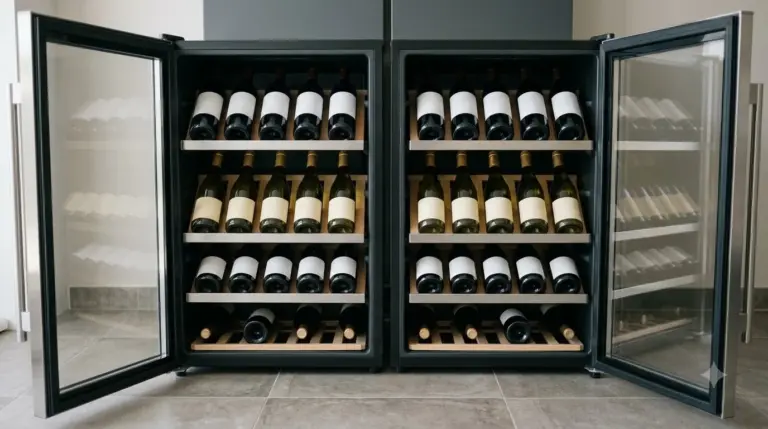
| Slim with glass door | Freestanding or built in | Dining rooms and display areas | Visible bottles, lighting inside |
| Slim solid door | Freestanding or built in | Kitchens that need a quiet, hidden look | Bottles out of sight, steadier light |
Best for Narrow Gaps Beside Existing Cabinets
A slim black unit is most useful in a gap that a standard fridge cannot fill. It sits between tall cabinets or beside a range, keeping the wine within reach without taking up floor space meant for other things.

Why it stands out: the narrow footprint is the main reason to choose this format. It fills a space that would otherwise go unused, and the black finish lets the unit recede into dark cabinetry.
Keep in mind: the gap has to match the width listed on the spec sheet, not the rough measurement. Leave the clearance the manufacturer requires, and confirm the door can open fully before the unit is installed.
Best for Kitchens With Black Hardware and Dark Cabinetry
Dark cabinets, matte pulls, and black appliances make a slim black fridge look like part of the design rather than an add-on. The finish is consistent with the rest of the room, which matters in kitchens built around a dark palette.
Why it stands out: a black front hides fingerprints better than many light finishes, and it pairs well with brushed metal handles and stone counters. The unit reads as intentional when the surrounding cabinets use the same tone.
Keep in mind: dark finishes absorb more heat from sunlight, so keep the unit away from a window that gets direct afternoon sun. Check whether the door has a handle or a recessed grip, because the handle style affects how the unit fits beside a dark cabinet.
Best for Apartments and Small Dining Rooms
In a small apartment, a slim black unit can serve as a wine station without taking the place of a counter or a cabinet. It stores bottles at a fixed temperature in a compact footprint, which suits a single household that drinks wine regularly but does not need a large cellar.

Why it stands out: the small footprint leaves room for other furniture, and a glass door lets the bottles act as décor. Because a slim unit holds fewer bottles, it encourages a rotating stock rather than a large reserve.
Keep in mind: apartments often have limited power outlets and tight ventilation. Plug the unit into a dedicated outlet, and do not place it inside a closed cabinet where the heat has nowhere to go.
Best for Single Temperature Storage of One Wine Type
Many households keep mostly one type of wine, such as a daily red or a stock of white for cooking and guests. A single zone slim unit covers that need without the cost of a second zone.
Why it stands out: one temperature setting is simpler to manage, and a single zone is often the lower-priced option in the slim format. It holds a steady range for the wine you drink most.
Keep in mind: the same temperature may not suit every bottle you own. Wikipedia’s wine cellar entry notes that wine can be stored satisfactorily between 7 and 18 °C (45 to 64 °F) as long as changes are gradual; if you keep reds and whites together, a dual zone unit gives you more control. You can read the full entry at Wikipedia’s wine cellar entry.
Best for Pantry Corners and Utility Spaces
A slim black unit also fits in a pantry corner, a laundry room, or a utility area where a bottle collection sits beside other storage. The unit keeps the wine out of the main kitchen, which is useful when the kitchen is busy with cooking.
Why it stands out: a utility location keeps the wine away from heat sources like the oven and dishwasher, and a solid door hides the bottles entirely. This format suits buyers who want storage rather than display.
Keep in mind: utility rooms can be warmer or cooler than the rest of the house, and temperature swings matter for wine. The same source describes swings of 14 degrees or more as a reason wine can breathe through the cork and age faster, so check the room temperature before choosing this location.
How to Choose a Slim Black Wine Fridge
A slim unit has fewer features than a full-size cabinet, so the spec sheet matters more. The checklist below covers the points worth comparing.
- Width, depth, and height of the unit, plus the side and top clearance the manufacturer lists
- Temperature range and how steady the controls hold it in a warm room
- Bottle capacity in standard bottles, and whether the shelves fit wider bottles
- Door style: glass for display, solid for a hidden look
- Noise and vibration, especially if the unit sits near a bedroom or living area
- Door hinge side and swing, so the unit fits the space you have
Once the gap and the storage goal are clear, the choice narrows quickly. A narrow freestanding unit suits a tight gap, a panel ready build in suits dark cabinetry, and a solid door suits a utility space.
Frequently Asked Questions
How many bottles does a slim black wine fridge hold?
Capacity depends on the width and shelf design. Slim units usually hold fewer bottles than full-size models, so check the bottle count on the spec sheet and remember that wider bottles take more shelf space.
Can a slim black wine fridge sit against a wall?
Most units need clearance at the back and sides for airflow. Follow the manufacturer’s listed clearances, because a unit pushed tight against a wall may struggle to vent heat and hold its temperature.
Does a black finish affect the temperature inside?
The finish itself does not change how the unit cools. Dark surfaces can absorb more heat from sunlight, so keep the unit out of direct sun to help it hold a steady temperature.
Is a glass door or a solid door better for a slim unit?
A glass door shows the collection and lets you see the bottles, while a solid door keeps light and temperature changes lower. Choose glass for display and solid for storage in a quieter or dimmer location.
Once you have picked a size and finish, plan how long opened bottles will stay in good condition. The guide on how long wine lasts after opening helps with that. For more options in the narrow format, browse the slim wine fridge page, and compare the black wine fridge range. You can also see the wine fridges by type section for other formats.
More in Wine Fridges by Type
 Best White Wine Fridge for Reliable Chilling and StorageUpdated Nov 20, 2026
 Best Smart Wine Fridge for Steady Temperatures and Remote ChecksUpdated Nov 18, 2026
 Best Black Under Counter Wine Fridge Options for Kitchens and IslandsUpdated Nov 18, 2026
 Best Built In Dual Zone Wine Fridge Options by Kitchen LayoutUpdated Nov 18, 2026
 Best Slim Built in Wine Cooler: 5 Space-Saving Styles for Tight KitchensUpdated Nov 18, 2026
 Best Quiet Dual Zone Wine Cooler Options for Peaceful HomesUpdated Nov 18, 2026