

We may earn a commission when you buy through links on this page, at no extra cost to you. Learn more.
The best cheap wine bottle holder is a simple countertop or stackable rack that stores standard 750 ml bottles on their side and fits a small kitchen, pantry or closet. Most budget models are made from wood, wire or plastic, and the right pick depends on how many bottles you keep, where they sit, and whether the rack should show or stay out of sight.
Storing a bottle on its side keeps the wine in contact with the cork, and it makes labels easy to read at a glance. A holder does not need to be expensive to do that job well. This guide looks at the main types of low-cost racks, what each one does best, and what to check before you order. If you are still deciding how many bottles you open in a typical week, the guide on how many glasses are in a bottle of wine helps you estimate how much room you need.
Quick Comparison of Budget Wine Holder Types
Most low-cost holders fall into four groups: countertop racks, stackable cube systems, wall-mounted frames, and freestanding metal racks. Each group handles space and capacity differently, so start by matching the type to the room before you compare finishes or brands. A holder that suits a dining room can be a poor fit for a utility closet, and the reverse is also true.
| Holder type | Best room | Bottles it suits | Main tradeoff |
|---|---|---|---|
| Countertop wood or wire rack | Kitchen or dining room | 6 to 12 bottles | Takes up counter space |
| Stackable cube system | Closet, pantry, corner | Grows with your collection | Needs a level, firm base |
| Wall-mounted frame | Bar wall or display nook | Usually 2 to 8 bottles | Mostly decorative, not for long storage |
| Freestanding metal rack | Basement, garage, utility room | 12 bottles or more | Can feel cold and show scratches |
Wall-mounted frames look tidy, yet the Wikipedia entry on wine racks notes that wall-mounted units are often used for decoration rather than long-term storage. Treat them as a display option for bottles you plan to drink soon, and use a different type for the rest of the collection.
Best for Small Kitchens and Counters
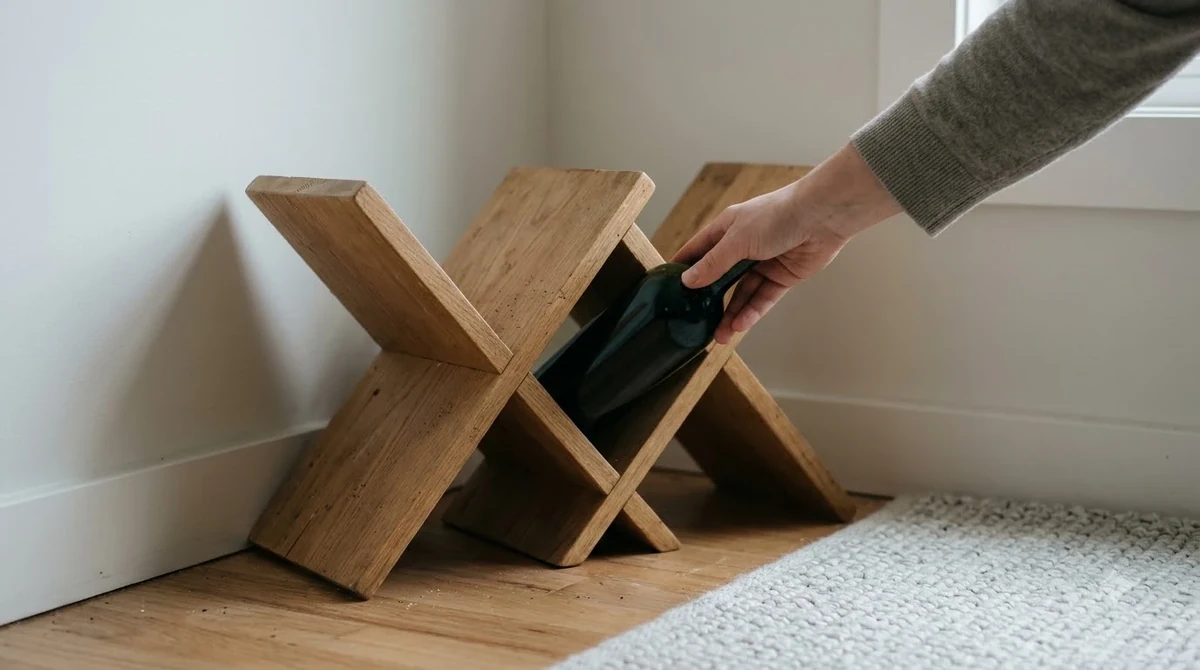
A countertop holder is the simplest budget choice for a kitchen where bottles are opened often. It keeps bottles within reach while you cook and does not need drilling or a cabinet.
Why it stands out: Lightweight wood or wire racks cost little, and a single shelf can hold a rotation of everyday bottles. Most racks are built around the standard 750 ml bottle, the usual unit of wine sales, so bottles slot in without fuss and the spacing is predictable.
Keep in mind: A counter rack takes up room you may need for food prep. Measure the depth and the height above the rack before you buy, and check that the base is wide enough that it will not tip when you pull a bottle from the top row.
Best for: Kitchens with limited floor space and households that drink from a steady rotation.
Best for Growing Collections With Stackable Cubes
Stackable systems are a practical way to start small and add units later. Each cube holds a bottle or two, and the layers can be arranged to fit a closet, a pantry shelf, or a corner that would otherwise go unused.
Why it stands out: Because you can add or remove cubes, the holder grows with your collection and costs little at the start. Wine cubes can hold any bottle that fits the opening, so the system also works for the occasional unusual shape or a larger format.
Keep in mind: Stacked units need a level floor and a firm connection between layers. Lower cubes carry the weight of those above, so check whether the cubes lock together before you fill the top row.
Best for: Closets, pantries and anyone who expects the collection to double within a year.
Best for Wall Displays and Bar Corners
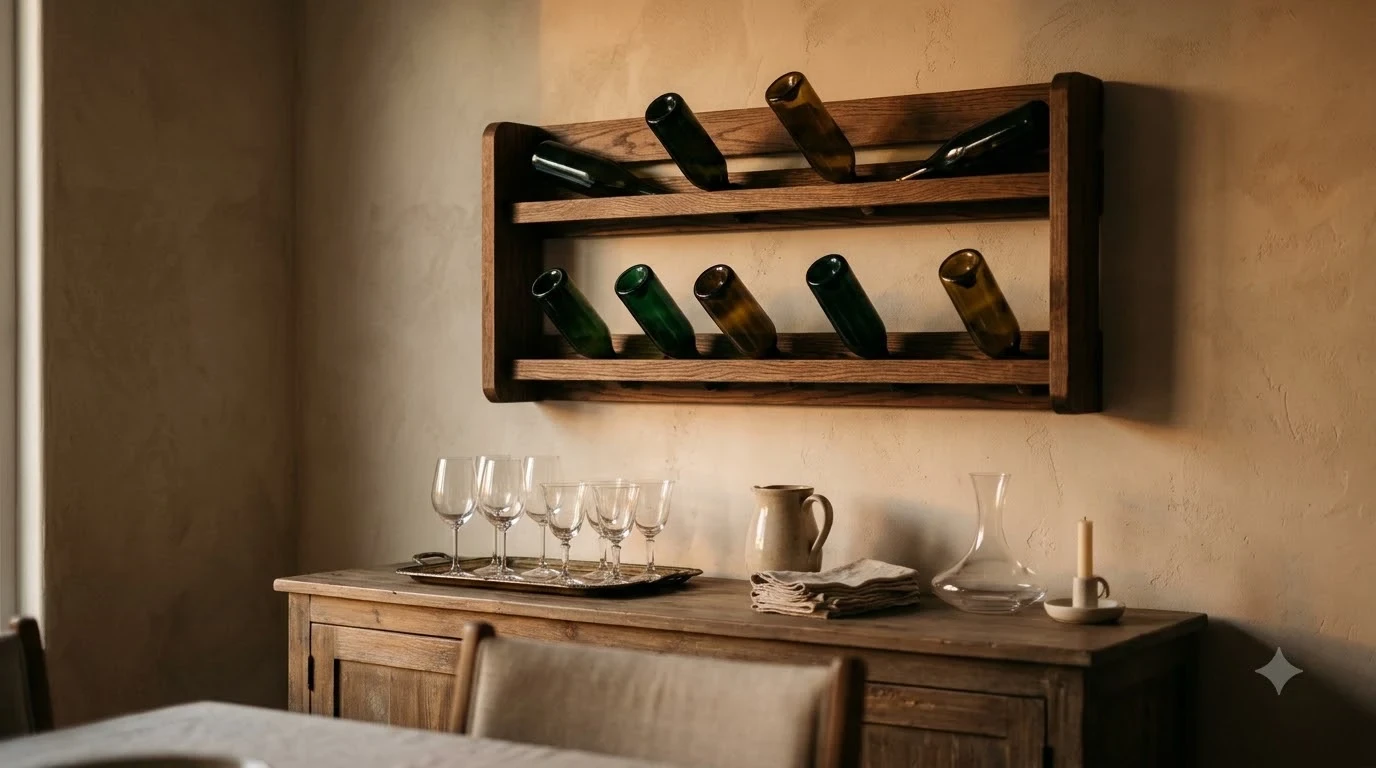
Wall frames save floor and counter space and suit a home bar or a dining nook. They work best when the bottles on display are the ones you plan to open soon, because the rack is designed to show bottles rather than hold them for years.
Why it stands out: A wall-mounted frame turns bottles into decor and keeps them off the surface where spills happen. Installation is usually a few screws into a stud or wall anchors, and the frame can be moved if you rearrange the room.
Keep in mind: Wall racks are often built for display rather than storage. Bottles sitting in a warm room or in direct light can age faster than those in a cool, dark cabinet, so keep the rotation short and avoid spots near a heater or window.
Best for: Bar corners, dining rooms and rooms where the rack is part of the decor.
Best for Long-Lasting Metal Frames
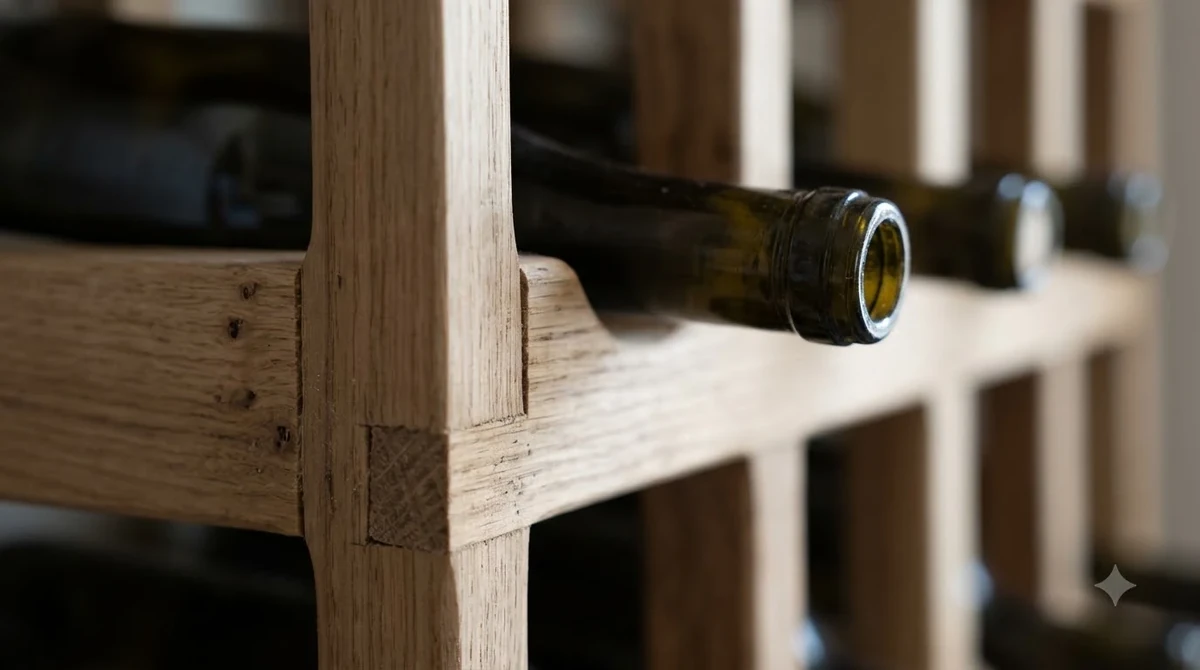
Metal racks hold their shape for years and stand up to a busy kitchen or a basement. Stainless steel and powder-coated wire are the usual materials at the lower end of the range, and both clean easily with a damp cloth.
Why it stands out: Metal frames are sturdy and resist the moisture that can warp wood in a humid room. Many designs hold bottles firmly so they do not slide when the rack is moved, which matters once the rack holds a full row.
Keep in mind: Metal can feel cold in a warm room and may show scratches on the finish. Check the coating and the welds, especially on thin wire, because cheap joints can loosen over time.
Best for: Basements, garages, utility rooms and any space where durability matters more than warmth.
Best for Renters and Temporary Setups
A renter or someone who moves often needs a holder that assembles without tools and packs flat. Budget racks in this group are usually plastic or light wire, and they can be taken apart and reused in a new place.
Why it stands out: Plastic and light wire units cost little, weigh very little, and do not need holes in the wall. Because they go up and come down easily, they suit a lease where the landlord does not want fixtures added.
Keep in mind: Thin materials may bow under a full load of bottles. Check the weight the rack is rated for, and avoid tall units that are narrow at the base.
Best for: Apartments, dorm rooms and anyone who is still deciding how large the collection will get.
How to Choose a Budget Wine Bottle Holder
A good low-cost holder matches the room, the number of bottles, and the way you use them. Start with the space, then the capacity, then the finish, and you will avoid most of the common mistakes.
| Factor | What to check | Why it matters |
|---|---|---|
| Space | Depth, height and clearance | Prevents a rack that blocks drawers or cabinets |
| Capacity | Bottles per shelf and total count | Avoids overcrowding and tipping |
| Stability | Wide base and locking joints | Keeps the rack steady when you lift a bottle |
| Material | Wood, metal or plastic | Affects durability in damp or warm rooms |
Bottle size also matters. Most racks are built for the standard 750 ml bottle, which has become the usual measure in wine sales. Half bottles at 375 ml are narrower and fit most racks easily, while magnums at 1.5 L are wider and need deeper slots. A holder sized for 750 ml may not accept a magnum, so measure the slot before you order if you buy large bottles.
Storage conditions matter as much as the rack itself. The Wikipedia entry on wine cellars notes that wine can be kept between 7 and 18 °C as long as changes are gradual, and that about 13 °C is often described as ideal. Large temperature swings can make wine breathe through the cork and speed aging. A holder in a cool, dark corner of a kitchen is a better match for these conditions than one placed beside an oven or in direct sun.
Tip: Keep the holder away from heat sources and direct light, and rotate bottles so the oldest ones come out first.
Frequently Asked Questions
Should a wine bottle be stored on its side in a holder?
Many people store bottles on their side so the wine stays in contact with the cork. For bottles you plan to drink within a few weeks, a holder that keeps them horizontal or at a slight angle is a simple choice.
How many bottles does a typical budget holder hold?
Countertop racks often hold between six and twelve bottles, while stackable systems grow with each added unit. Wall frames usually hold a handful of bottles for display.
Are wall-mounted wine racks good for long-term storage?
Wall-mounted racks are usually designed for display. They work well for bottles you plan to open soon, but a cool, dark cabinet or cellar is better for long aging.
What material is best for a cheap wine bottle holder?
Wood looks warm and works in dry rooms, metal lasts longer in kitchens and basements, and plastic is light and easy to move. Choose the material that suits the room rather than the lowest starting point alone.
A budget holder can do the job well if it fits the space and keeps bottles steady. For a broader look at storage size, browse the Accessories Library, or compare larger options on the best wine bottle holder page before you decide.
More in Wine Accessories
 Coravin Vs Vacu Vin: Choose the Right Wine Saver for Your BottlesUpdated Nov 21, 2026
 Zwilling Wine Stopper Review: Preserve Open Bottles LongerUpdated Nov 21, 2026
 Wine Enthusiast Wine Preserver Review: Features, Benefits and LimitationsUpdated Nov 21, 2026
 Wine Enthusiast Wine Stopper: An Easier Way to Reseal Open BottlesUpdated Nov 21, 2026
 Vintorio Wine Opener: Two-Step Cork RemovalUpdated Nov 21, 2026
 Zwilling Wine Aerator Review: Aerate, Pour, and Seal With One ToolUpdated Nov 21, 2026