

We may earn a commission when you buy through links on this page, at no extra cost to you. Learn more.
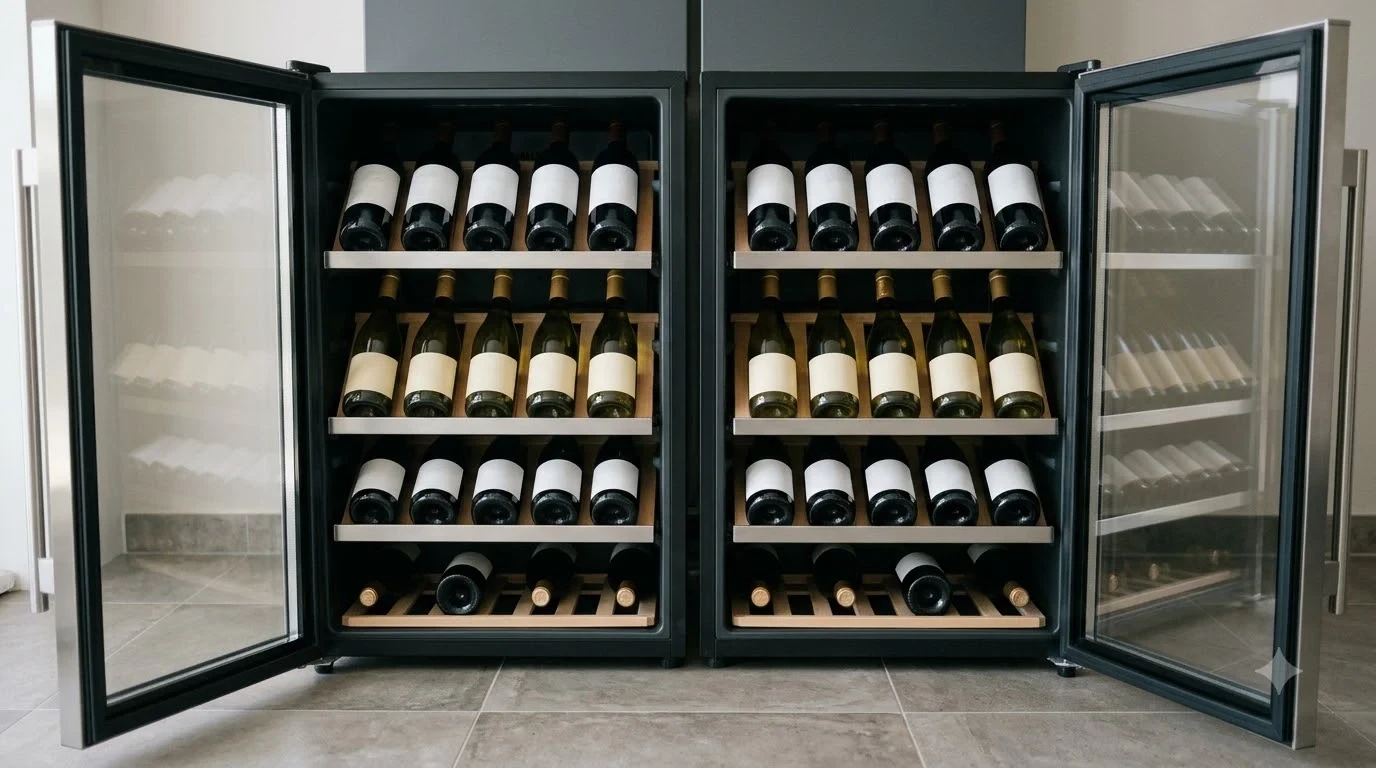
The best built in dual zone wine fridge keeps reds and whites at two separate temperatures inside one cabinet that sits flush with your kitchen cabinetry. The right model depends on the opening it has to fill, how many bottles you keep on hand, and whether you want a warmer zone for reds and a cooler one for whites. This guide compares the main styles by fit, zone setup, and capacity so you can narrow the list before you shop.
Dual zone units suit homes where wine is both stored and served. A built in model is the most visually integrated option because its front can be paneled to match the cabinets around it. The trade-off is planning: the opening has to match the manufacturer’s dimensions, and the unit needs the airflow gap the maker specifies.
Many buyers start with the room rather than the appliance. A kitchen island, a wall of tall cabinets, and a home bar each call for a different height and depth, and a dual zone unit that fits one of those spaces may not fit another. Measuring the opening, the door swing, and the path the fridge will take into the room before comparing models saves time and avoids costly returns. The sections below walk through the main choices in the order most buyers face them.
Quick Comparison of Built In Dual Zone Styles
Built in and freestanding dual zone models differ mostly in how they are installed and how much of the kitchen line they blend into. The table below compares the common styles before the detailed picks.
| Style | Installation | Best suited to | Zone layout |
|---|---|---|---|
| Built in, panel ready | Flush in a cabinet run, needs a custom front panel | Full kitchen cabinetry | Warmer zone for reds, cooler zone for whites |
| Built in, stainless front | Flush with visible metal trim | Modern kitchens and home bars | Same two-zone layout |
| Under counter dual zone | Fits below a standard counter height | Islands and smaller kitchens | Two zones, usually fewer bottles |
| Freestanding dual zone | Plug in, needs side and top clearance | Rentals and quick upgrades | Same two-zone layout, less integrated |
Best for Full Cabinet Runs With Panel Ready Doors
A panel ready built in unit is the choice for homeowners who want the wine storage to disappear into the cabinetry. The front is covered with a custom panel that matches the doors beside it, so the fridge reads as part of the kitchen rather than an appliance.

Why it stands out: the flush look is the main reason people choose this style. Because the panel is custom, the finished line looks deliberate, and a dual zone layout lets you keep reds and whites apart without a second cabinet.
Keep in mind: the panel has to be sized to the exact door height and weight the manufacturer allows. Plan the cabinet build-out before ordering, and confirm the vent path with your installer.
Best for Modern Kitchens With Stainless Trim
A stainless front with metal trim suits kitchens built around steel appliances. It gives the unit a clean, finished edge and works well when the rest of the room uses brushed or polished metal.
Why it stands out: the front needs no custom panel, so the install can be simpler than a fully paneled unit. It also keeps the glass door visible, which some owners prefer when showing off a bottle collection.
Keep in mind: fingerprints show on stainless, and the glass door lets light in. Keep the unit out of direct sun and wipe the front regularly.
Best for Wine Bars and Entertaining Spaces
A dual zone built in unit makes sense in a home bar or entertaining area where guests expect both red and white wine within easy reach. The two zones let you keep a rotation of bottles ready to serve without moving them between rooms.
Why it stands out: the layout fits a bar counter, and the glass door displays the bottles while keeping them at a steady temperature. Because the cooler zone holds whites at a lower temperature, you can serve them straight from the unit.
Keep in mind: bars are often warmer than kitchens, and the unit has to vent heat properly. Check the room temperature and the ventilation gap before choosing a model.
Best for Tight Openings Under a Standard Counter
When the space is limited, a slimmer under counter dual zone unit can replace a full-height cabinet. It keeps the wine at the counter line, which is convenient for kitchens without room for a tall cabinet.
Why it stands out: the lower height makes it easy to reach the bottles, and a dual zone layout keeps the two wine types separate in a smaller footprint.
Keep in mind: capacity is smaller than a tall built in model, so a dedicated unit for a large collection may not be enough. Measure the opening first and compare the bottle count with the manufacturer’s listing.
Under counter units also tend to have shallower shelves, which affects how wide bottles fit. A Bordeaux-shaped bottle takes more room than a Burgundy or Champagne bottle, so check whether the racks are sized for the bottles you actually buy. Pulling the shelves out to test the fit before the unit goes into the cabinet is a simple step that prevents surprises.
Best for Mixed Collections of Red and White Wine
If you buy both reds and whites in regular amounts, the two-zone setup is the main reason to choose this type of fridge. It gives each wine its own temperature range instead of compromising on one setting.

Why it stands out: according to Wikipedia’s wine cellar entry, wine can be stored satisfactorily between 7 and 18 °C (45 to 64 °F) as long as changes are gradual, and 13 °C (55 °F) is described as ideal for short-term storage and long-term aging. A zone for each wine type gives you room to hold reds and whites inside those ranges.
Keep in mind: the same source notes that temperature swings of 14 degrees or more can make wine breathe through the cork and age faster. A stable thermostat matters more than a large capacity.
How to Choose a Built In Dual Zone Wine Fridge
Start with the opening, then work through the features that affect daily use. The checklist below covers what to compare on spec sheets.
- Opening width, height, and depth, plus the ventilation gap the manufacturer lists
- Temperature range for each zone and how precisely the controls hold it
- Bottle capacity in standard bottles, with a note on how wide bottles fit the racks
- Door style: solid panel for a hidden look, glass for display
- Vibration and noise levels, especially if the unit sits in a living area
- Child lock or door lock if the fridge is in a shared home
Once the opening and zone needs are clear, the choice between styles becomes straightforward. A panel ready model suits full cabinetry, stainless suits modern kitchens, and under counter fits limited space.
Frequently Asked Questions
Is a built in dual zone wine fridge better than a freestanding one?
It depends on the kitchen. Built in units blend into cabinetry and usually need the exact opening the manufacturer specifies. Freestanding units are easier to move and install, but they stand out more and need clearance on the sides and top.
What temperatures should the two zones be set to?
Wikipedia’s wine cellar entry describes 7 to 18 °C (45 to 64 °F) as a workable range when changes are gradual, with 13 °C (55 °F) ideal for short-term storage and long-term aging. Follow the ranges the manufacturer lists for each zone.
How many bottles does a typical dual zone unit hold?
Capacity varies by model and shelf design. Check the bottle count on the spec sheet, and remember that wider bottles take more shelf space than standard ones, so the real number can be lower.
Does a built in unit need ventilation?
Yes. Built in models need the airflow gap listed by the manufacturer. Without it, the compressor can overheat and the zones may not hold their temperature.
Once you have chosen a style and size, plan how long your opened bottles will stay in good shape. The guide on how long wine lasts after opening pairs well with a dual zone setup, and you can browse the wine fridges by type section to compare more models. For a closer look at the built in format, see the dual zone built in wine cooler guide.
More in Wine Fridges by Type
 Best White Wine Fridge for Reliable Chilling and StorageUpdated Nov 20, 2026
 Best Smart Wine Fridge for Steady Temperatures and Remote ChecksUpdated Nov 18, 2026
 Best Black Under Counter Wine Fridge Options for Kitchens and IslandsUpdated Nov 18, 2026
 Best Black Slim Wine Fridge for Narrow Gaps and Dark KitchensUpdated Nov 18, 2026
 Best Slim Built in Wine Cooler: 5 Space-Saving Styles for Tight KitchensUpdated Nov 18, 2026
 Best Quiet Dual Zone Wine Cooler Options for Peaceful HomesUpdated Nov 18, 2026