

We may earn a commission when you buy through links on this page, at no extra cost to you. Learn more.
How to describe wine is easier when you follow a simple order: look at the color, smell the aromas, taste the body and acidity, then consider the finish. Most tasting notes work through the same four stages, and each stage gives you words to describe what you notice. You do not need a trained palate to do this well, only a habit of paying attention and naming what you find.
Wine descriptions can sound intimidating, full of terms like “structured” or “bright” that seem to belong to specialists. In practice, a clear description is just an honest account of what the wine looks, smells, and tastes like, written in plain words. This guide walks through the stages of tasting and the vocabulary that helps most people talk about a glass.
Start with the four stages of tasting
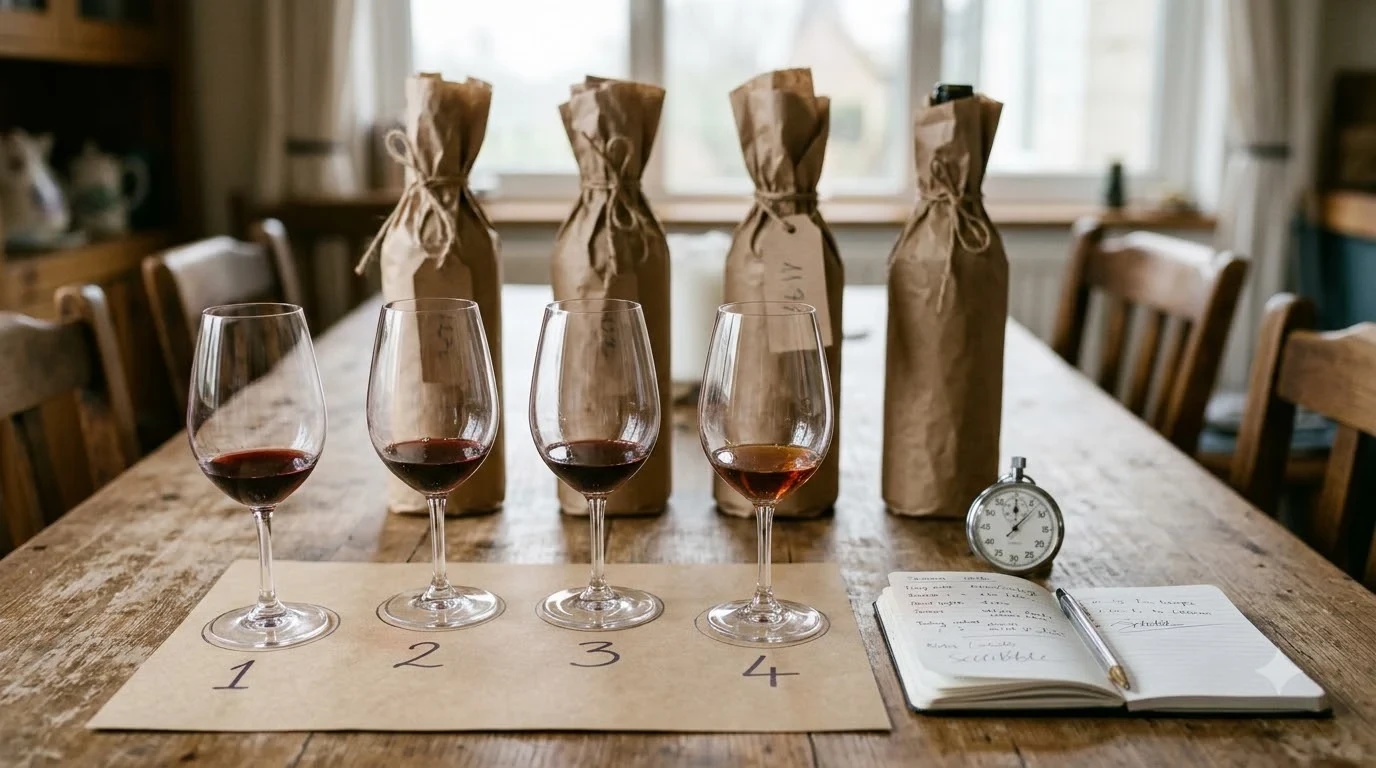
Professional tasting is usually organized into four parts: appearance, aroma, the sensations in the mouth, and the finish. The Wikipedia article on wine tasting describes these stages as the basis for judging a wine’s complexity, its potential for aging or drinking now, and any faults it may have. The same reference also lists a shorter sequence of five actions, often called the five S’s: see, swirl, sniff, sip, and savor.
You can use the stages as a checklist. Look at the glass, smell it, take a sip, and then notice what remains after you swallow. Writing one or two words for each stage is often enough to make a useful note, and the notes become more detailed as you taste more wines.
Describe the color and clarity
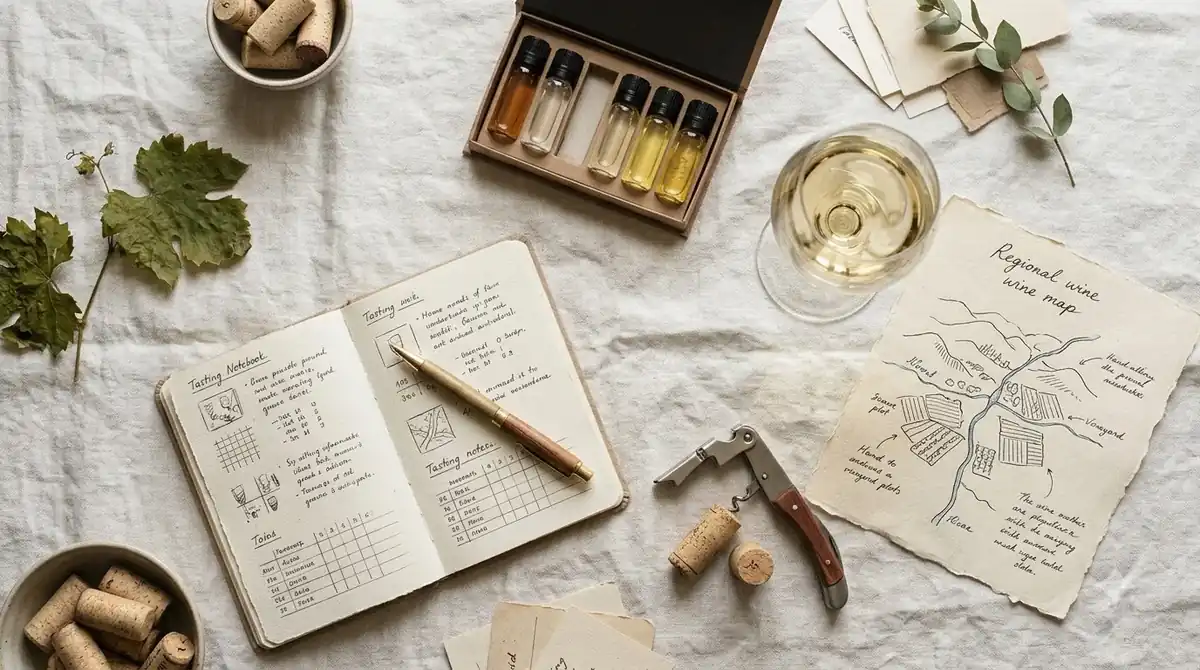
Appearance is the quietest part of a tasting, but it still gives clues. Hold the glass against a white background and look at the shade and how much light passes through. Wine Folly’s tasting tutorial suggests comparing the color to other wines of the same variety, since a young red may look purple or ruby while an older one turns brick or garnet at the rim.
Clarity is a simple check. A clear wine looks bright, while a dull or cloudy wine may signal a fault or simply a wine that has not been filtered. Describing the color as deep, pale, or bright is usually enough for a first note.
Smell the wine and name the aromas
The nose is where most people find the most to say. Swirl the glass gently to release the aromas, then sniff without putting your nose too deep into the bowl. Wine Folly’s guide describes swirling as a way to aerate the wine and release its aromas, and it suggests naming two fruits and two other aromas as a simple exercise.
Start with the big categories. Red and dark fruit such as cherry, plum, or blackberry are common in red wines, while citrus, apple, and pear often show up in whites. Other aromas can be floral, earthy, or spicy, and they can also describe oak, such as vanilla or toast. Name the first thing that comes to mind, even if it is simple, because accurate words come with practice.
| Aroma family | Examples you might notice | Often found in |
|---|---|---|
| Fruit | Cherry, plum, apple, citrus | Reds and whites alike, depending on the variety |
| Floral | Rose, violet, orange blossom | Aromatic whites and some light reds |
| Earth and herb | Forest floor, mint, green pepper | Cool-climate reds and some whites |
| Oak and spice | Vanilla, toast, clove, pepper | Wines aged in oak barrels |
Describe body, acidity, tannin, and sweetness
The sensations in the mouth are where the wine’s structure shows. Body describes how heavy the wine feels on the palate. The Wikipedia reference labels wines as light-bodied, medium-bodied, or full-bodied, and it links weight to color and intensity. A full-bodied wine usually feels richer, while a light-bodied one feels crisp and easy.
Acidity is the sharp, mouth-watering quality that makes your mouth water. Tannin is the drying sensation on the gums and tongue that is common in red wines. Wine Folly’s tutorial describes this as whether the wine makes your tongue feel dry. Sweetness is a separate quality. The Wikipedia article notes that sweeter wines are denser and leave thick streaks, called legs or tears, on the glass when swirled. Balance is the key idea behind all of these terms, meaning that no single element, such as acid or tannin, dominates the others. A wine can be full-bodied and still feel fresh if its acidity is lively, or it can be light and still show firm tannin if the grape is naturally structured. When you describe a wine, say how these parts fit together rather than listing them one by one.
Notice the finish and the aftertaste
The finish is what remains after you swallow or spit. It can be short or long, pleasant or harsh, and it often gives the clearest sign of a wine’s quality. A wine that disappears quickly may feel simple, while one that lingers and changes over several seconds usually shows more complexity. Tasting guides treat the finish as the place where the earlier notes come together. If the finish echoes the aromas you noticed at the start, the wine feels coherent. If the finish brings in something new and unpleasant, such as a sharp or bitter note, that is worth recording too, because it tells you something about the bottle or the way it was stored.
Ask yourself what is left in the mouth. Is it fruit, spice, or a dry sensation? Does the flavor fade cleanly or leave a bitter note? These questions turn a general impression into a specific description that others can understand.
Put the notes together in a short description
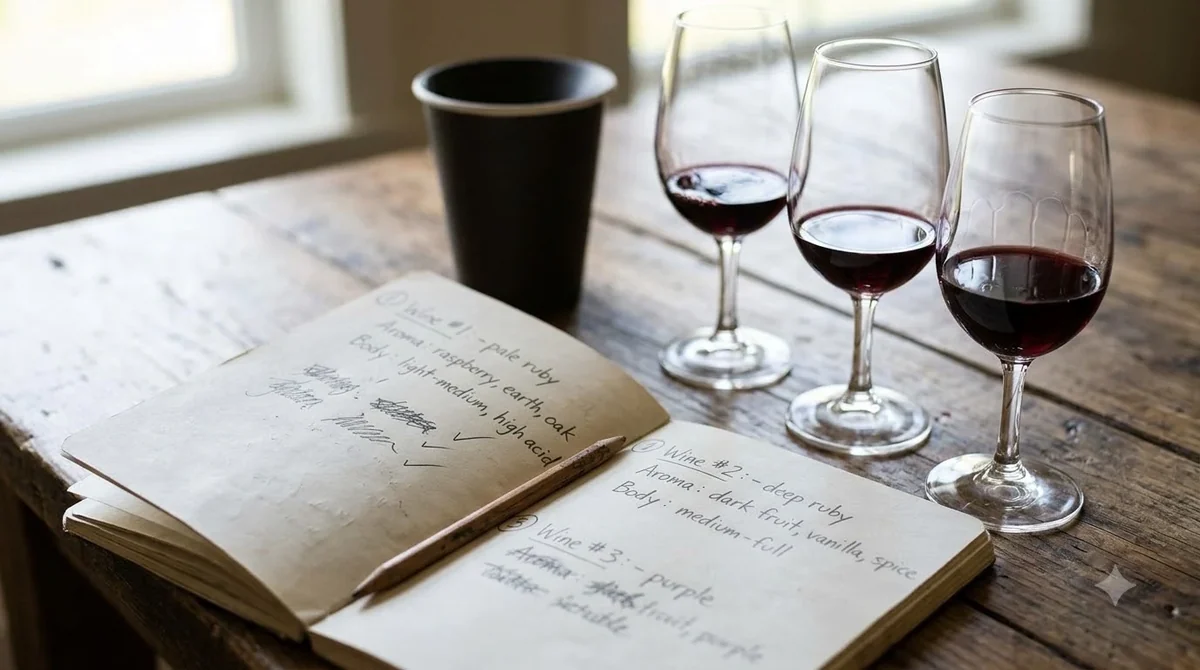
A good tasting note combines the stages into a few clear sentences. For example, you might write that the wine has a deep ruby color, aromas of dark cherry and cedar, a medium body, and a dry finish with firm tannin. That short note tells another person what to expect without any jargon, and it helps you remember the wine later.
Keep the language honest. Describe what you notice rather than what you think a wine should taste like. If you are not sure of a word, choose a simpler one, such as “fruity” or “dry,” and refine it with practice. Many people also find it helpful to compare a wine with one they already know, which makes the description more vivid and easier to share. A comparison such as “a little brighter than a Beaujolais” or “rounder than a Sauvignon Blanc” gives a listener a reference point, even if they have never tasted the bottle in question. Keep a running list of the comparisons that work for you, and reuse them when you taste similar wines.
Frequently Asked Questions
What is the easiest way to start describing wine?
Follow the four stages: look at the color, smell the aromas, taste for body and acidity, then notice the finish. Write one or two words for each stage, and the note will take shape on its own.
What does body mean in a wine description?
Body describes how heavy or full the wine feels in the mouth. Wines are commonly labeled light-bodied, medium-bodied, or full-bodied, and the term relates to the weight and intensity of the flavor.
What does tannin feel like?
Tannin is the dry, drawing sensation on the tongue and gums, most common in red wines. It is a structure element, not a flavor, and it can soften as a wine ages or is served with food.
Does describing wine take special vocabulary?
No. Plain words such as fruity, dry, light, or smooth are accurate and useful. Specialized terms help when you want more precision, but a clear description in everyday language works well.
Describing wine is a skill that improves with each glass. Work through the stages, name what you notice, and keep your notes short and honest. For more background on the basics of tasting and serving, the wine basics section is a good next step, and which wine has less sugar shows how sweetness changes the way a glass tastes.
More in Wine Basics
 Which Rose Is Best for Your Taste, Budget, and Food PairingsUpdated Nov 21, 2026
 Is Cheap Wine Bad? How to Find Bottles Worth DrinkingUpdated Nov 21, 2026
 What To Write On A Wine Gift Tag: Thoughtful Messages For Every OccasionUpdated Nov 21, 2026
 Which Wine Is Best For Weight Loss? Compare Lower-Calorie ChoicesUpdated Nov 21, 2026
 What Is The Best Wine For Mimosas? Choose Bubbly That Balances Orange JuiceUpdated Nov 20, 2026
 Which Prosecco Is Best for Your Taste and OccasionUpdated Nov 20, 2026