

We may earn a commission when you buy through links on this page, at no extra cost to you. Learn more.
Beringer red wine comes from Napa Valley, where the winery has operated since 1876, and many Napa reds are built on Cabernet Sauvignon. That combination of a long-established estate and a warm California growing region shapes the style most drinkers associate with the label: full-bodied, dark-fruited reds with structured tannins that suit a hearty meal. Knowing the region helps you set expectations before you open the bottle.
Shoppers who search for Beringer red wine often want to know what the bottle will taste like, where it was made, and what food to serve with it. This guide covers the winery’s history and setting, the grape and style that define many Napa reds, the flavor profile to expect, and the practical steps for serving and choosing a bottle.
A Napa Valley winery with a long history
According to the Wikipedia entry on Beringer Vineyards, the winery was founded in 1876 and is located in St. Helena, California, in the Napa Valley appellation. The page describes it as the oldest continuously operating winery in the Napa Valley, which gives the brand a long track record in the region.
The estate’s history also includes milestones that shaped how wine visitors experience the valley. In 1934, according to the same entry, it became the first California winery to offer public tours and wine tasting after the repeal of Prohibition. The estate was later listed on the National Register of Historic Places in 2001 and is also a California Historical Landmark.
Ownership has changed over the decades. The Wikipedia entry notes that the Beringer family sold the winery to Nestlé in 1971, and that a group led by Texas Pacific Group bought it in 1996 before the company went public the following year. Foster’s Group owned it from 2000 to 2011, and Treasury Wine Estates is the current owner. Ownership changes do not necessarily change the style of the wine, but they are a good reason to check the vintage and producer details on each label.
Why Napa Valley shapes the style
Napa Valley is part of the North Coast American Viticultural Area, and its warm days and cool nights help grapes ripen fully while keeping acidity. Wine Folly notes that Napa gained fame after the 1976 blind tasting known as the Judgment of Paris, when Californian wines beat top French wines in the eyes of the judges. That result put Napa Cabernet Sauvignon on the world map, and it still defines how many drinkers picture a California red.
Because the valley has a warm climate, Napa reds often show riper fruit than many Bordeaux wines. A bottle from this region is usually more fruit-forward and rounder in the mouth, though the structure from the grape keeps it from tasting soft. That is the style you should expect when you choose a Napa red from a long-established producer.
The grape behind many Napa reds
Cabernet Sauvignon is the world’s most popular red wine grape, according to Wine Folly’s Cabernet Sauvignon guide. The grape is a natural cross between Cabernet Franc and Sauvignon Blanc, a parentage that researchers at UC Davis identified in 1997. It originated in the historic Aquitaine region of France, which includes Bordeaux, and it now grows in many regions around the world.
When a Napa red is labeled as Cabernet Sauvignon, the wine is usually dark and structured. Wine Folly describes flavors of black cherry, black currant, cedar, and baking spices, with graphite notes in many examples. Some wines also show green touches such as bell pepper, which depends on the vintage and the winemaking choices.
Flavor, body, and structure
Wine Folly describes Cabernet Sauvignon as dry and full-bodied, with alcohol around 13.5 to 15 percent by volume, medium-high tannin, and medium-high acidity. Those elements give the wine its grip and its ability to age. The tannins are firm enough to stand up to rich meat, while the acidity keeps the wine from feeling heavy on the palate.
| Element | Typical Napa Cabernet style | What it means at the table |
|---|---|---|
| Fruit | Black cherry, black currant | Pairs with rich, savory dishes |
| Oak and spice | Cedar, baking spices | Adds warmth alongside grilled food |
| Structure | Medium-high tannin and acidity | Holds up to red meat and hearty sauces |
| Body | Dry and full-bodied | Feels substantial in the glass |
| Alcohol | About 13.5 to 15 percent | Gives weight and warmth |
Tip: Check the vintage and the producer’s description on the back label. A cooler year can show more savory character, while a warm year often shows riper fruit, so the year helps you predict the style.
Serving and pairing a Napa red
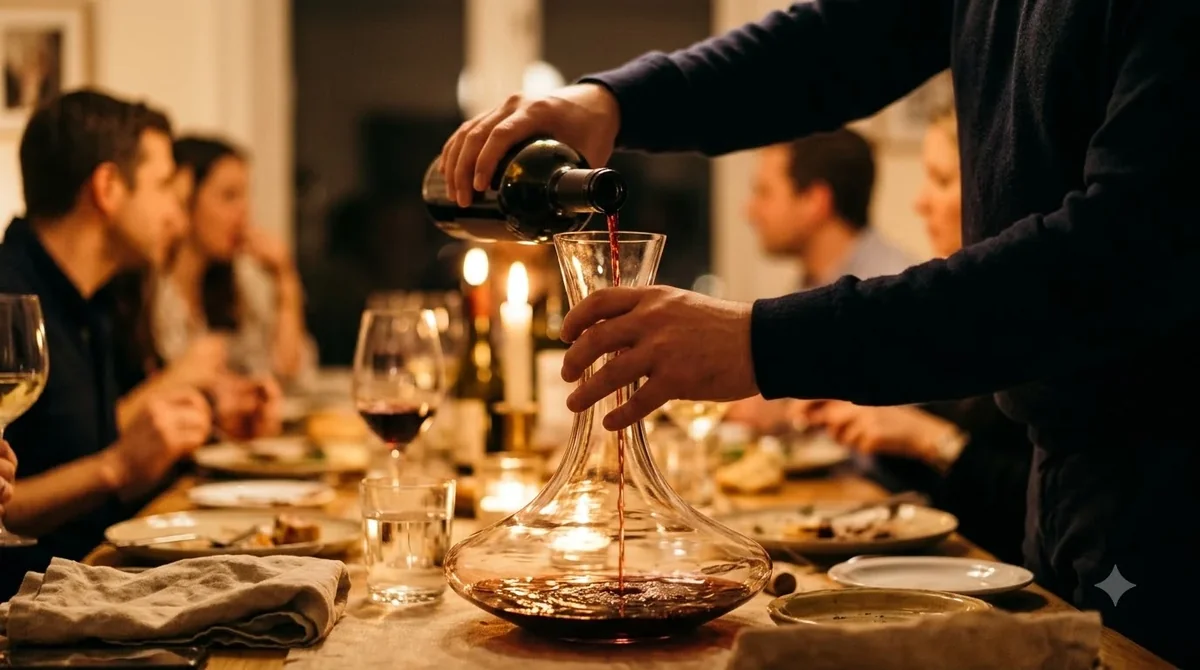
Wine Folly recommends serving Cabernet Sauvignon at 60 to 68 degrees Fahrenheit, or about 15 to 20 degrees Celsius, in an oversized glass. Decanting for about one hour can soften the tannins and open the aromas, which is useful for a young Napa red. A well-made Cabernet can also be cellared for ten years or more, so a bottle you buy now may become more layered with time.
Food pairing is straightforward with this style. Wine Folly suggests grilled meats, peppery sauces, and boldly flavored dishes, since the wine’s tannin and fruit hold up to strong flavors. A steak with a pepper crust, a slow-cooked beef dish, or a hard cheese on a board all suit a Napa Cabernet. Lighter fish or delicate salads are less natural partners for this kind of red. If you are serving a crowd, set out a bowl of nuts or a charcuterie board alongside the bottle, since the salty and savory bites bring out the wine’s dark fruit and give guests something to sip with.
How to choose a Beringer red
When choosing a Beringer red, start with the vintage year and the grape named on the label. A varietal Cabernet Sauvignon will show the most direct style, while a blend may be more approachable in a different way. If you want a bottle for a special dinner, consider an older vintage that has had time to develop, and if you want an everyday red, a younger bottle will be fresher and more fruit-driven.
It also helps to compare with other California reds you may already know. The Austin Hope red wine guide covers another California red, which makes a useful side-by-side comparison. For a broader look at how producers present their wines, the wine brands guide is a practical next step.
Frequently Asked Questions
Is Beringer red wine made in Napa Valley?
The Wikipedia entry on Beringer Vineyards places the winery in St. Helena, in the Napa Valley appellation. Check the label for the appellation and vintage on the specific bottle you buy.
Is Beringer a dry red wine?
Napa Cabernet Sauvignon is typically dry and full-bodied. Confirm the style on the back label or the producer’s description for any specific Beringer bottle.
Should I decant a Beringer red?
A young, structured Napa red benefits from decanting for about an hour, which can soften tannins and open the aromas. Older bottles may need less time, so taste a small amount first.
What food goes with Napa Cabernet Sauvignon?
Grilled meats, peppery sauces, and boldly flavored dishes are classic choices. Hard cheeses also work well because the tannins and fruit hold up to rich, savory flavors.
Beringer red wine is easiest to judge when you know its Napa Valley setting and the Cabernet-driven style many of these reds share. Check the vintage and the producer on the label, serve the wine at a cool room temperature, and pair it with bold, savory food. For more on wine brands and what their labels tell you, visit the wine brands guide.
More in Wine Brands
 Underwood Wine Price: Compare Bottles, Cans, and Pack SizesUpdated Nov 21, 2026
 Zenato Wine Price: Compare Styles and Choose the Right BottleUpdated Nov 21, 2026
 Zuccardi Wine Price: Compare Bottles and Find the Right RangeUpdated Nov 21, 2026
 Yellow Tail Moscato Review: Taste, Sweetness and Serving TipsUpdated Nov 21, 2026
 Wolf Blass Yellow Label Review: Choose Your Best StyleUpdated Nov 21, 2026
 Wolffer Estate Rose Review: Choose the Right Bottle for Your TableUpdated Nov 21, 2026