

We may earn a commission when you buy through links on this page, at no extra cost to you. Learn more.
A wine fridge not cooling usually has a simple cause: the unit is unplugged or set too warm, the door seal lets warm air in, or the vents and condenser are blocked. Check those areas before you assume the cooling system has failed. Most of these problems can be fixed in one session without tools, and a few checks will show whether a technician is needed.
A wine fridge is a small cooling cabinet built to hold bottles at a steady temperature. It depends on a few parts working together: a power supply, a thermostat, a compressor that moves heat out of the cabinet, and airflow that carries that heat away. When one part fails or gets blocked, the inside warms up. This guide goes through the checks in a practical order, from the simplest causes to the ones that need service.
Start with power and the temperature setting
Before looking at anything else, confirm that the unit has power. Check that the cord is fully seated in the outlet, that the outlet works with another device, and that the breaker has not tripped. Some units have a power switch or a control panel that goes dark when the unit is off, so check those too.
Next, confirm the temperature setting. Many people set the dial to its coldest position and forget it, or someone bumps the control by accident. Storage guidance in the wine cellar article on Wikipedia describes a storage range of 7–18 °C (45–64 °F) as acceptable when changes happen gradually, and it gives 13 °C (55 °F) as ideal for both short-term storage and long-term aging. Set the unit inside that range and allow several hours for the interior to settle before judging the result.
Check the door seal and how often the door opens
A door that does not close tightly lets warm room air in every time it is opened, and the compressor has to work harder to keep up. Look at the rubber gasket around the door. Run a sheet of paper along the edge while the door is closed: if the paper slides out with no resistance at any point, the seal is weak in that spot. Clean the gasket with mild soap and water, because grease and dust can stop it from sealing. Replace the gasket if it is cracked, flattened or torn.
Frequent opening is the other common cause. Each time the door opens, warm air enters, and the unit may need a long time to recover. If you load or pull bottles often, keep the door open for less time and gather several bottles before opening the cabinet, so you open it once instead of several times.
Clear the vents and the condenser
Most wine fridges move heat out through a condenser, usually a set of metal coils on the back or underneath the unit. Those coils need open air around them.

A unit pushed tight against a wall, placed inside a cabinet with no ventilation, or covered by a towel or a stack of boxes cannot release heat, and it will run without cooling well. Keep the clearance listed in the owner’s manual and leave the space around the unit free.
Dust builds up on the coils over time, and a coil coated in dust works less efficiently. Switch the unit off, unplug it, and brush or vacuum the coils gently. Also check the interior air vents, which are often hidden behind a panel or shelf. A blocked interior vent can keep one zone warm while the rest of the cabinet cools normally, so the top shelf may feel different from the bottom one.
Look at the room temperature and the location
The room around the unit has a bigger effect than many owners expect. A cabinet that sits in a warm space keeps losing ground even when every internal part works, so the location is worth checking before you open the back panel.
A wine fridge is designed for a room with moderate temperatures. If the room is much hotter than the unit’s rated ambient range, the compressor may struggle to keep the inside cold. Kitchens near ovens, rooms with direct sun through a window, and spaces above a heat source are common problem spots. Move the unit to a cooler, shaded place and give it several hours to recover before judging the result.
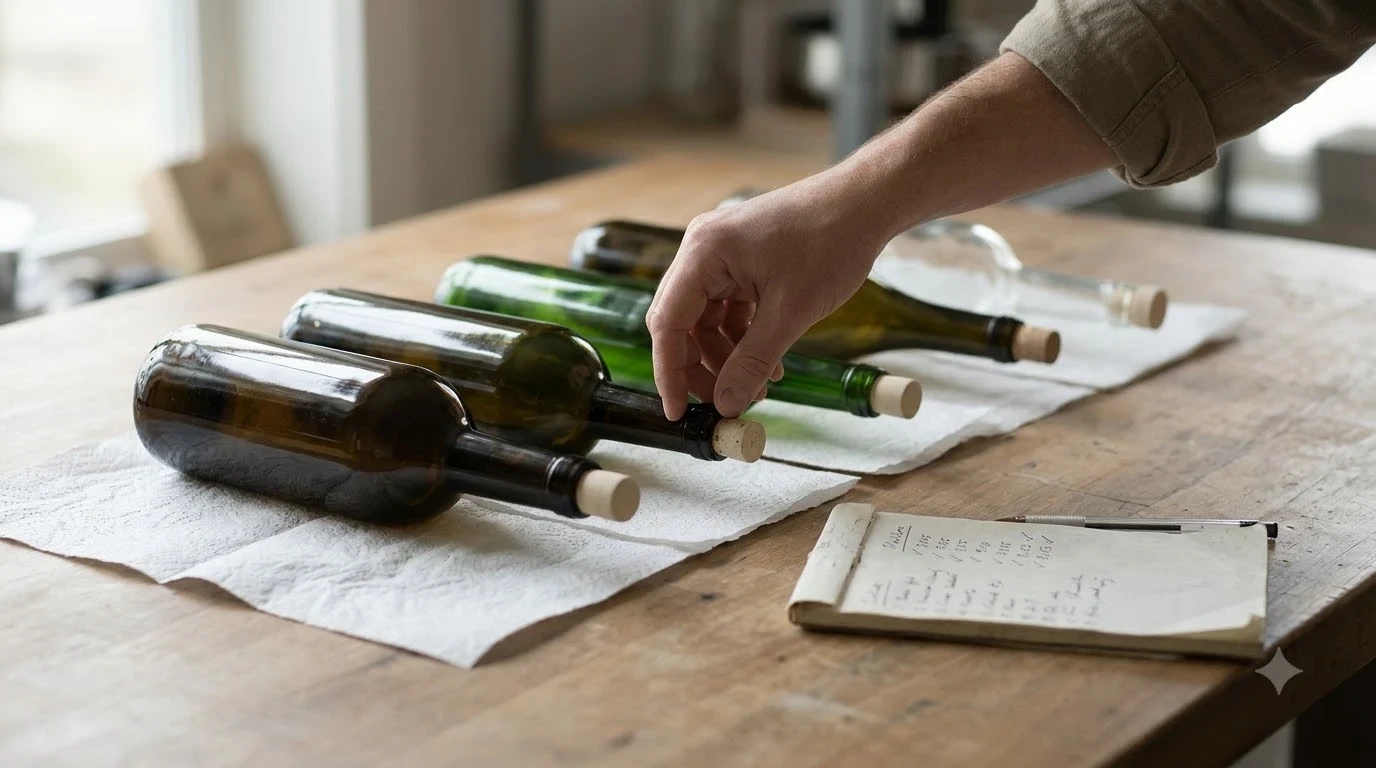
Ambient temperature also matters after a move. A unit that was transported or laid on its side needs time to settle before it cools properly. Many manufacturers advise waiting before the unit is plugged in and run upright, and the owner’s manual is the best source for the exact wait time for your model.
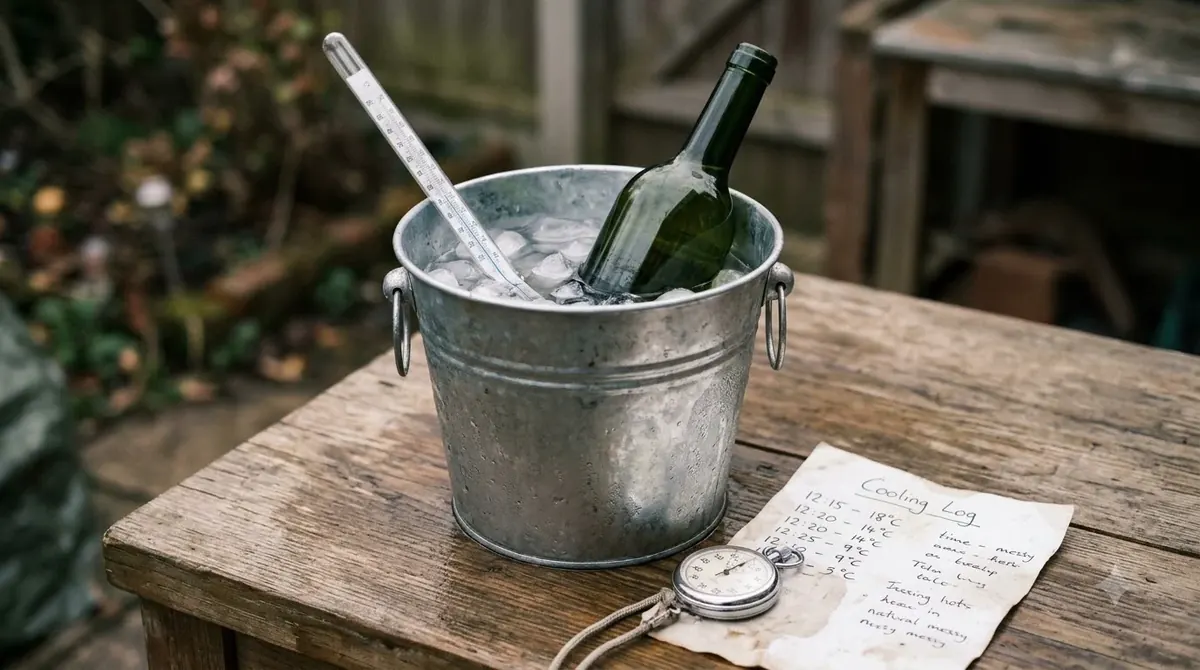
Tip: Place a separate thermometer in the middle of the cabinet rather than relying only on the built-in display. Built-in sensors can read differently from the zone where the bottles sit, and an independent reading shows whether the cooling is really failing.
When the compressor or fan may be the problem
If the power, setting, seal, airflow and room temperature all check out, the problem may be inside the cooling system. A healthy unit usually makes a steady hum and cycles on and off. A fan that stays silent, a compressor that clicks on and immediately shuts off, or a unit that runs constantly without reaching the set temperature points to a component that needs service.
Do not open a sealed refrigerant system yourself. Refrigerant work requires certified training in most places. If the unit is still under warranty, contact the manufacturer first, because repairs may be covered and an unauthorized repair can affect the warranty terms.
| Symptom | Most likely cause | What to do |
|---|---|---|
| Dark display, no sound | No power or a tripped outlet | Check the cord, outlet and breaker |
| Runs but stays warm | Thermostat set too warm | Lower the setting and wait several hours |
| Warm air at the door | Worn or dirty door gasket | Clean or replace the gasket |
| Hot back or sides | Blocked airflow or dusty coils | Clear the space and clean the coils |
| Constant running, no cooling | Hot room or a failing component | Move the unit; call for service if it persists |
Frequently Asked Questions
How long should a wine fridge take to cool down?
After a power outage or a fresh start, it can take several hours to reach the set temperature, and a fully loaded unit can take longer. If the interior stays warm well past the settling time in the owner’s manual, check the setting, the seal and the airflow before calling for service.
Is it safe to keep wine in a wine fridge that is not cooling?
Wine stored warm for long periods ages faster than intended, and heat, light and vibration can all affect it over time. Move the bottles to a cooler place while you repair the unit, and check them before drinking.
Can I fix a wine fridge that is not cooling myself?
Yes, for the common causes: power, the temperature setting, the door seal, the room location and dusty coils. Work on the sealed refrigerant system should be left to a certified technician.
Why does my wine fridge hum or click even when it is cold?
The compressor and fan cycle on and off to hold the set temperature, so some sound is normal. A constant loud noise, a rattle, or a unit that never seems to stop running is worth checking against the owner’s manual.
Once the unit is cooling again, let it hold its setting for a full day before you return bottles to it. Watch the thermometer during that time, and if the reading drifts up again while the room stays moderate, repeat the checks in the order above. A repeat problem with the same symptom often points back to the seal or the airflow rather than to the compressor.
A wine fridge that stops cooling is usually a problem you can narrow down in one session. Start with power and the setting, then check the seal, the airflow and the room, and move to service only when those are clear. For more on keeping opened bottles in good condition, read how to keep wine fresh after opening, or the Wine Fridge Troubleshooting guide.
More in Storage & Fridge Care
 How Long Can You Store Wine in a Wine Fridge? Protect Bottle QualityUpdated Nov 20, 2026
 Can You Store Beer in a Wine Fridge? Keep Both Drinks FreshUpdated Nov 20, 2026
 Is It Worth Repairing a Wine Fridge? Spot the Cheap Fixes Before You ReplaceUpdated Nov 20, 2026
 Wine Fridge Condensation: Identify Causes and Fix Moisture ProblemsUpdated Nov 20, 2026
 Wine Fridge Too Cold: Protect Your Wine and Fix the TemperatureUpdated Nov 20, 2026
 How to Reset Wine Fridge: Restore Cooling and SettingsUpdated Nov 20, 2026