

We may earn a commission when you buy through links on this page, at no extra cost to you. Learn more.
How to store opened champagne: reseal it tightly with a proper stopper, keep it cold in the refrigerator, and drink it within a short window while the bubbles are still lively. Champagne holds its fizz because carbon dioxide stays dissolved under pressure inside the bottle. Once the seal is broken, that pressure starts to escape, so the goal of storage is to slow the loss of gas and keep the wine chilled.
An open bottle of champagne is one of the easiest sparkling wines to waste. The fizz fades quickly, and a bottle left on the counter can taste flat by the next day. Storage is simple once you know what keeps the gas in, and this guide covers the stopper, the fridge, and the common mistakes that let the bubbles escape.
Why Champagne Loses Its Bubbles After Opening
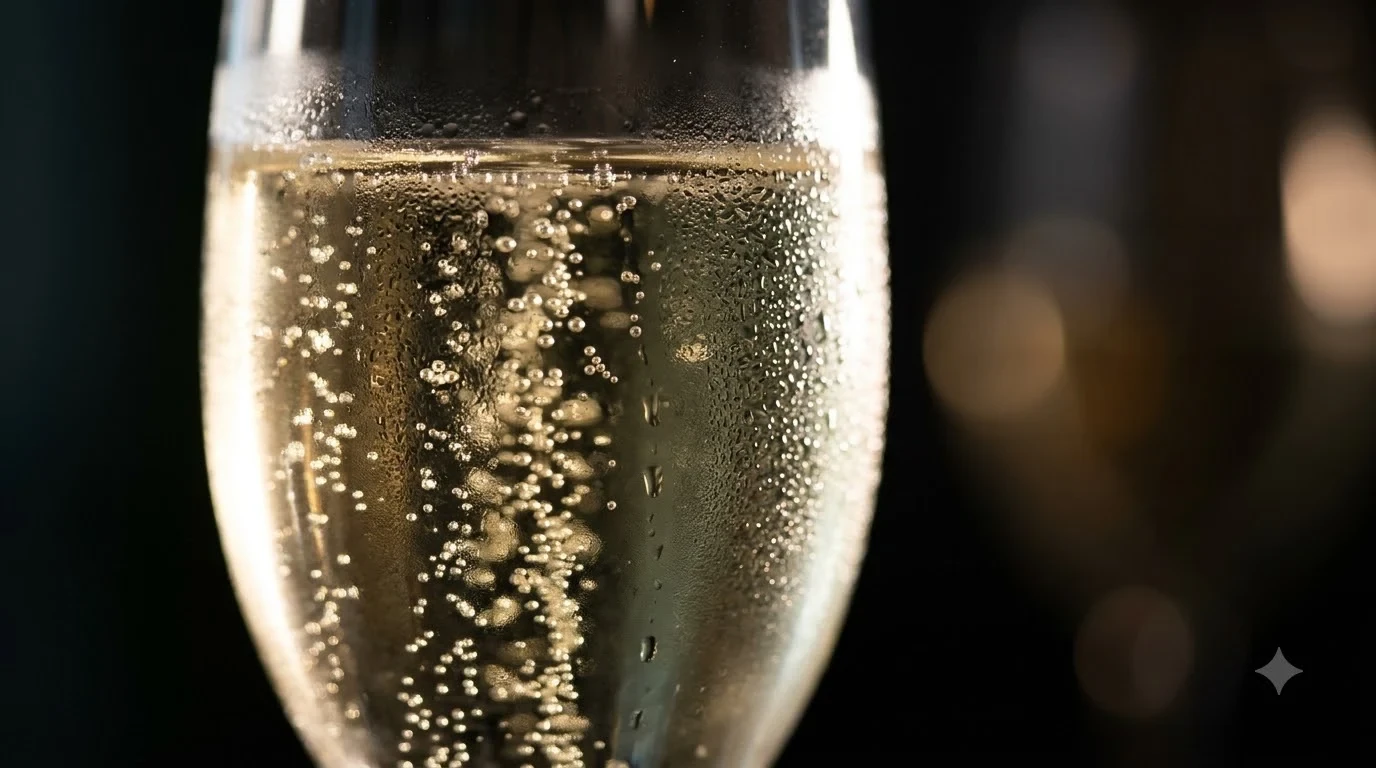
The bubbles in champagne come from a second fermentation that happens inside the bottle. The Wikipedia article on champagne describes how the bottle is corked quickly to keep the carbon dioxide dissolved, and how a finished bottle holds roughly six bar, or about 90 psi, of pressure. That pressure is what keeps the gas in solution until you open the bottle.
When the cork comes out, the pressure drops and the carbon dioxide begins to leave the wine. The article notes that bubbles form mainly at tiny nucleation sites, such as etched spots in the glass, which is why a glass with rough or dusty patches can release gas faster. Some loss is unavoidable, but the rate depends on temperature, the seal, and how much air is in the bottle. Those three factors are the ones you control at home.
Warmth is the biggest driver. Warm wine releases gas faster, and a bottle that sits in a sunny kitchen or a hot car will lose its fizz much sooner than one kept cold. Air is the second factor. A large volume of air above the wine gives the gas more room to escape, so a bottle that is only half full loses its sparkle faster than a full one.
Reseal the Bottle the Right Way
The first step is the stopper. The original cork will not reseal a champagne bottle well after it has been opened, because the cork has already lost its shape. A dedicated champagne stopper, which clamps around the neck and seals the mouth, is the standard tool. Many wine shops and kitchen stores sell them, and they are sold as a set of simple accessories.
Seat the stopper firmly and make sure the clamp is tight. A loose stopper lets gas escape steadily, and the bottle can lose its fizz in a few hours. Check the seal before you put the bottle away, and do not store it with the stopper half on. If you do not have a dedicated stopper, a tightly fitted cork from a wine bottle is better than nothing, but expect less fizz the next day.
Some people use a spoon in the neck as a folk remedy. It does very little, and it is better to rely on a proper stopper and a cold bottle.
Keep It Cold in the Refrigerator
Refrigeration is the most effective step. Cold wine holds carbon dioxide more easily, so a sealed, chilled bottle keeps its bubbles far longer than one at room temperature. The serving temperature for champagne is cool, about 7 to 9 °C, or 45 to 48 °F, according to the Wikipedia article, and that is also a good storage target. Keep the bottle upright in the door or on a shelf toward the back, where the temperature is most stable.
A refrigerator is the right place to store opened champagne, but it is not a place for long-term storage of any wine. Keep the bottle away from strong-smelling foods, since sparkling wine can pick up odors through a loose seal. If your refrigerator is not holding a steady cold temperature, the wine will lose its fizz faster, so it is worth checking the fridge setting before you rely on it.
Chilling a bottle before you open it also helps. The Wikipedia article notes that a cold bottle loses less gas when it is opened, so a bottle that has been in the refrigerator is more likely to pour lively the first time too. That benefit adds to what the fridge does for the bottle after the seal is in place.
How Long Opened Champagne Stays Good
Opened champagne has a short useful life, and the fizz is the first thing to go. It is usually still safe to drink after the bubbles fade, but it will taste flat, dull, and less pleasant. The best approach is to plan to finish the bottle within a day or two, and to focus on the sparkle while it lasts. Many drinkers use leftover champagne in cooking or cocktails once the bubbles are gone, such as in a light sauce or a punch base, where the sweetness and acidity still come through.
Keep in mind that a partly full bottle with a good seal will hold its character longer than one with a loose seal and a lot of air. If you know you will not finish the bottle soon, a small bottle or a half bottle is a better choice than a full one with a large air gap. For a closer look at the time window, the guide to how long champagne lasts after opening explains the factors that shorten or extend it.
Storage Options for Opened Champagne Compared
Different setups give different results. The table below compares the common options, from the best case to the least useful.
| Storage method | What it does | Expected result |
|---|---|---|
| Champagne stopper, refrigerated | Seals the mouth and keeps the wine cold | Best retention of bubbles |
| Cork pushed back in, refrigerated | Limits gas loss, but the seal is weaker | Good for a day, less fizz after |
| Stopper, left on the counter | Seals the mouth but lets the wine warm | Fizz fades faster than in the fridge |
| Bottle open, no stopper, refrigerated | Cold, but the gas escapes freely | Flat within a short time |
| Bottle open, left on the counter | Warm and unsealed, the least protection | Flattest result, fastest loss |
The pattern is clear. Cold temperature and a good seal do most of the work, and the rest is a matter of finishing the bottle while it still tastes lively. For the broader principles of keeping any opened wine in good condition, the guide to keeping wine fresh after opening applies the same idea to still wines.
Common Mistakes When Storing Opened Champagne
The most common mistake is leaving the bottle on the counter with the original cork pushed loosely in. That combination lets gas escape and lets the wine warm, and it is the fastest route to a flat glass. A second mistake is storing the bottle in a door shelf that opens and closes constantly, where the temperature swings and the bottle warms and cools repeatedly.
Another mistake is pouring off the bottle and leaving it half full with a large air gap. Transferring the leftover wine into a smaller container is not recommended for champagne, because the transfer itself releases gas, but a smaller bottle with a good seal does keep the wine better than a large bottle with a lot of air. Finally, do not rely on a spoon or a fork in the neck. It does not seal the bottle and gives a false sense of security.
If your refrigerator is too warm or the bottle still loses fizz quickly even with a proper stopper, check the seal first and then the temperature. Those two checks solve most problems.
Frequently Asked Questions
Can I store opened champagne in the refrigerator?
Yes. Refrigeration is the most effective step for keeping opened champagne lively. Keep it sealed with a proper stopper and store it upright, away from strong-smelling foods.
Does a regular cork work to reseal champagne?
A regular cork is not ideal because the original cork loses its shape after opening. A dedicated champagne stopper, which clamps around the neck, seals the bottle much better and keeps more of the fizz in place.
Is flat champagne still safe to drink?
Champagne that has lost its bubbles is usually still drinkable, though it will taste dull. It is a good candidate for cooking or mixing, where the sweetness and acidity still contribute.
Why does champagne lose its fizz faster when it is warm?
Warm wine holds less dissolved carbon dioxide, so the gas leaves more quickly once the bottle is opened. Keeping the bottle cold slows that loss, and a cold bottle also loses less gas when it is first opened.
Opened champagne is simple to store if you focus on the seal and the temperature. Use a proper stopper, keep the bottle cold, and finish it while the bubbles are still lively. A little planning makes the difference between a sparkling glass tomorrow and a flat one.
More in Storage & Fridge Care
 How Long Can You Store Wine in a Wine Fridge? Protect Bottle QualityUpdated Nov 20, 2026
 Can You Store Beer in a Wine Fridge? Keep Both Drinks FreshUpdated Nov 20, 2026
 Is It Worth Repairing a Wine Fridge? Spot the Cheap Fixes Before You ReplaceUpdated Nov 20, 2026
 Wine Fridge Condensation: Identify Causes and Fix Moisture ProblemsUpdated Nov 20, 2026
 Wine Fridge Too Cold: Protect Your Wine and Fix the TemperatureUpdated Nov 20, 2026
 How to Reset Wine Fridge: Restore Cooling and SettingsUpdated Nov 20, 2026