

We may earn a commission when you buy through links on this page, at no extra cost to you. Learn more.
What is Kerner? Kerner is an aromatic white wine grape created in Germany in 1929 by crossing red Trollinger (Schiava) with white Riesling. It produces bright, fruit-forward white wines with notes of green apple, white peach, pear, citrus, and Alpine herbs, pairing Riesling-like acidity with a fuller body and softer edge. Today, the grape is celebrated both in Germany and in high-altitude vineyards across northern Italy’s Alto Adige region.
If you enjoy dry Riesling or Pinot Grigio and want a white wine with vivid aromatics and a rounder mid-palate, Kerner deserves a spot in your glass. Though it spent decades as an underrated blending grape, modern producers have transformed it into one of Europe’s most compelling cool-climate whites.
What It Is
Kerner is a white Vitis vinifera grape variety bred in 1929 by viticulturist August Herold at the state grape-breeding institute in Weinsberg, located in Germany’s Württemberg region. Herold crossed Trollinger—a light-skinned red grape known as Schiava or Vernatsch in northern Italy—with classic white Riesling. Because both parents belong to the same European grape species, Kerner is a true intraspecific crossing rather than an American-European hybrid.
Herold named the new grape after Justinus Kerner (1786–1862), a Swabian physician and poet who lived in Weinsberg and famously prescribed a daily glass of wine to his patients as natural medicine. The variety received official German plant variety protection and commercial registration in 1969, quickly gaining traction among growers across Germany.
From a viticultural standpoint, Kerner solved several headaches that plagued Riesling growers. The vine buds late in the spring, protecting delicate shoots from late frosts, and endures winter temperatures down to minus 10 degrees Celsius (14 degrees Fahrenheit). It also yields reliably and ripens earlier than Riesling, allowing growers to harvest ripe, sugar-rich fruit even in marginal cool-climate sites.
Flavor and Styles
In the glass, Kerner delivers an expressive bouquet of orchard fruit, stone fruit, and blossom, backed by brisk acidity and a medium-to-full body. Winemakers at Wine Enthusiast describe the grape as bridging the gap between Riesling’s high-toned aromatics and Gewürztraminer’s richer mid-palate texture.
Aromatic descriptors commonly include crisp green apple, Bartlett pear, white peach, apricot, tangerine, and Meyer lemon, often layered with white flowers, nutmeg, or a subtle herbal note reminiscent of Alpine meadows. Unlike aged Riesling, Kerner rarely develops pronounced petrol aromas, leaning instead toward fresh fruit, gentle spice, and crushed-stone minerality.
Winemakers vinify Kerner across a spectrum of styles depending on regional tradition and climate:
- Crisp, Dry Alpine Whites: Fermented in temperature-controlled stainless steel tanks (typically around 12 to 18 degrees Celsius) to preserve pure fruit and tension, these dry bottlings generally sit between 12.5% and 14% ABV.
- Oak-Aged Reserve Bottlings: Select single-vineyard expressions from northern Italy see partial maturation in large neutral casks or small oak barrels, adding creamy texture, toasted nut nuances, and extended aging potential.
- Off-Dry and Late-Harvest (Spätlese) Wines: In Germany, producers frequently leave a touch of residual sugar to balance the grape’s lively acidity, crafting refreshing Kabinett and luscious Spätlese styles.
- Sparkling Wines: Thanks to its natural acidity and bright apple-citrus profile, Kerner is also used in Germany to produce aromatic Sekt.
| Attribute | Kerner | Riesling | Pinot Grigio (Alto Adige) |
|---|---|---|---|
| Primary Aromas | White peach, pear, green apple, citrus, Alpine herbs, nutmeg | Lime, green apple, apricot, jasmine, slate, petrol | Lemon zest, white pear, almond blossom, wet stone |
| Body | Medium to full | Light to medium | Light to medium |
| Acidity | Medium-high to high | Very high | Medium-high |
| Typical Style | Dry to off-dry | Bone-dry to sweet | Dry |
| Alcohol (ABV) | 12.5% – 14% | 8% – 13% | 12.5% – 13.5% |
Where It Grows
While Kerner originated in Germany, its modern quality benchmark resides high in the Italian Dolomites, with smaller plantings scattered across Austria, Switzerland, Japan, and the United States.
In Germany, Kerner became one of the most widely planted new crossings of the twentieth century, particularly across the Pfalz, Rheinhessen, Mosel, and Württemberg regions. During the 1970s and 1980s, high yields made it a staple in inexpensive bulk blends such as Liebfraumilch, which temporarily overshadowed its potential for serious single-varietal wines. Today, German acreage has declined from its peak, yet dedicated growers still bottle vibrant dry and Spätlese examples.
Kerner found its true calling after arriving in northern Italy’s Alto Adige (Südtirol) in the early 1970s, earning official DOC recognition in 1993. Planted on steep, sun-drenched slopes at altitudes between 600 and 900 meters above sea level—especially in the Valle Isarco (Eisacktal)—the grape thrives in gravelly, porphyry, and metamorphic soils. Intense daytime sunshine builds ripe peach and tropical flavors, while freezing mountain nights lock in razor-sharp acidity. As judges at Decanter highlighted during the 2026 World Wine Awards, top Valle Isarco Kerner bottlings display chalky complexity, aromatic precision, and cellar-worthy structure.
Outside Europe, Japan’s cool northern island of Hokkaido has emerged as an exciting hub for Kerner, with roughly 300 hectares planted. In the United States, small-lot producers in Washington’s Puget Sound and California’s Lodi and Sierra Foothills also craft crisp, small-batch bottlings. If you enjoy exploring lesser-known regional whites, browse our guide to Wine by Type or check out crisp Iberian grapes like arinto wine.
How to Serve
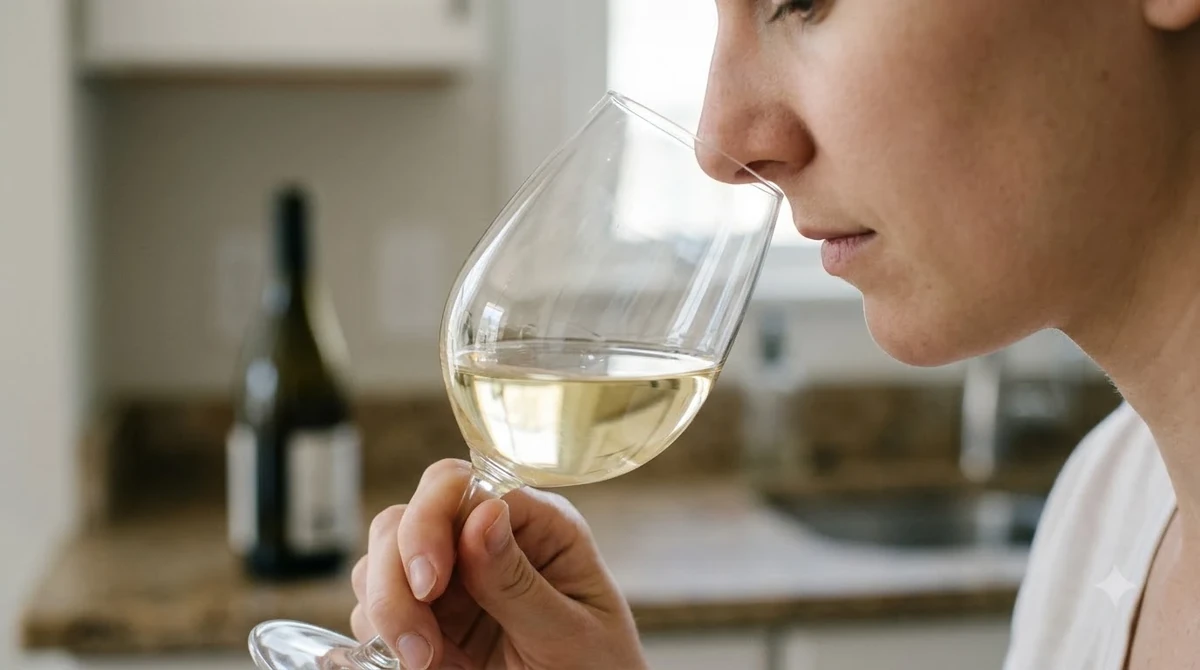
Serve Kerner well-chilled—between 46°F and 54°F (8°C to 12°C)—in a standard tulip-shaped white wine glass to focus its floral and stone-fruit aromatics.
Pouring Kerner straight from a 38°F kitchen refrigerator mutes its delicate white-blossom and peach notes, making the wine taste overly sharp. Pulling the bottle from the fridge 15 to 20 minutes before pouring allows the aromatics to open up while keeping the finish brisk and refreshing. If you are opening an oak-aged reserve Kerner from Alto Adige, serve it toward the warmer end of that range, around 50°F to 54°F (10°C to 12°C), so its nutty, textured layers shine.
Decanting is unnecessary for young, stainless-steel bottlings, which rely on immediate aromatic freshness. Most entry-level and classic Kerner wines are best enjoyed within two to three years of the vintage date, though top-tier high-altitude selections from Valle Isarco can evolve gracefully in a cool cellar for five to eight years.
Tip: Let your glass of Kerner warm slightly over the course of a meal—as it moves from fridge-cold toward cellar temperature, hidden notes of tangerine peel, apricot, and Alpine herbs come into sharp focus.
Food Pairing
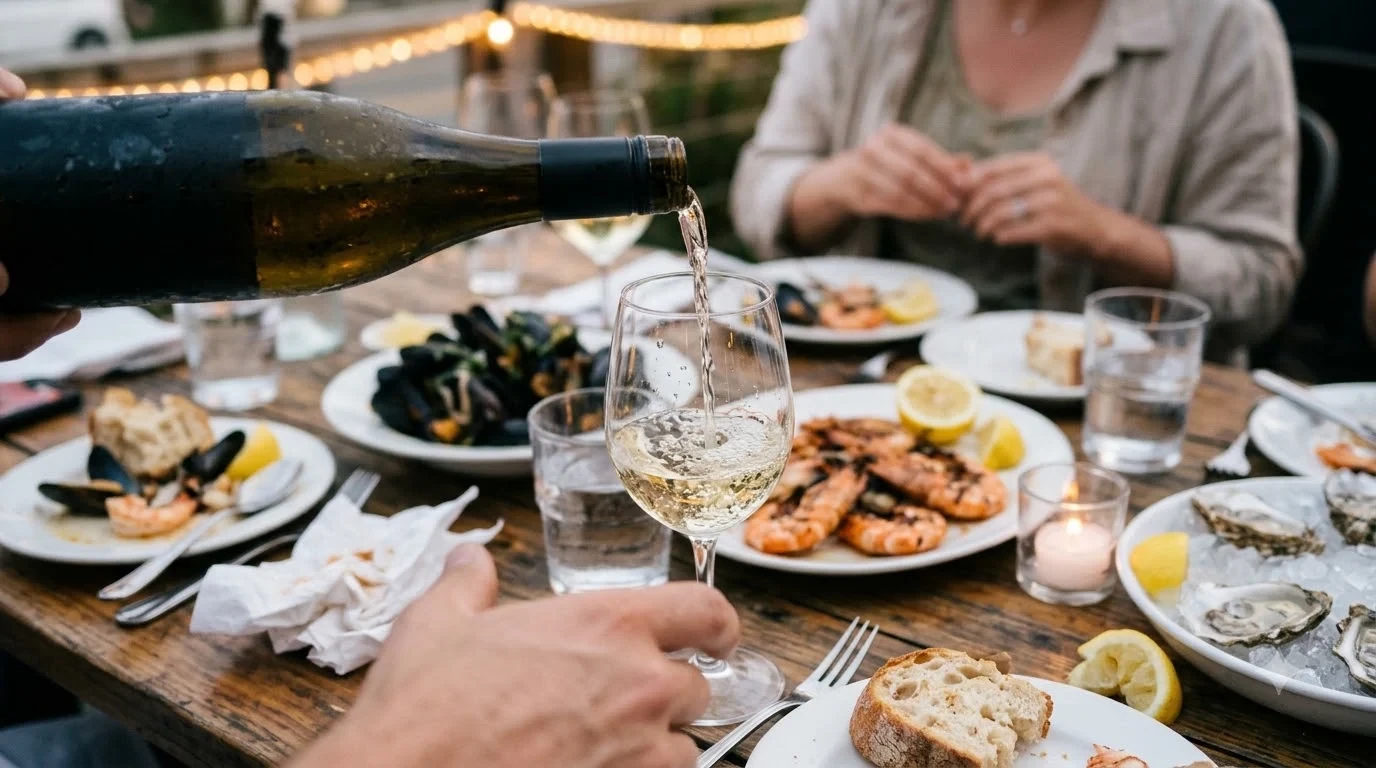
Kerner’s combination of vibrant acidity, aromatic lift, and medium-full weight makes it one of the most food-friendly white wines at the dinner table.
At the table, Kerner excels alongside seafood and light poultry dishes that benefit from a squeeze of citrus. Pan-seared trout, grilled sea bass, shrimp scampi, baked clams, and sushi all play naturally against the wine’s green apple and lemon-zest tension. In its Alpine home of Alto Adige, locals routinely pour dry Kerner alongside asparagus spears with hollandaise, speck charcuterie boards, and mild cow’s-milk mountain cheeses.
Because Kerner carries generous stone-fruit weight and subtle herbal spice, it also handles aromatic and mildly spicy global cuisines far better than ultra-lean whites. Dishes seasoned with ginger, lemongrass, coriander, or mild chili—such as Thai green curry, Vietnamese summer rolls, Moroccan spiced chicken, or pork tenderloin with apple chutney—find a natural partner in both dry Italian bottlings and off-dry German Kabinett styles. Unlike delicate Spanish whites such as the airen grape, Kerner has enough mid-palate concentration to stand up to richer sauces without feeling heavy.
How to Choose a Bottle
When shopping for Kerner, check the region and sweetness indicators on the label first, as German and Italian bottlings offer distinctly different drinking experiences.
If you prefer bone-dry, mineral-driven white wines with crisp orchard fruit and higher natural alcohol (around 13% to 14% ABV), look for bottles labeled Alto Adige DOC or Südtirol Eisacktaler DOC (Valle Isarco). Respected producers from this Alpine valley—including Abbazia di Novacella, Cantina Valle Isarco (Eisacktaler Kellerei), Kellerei Bozen, Kellerei Kaltern, Pacherhof, and Manni Nössing—consistently turn out benchmark examples.
If you enjoy a touch of off-dry fruitiness and lower alcohol, seek out German bottles from the Pfalz or Rheinhessen labeled Kabinett or Spätlese. German producers who want a fully dry profile will print the word Trocken on the front label. Look for recent vintages within the past one to three years to capture the grape’s signature floral freshness at its peak.
Frequently Asked Questions
Is Kerner wine sweet or dry?
Most Kerner wines—especially those from northern Italy’s Alto Adige region—are fermented completely dry with crisp acidity and a clean finish. In Germany, however, winemakers produce Kerner across a wider spectrum ranging from bone-dry (Trocken) to off-dry Kabinett and sweet late-harvest Spätlese styles. Checking the region and German ripeness terms on the label will tell you which style is inside.
What does Kerner taste like compared to Riesling?
Kerner shares Riesling’s bright orchard-fruit and citrus aromatics, showing notes of green apple, white peach, pear, and lime. Compared to Riesling, Kerner typically has slightly softer acidity, a fuller and rounder mid-palate, subtle herbal or nutmeg nuances, and none of the petrol aroma that mature Riesling develops.
Where is the best Kerner wine made?
While Kerner originated in Germany, Italy’s Alto Adige region—particularly the high-altitude Valle Isarco (Eisacktal)—is widely recognized for producing the world’s finest dry examples. Steep mountain slopes and cold Alpine nights give Valle Isarco Kerner remarkable aromatic precision, freshness, and mineral tension.
Is Kerner a hybrid grape?
No, Kerner is an intraspecific crossing rather than a hybrid. Both of its parent grapes—red Trollinger (Schiava) and white Riesling—belong to the classic European wine grape species Vitis vinifera, whereas true hybrids cross two different grapevine species.
Whether you discover it in a crisp Alpine bottling from northern Italy or a fragrant German Kabinett, Kerner offers an inviting bridge between aromatic intensity and everyday drinkability. Next time you reach for Sauvignon Blanc, Pinot Grigio, or dry Riesling, pick up a bottle of Kerner to experience one of cool-climate winemaking’s most rewarding white grapes.
More in Wine Types & Grapes
 Zinfandel Sugar Content: Dry Red vs. White Zinfandel GramsUpdated Nov 21, 2026
 Best Zinfandel Substitute Options for Sipping and CookingUpdated Nov 21, 2026
 Zweigelt Food Pairing: Best Dishes, Cheeses, and Serving TipsUpdated Nov 21, 2026
 Zinfandel Tannins Explained: How Structure Shapes Every BottleUpdated Nov 21, 2026
 Zinfandel Sweetness Level: Dry Red vs. Sweet White Zin ExplainedUpdated Nov 21, 2026
 Xinomavro Food Pairing: Best Dishes, Styles, and Serving TipsUpdated Nov 21, 2026