

We may earn a commission when you buy through links on this page, at no extra cost to you. Learn more.
Chateau Palmer wine is a Margaux red from a Third Growth estate in the 1855 classification, and its blend is unusual for the Médoc. The current plantings are 47% Cabernet Sauvignon, 47% Merlot and 6% Petit Verdot, a Merlot share that stands out on the Left Bank. The estate makes roughly 100,000 bottles of its Grand Vin a year, plus a second label, Alter Ego de Palmer, and it points to its legendary past vintages as the inspiration for future wines.
This guide covers where Chateau Palmer sits, how its history shaped the estate, what goes into the bottle and how to serve it. It is meant for buyers who see the name on a wine list or shop shelf and want a clear picture before they open a bottle.
Where Chateau Palmer sits and how the estate started
Chateau Palmer is in Margaux-Cantenac in the Gironde, part of the Margaux appellation in the Médoc. The estate ranks as a Troisieme Grand Cru in the 1855 Bordeaux classification, and it is widely regarded as one of the two most prominent Third Growths in that group.
The property was known as Domaine de Gascq from the early 18th century. In 1814 British officer and politician Charles Palmer bought it, paying 100,000 francs plus an annual life annuity of 500 litres of wine. He expanded the vineyard between 1816 and 1831, and it grew to 163 hectares at its largest. Debt forced a sale in 1843, and the Pereire brothers bought the estate in 1853 and commissioned the present château.
Four Bordeaux wine-trade families, Ginestet, Miailhe, Mähler-Besse and Sichel, acquired the estate in 1938. That shared ownership is part of why the estate is still closely tied to the wider Bordeaux trade. In 2004 Thomas Duroux became managing director and moved the estate toward biodynamic farming, which earned Demeter certification in 2018.
The vineyard today covers 66 hectares of vines within a total estate of 100 hectares. Those numbers matter for buyers because a smaller planted area and a biodynamic approach both shape how the vines are farmed, even though the wine is still a classified Margaux.
The estate also has a long cultural reputation. The composer Claude Debussy ordered two cases of the 1909 vintage in 1917, and the estate today runs an art journal, a jazz programme and a photography residency. Those projects show that Palmer presents itself as a château with a broader cultural life, not only as a winery.
The blend: why Merlot plays such a big role
The current planting is 47% Cabernet Sauvignon, 47% Merlot and 6% Petit Verdot. Many Left Bank estates lean heavily on Cabernet Sauvignon, so an equal split with Merlot is a noticeable difference. Merlot brings softer tannin and plum-like fruit, while Cabernet Sauvignon gives the wine its backbone and length.
Merlot is a major grape across Bordeaux, where it makes up about 60% of the appellation’s AOP vineyard plantings, according to Wine Folly’s Merlot guide. The Wikipedia entry on the estate describes the high Merlot share at Palmer as unusual for the Médoc, and that is what sets the estate apart from its neighbors.
| Element | Figure from the estate profile | Why it matters to a buyer |
|---|---|---|
| Classification | Third Growth, 1855 | A historical ranking, not a current score |
| Vines planted | 66 hectares within 100 hectares of estate | Shows how much of the land is in production |
| Grand Vin | About 100,000 bottles a year | The main bottling most shoppers meet |
| Alter Ego de Palmer | About 80,000 bottles a year, from 1998 | A second wine at a different price point |
The second label, Alter Ego de Palmer, was launched with the 1998 vintage and is made in a more approachable style. It gives shoppers a chance to taste the house character without committing to the full Grand Vin. The estate also makes a white wine and a historical blend that combines Palmer wine with Syrah.
Flavor and style: what to expect in the glass
A Merlot-rich Margaux usually shows red fruit, a supple texture and softer tannin than a Cabernet-heavy Pauillac, with cedar and spice from oak aging. The Merlot share means the wine can feel more open at a younger age. Its structure still rewards time in the bottle, and younger vintages can taste lean if they have not had a chance to settle.
Wine Folly’s guide to Merlot notes that the variety is softer and less astringent than Cabernet Sauvignon, with medium-high tannins, medium acidity and a medium-full body. That profile fits what many tasters expect from a Merlot-rich Margaux, although the exact character changes with each vintage and the weather that year.
Tip: Vintage matters more than the label for this estate. A cooler year and a warmer year can produce very different bottles, so check the year before you choose.
How to serve Chateau Palmer
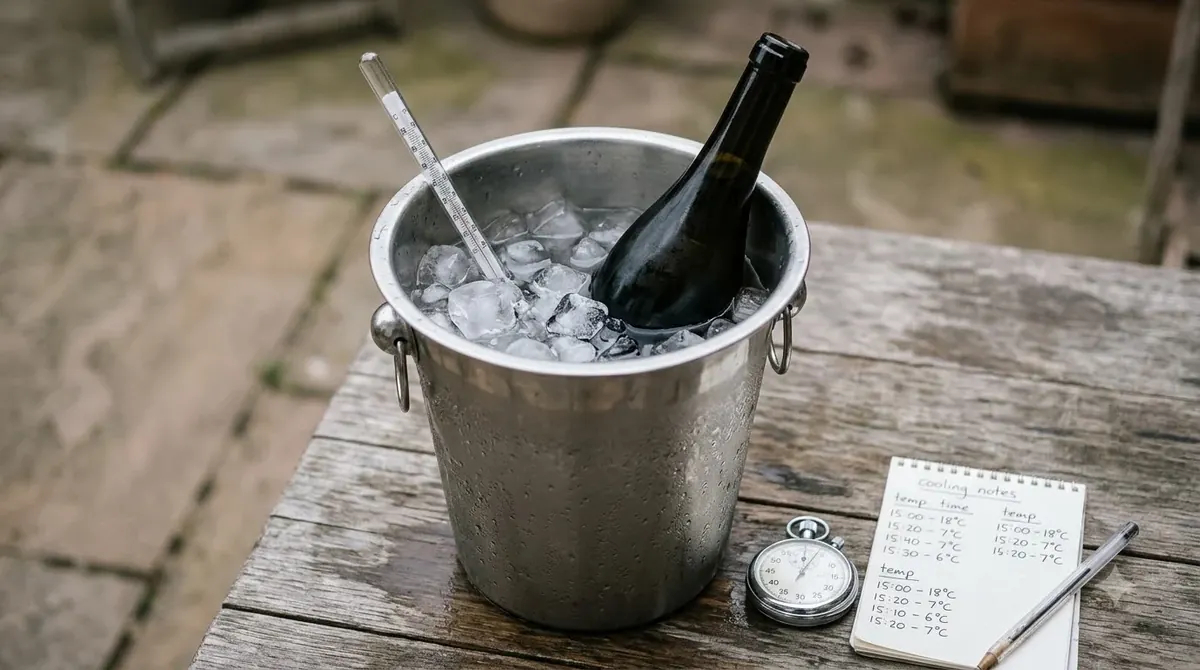
Wine Folly suggests serving Merlot slightly below room temperature, ideally between 60 and 68°F (15 and 20°C). The same guide recommends a large glass and about 30 minutes of decanting for bigger reds. For a young Palmer, decanting can help the wine open and show more of its fruit.
Older bottles often need less decanting, and a gentle pour is enough for many of them. Serve the wine slightly cool rather than warm, because warmth can make the alcohol and the tannins feel heavier in the glass.
Food pairing for a Merlot-rich Margaux
The softer tannin of Merlot makes Palmer more flexible than a firm Cabernet-led Pauillac. Roast meats, roast veal and filet mignon with a peppercorn sauce are classic matches. A rustic vegetable dish such as ratatouille also pairs well, because the wine’s red fruit and soft texture suit herbs and tomato.
Wine Folly lists roast turkey and beef short rib as good options for Merlot-dominant Bordeaux, which makes Palmer a useful bottle for a holiday table. Keep the sauce and seasoning in view: a heavy, salty dish can flatten the wine, while a balanced one lets the fruit and structure show.
How to choose and keep a bottle
Look at the vintage and the château name, and confirm that you are buying the Grand Vin or the Alter Ego. Those two bottles share the estate’s style but not the same profile. Retailers sometimes list Palmer with different spellings, so compare the label with the listing before you pay.
Store bottles on their side in a cool, dark place with steady temperature. A wine fridge keeps the temperature stable. If you plan to keep a bottle for a long time, ask the seller about the current vintage rather than relying on general advice. For another Bordeaux estate with a different blend, the Chateau Lynch Bages wine guide covers a Pauillac red built mainly on Cabernet Sauvignon.
Frequently Asked Questions
Is Chateau Palmer a Left Bank wine?
Yes. Chateau Palmer is in Margaux-Cantenac in the Gironde, on the Left Bank of the Gironde estuary in the Médoc. It is a Third Growth in the 1855 classification.
What grapes are in Chateau Palmer?
The current plantings are 47% Cabernet Sauvignon, 47% Merlot and 6% Petit Verdot. The equal Merlot and Cabernet share is one of the features that sets the estate apart.
What is Alter Ego de Palmer?
Alter Ego de Palmer is the estate’s second wine. It was launched with the 1998 vintage and is made at a lower volume than the Grand Vin, with about 80,000 bottles a year.
How should I serve Chateau Palmer?
Serve it slightly below room temperature, around 60 to 68°F (15 to 20°C). For a young bottle, decanting for about 30 minutes can help the fruit show.
Chateau Palmer is a strong choice for anyone who wants Left Bank structure with a softer, perfumed style. Knowing the classification, the Merlot-heavy blend and the vintage will help you read a label and decide whether the bottle suits your meal. For a broader view of estates and their histories, browse our wine brands section.
More in Wine Brands
 Underwood Wine Price: Compare Bottles, Cans, and Pack SizesUpdated Nov 21, 2026
 Zenato Wine Price: Compare Styles and Choose the Right BottleUpdated Nov 21, 2026
 Zuccardi Wine Price: Compare Bottles and Find the Right RangeUpdated Nov 21, 2026
 Yellow Tail Moscato Review: Taste, Sweetness and Serving TipsUpdated Nov 21, 2026
 Wolf Blass Yellow Label Review: Choose Your Best StyleUpdated Nov 21, 2026
 Wolffer Estate Rose Review: Choose the Right Bottle for Your TableUpdated Nov 21, 2026