

We may earn a commission when you buy through links on this page, at no extra cost to you. Learn more.
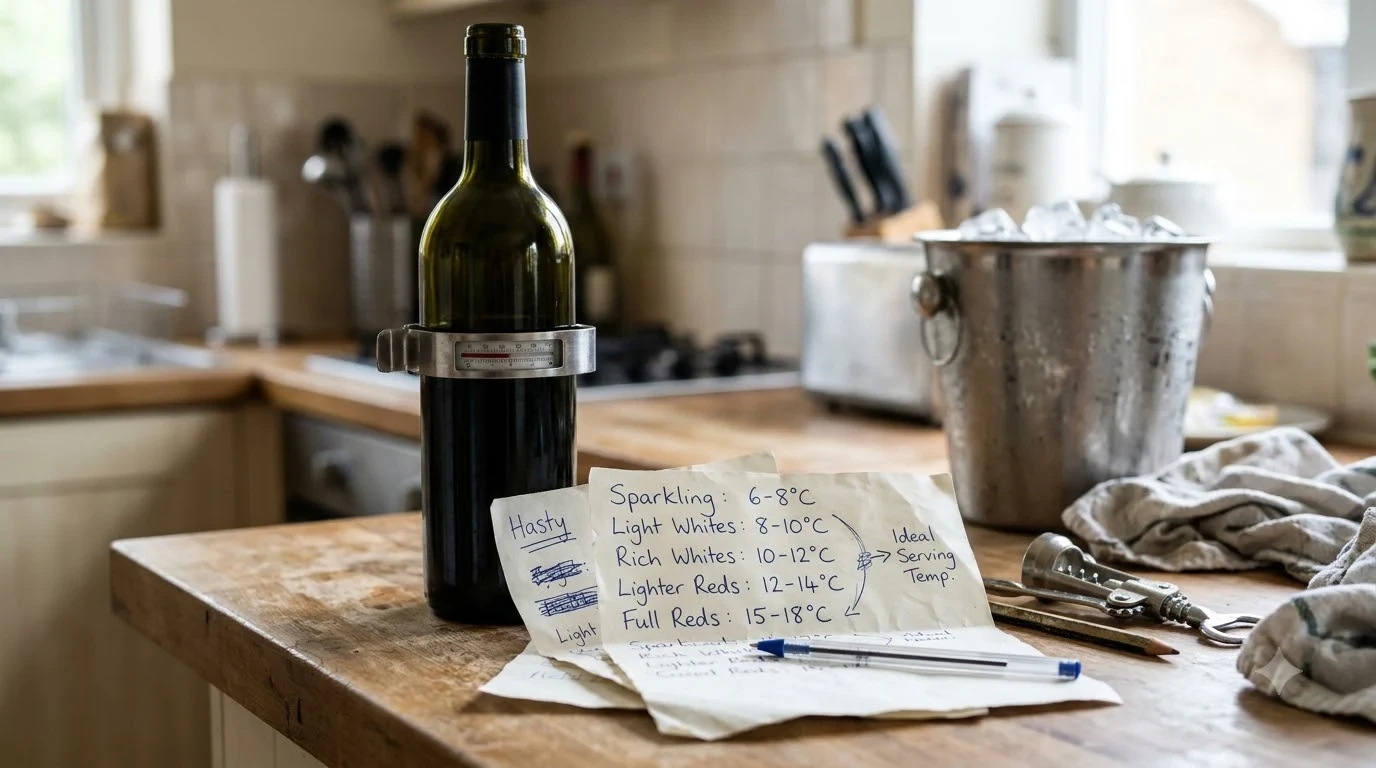
Should chianti be chilled? Only lightly. Serve it cool, around 60 to 65°F, rather than straight from the fridge. Chianti is a medium-bodied Italian red made mostly from Sangiovese, with high tannins and high acidity. VinePair advises serving reds “slightly cool,” so a short time in the fridge is usually enough to bring the bottle into the right range.
Many people reach for the fridge out of habit, whether the bottle is red, white, or sparkling. Chianti is a little different. Its main grape, Sangiovese, gives the wine a backbone of acidity and tannin that is easy to notice when the bottle is too cold or too warm. Serving temperature is one of the simplest levers a host controls, so it is worth getting right. It has the firm structure and bright acidity of a food wine, and the temperature you choose changes how those qualities show up in the glass. This guide covers how cool to serve it, whether it needs air, how long it keeps after opening, and how to store it between glasses.
Should Chianti Be Chilled?
Chianti is best treated as a red that benefits from a light chill, not as a white wine served cold.
The VinePair serving temperature guide places medium to full-bodied reds in a “Cool” range of 60 to 65°F. Chianti appears in that group of core grapes and wines. The same guide lists its light-bodied chillable reds, such as Frappato and Schiava, at 55 to 60°F, and Chianti is not among them. That makes Chianti a cool red rather than a chilled one. The guide also suggests refrigerating a red for about an hour before serving, or freezing it for around 15 minutes if you need a faster result.
Chianti Serving Temperature
The sourced serving range is 60 to 65°F, which is a cool room-temperature feel rather than a cold one.
The VinePair guide to Chianti describes the wine as medium-bodied and high in both tannins and acidity. Its region is Tuscany in central Italy, roughly 60 miles inland from the Ligurian Sea, and the area includes seven sub-regions. Younger bottles show red currant, raspberry, and plum, with a touch of spice. As they age, they develop earthier notes, and oak-aged versions lean more savory. A cool serve keeps the red fruit bright while letting the structure show. If the glass feels too harsh or too flat, a few minutes of warming in the hand or on the table will usually help you find the balance you like.
| Wine type | Serving range | What it means for chianti |
|---|---|---|
| Light-bodied chillable reds | 55 to 60°F | Not Chianti’s group |
| Medium to full-bodied reds | 60 to 65°F | Chianti sits in this group |
| Refrigerate before serving | About 1 hour | Gentle way to reach the cool range |
| Freezer shortcut | About 15 minutes | Use with care so the bottle does not freeze |
Does Chianti Need to Breathe?
VinePair’s Chianti guide does not address decanting or aeration, so any advice about air is a matter of taste rather than a sourced rule.
Chianti’s firm tannins and acidity can taste tight when a bottle is first opened, especially a young one. Some drinkers like to pour a glass and let it sit for a while to see whether the fruit opens up. Others prefer to drink it straight from the bottle. Chianti Classico must contain at least 80 percent Sangiovese, while Chianti DOCG requires at least 70 percent, so the two can taste slightly different even when they share the same grape. Taste a small pour first, then decide whether the wine needs more time. If you are unsure, wait until the second glass, when the wine has had a few minutes in the air and in your hand, before making a judgment about the structure.
How Long Does Chianti Last After Opening?
VinePair gives a cellaring range for unopened bottles, but it does not give a figure for how long an opened bottle keeps.
The guide says Chianti “can be cellared anywhere from five to ten years and beyond.” That range refers to storing an unopened bottle. Once the cork is out, the wine begins to lose its freshness over time. A general rule many wine drinkers follow is to recork the bottle, keep it cool, and finish it within a few days, tasting as you go. Younger, fruit-forward bottles usually fade faster than older, more structured ones, so use your own taste as the final guide.
How to Store Chianti
Store unopened bottles on their side in a cool, dark, steady place, and keep an opened bottle cool between glasses.
For a bottle you plan to keep for years, the guide’s cellaring range of five to ten years is the reference point. For everyday bottles, you do not need a special cellar. A closet or cabinet away from heat and light works well. Once opened, recork the bottle and refrigerate it to slow the decline, then take it out about an hour before the next glass. VinePair suggests letting an opened red sit out to warm slowly, which keeps the temperature closer to the serving range without a sudden jump.
Planning matters more than rescue. If you know you will serve Chianti with dinner, put the bottle in the fridge an hour before the meal and pour it when the first course arrives. If you forget, a short time in the freezer gets it closer, but check the clock because a bottle can freeze and burst its glass. The aim is steady, gentle cooling rather than a sudden drop.
Tip: If a bottle has been in the fridge, take it out before the meal rather than after. Chianti warms more evenly when it has time to come up to temperature on the table.
Food also changes how a cool Chianti tastes. VinePair notes that Chianti suits tomato-based pasta sauces, pizza, and antipasti, and that its elevated acidity helps with tomato-based dishes. A cool serve keeps that acidity lively in the glass, so the wine can stand up to the sauce instead of blending into it.
Frequently Asked Questions
Can you put chianti in the fridge?
Yes, for a short time. VinePair suggests refrigerating a red for about an hour before serving to bring it into the cool range. Leaving it in the fridge for a long stretch will make it colder than the 60 to 65°F serving range.
Is chianti served at room temperature?
Most warm rooms are above the cool range, so a red left out on a hot day can taste heavier than intended. Aim for the 60 to 65°F range, which feels cool rather than cold.
Does Chianti Classico need a different serving temperature?
The VinePair temperature guide does not separate Chianti from Chianti Classico, so the same cool range applies to both. The main difference is the Sangiovese percentage, which can change the style.
Does a very cold glass of chianti taste bad?
It will taste less aromatic and can feel tighter. A very cold serve hides the red fruit that makes Chianti appealing, so a cool serve is the safer choice for most drinkers.
In short, chianti is a cool red, not a chilled one. Give it about an hour in the fridge if it is warm, serve it around 60 to 65°F, and recork it if you save the rest for later. For more on how different reds handle temperature, the malbec and zinfandel guides cover similar questions, and the Wine by Type hub collects them in one place.
More in Wine Types & Grapes
 Zinfandel Sugar Content: Dry Red vs. White Zinfandel GramsUpdated Nov 21, 2026
 Best Zinfandel Substitute Options for Sipping and CookingUpdated Nov 21, 2026
 Zweigelt Food Pairing: Best Dishes, Cheeses, and Serving TipsUpdated Nov 21, 2026
 Zinfandel Tannins Explained: How Structure Shapes Every BottleUpdated Nov 21, 2026
 Zinfandel Sweetness Level: Dry Red vs. Sweet White Zin ExplainedUpdated Nov 21, 2026
 Xinomavro Food Pairing: Best Dishes, Styles, and Serving TipsUpdated Nov 21, 2026