

We may earn a commission when you buy through links on this page, at no extra cost to you. Learn more.
Bourgueil wine is a red from the Loire Valley, made mainly from Cabernet Franc and grown on the right bank of the river west of Tours. The appellation covers about 1,400 hectares across seven communes in Indre-et-Loire. Most bottles are dry, and the range runs from light, fresh reds to firmer wines that can age in the cellar for years.
If you have spotted Bourgueil on a restaurant list or a shop shelf and wondered how it differs from other French reds, this guide covers the grape, the region, the taste, how to serve it, and what to eat with it. It is written for buyers who want a clear picture before they open a bottle.
What Bourgueil Wine Is
Bourgueil is a French appellation d’origine contrôlée, a protected name that sets rules on where the grapes grow and how the wine is made. The rules date to regulations passed on 31 July 1937, which makes it one of the older named appellations in the Loire. Red is the main product, and rosé makes up only a small share of output, roughly 2 to 5 percent.
The wine is built around one grape. Cabernet Franc is the primary variety here, and locals often call it “Cabernet Breton.” Producers may blend in up to 10 percent Cabernet Sauvignon, but most bottles are almost entirely Cabernet Franc. That is why many drinkers treat Bourgueil as a reference point for the grape outside Bordeaux.
The name appears on labels in the same way as other Loire appellations, so check for “Bourgueil” on the front of the bottle and the Loire region on the back. Wines made under the name follow the appellation rules, which is the simplest way to confirm what you are buying.
Where the Vines Grow
The vineyards sit on the right bank of the Loire, west of Tours and close to the edge of the Maine-et-Loire department. The seven communes are Restigné, Benais, Ingrandes-de-Touraine, Saint-Patrice, Chouzé-sur-Loire, La Chapelle-sur-Loire, and Bourgueil itself. Together they cover about 1,400 hectares, a modest area that keeps output small.
The climate is mostly continental, with a maritime influence that grows stronger farther west toward the Atlantic. The river moderates temperatures, which helps the grapes ripen while keeping their acidity. Soils change from one slope to the next, and that variation shows up in the glass.
| Soil type | Link to style, per the sources |
|---|---|
| Rocky soil on islets from recent alluvia | No specific style link given |
| Sandy and gravelly soil on high terraces | Redcurrant shade on siliceous soils |
| Limestone-rich soil on slopes against woodland | Dusky red hue |
Taste and Style
A typical Bourgueil smells of red fruit and carries floral notes when young. The wine tends to be fresh, with bright acidity and a light to medium body. The aromas turn earthier as the bottle ages, a common path for Cabernet Franc from the Loire.
The grape ripens unevenly from year to year, so the same producer can make a brighter, lighter vintage in one year and a firmer one in another. Winemakers manage this through vineyard choices, harvest timing, and how they handle the wine in the cellar. Wines from limestone slopes often show a deeper color, while those from siliceous soils lean toward redcurrant.
Loire versions of Cabernet Franc are usually leaner and more herbal than the riper versions from warmer places. Expect a wine that is more about freshness and structure than heavy fruit or oak.
Warmer regions such as Tuscany and California produce fuller Cabernet Franc with richer, dried-fruit flavors, according to Wine Folly. A Bourgueil is a different experience, with a lighter body and more tart red fruit, so it helps to set your expectations before the first sip.
How to Serve Bourgueil
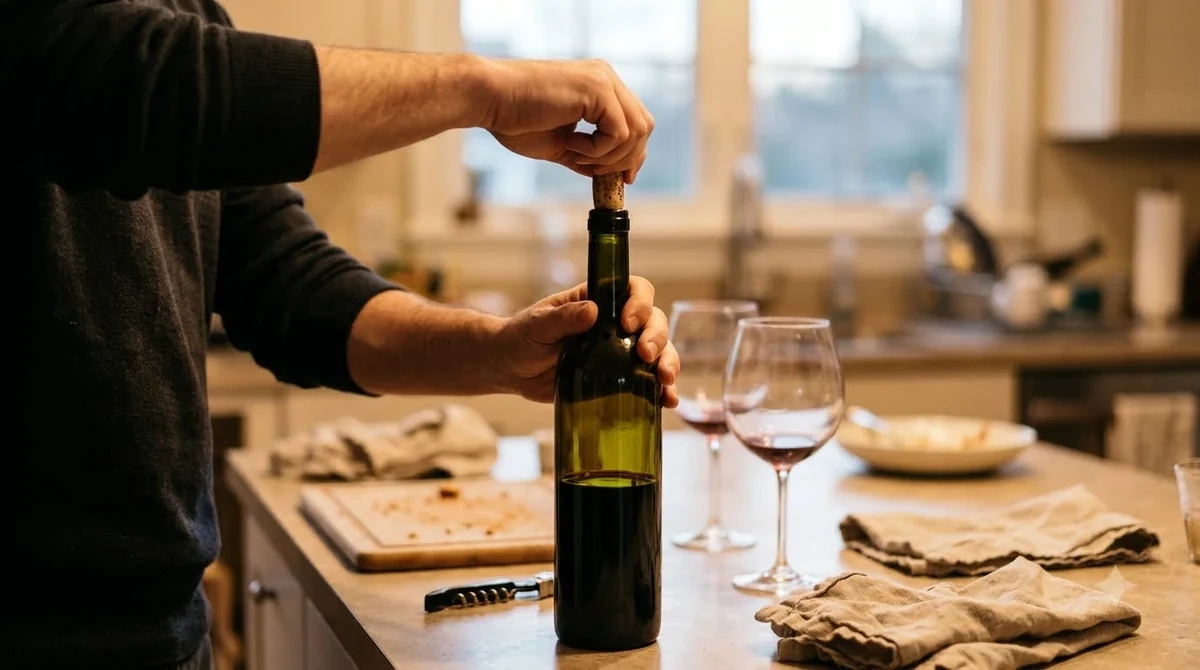
Serve it slightly cooler than the warm room temperature many people use for red. Wine Folly gives 60 to 68 degrees Fahrenheit (15 to 20 degrees Celsius) as the serving range for Cabernet Franc, just below room temperature. A short stint in the fridge before pouring is usually enough.
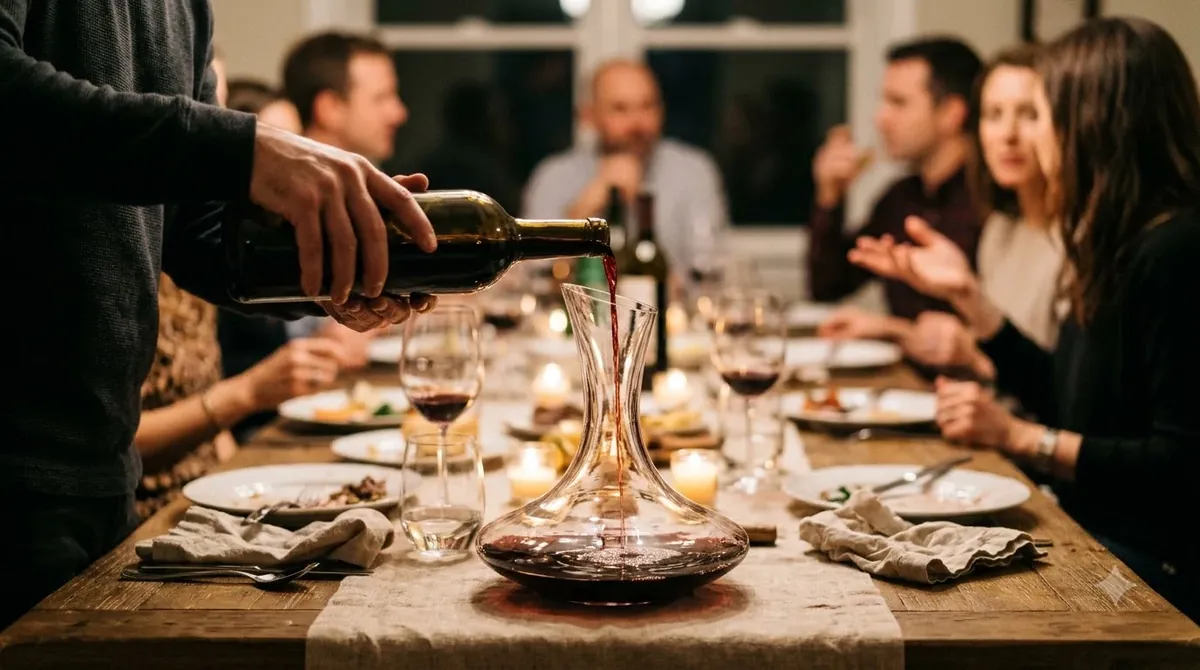
Young bottles do not need decanting. An older bottle that has thrown sediment benefits from an hour or so in a decanter. A medium glass with room to swirl lets the floral and red fruit aromas come through.
Tip: If the bottle is warmer than the range above, chill it for about 15 minutes before you pour.
Storing Bourgueil at Home
Most bottles are made to be enjoyed within a few years of the vintage, so there is no need to build a cellar to appreciate them. Keep bottles in a cool, dark place where the temperature stays steady, and avoid spots near heat sources such as ovens or sunny windows.
If you plan to hold a bottle for several years, store it on its side so the cork stays moist, and give it a few days to settle upright before you open it. Bottles with sediment should be stood up for a day or two so the deposit falls to the bottom before decanting.
Food Pairing
Bourgueil works with food that has some acidity and herbs. Roast chicken, grilled pork, and mushroom dishes all suit a lighter red. Fresh goat cheese and other Loire cheeses are classic partners in the region, since the wine’s acidity matches their tang.
Avoid heavy sauces that bury the fruit. A bottle from a sandier site with redcurrant notes suits delicate dishes better than a firmer limestone wine, which can handle red meat and richer stews.
Herbs in the dish help too. Thyme, sage, and a light pepper crust echo the herbal edge that many Loire Cabernet Franc wines show, so the food and the glass feel connected rather than competing.
How to Choose a Bottle
Younger bottles from recent vintages are fresh and approachable, and they are the easiest way to learn the style. If you plan to keep a bottle, look for a producer known for structure and check the producer’s own notes on how long to hold it.
When a shop lists a Bourgueil beside a Chinon, remember that both are Cabernet Franc from the Loire. Wine Folly identifies Chinon as the best-known Loire appellation for the grape, so the two often sit next to each other on the same shelf. Taste them side by side if you can, since the soils and producers make each one distinct. If you want a warmer-climate red for comparison, our alentejo wine guide covers a very different style, while the anderson valley wine page looks at another cool-climate region.
Frequently Asked Questions
Is Bourgueil wine red or white?
Bourgueil is mainly a red wine made from Cabernet Franc. Rosé is produced in small amounts, around 2 to 5 percent of output.
What does Bourgueil wine taste like?
Young Bourgueil tends to show red fruit and floral aromas with fresh acidity. As it ages, the flavors become earthier. Loire Cabernet Franc is often leaner and more herbal than the fuller versions from warmer regions.
How long can Bourgueil wine age?
Reference summaries say Bourgueil can age well in bottle for up to about 20 years. Many bottles are meant to be drunk within a few years, so check the producer’s guidance before you hold one for a long time.
Is Bourgueil the same as Cabernet Franc?
Not exactly. Bourgueil is the name of a protected place, and the wines made there are mostly Cabernet Franc. Cabernet Franc is grown in many regions, so the name Bourgueil tells you where the wine comes from and how it should be made.
To see how the Loire fits into the wider picture, read our wine regions guide. Start with one bottle from a recent vintage, serve it cool, and compare it with a second bottle from a different soil to see the difference for yourself.
More in Wine Regions
 Willcox Wine Trail: Discover Arizona’s High-Elevation Wine CountryUpdated Nov 20, 2026
 Yakima Valley Wine Region: Find the Best Styles to TryUpdated Nov 20, 2026
 Vosne Romanee Wine Tasting: Identify Aromas and Choose Better PairingsUpdated Nov 20, 2026
 Yakima Valley Wine Festival: Find the Best Seasonal Wine EventsUpdated Nov 20, 2026
 Wales Vineyards: Discover Cool-Climate Wines and Where to VisitUpdated Nov 20, 2026
 Yountville Wine Festival: Discover Napa Wines and Local FoodUpdated Nov 20, 2026