

We may earn a commission when you buy through links on this page, at no extra cost to you. Learn more.
The chambourcin grape is a red hybrid that was bred in France from North American and European vines, and it is now grown mainly in the eastern United States, the Mid-Atlantic, and parts of Canada. It produces deeply colored, aromatic red wines that can be dry or carry some residual sugar. Its strongest selling point is disease resistance, which lets growers farm it in humid climates where many classic European varieties struggle.
If you have seen chambourcin on a wine list from Virginia, Pennsylvania, or Kentucky and wondered what it tastes like, this guide covers the basics. It explains where the grape came from, what the wine usually tastes like, where it is planted, how to serve it, and what to eat with it.
Where the chambourcin grape came from
Chambourcin is an interspecific hybrid, meaning it was created by crossing species of grapevine rather than coming from a single Vitis vinifera ancestor. It was developed in France by Joannes Seyve, who worked with a large family of hybrids from the 1860s known as Seibel crosses. The exact parentage is still uncertain, but genetic studies point to several North American species in its background, including V. riparia, V. rupestris, and V. labrusca, along with V. vinifera.
The grape has been available to growers since 1963. Its disease resistance is the reason it gained ground. Fungal problems such as black rot and downy mildew are a constant threat in wet, warm regions, and chambourcin needs less spraying than many traditional varieties. It is also a parent of Regent, another disease-resistant red that has become popular with German growers.
What chambourcin wine tastes like
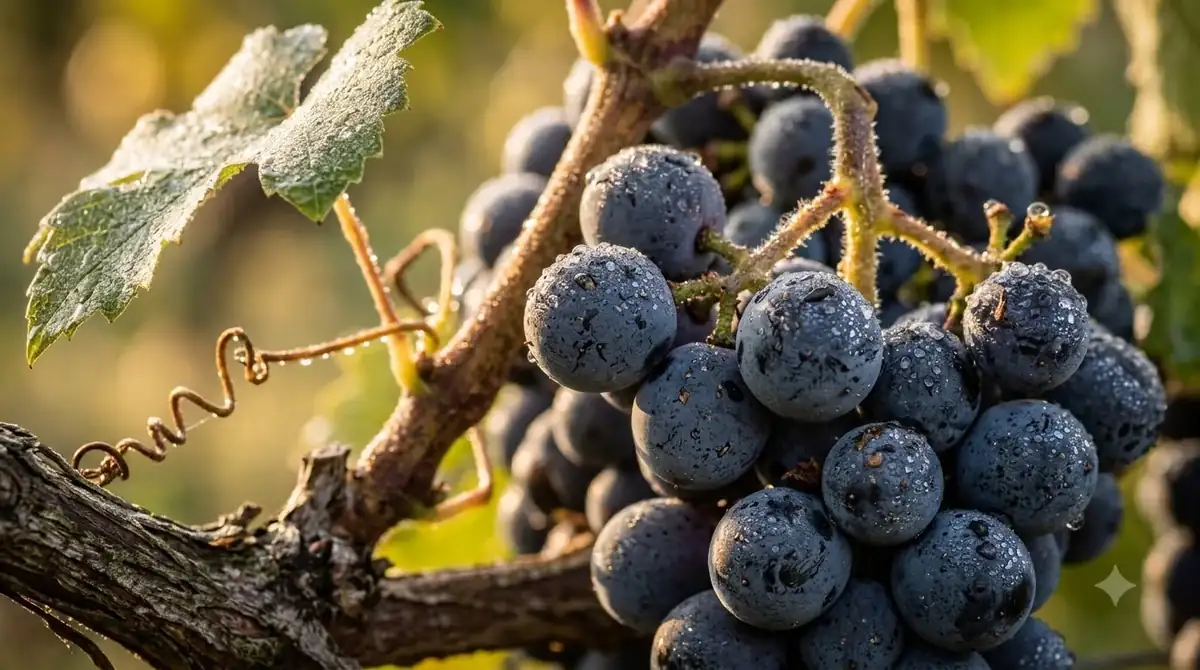
Chambourcin is a teinturier grape, which means the pulp as well as the skin is colored. The juice comes out red or pink instead of clear, so the wine starts with a deep color and often keeps it for years. Winemakers usually ferment the juice over the red skins, which pulls out color, tannin, and aromatic compounds at the same time.
The flavor is typically bold and fruit-forward. Drinkers often describe dark berries, plum, and a bit of spice, with enough acidity to keep the wine lively. Because the juice ferments over the skins, some bottlings have a strong, rustic character, and many producers recommend serving them slightly chilled. Some wines are made fully dry, while others keep a little residual sugar for a softer, rounder finish. Reading the back label or asking the tasting room staff will tell you which style you are getting.
Because the grape is so deeply colored, the wine stands out in a glass even when it is young. Many tasters notice that the color holds up well, which makes chambourcin a visually striking red for a tasting flight beside lighter varieties.
Where the grape is grown
Chambourcin is most closely associated with the Mid-Atlantic and Northeast United States. The grape is widely planted in New Jersey, New York, and Pennsylvania, and it is a major variety in the Lake Erie region that spans Ohio, New York, and Pennsylvania. Virginia and Maryland also have many plantings, with a number of counties in each state listing it among their key red grapes.
Growers have pushed it further south and west as well. It appears in Kentucky, Tennessee, Missouri, North Carolina, and Oklahoma, and it has been planted in Ontario and British Columbia in Canada. Outside North America, it is grown in warm, humid parts of Australia, New Zealand, and parts of France and Portugal. For a full breakdown of the grape’s history and plantings, the reference entry on Wikipedia is a good starting point.
| Area | Typical style you may see |
|---|---|
| Mid-Atlantic (VA, MD, PA, NJ) | Dry, fruit-forward reds with bright acidity |
| Lake Erie region (OH, NY, PA) | Dry or lightly sweet, depending on the producer |
| Midwest and South (KY, TN, NC, OK) | Bold and dark, sometimes with a rustic edge |
| Ontario and British Columbia | Structured reds with a cool-climate lift |
How to serve chambourcin
Serve chambourcin a little cooler than you would a big Cabernet. A typical service range for red wine is about 55 to 58 degrees Fahrenheit, and many people find that a few minutes in the refrigerator brings out the fruit when the wine is especially tannic or bold. A standard red wine glass with a generous bowl gives the aromas room to open.
Decanting is optional for most bottlings. A young, dark chambourcin can benefit from a little time in the glass or a short stop in a decanter, which softens the edges and lets the fruit come forward. Taste it at intervals to see when it opens up. Older bottles with sediment should be poured slowly, and the decanter will catch any solids.
Tip: If a chambourcin tastes sharp or rough straight from the bottle, try a short chill and a few minutes of air before you judge it.
Food pairings that work with chambourcin
Chambourcin pairs well with food that has enough fat and flavor to stand up to its color and acidity. Grilled sausages, burgers, and barbecue with a tomato or smoky sauce are natural choices. Roasted chicken with herbs and mushroom dishes also work well, because the wine’s dark fruit and earthy notes match the savory flavors.
For a dry style, try tomato-based pasta, pizza with pepperoni, or sharp cheeses such as aged cheddar. A slightly sweeter bottling is a good match for spicy barbecue or dishes with a little heat, since the residual sugar softens the spice. Avoid pairing it with very delicate seafood, which will be overpowered.
How to choose a chambourcin bottle
Start with the style you want. If you like fruit-forward, easy-drinking reds, look for a dry bottling from a producer in the Mid-Atlantic. If you want something bolder with more body, look at wines from the Lake Erie region or from producers who age the wine in oak.
Read the label for the vintage and the region. Recent vintages are usually the best value for young, bright styles, while a few years in the bottle can soften the tannins in more structured wines. If you are unsure, ask the staff at the winery for a dry sample before buying a case. Winery websites and regional wine trail pages often list tasting notes, which helps you compare bottles before you open them.
Frequently Asked Questions
Is chambourcin a red or white grape?
Chambourcin is a red grape. It is a teinturier variety, so the juice is red or pink as well as the skin, which is unusual for wine grapes.
Is chambourcin wine sweet or dry?
It can be either. Many chambourcin wines are made dry, but some producers keep a little residual sugar, especially in wines from the Lake Erie region. The back label or the winery’s tasting notes will tell you which style it is.
Where is chambourcin grown in the United States?
Most chambourcin is grown in the Mid-Atlantic and Northeast, including New Jersey, New York, Pennsylvania, Virginia, and Maryland. It is also planted in several Midwestern and Southern states because it handles humid weather well.
What should I drink chambourcin with?
Grilled meats, burgers, barbecue, tomato-based pasta, and aged cheeses are all good choices. Serve it slightly cool, and keep it away from very delicate seafood dishes.
Chambourcin is an easy grape to enjoy once you know its style. If you are building a broader sense of red wine, the guide to wine by type places it next to other reds, and the chablis grape page is a useful contrast if you also like crisp, dry whites.
More in Wine Types & Grapes
 Zinfandel Sugar Content: Dry Red vs. White Zinfandel GramsUpdated Nov 21, 2026
 Best Zinfandel Substitute Options for Sipping and CookingUpdated Nov 21, 2026
 Zweigelt Food Pairing: Best Dishes, Cheeses, and Serving TipsUpdated Nov 21, 2026
 Zinfandel Tannins Explained: How Structure Shapes Every BottleUpdated Nov 21, 2026
 Zinfandel Sweetness Level: Dry Red vs. Sweet White Zin ExplainedUpdated Nov 21, 2026
 Xinomavro Food Pairing: Best Dishes, Styles, and Serving TipsUpdated Nov 21, 2026