

We may earn a commission when you buy through links on this page, at no extra cost to you. Learn more.
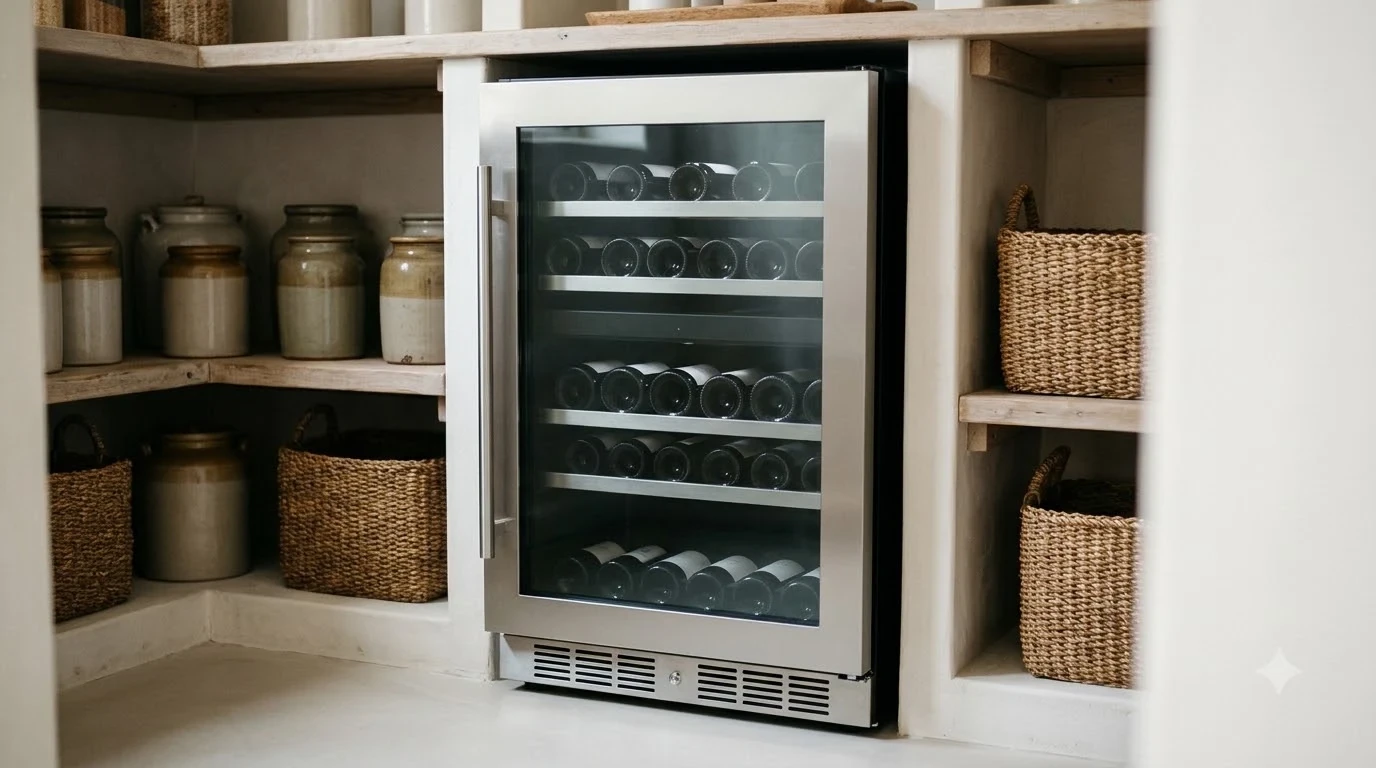
The best stainless steel built in wine fridge is a front-venting, compressor-cooled dual-zone undercounter model that keeps reds and whites at separate serving temperatures while sliding flush into standard cabinetry. Shoppers who focus on single-varietal aging or tight galley kitchens will find better value in a single-zone or narrow 15-inch unit, while households entertaining with mixed drinks benefit from a combination wine and beverage center. Full-height stainless steel column coolers round out the category for collectors outgrowing undercounter capacity.
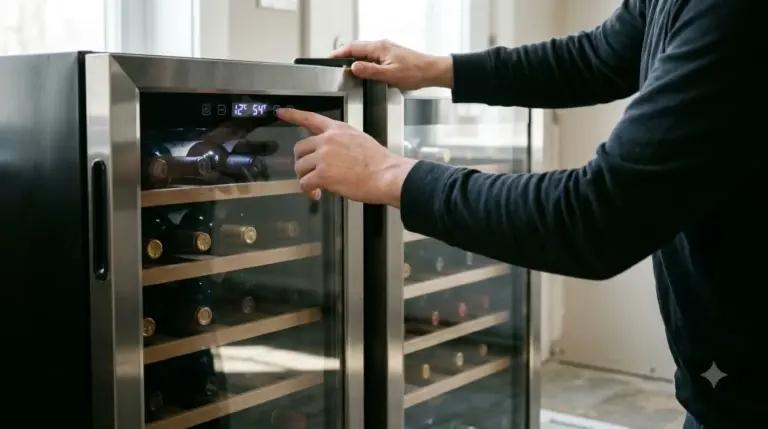
Installing a dedicated wine refrigerator under a kitchen island, wet bar, or pantry counter transforms how you store and serve bottles, yet choosing the wrong style leads to overheating compressors, pinched door hinges, or lukewarm Pinot Grigio. Unlike freestanding coolers that exhaust heat through the back and sides, a true built in wine fridge draws and expels air through a front toe-kick grille so surrounding millwork stays cool and safe. Pairing that zero-clearance ventilation with brushed stainless steel door trim and UV-protected glass creates a durable, architectural finish that matches modern kitchen appliances while shielding wine from light and vibration.
Quick Comparison
Each stainless steel built-in configuration balances cabinet footprint, temperature control, and bottle capacity differently depending on whether you prioritize long-term aging, dinner-party service, or multi-beverage hosting.
| Wine Fridge Type | Typical Width | Temperature Zones | Best Use Case | Key Consideration |
|---|---|---|---|---|
| 24-Inch Dual-Zone Undercounter | 24 inches | Two independent zones | Storing and serving reds and whites simultaneously | Slightly lower bottle count due to internal divider |
| 15-Inch Slim Undercounter | 15 inches | Single or dual zone | Replacing a trash compactor or fitting narrow islands | Tighter shelf spacing for wide Burgundy or Champagne bottles |
| Single-Zone Cellar Undercounter | 24 inches | One uniform zone | Long-term aging and maximum bottle capacity | Requires warming reds or chilling whites before pouring |
| French-Door Wine and Beverage Center | 24 to 30 inches | Two independent zones | Entertaining with wine, craft beer, and sparkling water | Left and right doors need swing clearance on both sides |
| Full-Height Stainless Column Cooler | 18 to 30 inches | Two or three zones | Large collections integrated into tall pantry cabinetry | Requires dedicated electrical circuit and professional leveling |
Best for Serving Reds and Whites Together: 24-Inch Dual-Zone Undercounter
A standard 24-inch dual-zone undercounter unit is the most versatile centerpiece for home kitchens and wet bars because it divides the interior into two separately controlled climate chambers. You can hold crisp Sauvignon Blanc, rosé, and sparkling wine at serving temperature in the upper compartment while keeping Cabernet Sauvignon and Pinot Noir ready to pour below.
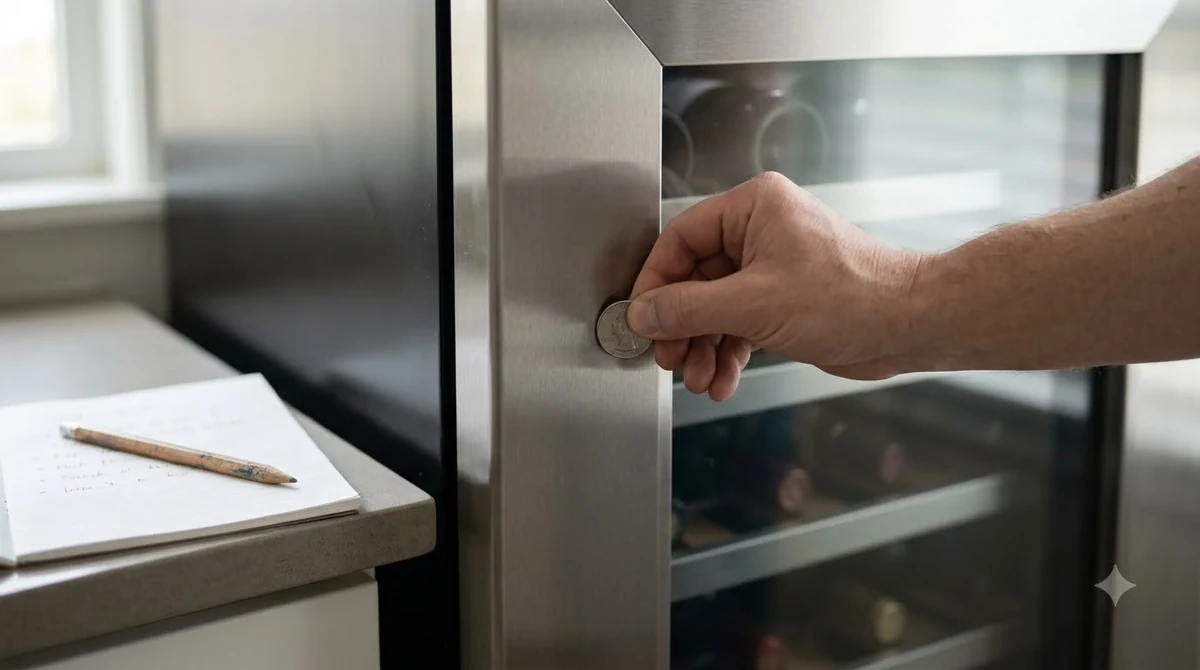
Why it stands out: According to Wine Enthusiast’s guide to single-zone versus dual-zone wine fridges, dual-zone cabinets solve the everyday service dilemma of keeping whites chilled between 41°F and 50°F while holding reds closer to 55°F to 65°F. Choosing a stainless steel wine cooler in the 24-inch width matches standard base-cabinet cutouts, typically accommodates 40 to 54 Bordeaux-style bottles on gliding beechwood or metal-trimmed racks, and uses quiet inverter compressors that maintain steady humidity without rattling delicate sediment.
Keep in mind and best for: Because an insulated thermal baffle separates the two compartments, dual-zone models sacrifice roughly ten percent of total bottle capacity compared to single-zone units of identical exterior dimensions, and you cannot set the lower zone colder than the upper zone on most designs. This category is best for households that open both red and white bottles throughout the week and want every pour at immediate serving temperature straight from the counter.
Best for Narrow Islands and Tight Alcoves: 15-Inch Slim Undercounter
When kitchen floor plans cannot spare two full feet of base cabinetry, a 15-inch slim built-in wine fridge slides neatly into compact islands, bar peninsulas, or the exact footprint left behind by an old trash compactor. Despite its slender profile, a quality 15-inch stainless steel model still delivers front-vented compressor cooling, double- or triple-pane tinted glass, and capacity for roughly 28 to 34 standard bottles.
Why it stands out: Compact width does not force you to compromise on preservation hardware, as reputable 15-inch built-in units include digital touch controls, reversible stainless steel door hinges, and vibration-dampened shelving. Many models in this width even squeeze in dual-zone dividers, letting apartment dwellers and condo owners maintain separate red and white compartments without remodeling their kitchen cabinetry.
Keep in mind and best for: Narrower racks leave less horizontal wiggle room when mixing wider Pinot Noir, Rhône, or Champagne bottles alongside slim Riesling and Bordeaux shapes, which can reduce real-world capacity by five to eight bottles. It is best for urban kitchens, butler pantries, and wet bars where every inch of counter space counts.
Best for Long-Term Aging and Maximum Capacity: Single-Zone Undercounter Cellar
A 24-inch single-zone built-in wine refrigerator dedicates its entire insulated cabinet to one rock-steady temperature, eliminating internal dividers to maximize rack count and vertical bottle clearance. Setting the thermostat around 55°F creates an authentic cellar environment where reds, whites, and sparkling wines can mature peacefully over several years.
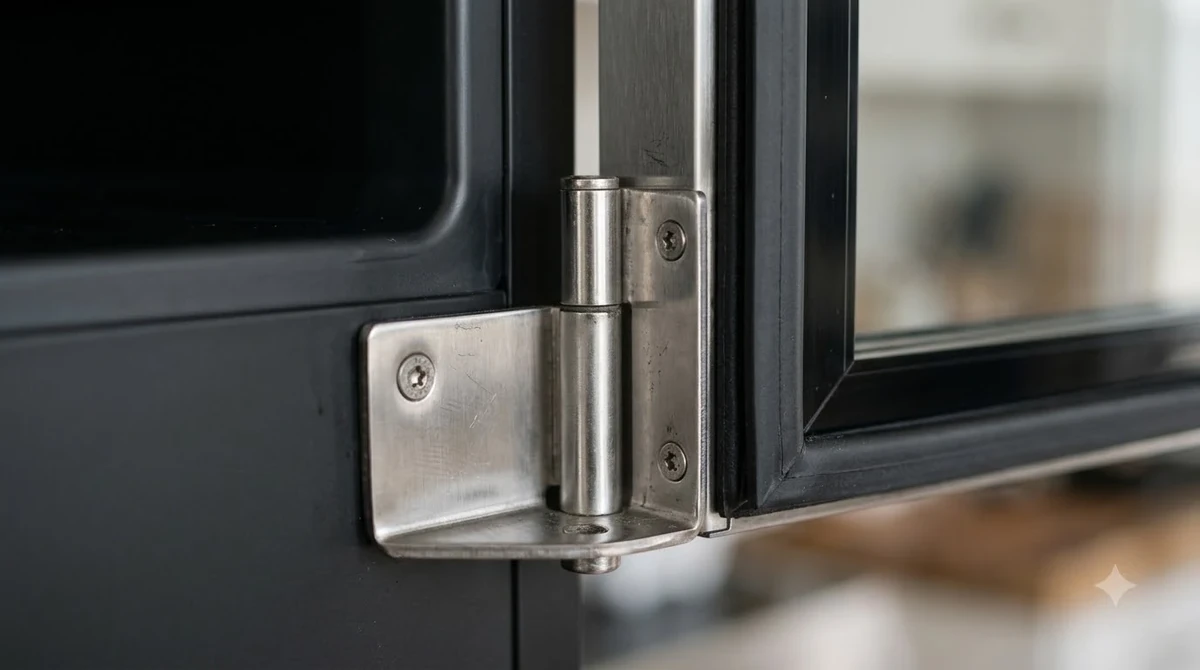
Why it stands out: As sommeliers interviewed by VinePair on storing red and white wines together explain, all wines age harmoniously at a single consistent cellar temperature around 55°F, making dual zones unnecessary if long-term storage is your primary goal. Without a partition eating up middle shelf space, single-zone undercounter cellars regularly hold 50 to 60 bottles, feature evenly spaced full-extension wooden racks that protect paper labels from tearing, and minimize compressor cycling because only one thermal target needs regulating.
Keep in mind and best for: Whites and Champagne stored at 55°F will need 20 to 30 minutes in an ice bucket or kitchen refrigerator before serving, while full-bodied reds benefit from resting on the counter briefly to open up. This style is best for collectors building a multi-year stash under the counter who value bottle capacity and thermal stability over instant grab-and-pour convenience.
Best for Mixed Entertaining: French-Door Wine and Beverage Center
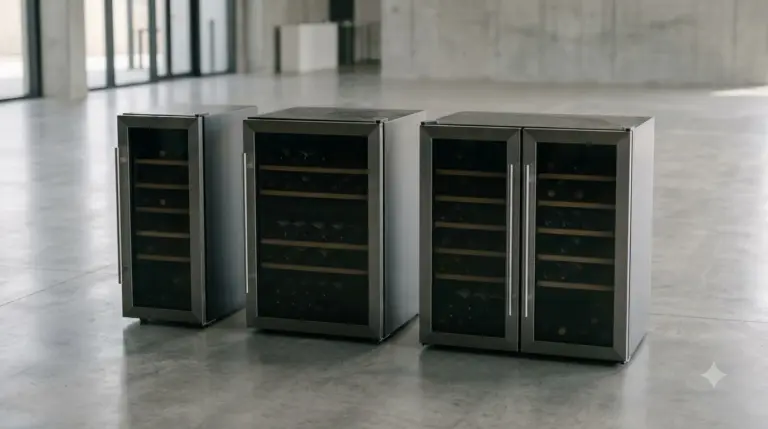
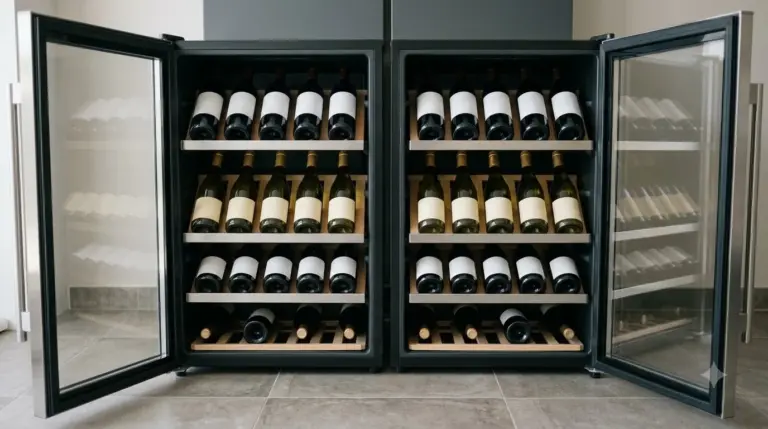
French-door stainless steel wine and beverage centers split a 24-inch or 30-inch undercounter cabinet down the middle, pairing a temperature-controlled wine rack column on one side with adjustable glass or wire shelves for cans, mixers, and craft beer on the other. Dual-pane glass doors framed in brushed stainless steel give hosts an immediate view of every drink option without letting cold air escape from both sides at once.
Why it stands out: Opening only half the cabinet at a time cuts cold-air loss in half during busy gatherings, helping each compartment recover its target temperature faster. The beverage side typically chills down to 34°F to 38°F for crisp lagers, tonic water, and sodas, while the wine side stays safely in the 41°F to 64°F range so delicate varietals never suffer frost shock or dried-out corks.
Keep in mind and best for: Because French doors swing outward from both the left and right edges, you must verify that adjacent cabinet pulls or walls will not collide with the stainless steel handles when opened past 90 degrees, and wine capacity usually tops out around 20 to 30 bottles. When comparing Finish x Type options for a family rec room or patio kitchen, this split configuration is best for hosts who serve beer, seltzer, and wine side by side.
Best for Serious Collectors: Full-Height Stainless Column Cooler
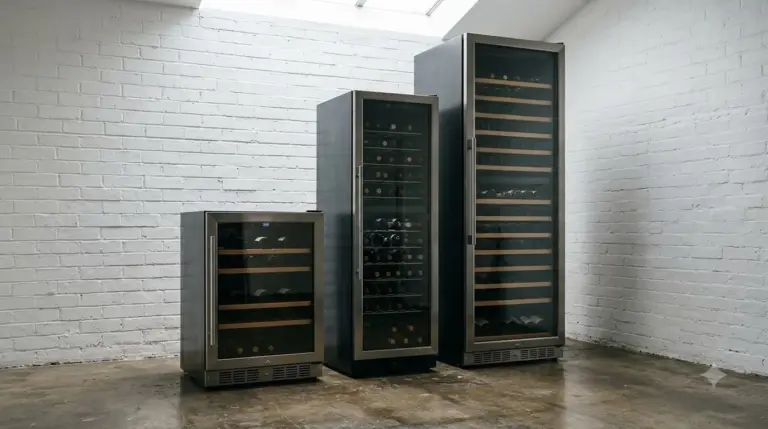
Full-height built-in wine columns stand 70 to 84 inches tall and integrate directly into full-depth pantry walls or alongside matching stainless steel kitchen refrigerators, holding anywhere from 100 to nearly 200 bottles. Designed with heavy-duty zero-clearance hinges, articulating toe-kick grilles, and multi-zone climate management, these architectural appliances bring cellar-scale storage right into the main living space.
Why it stands out: Taller vertical proportions allow manufacturers to engineer two or three independent temperature zones—such as a dedicated sparkling wine shelf at 40°F, a white wine zone at 48°F, and a red aging zone at 58°F—alongside presentation shelves that angle favorite labels toward the glass. Activated charcoal air filters, humidity-regulating evaporators, and low-emissivity UV glass shield valuable bottles from kitchen cooking odors and ambient daylight.
Keep in mind and best for: Column units weigh substantially more than undercounter models once loaded with glass bottles, requiring reinforced subflooring, anti-tip brackets, and careful planning for door-swing clearance. They are best for dedicated collectors renovating a kitchen or dining room who want cellar-grade capacity without relegating bottles to a basement.
How to Choose
Selecting the right built-in model comes down to matching cabinet cutout dimensions, cooling hardware, and shelving geometry to both your kitchen layout and the bottles you actually buy.
- Measure the cutout and door swing carefully: Reviewers and installation guides note that buyers should measure width, height, and depth at multiple points inside the cabinet opening and leave at least a quarter-inch of breathing room on the sides plus space at the back for the power plug. Also check whether the stainless steel door sits proud of adjacent cabinets or uses zero-clearance hinges so handles do not strike neighboring drawers.
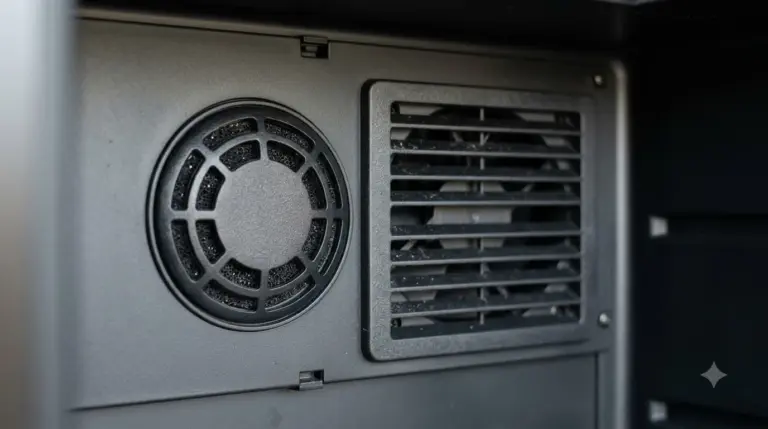
- Confirm front-venting compressor cooling: True built-in units exhaust warm air through a slotted grille beneath the door. Avoid thermoelectric coolers or rear-venting freestanding models for enclosed cabinetry, as trapped heat shortens compressor life and causes wide temperature swings.
- Check shelf spacing for non-Bordeaux bottles: Manufacturers calculate maximum bottle capacity using slim 750 mL Bordeaux bottles. If your collection leans toward sloped-shoulder Burgundy, Pinot Noir, Syrah, or heavy Champagne bottles, look for removable or luxury-spaced racks so labels do not scrape against the shelf above.
- Prioritize UV-tinted glass and door locks: Even inside a kitchen, overhead LEDs and afternoon sun degrade wine aromatics over time. Double- or triple-pane argon-filled glass with a low-E coating blocks ultraviolet rays while preventing exterior condensation in humid climates, and an integrated keyed lock protects prized bottles from curious hands.
Tip: Let a newly delivered compressor wine fridge stand upright for at least 24 hours before plugging it in so the internal refrigerant and lubricant settle properly, and plan your shelf organization so frequently opened whites sit near the front—especially once you factor in how long does wine last after opening when recorked bottles go back into the chill zone.
Frequently Asked Questions
Can you put a freestanding stainless steel wine fridge under a counter?
No, placing a freestanding wine fridge inside enclosed cabinetry blocks its rear and side ventilation panels, trapping heat around the compressor. Overheating forces the unit to run continuously, causes erratic internal temperatures that harm wine, and can damage surrounding woodwork or void the manufacturer warranty.
Do stainless steel built-in wine fridges leave fingerprints easily?
Traditional brushed stainless steel frames and handles can show smudges, though most modern built-in wine coolers apply a clear fingerprint-resistant coating over the metal trim. Wiping the frame along the grain with a damp microfiber cloth keeps the finish clean without harsh chemical polishes.
How noisy is a built-in compressor wine refrigerator in an open kitchen?
Most current built-in wine fridges operate between 38 and 42 decibels, which is roughly equivalent to a quiet library whisper or soft background hum. Models equipped with variable-speed inverter compressors run even more quietly than older single-speed motors because they ramp up gradually instead of clicking on at full power.
Should I store opened wine bottles upright or on their side in a built-in wine fridge?
Opened bottles should be stored upright whenever possible to minimize the surface area of wine exposed to oxygen inside the bottle. Many built-in stainless steel wine fridges include a convertible lower display shelf or upright cradle specifically designed to hold recorked bottles securely without spills.
Matching your cabinet width, cooling zones, and shelf geometry to how you drink ensures your built-in wine fridge blends naturally into your kitchen while protecting every bottle from heat, light, and vibration. Once you confirm your cutout clearance and preferred capacity from the categories above, you can compare individual models in each slot with confidence.
More in Wine Fridges by Type
 Best White Wine Fridge for Reliable Chilling and StorageUpdated Nov 20, 2026
 Best Smart Wine Fridge for Steady Temperatures and Remote ChecksUpdated Nov 18, 2026
 Best Black Under Counter Wine Fridge Options for Kitchens and IslandsUpdated Nov 18, 2026
 Best Black Slim Wine Fridge for Narrow Gaps and Dark KitchensUpdated Nov 18, 2026
 Best Built In Dual Zone Wine Fridge Options by Kitchen LayoutUpdated Nov 18, 2026
 Best Slim Built in Wine Cooler: 5 Space-Saving Styles for Tight KitchensUpdated Nov 18, 2026