

We may earn a commission when you buy through links on this page, at no extra cost to you. Learn more.
The best 20 bottle wine rack for most households is a stackable modular wood or metal grid, which holds nearly two full cases while fitting inside standard closets, pantries, or under-counter spaces. Freestanding floor racks with tabletop surfaces suit dining rooms and home bars where you want a built-in pouring station, while wall-mounted iron or wooden racks free up square footage in narrow apartments. For collectors planning to expand past twenty bottles later, interlocking peg or cube systems let you add capacity without replacing your original setup.
Holding twenty bottles puts your collection in a practical sweet spot: enough variety for weekday dinners, weekend hosting, and a few age-worthy reds without requiring a dedicated cellar or refrigeration unit. Because twenty standard 750ml bottles weigh roughly fifty to sixty pounds when full, structural stability, bottle slot geometry, and placement away from heat sources matter just as much as style.
Quick Comparison
Each twenty-bottle rack style balances footprint, expandability, and bottle compatibility differently depending on where you plan to keep your wine.
| Rack Type | Best Placement | Bottle Orientation | Fits Champagne & Pinot | Expandable |
|---|---|---|---|---|
| Stackable Modular Grid | Pantry, closet, or floor | Horizontal | Depends on slot width | Yes |
| Freestanding Floor Console | Dining room or living area | Horizontal | Yes, open cradles | No |
| Wall-Mounted Metal Rack | Kitchen, dining, or hallway wall | Horizontal, label-forward | Yes, wide cradles | Yes, add units |
| Countertop X-Frame or Scallop | Deep counter or sideboard | Horizontal | Tight on wide bases | No |
| Interlocking Cube or Bin | Basement, alcove, or cabinet | Horizontal or angled | Yes, bulk bins | Yes |
Best for Growing Collections: Stackable Modular Wood or Metal Grids
Stackable modular racks divide twenty bottles across four or five interlocking tiers, making them easy to tuck into a cool closet today and expand into a forty-bottle unit later.
Why it stands out: Modular grids use notched hardwood dowels or powder-coated steel bars that lock together without permanent wall anchors, keeping every bottle level so natural corks stay in steady contact with the wine. According to wine storage experts quoted by Wine Enthusiast, laying cork-finished bottles horizontally in a dark, cool spot prevents corks from drying out and letting oxygen spoil the wine. If you are upgrading from a 12 bottle wine rack after joining a wine club, a five-tier four-bottle-wide grid gives you room for nearly two full cases without dominating a room.
Keep in mind and best for: Standard modular notches are typically cut for 750ml Bordeaux cylinders, so wider Burgundy, Pinot Noir, or sparkling wine bottles may sit snugly or require skipping an adjacent slot. Choose untreated hardwood or coated steel if you plan to place the rack in a damp basement, as raw pine can absorb moisture over time. This style is best for steady wine buyers who want practical, expandable storage inside a pantry, hall closet, or spare alcove.
Best for Dining Rooms and Entertaining: Freestanding Floor Console Racks
Freestanding floor console racks pair four or five tiers of horizontal bottle cradles with a solid wood or stone top surface that doubles as a serving station for decanters and glassware.
Why it stands out: Unlike lightweight wire towers that can wobble on plush rugs, a console-style twenty-bottle unit has a wide rectangular base and substantial frame weight that stays planted when you pull a bottle from the middle row. The flat top gives you an immediate landing zone for pulling corks, resting a decanter, or setting out stems during dinner parties, turning storage into functional dining room furniture. Many models also include stemware rails underneath the tabletop so your glasses hang dust-free right above your bottles.
Keep in mind and best for: Console racks occupy fixed floor space and sit out in open living areas, meaning you need to position them away from sunny windows, radiators, and kitchen ranges. Check the vertical clearance between tiers before buying, because tight spacing can scrape paper labels on taller Riesling or Alsace bottles. This style is best for hosts who store everyday drinking bottles in a dining room, breakfast nook, or living room bar corner.
Best for Small Apartments and Tight Floor Plans: Wall-Mounted Label-Forward Racks
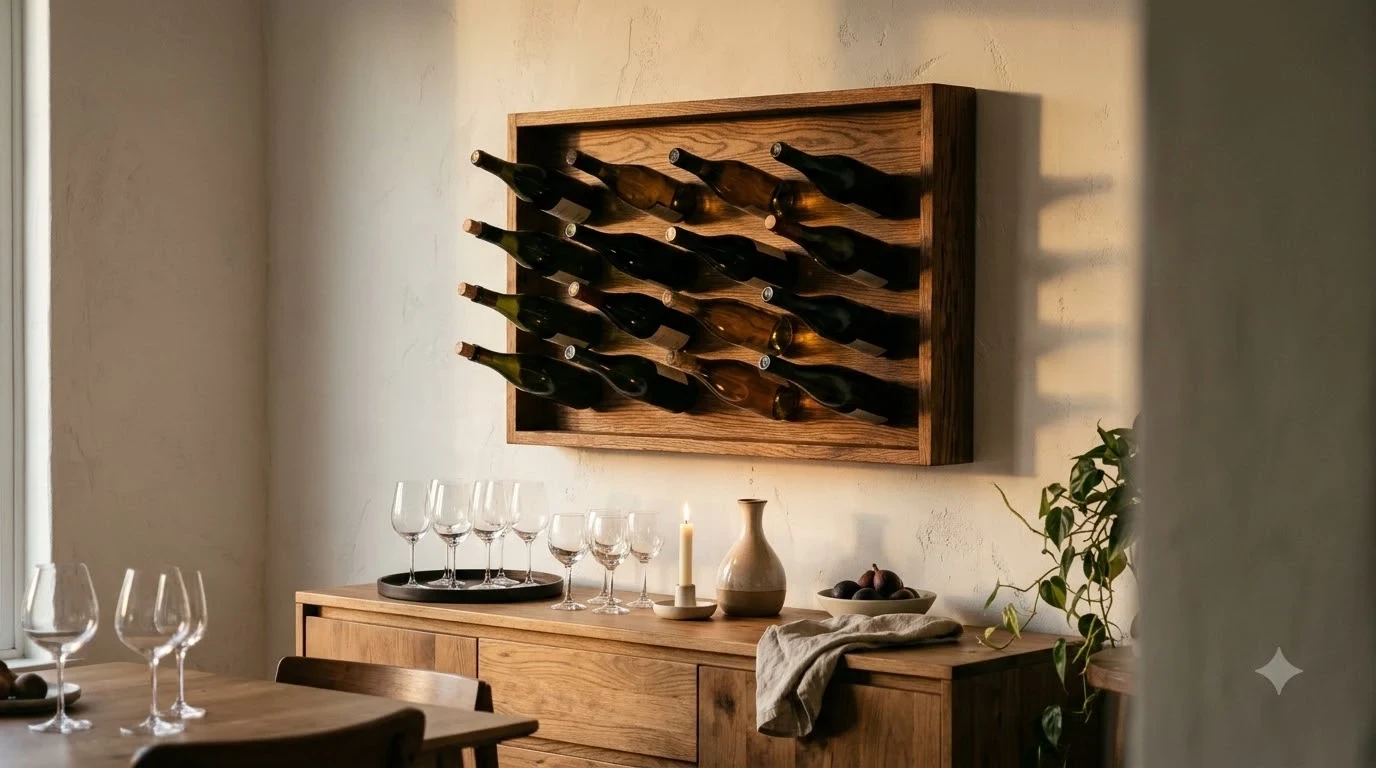
Wall-mounted metal or hardwood racks hold twenty bottles vertically along a wall in single- or double-deep columns, keeping floors completely clear while displaying every label at eye level.
Why it stands out: Storing bottles parallel to the wall with the labels facing outward lets you read vintages and producers at a glance without sliding bottles out and disturbing sediment. Double-deep steel rods hold two bottles per cradle—ten rows high for twenty bottles total—creating a slim vertical profile that fits narrow wall strips between doorways or beside cabinetry. Because the cradles support the neck and base separately, wider Champagne and Pinot Noir bottles rest comfortably alongside standard Cabernet bottles.
Keep in mind and best for: Twenty full bottles plus the steel frame weigh around sixty pounds, so you must anchor the mounting rails directly into wall studs or use heavy-duty toggle bolts rated for masonry or drywall. Wall racks also expose bottles to ambient room light, making them better suited for hallways, interior dining walls, or shaded corners rather than rooms flooded with afternoon sun. This type is best for apartment dwellers and design-minded drinkers who want accessible, space-saving storage.
Best for Kitchen Counters and Sideboards: Low-Profile Scalloped or Geometric Racks
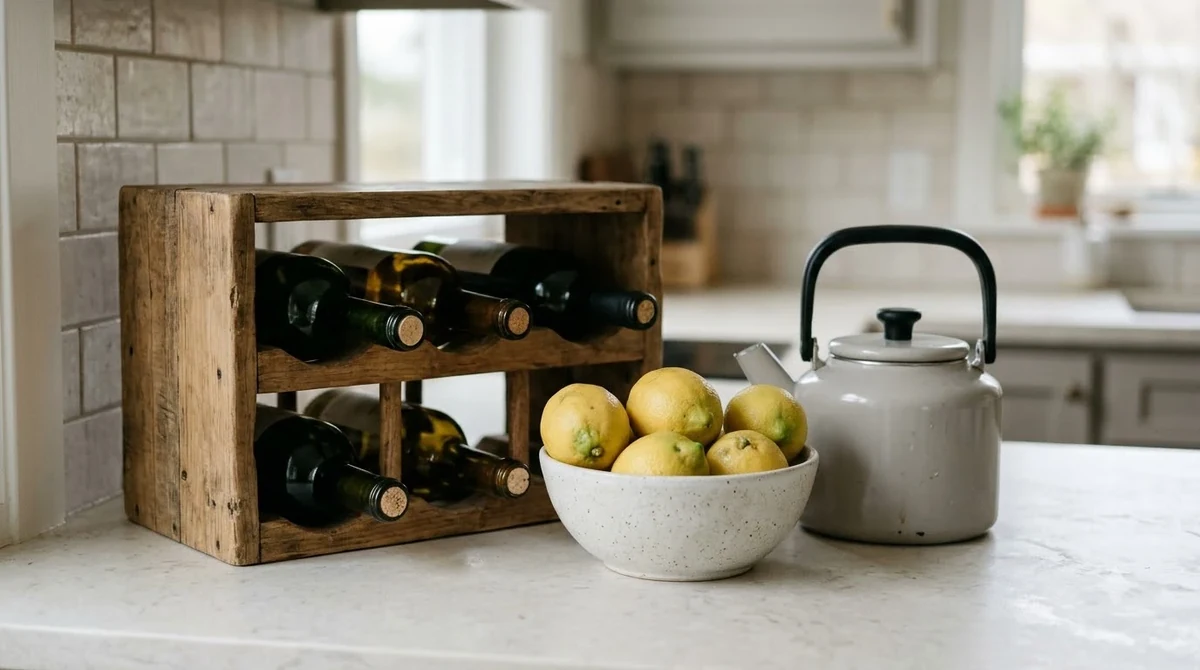
Low-profile twenty-bottle tabletop racks use curved wood slats or welded geometric cradles to organize bottles across a wide, stable footprint that fits beneath upper kitchen cabinets or atop a buffet.
Why it stands out: While a compact 6 bottle wine rack works for a single week of dinners, a four-row by five-column tabletop rack holds twenty bottles while staying under sixteen inches tall so it clears standard overhead cabinetry. Scalloped wooden shelves cradle the body of each bottle evenly, preventing rolling when you remove a bottle from an upper row. Welded metal honeycomb or wave frames achieve the same stability with an open, airy silhouette that keeps small kitchens feeling uncluttered.
Keep in mind and best for: Kitchens are typically the warmest rooms in a home due to ovens, dishwashers, and sunny windows, so a countertop rack should only hold bottles you plan to open within a few weeks or months rather than long-term aging candidates. Measure both counter depth and cabinet clearance, as standard 750ml bottles measure roughly twelve inches long and will overhang shallow shelves. This option is best for cooks and casual drinkers who want dinner bottles within arm’s reach on a sideboard or cool pantry counter.
Best for Mixed Bottle Shapes and Case Overflow: Interlocking Wooden Cubes and X-Bins
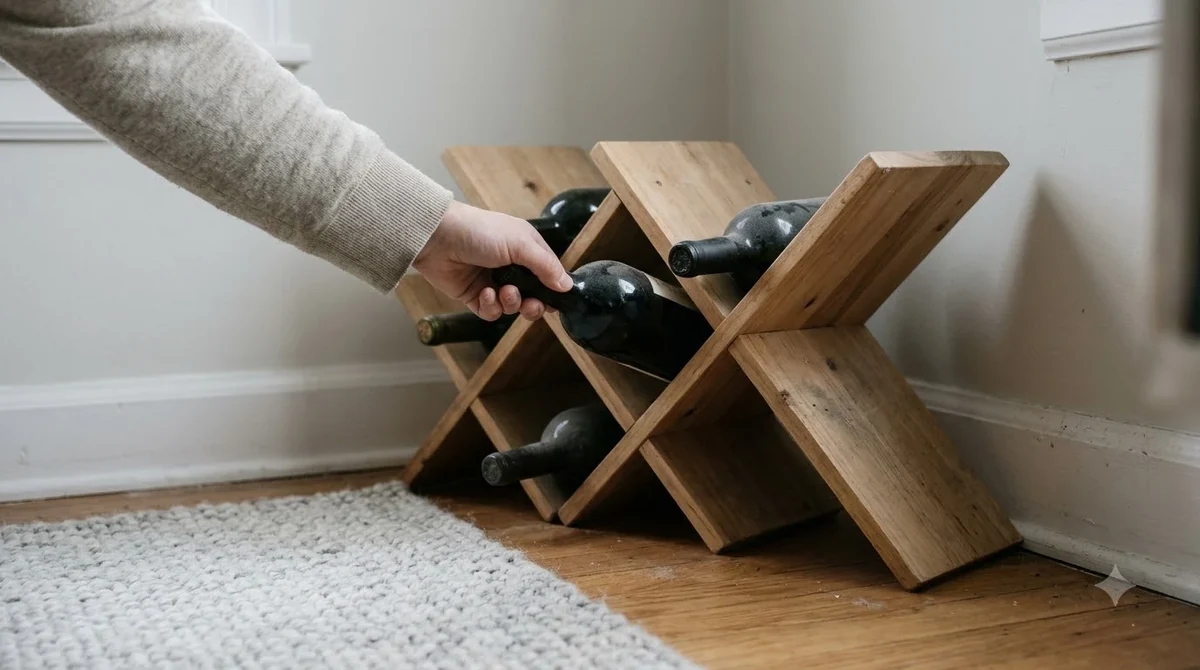
Interlocking cube and diamond-bin organizers group twenty bottles into four triangular compartments rather than individual slots, making it effortless to store oversized sparkling, Burgundy, and dessert bottles together.
Why it stands out: Individual-slot racks often struggle when your collection mixes slim Riesling flutes, heavy-bottomed Champagne bottles, and wide-shouldered Pinot Noir bottles. Diamond X-bins solve that problem by letting bottles nestle against one another in four quadrants of five bottles each, maximizing capacity inside a compact square frame. You can stack multiple cubes side-by-side or vertically inside a under-stair closet to build a custom cellar layout without custom carpentry.
Keep in mind and best for: Because bottles rest directly on top of one another inside each triangular bin, pulling a bottle from the bottom requires lifting the two or three bottles resting above it. That makes X-bins better suited for grouping multiples of the same house wine or storing bottles you do not need to access daily. This style is best for buyers who purchase mixed cases and need forgiving storage inside a closet, basement, or pantry.
How to Choose
Before picking a twenty-bottle rack, check four practical details so your bottles fit safely and age properly:
- Measure your location first: As beverage writers at VinePair explain, heat and light are the biggest everyday threats to wine, making interior closets, basements, and shaded dining walls far better locations than sunny countertops or spots near radiators.
- Check slot diameter and bottle length: Standard Bordeaux bottles measure roughly 3 inches across and 12 inches long, whereas Champagne and Pinot Noir bottles often reach 3.5 inches wide. Look for at least 3.5 inches of cradle clearance if you drink sparkling wine or Burgundy regularly.
- Account for full weight: Twenty full glass bottles weigh between 50 and 60 pounds. Choose solid hardwood, steel, or thick wrought iron over thin bamboo or unbraced wire, and anchor tall freestanding units to the wall if you have pets or young children.
- Plan around buying habits: If you often buy by the box, knowing how many bottles in a case of wine helps you size your setup—twenty slots hold one full twelve-bottle case plus eight extra bottles for everyday rotation, or you can browse our broader Racks & Storage hub if you need larger cellar capacity.
Tip: Keep bottles sealed with natural corks on their sides so the wine stays against the cork, while screw-cap bottles can safely sit upright on a top shelf or bin if you run out of horizontal slots.
Frequently Asked Questions
How much space do I need for a 20 bottle wine rack?
Most twenty-bottle freestanding and modular racks measure between 16 and 20 inches wide, 11 to 13 inches deep, and 18 to 32 inches tall depending on whether they are arranged in four or five tiers. Always leave an extra inch of depth so bottle necks or punts do not protrude past the edge of a shelf or counter.
Is wood or metal better for a 20 bottle wine rack?
Both materials perform well if the frame is sturdy, so the choice comes down to environment and bottle shapes. Powder-coated steel and wrought iron resist warping in damp basements and usually offer wider cradles for Champagne bottles, while unfinished or sealed hardwood dampens vibration and adds warmth to dining rooms.
Can I put a 20 bottle wine rack in the kitchen?
You can keep a twenty-bottle rack in the kitchen for bottles you plan to drink within a few weeks to a couple of months, provided it sits away from the stove, dishwasher, refrigerator exhaust, and direct sunlight. For bottles you want to hold for a year or longer, move the rack to a cooler closet, pantry, or basement where temperatures stay closer to 55°F.
Do screw-cap wine bottles need to be stored horizontally in a rack?
No, screw-cap and synthetic-cork bottles do not rely on liquid contact to keep a seal moist, so they can be stored upright without drying out. Storing them horizontally in your twenty-bottle rack is still completely safe and remains the most space-efficient way to organize your collection.
Choosing the right twenty-bottle rack comes down to matching the frame style to the coolest, darkest spot in your home and the bottle shapes you buy most often. Whether you go with an expandable modular grid for a closet or a label-forward wall rack for an apartment, a well-built rack keeps nearly two cases organized and ready to pour.
More in Racks & Storage
 Best Wine Barrel Racks for Distinctive Bottle StorageUpdated Nov 20, 2026
 Best Wine Storage Tower: Sizing, Protection and Room LayoutUpdated Nov 18, 2026
 Best Pyramid Wine Rack: Materials, Sizes and Where It FitsUpdated Nov 18, 2026
 Best Kitchen Cabinet Wine Rack Insert for Built-In Bottle StorageUpdated Nov 18, 2026
 Best 16 Bottle Wine Rack Options for Kitchens, Bars and CellarsUpdated Nov 18, 2026
 Best 48 Bottle Wine Rack Options for Cellars, Kitchens, and Tight SpacesUpdated Nov 18, 2026