

We may earn a commission when you buy through links on this page, at no extra cost to you. Learn more.
The best wine serving tray depends on whether you are transporting stemmed glassware across a room or staging bottles and snacks on a static table. Non-slip rubberized round trays offer the surest grip for moving tall stemware safely, while slotted wooden flight paddles lock four tasting glasses in place during side-by-side comparisons. For stationary entertaining, lipped hardwood or stainless-steel bar trays corral bottles, decanters, and small ramekins without letting condensation or spills reach your furniture.
Carrying four top-heavy Bordeaux stems and a chilled bottle of Sauvignon Blanc in one trip requires different engineering than displaying a cheese spread on a dining table. Standard flat platters lack edge containment and surface friction, turning a routine walk from the kitchen into a balancing act. Choosing a tray built for your specific hosting style prevents broken stems, protects wood surfaces from wine drips, and keeps service organized from the first pour to the last.
Quick Comparison
The five primary wine serving tray styles trade off surface grip, spill containment, and tabletop presentation depending on how you serve.
| Tray Type | Primary Material | Edge Profile | Stemware Stability | Ideal Capacity |
|---|---|---|---|---|
| Non-Slip Round Service Tray | Fiberglass or polypropylene with rubberized top | Low rolled rim | High (friction grip prevents sliding) | 4 to 6 stemmed glasses plus 1 bottle |
| Slotted Wine Flight Paddle | Hardwood (maple, walnut, or oak) or slate | Cutout slots or recessed wells | Very high (locks bases or bowls) | 3 to 4 tasting pours (2 to 3 oz each) |
| Lipped Bar & Bottle Tray | Stainless steel, brass, or lacquered wood | Raised gallery rail or high lip | Moderate (best for bottles and decanters) | 2 to 3 bottles, decanter, and corkscrew |
| Handled Wood & Marble Grazing Tray | Acacia, teak, or olive wood with stone insert | Cutout side handles or shallow lip | Moderate (flat surface for stemless or bowls) | 1 bottle, 2 glasses, and charcuterie spread |
| Portable Outdoor Stake & Folding Tray | Bamboo, acacia, or weather-treated hardwood | Recessed glass slots and bottle hole | High on uneven ground | 1 standard 750 ml bottle and 2 to 4 stems |
Best for Carrying Full Stemware Without Slips
Commercial-style round non-slip trays use a textured rubberized coating bonded to a rigid fiberglass or heavy-duty polypropylene core to stop wine glasses from sliding mid-stride. This design gives home hosts the same surface traction restaurant servers rely on when navigating crowded living rooms.
Why it stands out: Tall wine glasses have a high center of gravity, especially once poured, making smooth wood or polished metal treacherous during transport. A rubber-lined surface grips the flat foot of a crystal stem even when condensation drips down the bowl. Fiberglass cores also resist flexing under the weight of a full 750 ml bottle alongside multiple glasses, keeping the load balanced over one palm or carried with two hands.
Keep in mind: Utility comes ahead of aesthetics with this category, as matte black or dark brown rubberized surfaces look more back-of-house than decorative centerpiece. Reviewers at commercial hospitality suppliers note that fiberglass models handle frequent hand-washing without warping, though high-heat dishwasher cycles can degrade the bonded grip layer over time. This style is best for dinner party hosts who prioritize spill-free transport from kitchen to table over leaving the tray out on display.
Best for Side-by-Side Tasting Flights
Slotted wine flight paddles feature precision-cut holes or recessed circular wells sized to cradle three or four tasting glasses in a single neat row. Built with an extended handle on one or both ends, they let you pour and carry multiple varietals at once without clinking stems together.
Why it stands out: Organizing a blind tasting or comparing regional vintages becomes much cleaner when every glass stays in a fixed order from left to right. Many hardwood paddles include small chalkboard strips or slate insets next to each slot so guests can track grape varieties, vintages, or tasting notes. Because each glass base sits inside a recessed pocket or slides into a keyhole notch, minor bumps on the table will not tip a glass into its neighbor.
Keep in mind: Check the slot diameter before buying, since paddles cut for narrow tasting flutes or stemless tumblers may not accommodate wide-bowled Burgundy stems. Knowing how many glasses in a bottle of wine helps you plan flight pours accurately, as standard 2- to 3-ounce tasting pours stretch a single bottle across eight to twelve sample glasses. This type is best for at-home wine tastings, educational flights, and hosts who love structured side-by-side comparisons.
Best for Bar Carts and Bottle Staging
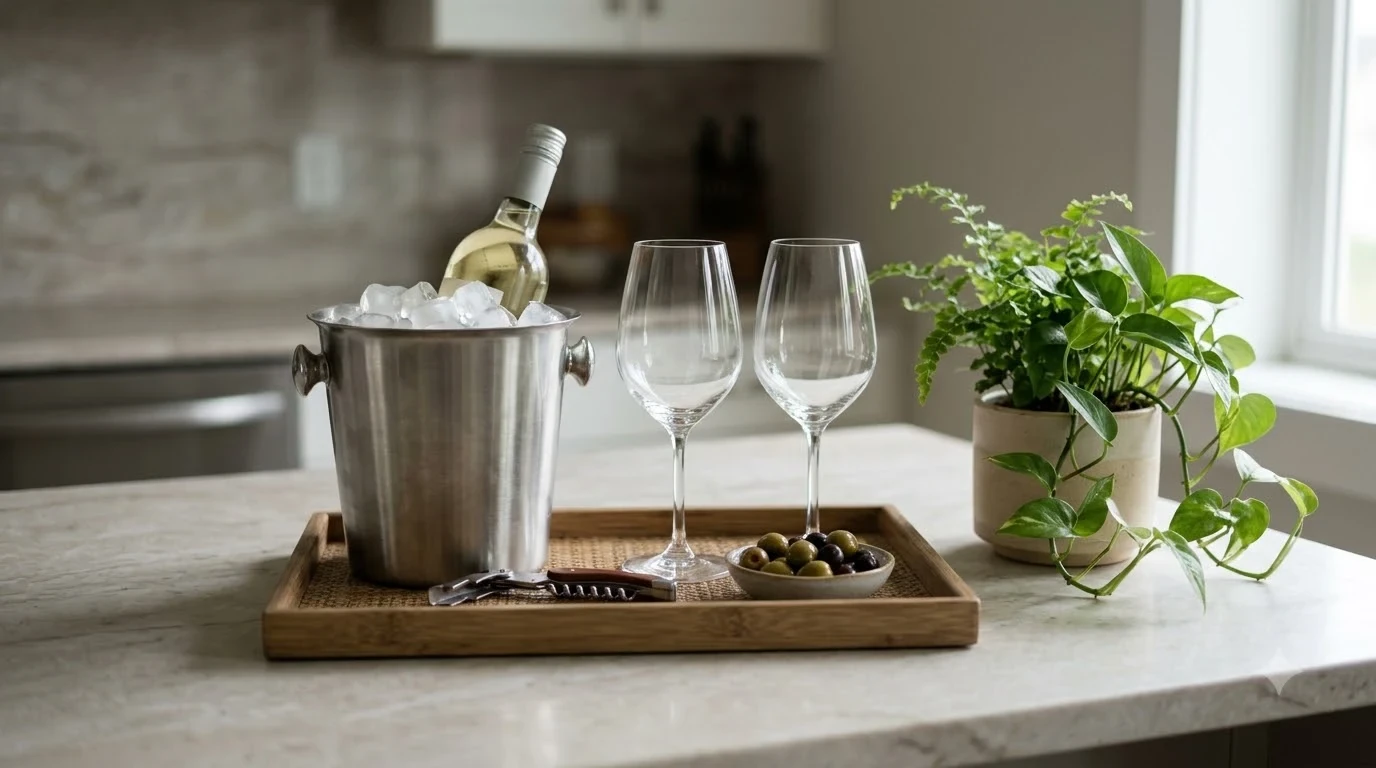
Lipped bar and bottle trays combine a flat, spill-resistant base with a raised perimeter wall or metal gallery rail to anchor open bottles, decanters, and bar tools in one spot. Unlike flat boards, the vertical edge keeps round bottles from rolling and contains red wine drips before they stain underlying furniture.
Why it stands out: When styled on top of a bar cart or sideboard, a high-rimmed tray creates an intentional pouring station that protects wood and stone finishes from acidic wine rings. Stainless-steel, brass-plated, and sealed hardwood options wipe clean effortlessly after a long evening of pouring. A sturdy rim also gives your fingers a secure grip when lifting a heavy load of full bottles, a filled decanter, and a foil cutter from a storage cabinet to the dining room.
Keep in mind: Mirror-polished metal trays show fingerprints, water spots, and fine scratches from heavy glass bases more readily than brushed steel or matte finishes. If you choose a wooden gallery tray, verify that the interior surface has a waterproof lacquer or marine-grade finish so cabernet drips do not soak into the grain. This style is best for dedicated home bar setups, decanter service, and hosts who keep bottles staged on a credenza during parties.
Best for Wine and Charcuterie Pairings
Handled grazing trays pair dense hardwoods like acacia, olive, or teak with removable marble or slate inserts to hold both poured glasses and cured meats, cheeses, and accompaniments. Side cutout handles make it easy to carry an entire wine-and-snack spread from the kitchen counter straight to the coffee table.
Why it stands out: As Wine Enthusiast notes, lipped round or rectangular trays prevent small ramekins and condiment jars from sliding around while guests serve themselves. Removable stone inserts also let you chill soft cheeses beforehand and wash oily olive residues or acidic vinegar drizzles separately from the wood frame. Following Wine Folly’s charcuterie board guidelines, placing small bowls for olives, honey, or mustard in a triangle anchors the layout and leaves dedicated space for two glasses or a chilled bottle.
Keep in mind: Natural wood requires occasional conditioning with food-grade mineral oil to prevent drying and cracking, and stone inserts add noticeable weight when the tray is fully loaded. Avoid soaking unsealed wood in the sink, as trapped moisture causes warping along the joints. This category is best for casual movie nights, small-group happy hours, and hosts who want one vessel for both drinks and appetizers.
Best for Picnics, Patios, and Outdoor Lounging
Portable outdoor wine trays use folding legs or a pointed ground stake alongside notched glass holders and a central bottle cutout to keep wine upright on grass, sand, or uneven patio pavers. Compact and lightweight, they solve the classic outdoor problem of tipping stemmed glasses on soft terrain.
Why it stands out: Setting a standard tray on a picnic blanket or lawn almost guarantees a spilled glass the moment someone shifts position. Ground-stake models push directly into soil or turf, lifting the tray surface several inches above the grass while suspending stemmed glasses securely by their bowls or bases. Folding-leg models offer similar stability on blankets, low ottomans, or beach towels, then collapse flat to slip inside a picnic tote or backpack.
Keep in mind: Ground-stake trays only work on soft earth, grass, or sand, making them useless on concrete balconies or wooden decks unless they include a convertible flat base. Check the diameter of the central bottle cutout as well, because wider Burgundy, Champagne, or Pinot Noir bottles sometimes bind in openings cut strictly for straight-sided Bordeaux bottles. This style is best for park picnics, outdoor concerts, backyard lawn gatherings, and beach sunsets.
How to Choose
Selecting the right tray comes down to matching surface friction, edge height, and dimensions to the way you actually serve wine at home.
- Surface grip and material: Look for rubberized liners, textured finishes, or recessed glass cutouts if you plan to walk while carrying full stemmed glasses. Smooth wood, slate, and polished metal look great on a stationary table, but glasses slide easily on them if tilted even slightly.
- Lip height and spill containment: A low rolled rim of half an inch works well for lifting glasses cleanly, whereas a raised rail of one to two inches is better for corralling bottles, ice buckets, and small snack bowls.
- Footprint and weight balance: A 14- to 16-inch round tray holds four standard wine glasses comfortably without feeling unwieldy in one hand. Rectangular trays over 18 inches long offer generous space for food and bottles but require two hands and sturdy side handles.
- Bottle and stemware compatibility: Verify that bottle cutouts measure at least 3.5 inches across to fit wider sparkling and Pinot Noir bottles, and confirm that flight slots fit your existing stemware bases.
- Cleanup and moisture resistance: Wine is acidic and inevitably drips. Choose non-porous stainless steel, sealed hardwood, or removable stone inserts if you want quick wipe-down maintenance after hosting.
Tip: When carrying a flat tray loaded with stemmed wine glasses, group the tallest glasses near the center rather than along the outer rim, and place a slightly damp cocktail napkin beneath any small ramekins or bottles to stop them from shifting in transit.
Frequently Asked Questions
What size serving tray is best for four wine glasses and a bottle?
A round tray measuring 14 to 16 inches in diameter or a rectangular tray around 16 by 12 inches provides enough room for four standard wine glasses and one 750 ml bottle without crowding the bowls. Leaving at least an inch of clearance between glass rims prevents accidental clinking while you walk.
Are wooden wine serving trays prone to red wine stains?
Unfinished or lightly oiled porous woods can absorb red wine pigments if drips sit for hours, though dense hardwoods like teak, acacia, and olive wood resist staining better than softer pine or bamboo. Choosing a tray with a sealed lacquer finish or wiping spills promptly with a damp cloth keeps the wood surface clean.
Can you put a non-slip wine tray in the dishwasher?
Most non-slip serving trays require hand-washing with warm soapy water because high dishwasher drying temperatures can warp fiberglass cores or peel away bonded rubber grip surfaces. Stainless-steel trays without wood accents are usually dishwasher-safe, though hand-drying immediately prevents water spots.
How do you carry a tray of stemmed wine glasses without spilling?
Position the heaviest items—such as a full bottle or water carafe—near the center of the tray, and cluster stemmed glasses around that central anchor rather than near the edges. Keep your eyes looking ahead toward your destination rather than down at the glasses, which helps your body naturally stabilize the tray as you walk.
Whether you need a grippy service tray for busy dinner parties, a slotted paddle for tasting flights, or a folding table for afternoon picnics, matching the tray’s structure to your hosting routine takes the stress out of pouring. Explore more barware essentials in our Accessories Library to round out your home wine setup.
More in Wine Accessories
 Coravin Vs Vacu Vin: Choose the Right Wine Saver for Your BottlesUpdated Nov 21, 2026
 Zwilling Wine Stopper Review: Preserve Open Bottles LongerUpdated Nov 21, 2026
 Wine Enthusiast Wine Preserver Review: Features, Benefits and LimitationsUpdated Nov 21, 2026
 Wine Enthusiast Wine Stopper: An Easier Way to Reseal Open BottlesUpdated Nov 21, 2026
 Vintorio Wine Opener: Two-Step Cork RemovalUpdated Nov 21, 2026
 Zwilling Wine Aerator Review: Aerate, Pour, and Seal With One ToolUpdated Nov 21, 2026