

We may earn a commission when you buy through links on this page, at no extra cost to you. Learn more.
The best black dual zone wine fridge is a front-venting built-in compressor cabinet with UV-tinted glass, holding 30 to 50 bottles across two independently controlled temperature zones. That setup lets you store crisp whites and sparkling wines at 41°F to 50°F alongside cellar-ready reds at 55°F to 65°F inside a sleek matte-black or black-stainless frame. If you rent or want zero installation, a freestanding compressor unit gives you the same dual-climate precision, while slimline 15-inch columns, high-capacity collector towers, and wine-and-beverage hybrids solve narrower kitchens, larger cellars, and mixed entertaining needs.
A dark cabinet finish does more than hide fingerprints and blend into modern cabinetry—paired with smoked or double-pane UV-blocking glass, a black exterior minimizes ambient light glare while turning your bottles into a clean visual focal point. Because wine styles require noticeably different serving conditions, splitting one cabinet into two independent climate chambers saves you from pulling warm reds off a kitchen counter or over-chilling Sauvignon Blanc in a standard refrigerator.
Quick Comparison
Each cabinet format balances installation clearance, cooling hardware, and bottle capacity differently depending on where it lives in your home.
| Cabinet Type | Typical Capacity | Ventilation & Placement | Cooling System | Best Kitchen & Home Fit |
|---|---|---|---|---|
| 24-Inch Built-In Undercounter | 36–54 bottles | Front-venting; flush under counters or freestanding | Variable-speed compressor | Kitchen remodels, islands, and wet bars |
| Compact Freestanding Tower | 24–36 bottles | Rear/side clearance required; freestanding only | Compressor or hybrid | Apartments, dining rooms, and offices |
| 15-Inch Slimline Column | 18–30 bottles | Front-venting; narrow cabinet cutouts | Compressor | Tight galley kitchens and trash-compactor gaps |
| High-Capacity Tall Cellar | 80–160+ bottles | Freestanding or zero-clearance built-in | Low-vibration compressor | Growing collections and dedicated wine rooms |
| Wine & Beverage Hybrid Center | 15–24 bottles + 50–70 cans | Front-venting; undercounter or freestanding | Dual-zone compressor | Patio doors, game rooms, and frequent hosts |
Best for Smooth Kitchen Integration: 24-Inch Built-In Undercounter Cabinets
A standard 24-inch built-in undercounter cabinet slides flush into base cabinetry thanks to a front-facing exhaust grille, making it the strongest all-around choice for kitchen islands and wet bars. Matte black doors and dark interiors create a custom architectural look without the maintenance of polished stainless steel.

Why it stands out: Front ventilation routes warm compressor air out through the toe-kick rather than trapping it behind the unit, which prevents overheating inside tight cabinet boxes. Reviewers at Wine Enthusiast highlight that quality undercounter models maintain steady dual climates—typically 41°F to 54°F in the upper zone and 54°F to 68°F in the lower zone—while keeping noise below 40 decibels, quieter than a modern dishwasher. Many black built-in models also offer reversible door hinges and recessed handles so the cabinet door clears adjacent drawers cleanly.
Keep in mind: Advertised bottle counts assume standard 750 mL Bordeaux shapes; wider Burgundy pinot noir bottles and Champagne magnums reduce usable capacity unless the unit includes adjustable-height beechwood or wire racks. This format is best for homeowners upgrading a kitchen or bar nook who want a permanent, built-in dual zone under counter wine fridge that looks intentional from day one.
Best for Renters and Flexible Layouts: Compact Freestanding Dual-Zone Coolers
Freestanding black dual-zone coolers sit directly on hardwood or tile floors without cabinetry modifications, giving renters and apartment dwellers true two-temperature storage anywhere near an outlet. Their dark side panels and black-trimmed glass doors look finished from all three exposed angles.
Why it stands out: Because freestanding cabinets dissipate heat through their back and side walls, manufacturers can use streamlined compressor assemblies that cool quickly after you load a fresh case of wine. According to wine storage specialists at Wine Enthusiast, maintaining a rock-steady environment between 53°F and 57°F protects bottles from premature oxidation, while separate serving zones let you keep whites crisp and reds ready to pour on demand. Look for models with soft interior LED lighting and digital touch controls built into the outer glass so you never let warm room air rush in just to check a readout.
Keep in mind: You must leave at least two to four inches of breathing room behind and beside a freestanding cabinet, so sliding one into an enclosed counter opening will shorten compressor life. This category works best for renters, condo owners, and anyone who wants a portable dual zone wine fridge for a dining room or home office.
Best for Narrow Spaces: 15-Inch Slimline Dual-Zone Columns
Measuring just 15 inches wide, slimline dual-zone columns turn narrow cabinet gaps—such as an old trash-compactor bay or the end of a peninsula—into dedicated two-temperature wine storage. A black glass facade keeps the tall, slender silhouette sleek rather than visually crowded.
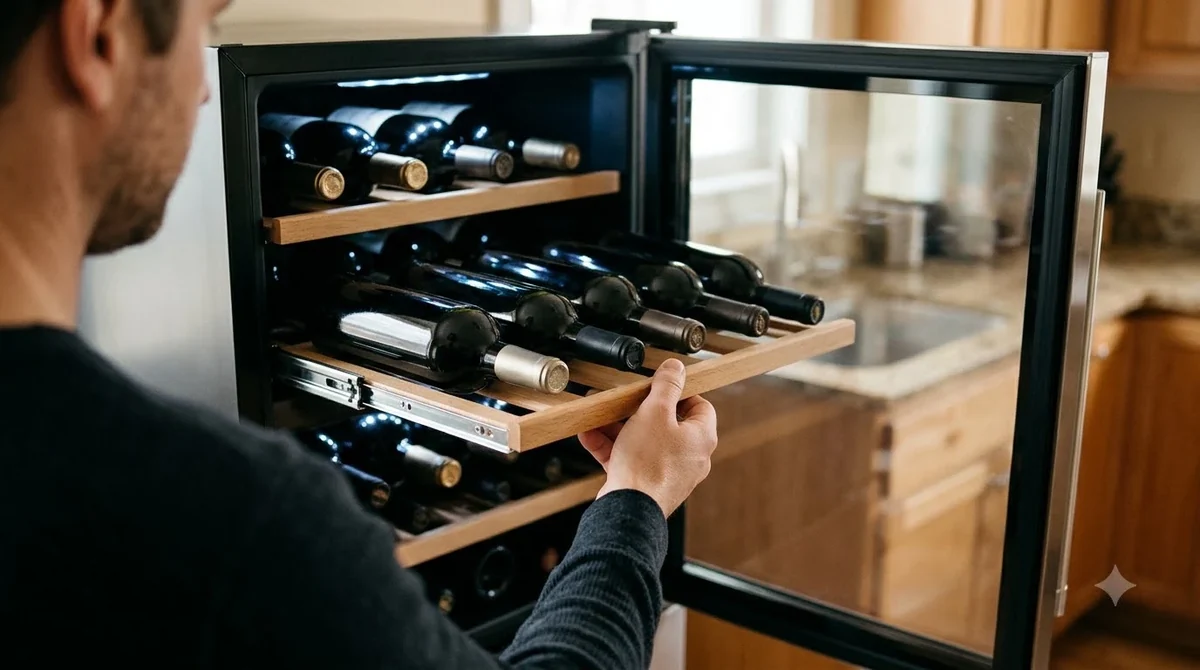
Why it stands out: Despite their narrow footprint, well-engineered 15-inch units stack bottles two deep on gliding wooden racks and separate the upper white-wine chamber from the lower red-wine chamber with an insulated thermal divider. Reviewers note that top-tier slimline cabinets even include upright vertical slots on the bottom tier so opened bottles stay leak-free while preserving freshness for several days—a helpful perk when tracking how long does wine last after opening. Front-venting grilles allow both built-in and freestanding placement.
Keep in mind: Narrow shelves leave very little side-to-side margin for wide-shouldered Rhône, Pinot Noir, or sparkling bottles, often forcing you to remove a shelf and sacrifice total bottle count. Choose this type if you have a compact urban kitchen or a tight bar cutout and prioritize tidy ergonomics over massive capacity.
Best for Growing Collections: High-Capacity Tall Black Wine Cellars
Standing four to six feet tall and holding anywhere from 80 to over 160 bottles, tall freestanding or zero-clearance dual-zone cabinets serve collectors who have outgrown undercounter coolers. Finished in matte or textured black with smoked UV-filtering glass, they act as a vertical cellar centerpiece.
Why it stands out: Larger cabinet volume allows for heavier insulation, thicker double- or triple-pane argon-filled glass, and vibration-dampened compressors that shield delicate sediment in aging reds. As Wine Folly explains, wines stored at warm room temperatures age up to four times faster than bottles held around 55°F, making active climate and humidity control essential once you start cellaring bottles past a single season. Tall dual-zone towers let you dedicate the larger zone to long-term aging at 55°F while keeping the secondary zone chilled to 45°F for everyday white and sparkling pours.
Keep in mind: Full cabinets weigh several hundred pounds, so confirm floor support and check whether the unit requires rear airflow clearance before pushing it flush against a wall. This format is built for serious enthusiasts building a multi-year collection without constructing a walk-in cellar.
Best for Mixed Entertaining: Dual-Zone Wine and Beverage Centers
Wine and beverage centers pair a temperature-controlled wine rack section on one side—or top—with adjustable wire or glass shelves calibrated down to 36°F–39°F for sparkling water, craft beer, and mixers. A unified black frame ties both compartments together under one cohesive aesthetic.
Why it stands out: Standard wine coolers rarely drop below 41°F, which leaves canned sodas and lagers warmer than most guests prefer. Dual-zone beverage hybrids solve that problem with independent evaporators or split French-door chambers, letting one side chill cans near freezing while the other holds Pinot Noir or Chardonnay at cellar temperature. When browsing different configurations across Finish x Type categories, black stainless and smoked-glass hybrids consistently rank among the most versatile options for busy households.
Keep in mind: Splitting internal real estate between cans and 750 mL bottles reduces total wine capacity to roughly 15 to 24 bottles, and colder beverage zones can introduce slight condensation if doors are opened frequently during parties. Pick this style if your fridge serves a whole family or doubles as an outdoor-patio drink station.
How to Choose
Compressor vs. Thermoelectric Cooling: Compressor-driven fridges handle wide ambient room swings and reach crisp 40°F white-wine temperatures effortlessly, making them the clear winner for kitchens and larger capacities. Thermoelectric units run nearly silent with zero compressor vibration, but they struggle when room temperatures climb above 75°F and work best only in small, climate-controlled rooms.
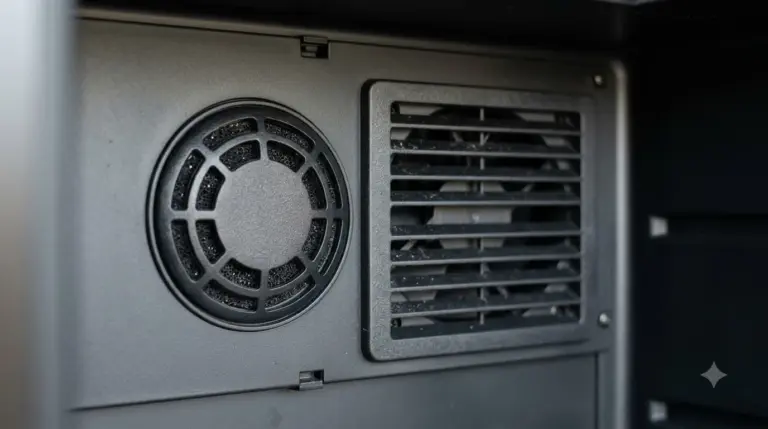
Ventilation and Door Swing: Check where the exhaust vents sit before measuring your space. Front-venting grilles at the base allow flush undercounter installation, whereas rear-venting cabinets need open air around the back and sides. If the fridge sits next to a wall or corner cabinet, verify that the door hinge is reversible and opens at least 90 degrees so sliding shelves pull out cleanly.
UV Protection, Shelving, and Zone Logic: Ultraviolet light degrades wine aromas prematurely, so look for double-pane tinted or Low-E glass doors paired with low-heat LED interior lighting. Inside, smooth-gliding beechwood or coated-wire racks prevent label scuffing, and removable shelves let you fit wider Burgundy and Champagne bottles. Finally, confirm each zone’s exact temperature span—some dual-zone cabinets enforce a minimum 4°F to 8°F difference between upper and lower chambers.
Tip: Always buy one size larger than your current bottle count—manufacturers measure capacity using slim Bordeaux bottles, so mixing in wider Pinot Noir, Riesling, or sparkling bottles typically reduces real-world capacity by 15 to 25 percent.
Frequently Asked Questions
What temperatures should I set each zone to in a dual zone wine fridge?
Set the colder zone—usually the upper compartment—between 42°F and 50°F for sparkling wines, Sauvignon Blanc, Pinot Grigio, and rosé. Set the warmer lower zone between 55°F and 62°F for Pinot Noir, Cabernet Sauvignon, and other reds, or hold both zones at 55°F if you are focusing purely on medium-term aging.
Can I put a freestanding black wine fridge under my kitchen counter?
No, unless the manufacturer explicitly rates the cabinet for built-in, zero-clearance installation with a front exhaust grille. Freestanding wine coolers expel heat through their rear and side panels, so enclosing them under a countertop traps hot air, forces the compressor to run nonstop, and voids most warranties.
Does a black exterior make a wine fridge run hotter or use more energy?
No, indoor cabinet color has virtually zero impact on cooling efficiency because modern wine fridges rely on thick foam insulation and sealed magnetic door gaskets. However, placing any glass-front wine cooler in direct sunlight through a kitchen window will heat the interior, so choose double-pane UV-tinted glass and keep it out of direct sunbeams.
Why does my dual zone wine fridge have a minimum temperature difference between zones?
Because both zones share a single insulated cabinet divided by an internal partition, cold air naturally settles downward while warmer air rises. Many dual-zone thermostats require the warmer zone to stay at least 4°F to 8°F higher than the colder zone so the cooling loop can maintain stable temperatures without fighting itself.
Choosing the right black dual-zone wine cabinet comes down to matching ventilation style and shelf spacing to where you live and what you pour most often. Measure your cutout carefully, leave room for wider bottle shapes, and let two independent climate zones keep every bottle ready at a moment’s notice.
More in Wine Fridges by Type
 Best White Wine Fridge for Reliable Chilling and StorageUpdated Nov 20, 2026
 Best Smart Wine Fridge for Steady Temperatures and Remote ChecksUpdated Nov 18, 2026
 Best Black Under Counter Wine Fridge Options for Kitchens and IslandsUpdated Nov 18, 2026
 Best Black Slim Wine Fridge for Narrow Gaps and Dark KitchensUpdated Nov 18, 2026
 Best Built In Dual Zone Wine Fridge Options by Kitchen LayoutUpdated Nov 18, 2026
 Best Slim Built in Wine Cooler: 5 Space-Saving Styles for Tight KitchensUpdated Nov 18, 2026