

We may earn a commission when you buy through links on this page, at no extra cost to you. Learn more.
The best 72 bottle wine rack depends on where you plan to keep six cases of wine, with modular stackable hardwood racks offering the most reliable all-around stability and room to grow. Buyers working with damp basements or tight hallways will get better longevity from powder-coated metal wire frames or label-forward wall rails, while collectors who entertain frequently often prefer freestanding cabinet racks with tabletop space or wide-cubby grids that hold chunky Champagne and Burgundy bottles without scraping labels.
Stepping up to a 72-bottle rack is a real milestone for a home collection: it holds six full cases, weighs roughly 190 to 215 pounds once loaded, and turns scattered bottles into a dedicated cellar setup. Whether you have graduated from a compact 6 bottle wine rack on the kitchen counter or outgrown a mid-sized 12 bottle wine rack in the pantry, choosing the right six-case architecture prevents bowing shelves, dried corks, and awkward rearranging later.
Quick Comparison
Each 72-bottle rack style balances footprint, bottle compatibility, and moisture resistance differently depending on where it sits in your home.
| Rack Type | Best For | Typical Material | Bottle Fit | Installation |
|---|---|---|---|---|
| Modular Stackable Wood Rack | Growing home collections | Alder, pine, mahogany, or bamboo | Standard 750ml Bordeaux; select wider slots | Tool-free or dowel/screw assembly |
| Freestanding Metal Wire Grid | Basements and humid rooms | Powder-coated steel or iron | Bordeaux, Burgundy, and most Champagne | Freestanding with anti-tip wall strap |
| Wall-Mounted Label-Forward Rails | Narrow hallways and dining walls | Anodized aluminum or steel | Standard 750ml and wider necks | Must anchor into 16″ or 24″ wall studs |
| Wide-Slot Hardwood Bin Grid | Sparkling and Burgundy collectors | Walnut, mahogany, or redwood | Oversized bottles and bulk case stacking | Freestanding furniture assembly |
| Console or Buffet Wine Rack | Dining rooms and entertaining | Wood and steel hybrid | Mostly standard 750ml Bordeaux | Freestanding floor unit |
Best for Growing Collections: Modular Stackable Wood Racks
Interlocking hardwood and bamboo dowel racks are the gold standard for collectors who want to store six cases today while leaving the door open to expand upward or sideways later.
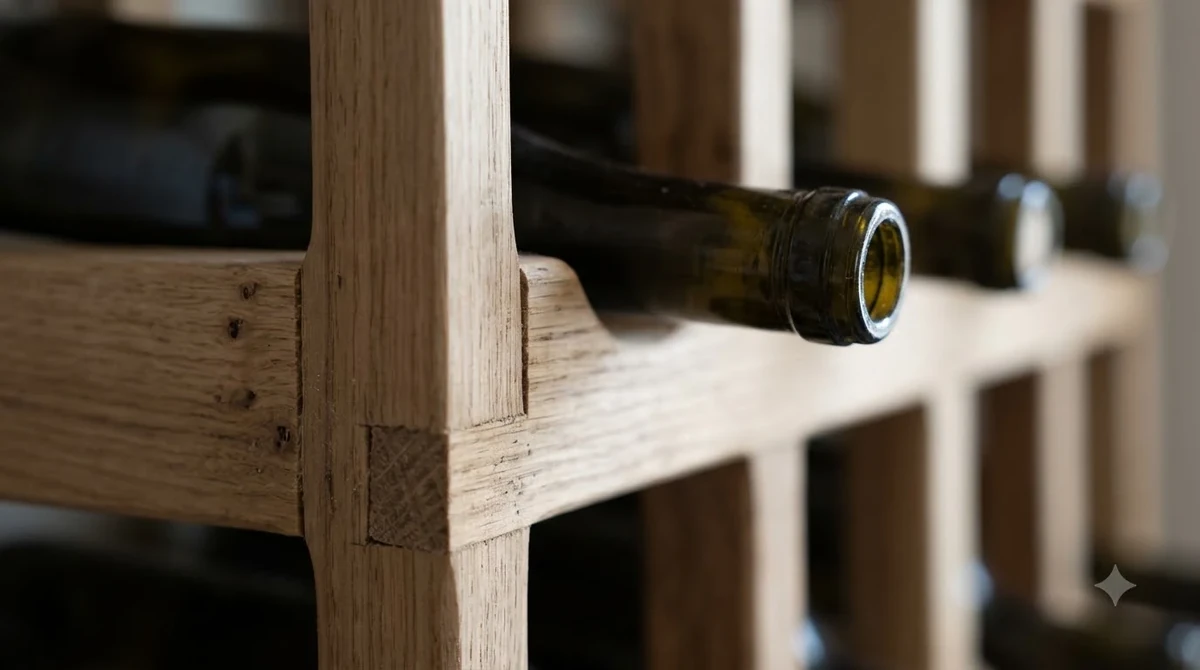
Why it stands out: Reviewers at Wine Enthusiast and specialty cellar builders point to modular stackable kits—often built from knotty alder, mahogany, or dense bamboo—because individual scalloped rails cradle every bottle horizontally without metal-on-glass clinking. Notched crossbars lock together like timber joinery, distributing nearly 200 pounds of glass and wine evenly across the floor rather than stressing a single center post. If your buying habits pick up next year, you can add extra tiers on top without scrapping your original setup.
Keep in mind: Unfinished softwoods like pine can absorb moisture and warp if placed directly on a damp concrete basement floor, so look for eased edges and a low-VOC satin sealant in humid zones. Most standard modular columns are spaced for 750ml Bordeaux cylinders, meaning wide-hipped Pinot Noir or Champagne bottles may fit snugly. Best for: Dry interior closets, under-stair nooks, and dedicated wine rooms where you want warm, furniture-grade storage that scales over time.
Best for Damp Basements & Utility Spaces: Freestanding Metal Wire Racks
Open-frame steel wire grids shrug off cellar humidity, maximize airflow around every bottle, and let you scan labels at a glance without pulling bottles out of deep cubbies.
Why it stands out: According to cellar specialists interviewed by Wine Enthusiast, open wire racking provides superior air circulation and clear visibility compared to enclosed wooden boxes, making it effortless to separate everyday drinkers from bottles meant to rest. Powder-coated steel and chrome-plated grids will never swell, splinter, or harbor mildew in a cool basement where relative humidity hovers between 50 and 80 percent. Many six-tier wire towers also weigh less than solid hardwood units, simplifying room rearrangement before you load them.
Keep in mind: Thin metal rods concentrate pressure along two narrow contact lines on the glass, which can scuff paper labels if you slide bottles in and out carelessly. Tall, narrow wire frames also have a higher center of gravity than wide wooden blocks, so attaching the included anti-tip wall bracket is non-negotiable once all 72 slots are full. Best for: Cool basements, conditioned utility rooms, and high-turnover collections where visibility and moisture resistance matter most.
Best for Tight Spaces & Modern Displays: Wall-Mounted Label-Forward Racks
Metal wall columns and horizontal rail systems lift 72 bottles off the floor entirely, turning a blank dining room wall or narrow hallway into an accessible, gallery-style display.
Why it stands out: Instead of hiding corks in deep grid holes, label-forward rails support each bottle along its neck and base so the front label faces directly into the room. Because a triple-depth wall column projects only about a foot from the drywall, you can fit six full cases into tight walkways or alcoves where a freestanding cabinet would block foot traffic. Anodized aluminum and matte-black steel finishes also blend naturally into contemporary kitchens and dining areas.
Keep in mind: Six cases of wine plus steel hardware create roughly 190 to 215 pounds of dead load, so wall-mounted systems must be anchored directly into 16-inch or 24-inch wood studs or solid masonry—drywall anchors alone will fail. You also need to verify that your chosen wall stays out of direct afternoon sunlight and at least 18 inches away from ovens, radiators, or dishwasher vents. Best for: Condo dwellers, narrow dining walls, and design-minded hosts who want zero floor footprint and instant label readability.
Best for Champagne & Burgundy Bottles: Wide-Slot Bin & Cubby Grids
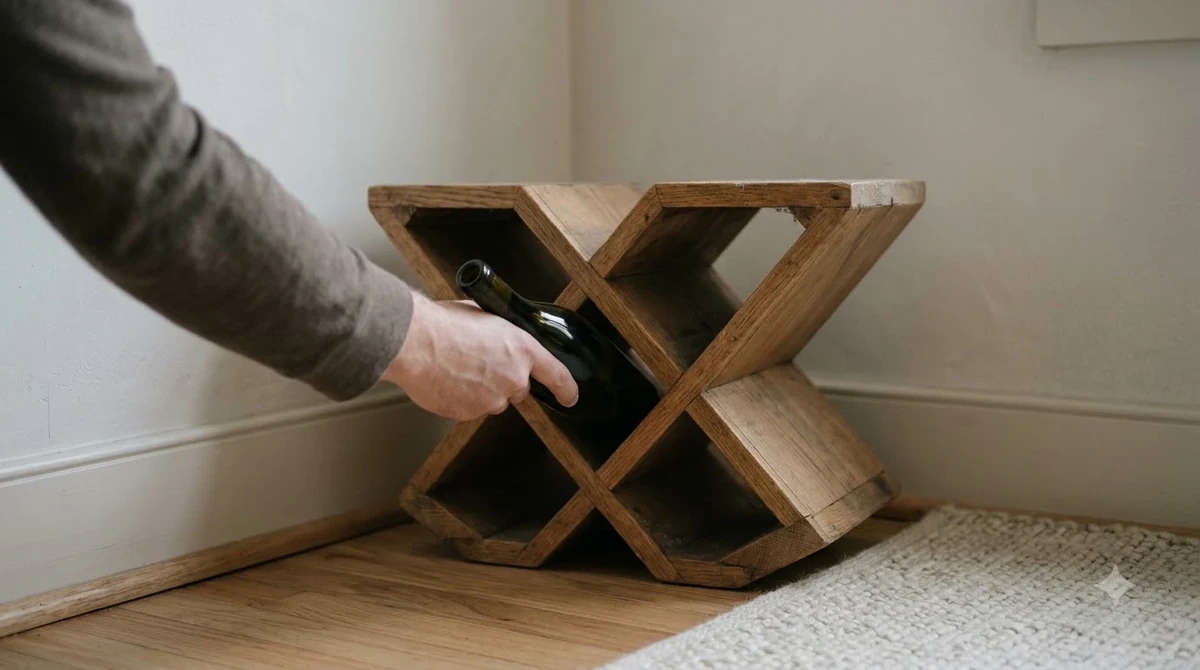
Diamond bins and oversized square cubby racks eliminate the frustration of forcing broad-shouldered sparkling wine, Alsace flutes, and Rhône bottles into tight individual slots.
Why it stands out: Most off-the-shelf 72-bottle racks are engineered around standard 3-inch-diameter Bordeaux bottles, leaving collectors with wider bottles stuck stacking cases on the floor. Bin-style wooden grids combine upper rows of generous 3.5-inch-plus individual slots with open diamond or square bins below that hold up to a dozen bottles apiece. Knowing how many bottles in a case of wine fit per bin makes inventory simple: you can dedicate an entire cubby to a single producer or vintage without tearing paper labels.
Keep in mind: Diamond bins stack bottles directly on top of one another, which means retrieving a bottle on the bottom row requires lifting two or three above it first. Deep cubbies also hide rear labels unless you add neck tags around the capsules. Best for: Collectors who buy mixed case lots of Champagne, Pinot Noir, Chardonnay, or heavy-glass reserve reds.
Best for Dining Rooms & Entertaining: Freestanding Console & Buffet Racks
Tabletop console racks pair a 72-bottle grid base with a finished wood or stone serving top, giving you a dedicated station for decanting, glassware, and corkscrews.
Why it stands out: Unlike raw cellar racking designed for hidden closets, furniture-grade console racks act as functional sideboards in a dining room, living area, or breakfast nook. The waist-high surface keeps bottles within easy reach during dinner parties while providing sturdy workspace for a decanter, ice bucket, or charcuterie board. Hybrid designs that pair a steel frame with hardwood shelves and leveling feet stay rock-solid even on older, slightly uneven wood floors.
Keep in mind: Living spaces are typically warmer and brighter than basements, so console racks are best reserved for bottles you plan to open within three to twelve months rather than decade-long aging projects. Check slot depth as well, since shallower furniture cabinets can leave long-necked bottles protruding slightly past the front trim. Best for: Hosts who store wine in main living spaces and want a cohesive piece of furniture rather than utility shelving.
How to Choose
Before ordering any 72-bottle rack from our Racks & Storage guide, evaluate four practical details that determine whether your bottles stay safe and accessible.
- Room environment first: As storage guides from Wine Enthusiast emphasize, a rack only holds bottles—the surrounding room controls how well wine ages. Aim for a dark, vibration-free spot near 55°F with 50 to 80 percent relative humidity, far from kitchen appliances, radiators, and sunny windows.
- True bottle diameter: Measure the widest bottles you regularly buy. If more than a quarter of your collection consists of Champagne, Oregon Pinot Noir, or heavy Napa Cabernet bottles, prioritize racks with at least 3.5 inches of clearance per slot or open bin compartments.
- Loaded weight and anchoring: A single full 750ml bottle weighs roughly 2.65 to 3 pounds, meaning a full 72-bottle rack exerts around 200 pounds of downward or outward pull. Confirm floor flatness for freestanding towers and locate wall studs before installing any wall-mounted columns or anti-tip straps.
- Horizontal cork contact: Every slot should hold natural-cork bottles completely flat or tilted slightly downward toward the neck so wine stays in continuous contact with the cork, preventing air from drying it out and oxidizing the bottle.
Tip: Leave roughly 20 percent of your 72 slots open when you first load the rack so you have breathing room to reorganize by region or drinking window without unloading three cases at once.
Frequently Asked Questions
How much space does a 72 bottle wine rack take up?
Most freestanding 72-bottle racks measure between 26 and 45 inches wide, 28 to 57 inches tall, and roughly 11 to 13 inches deep. Tall, narrow 6-column towers save floor width in closets, while wider 12-column waist-high racks fit neatly under windows or against dining room walls.
How much does a 72 bottle wine rack weigh when full?
An empty wood or steel 72-bottle rack weighs between 20 and 45 pounds, while 72 filled 750ml bottles add roughly 190 to 215 pounds depending on glass thickness. Plan for a total loaded weight of 210 to 260 pounds, and always secure tall freestanding racks to a wall stud with an anti-tip bracket.
Should I choose a wood or metal 72 bottle wine rack?
Choose solid hardwood or bamboo for dry, temperature-stable rooms where you want gentle bottle cradling and classic furniture styling. Choose powder-coated steel or aluminum for damp basements, modern label-forward wall displays, or tight spaces where slim metal rails maximize capacity.
Can a 72 bottle wine rack hold Champagne and Pinot Noir bottles?
Standard racks with 3-inch or 3.25-inch openings fit Bordeaux bottles easily but often pinch wider Champagne and Burgundy bottles, scraping labels when you pull them out. Look for racks specifying at least 3.5-inch slot openings or choose a wide-cubby bin design for mixed bottle shapes.
Matching your 72-bottle rack to the room’s humidity, your favorite bottle shapes, and how quickly you rotate through six cases ensures your collection stays organized and protected for years. Once you narrow down the right structural style above, compare exact dimensions against your wall or closet space before loading your first case.
More in Racks & Storage
 Best Wine Barrel Racks for Distinctive Bottle StorageUpdated Nov 20, 2026
 Best Wine Storage Tower: Sizing, Protection and Room LayoutUpdated Nov 18, 2026
 Best Pyramid Wine Rack: Materials, Sizes and Where It FitsUpdated Nov 18, 2026
 Best Kitchen Cabinet Wine Rack Insert for Built-In Bottle StorageUpdated Nov 18, 2026
 Best 16 Bottle Wine Rack Options for Kitchens, Bars and CellarsUpdated Nov 18, 2026
 Best 48 Bottle Wine Rack Options for Cellars, Kitchens, and Tight SpacesUpdated Nov 18, 2026