

We may earn a commission when you buy through links on this page, at no extra cost to you. Learn more.
The best wine cellar lighting is low-heat, dimmable or motion-activated light that you switch on only when you need to read a label, because wine should stay out of strong and prolonged light. Warm-tone LED strips and motion-activated pucks suit most cellars, while under-shelf task lights help when you pick bottles often. Choose by how long the light stays on, how much heat the fixture gives off, and where the bottles sit.
Lighting in a wine cellar is a balance. You need enough light to read labels and check bottles, but strong or long exposure can harm the wine, especially bottles stored in clear glass. Storage guidance commonly favors darkness, and the lighting you install should respect that. This guide compares the main lighting types and explains what to check before you install any of them. It covers small closets, home cellars, and tasting rooms.
Quick Comparison of Cellar Lighting Types
Cellar lights fall into five broad groups. They differ mainly in how much heat they give off, whether they can be dimmed, and how easily they switch off when no one is in the room. The table gives a side-by-side view so you can narrow the options before reading the details.
| Lighting type | Heat output | Dimmable | Switching | Best for |
|---|---|---|---|---|
| Low-heat LED strip | Low | Often yes | Manual or timer | Racks and shelves |
| Motion-activated puck | Very low | Usually no | Automatic | Small closets and walk-in cellars |
| Under-shelf task light | Low | Sometimes | Manual | Reading labels at eye level |
| Dimmable ceiling fixture | Moderate | Yes | Manual | Tasting rooms and entertaining |
| Battery-powered puck | Very low | No | Manual | Rentals and rooms without wiring |
Best for Warm-Tone LED Strips on Racks
A low-heat LED strip suits a cellar with wine racks along one or more walls. The strip sits under a shelf or along the edge of a rack and lights the bottle fronts without heating the room. Warm-tone LEDs are a common choice because they render labels in familiar colors and give off less heat than older fixtures.
Why it stands out: a thin strip adds light without bulk, and most designs run cool enough to mount close to the bottles. Adding a dimmer lets you reduce the output when you only need to find a bottle.
Keep in mind: a strip left on for long periods still adds exposure. Put it on a timer or a manual switch, and keep it away from the bottle faces so you do not heat the glass.
Best for: wine racks in a home cellar or a dedicated room.
Best for Motion-Activated Lighting in Small Spaces
A motion-activated puck suits a closet or a small walk-in cellar where the light should only be on while someone is inside. The sensor turns the light on when you enter and shuts it off after a short delay. This style limits how long the bottles are exposed, which matters most in a space you visit a few times a week.
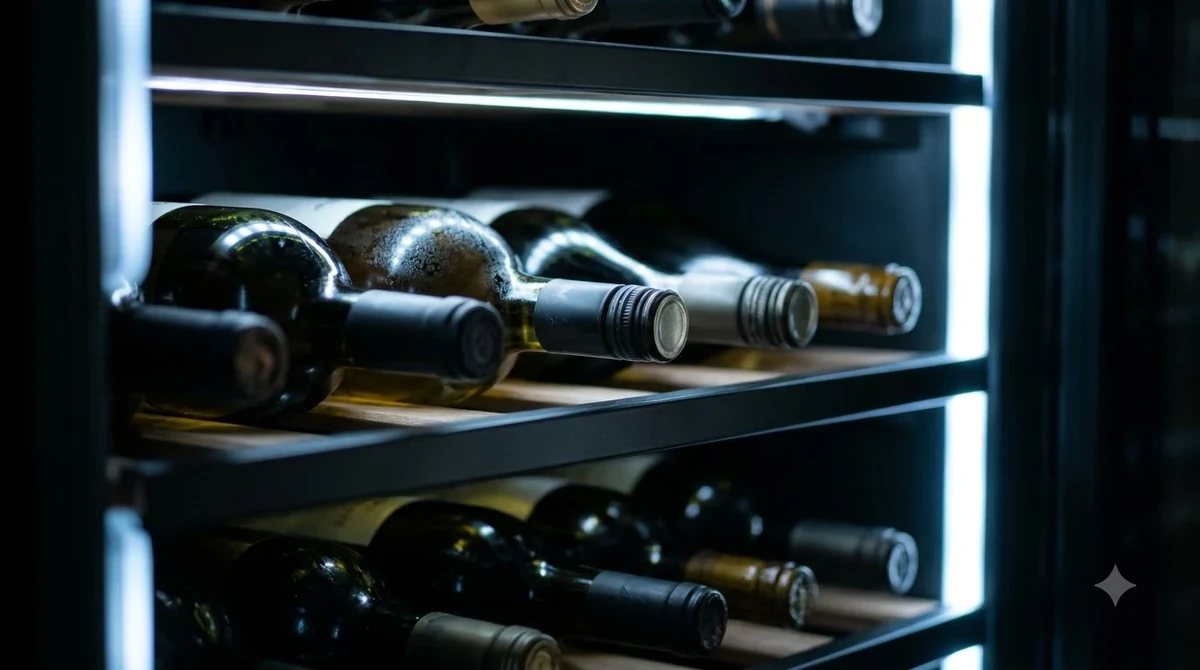
Why it stands out: the light runs only when there is movement in the room, so it is rarely left on by accident. Most pucks give off very little heat, and they install quickly with a small bracket.
Keep in mind: motion sensors can switch off while you are standing still, such as when you are reading a label. Look for a model with a longer delay, and test the sensor range before you mount it.
Best for: closets, small cellars, and rooms where you enter briefly and leave.
Best for Reading Labels at Eye Level
An under-shelf task light puts a focused beam on the bottles you pick most often. Because the light sits at eye level, you can read a label without standing in front of the rack and blocking the light. This style is practical for a cellar where you pull bottles often and want to see details such as vintage and producer.
Why it stands out: a focused beam gives good label visibility while keeping the rest of the room dim. It also points the light down, away from the upper racks.
Keep in mind: the fixture still adds some heat, so choose a low-heat model and avoid mounting it directly above a bottle. A dimmer helps keep the output low when you do not need full brightness.
Best for: people who browse a rack by sight and want to read labels without a flashlight.
Best for Tasting Rooms and Entertaining
A dimmable ceiling fixture suits a tasting room or a dining area next to a wine cellar, where the light sets the mood and the room is used for guests. A dimmer keeps the light soft during a tasting, and the fixture can be placed away from the racks. The room becomes a space for people to gather, while the bottles stay in darker storage.
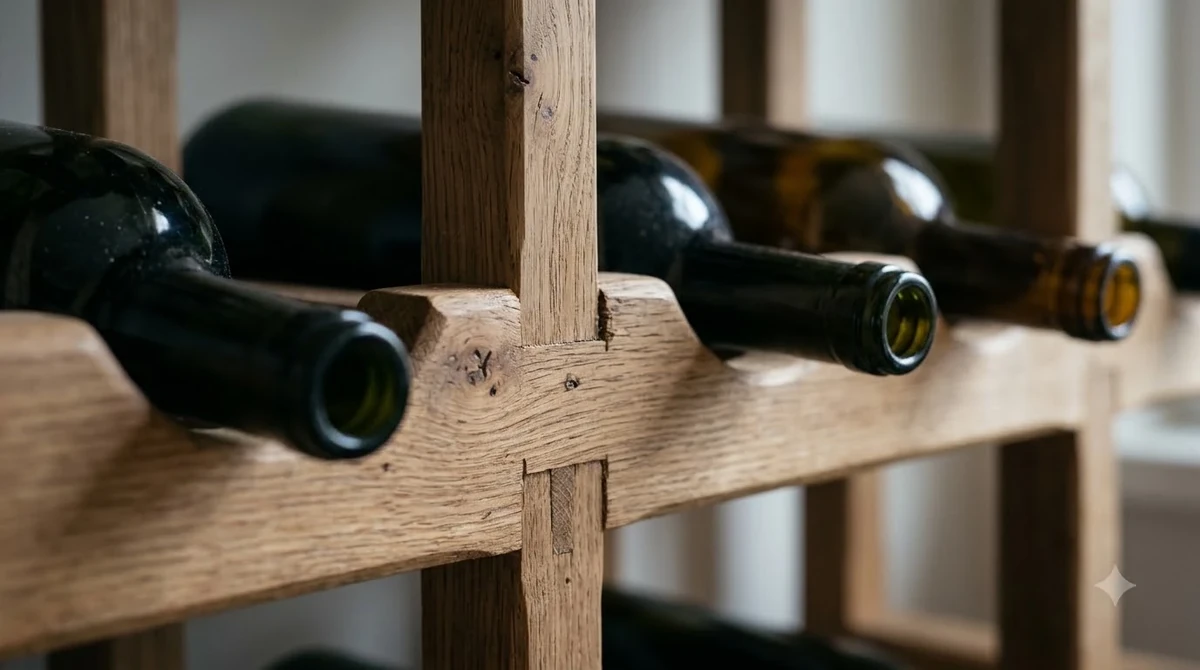
Why it stands out: a dimmable fixture gives a warm, even light for tastings, and it can be set low during storage visits. Keeping the fixture out of the storage zone means the bottles see less light.
Keep in mind: ceiling fixtures give off more heat than strips or pucks, so keep them away from the storage racks. Check the wattage and the heat rating before you install one close to a cellar.
Best for: tasting rooms, dining areas, and home bars next to a storage cellar.
Best for Small Closets Without Wiring
A battery-powered puck suits a rented apartment, a closet, or a room where running new wiring is not practical. It mounts with adhesive or a bracket and runs on batteries, so it can be placed exactly where you need it. Because the light is small and low in output, it fits a compact storage space.
Why it stands out: no wiring means a quick setup, and the light can be moved when you rearrange the racks. Many pucks give off very little heat.
Keep in mind: batteries run down, and a puck without dimming can be bright at close range. Keep it on a manual switch, and replace the batteries before they start to dim.
Best for: renters, small closets, and temporary storage.
How to Choose Cellar Lighting
Start with how long the light will be on and how close the bottles sit to it. Then check the heat output, the switching method, and how the light is placed relative to the racks. A few simple rules keep the storage area dark and the lighting useful.
- Heat: choose low-heat LED fixtures, and mount them away from the bottle faces.
- Switching: use a motion sensor, a timer, or a manual switch so the light is not left on.
- Color: warm-tone LEDs are easier on the eye and show label colors well.
- Placement: keep fixtures out of direct line with the bottles, and aim light at labels rather than glass.
- Glass color: clear-glass bottles, especially white wines, need the most protection from light, so store them in the darkest part of the cellar.
Before you buy, measure the space and mark where the bottles will sit. A fixture should light the label area without sitting directly above a bottle or a stack of cases. Test the light for a few minutes at full brightness, then check how warm the nearest bottle feels by hand after the light has run. If the glass feels warm, move the fixture or lower the output. Plan the wiring or battery replacement schedule at the same time, so the light does not end up left on because it is hard to switch off.
Tip: keep bottles in their original cases or a cabinet when you can. A closed door or a box blocks light far better than any fixture placement.
Frequently Asked Questions
Does light really damage wine in a cellar?
Strong ultraviolet light can harm wine, and light strike can occur in clear-glass bottles, especially whites. A Wine Spectator article on bottles from wine shops notes that ordinary indoor light is unlikely to ruin wine, but direct sunlight should be avoided. Keeping the cellar dark and limiting exposure is the safe approach.
What temperature should a wine cellar be?
The Wine cellar article on Wikipedia describes 13 °C (55 °F) as ideal for short-term storage and long-term aging, and says wine ages normally between 10 and 14 °C (50 to 57 °F). Lighting that adds heat can push the room above that range, so choose low-heat fixtures.
Is LED lighting better than other types for a cellar?
Low-heat LEDs are a common choice because they give off less heat than older bulbs, which helps keep the cellar stable. The best option still depends on how long the light stays on and where the fixture sits relative to the bottles.
Should the light stay on in a wine cellar?
No. Keep the light off except when you are reading labels or moving bottles. A motion sensor, a timer, or a manual switch helps prevent the light from being left on for hours.
Lighting is one part of a cellar setup. For door choices that keep the room dark and sealed, see the guide to a wine cellar door. For shelving that holds bottles at the right angle, read the guide to wine cellar racks. If you are planning how much wine a cellar needs for a gathering, the how many glasses in a bottle of wine guide gives a simple count. You can also browse the Accessories Library for other storage and serving gear.
More in Wine Accessories
 Coravin Vs Vacu Vin: Choose the Right Wine Saver for Your BottlesUpdated Nov 21, 2026
 Zwilling Wine Stopper Review: Preserve Open Bottles LongerUpdated Nov 21, 2026
 Wine Enthusiast Wine Preserver Review: Features, Benefits and LimitationsUpdated Nov 21, 2026
 Wine Enthusiast Wine Stopper: An Easier Way to Reseal Open BottlesUpdated Nov 21, 2026
 Vintorio Wine Opener: Two-Step Cork RemovalUpdated Nov 21, 2026
 Zwilling Wine Aerator Review: Aerate, Pour, and Seal With One ToolUpdated Nov 21, 2026