

We may earn a commission when you buy through links on this page, at no extra cost to you. Learn more.
The best compressor wine cooler is usually a single-zone or dual-zone unit sized to your bottle count, with a cooling system that holds a steady temperature even when the room warms up. A compressor cooler uses the same basic refrigeration cycle as a kitchen fridge, which gives it a firm grip on temperature in a warm room. Choose the zone count based on whether you store one style of wine or several, and pick a size that leaves room for future bottles.
Wine coolers come in two main cooling types, and a compressor model is the one most people choose when they want reliable, consistent storage. This guide explains how compressor coolers work, compares the main styles, and shows what to check before you buy, so you can pick a unit that protects your wine instead of only chilling it.
Quick Comparison
Compressor coolers differ mainly in zone count, capacity, and how they fit into a space. A single-zone unit keeps one temperature for all bottles, while a dual-zone model separates reds and whites. The table compares the common styles on the points that matter most.
| Style | Best for | Temperature control | Footprint |
|---|---|---|---|
| Built-in undercounter compressor cooler | Kitchens and islands | Single or dual zone | Fits under a counter |
| Freestanding single-zone compressor | One wine style, large collections | One temperature | Floor standing |
| Dual-zone compressor cooler | Mixed reds and whites | Two temperatures | Floor or undercounter |
| Compact compressor cooler | Small spaces and apartments | Single zone | Narrow footprint |
Best for Built-In Kitchen Installs
A built-in undercounter compressor cooler is designed to sit flush under a counter or kitchen island. It keeps the wine close to where you cook and serve, and the front-venting airflow is often a deciding factor for installs with limited clearance.
Why it stands out: A built-in unit looks like part of the cabinetry and frees floor space. Many models are sized to match standard cabinet openings, which simplifies installation.
Keep in mind: Check the ventilation requirements before you buy. A compressor needs airflow to shed heat, so a cabinet with no gap can cause the unit to run hot.
Best for: Kitchen remodels and homeowners who entertain often and want wine within reach.
Best for Large Single-Zone Collections
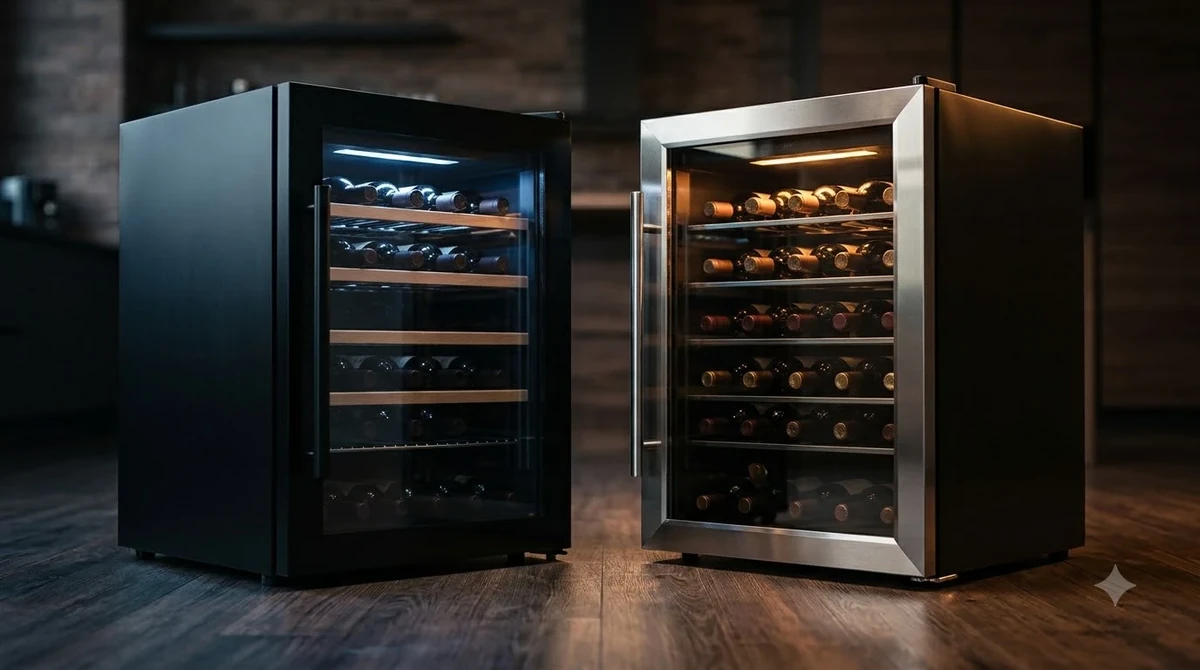
A freestanding single-zone compressor cooler holds one temperature across the whole cabinet. This suits a collection that is mostly one style, such as a cellar of aging reds, and it gives you more capacity than most undercounter models.
Why it stands out: One zone means simpler control and a consistent environment for every bottle. Freestanding units often hold more bottles for the floor space they use.
Keep in mind: If you store both whites and reds, one temperature will be a compromise. Pick the setting that suits your most common bottles.
Best for: Collectors, long-term storage, and anyone who keeps mostly one wine style.
Best for Mixed Reds and Whites
A dual-zone compressor cooler separates the cabinet into two sections, each with its own setting. Reds can rest at a slightly warmer temperature while whites stay cooler, which fits a household that drinks both.
Why it stands out: Two zones let you serve each style at the right temperature without moving bottles between sections. It is convenient for hosts who serve both at the same dinner.
Keep in mind: Dual-zone units cost more space in each section, so they may hold fewer bottles than a single-zone unit of the same size.
Best for: Couples and families who drink both red and white every week.
Best for Large Bottle Counts
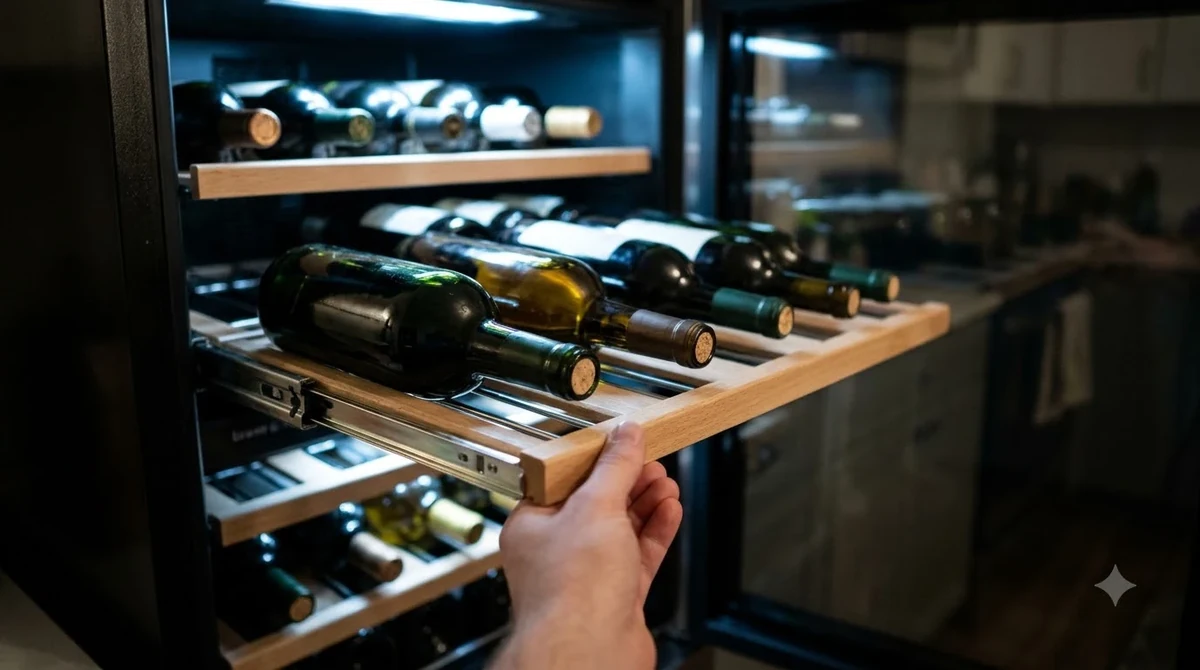
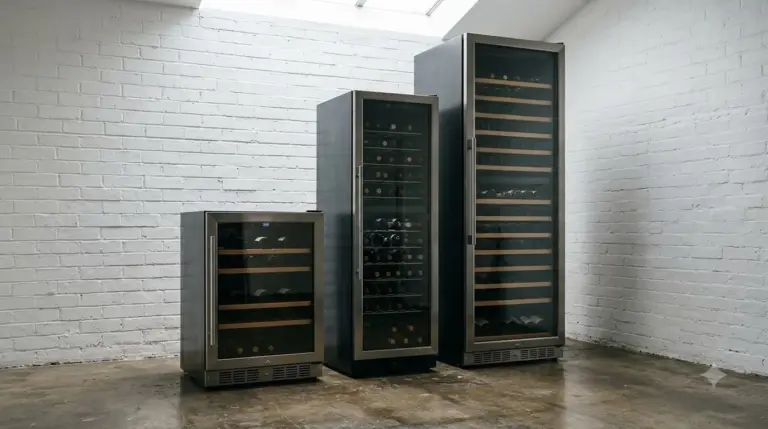
When a collection grows beyond a few dozen bottles, capacity becomes the main concern. Larger compressor coolers are built to hold more bottles, often with sliding or adjustable shelves that make it easier to reach a specific label.
Why it stands out: A high capacity keeps a growing collection in one place, and adjustable racks let you store bottles of different sizes.
Keep in mind: Larger units need more space and more power. Check the room’s ventilation and your electrical setup before buying a large cabinet.
Best for: Serious collectors and anyone who buys wine by the case.
Best for Small Spaces and Apartments
A compact compressor cooler fits a corner, a closet, or a narrow alcove. It holds a modest number of bottles, which is enough for a household that drinks a few bottles a week.
Why it stands out: A small footprint makes it possible to keep wine at home without giving up much space, and compact units are often easier to move during a relocation.
Keep in mind: A small cabinet fills quickly. Plan for the bottles you actually drink, and check the depth of the unit against the bottles you buy most often.
Best for: Renters, students, and households with limited space.
How to Choose
The right compressor cooler depends on where it will live, how many bottles you keep, and how many wine styles you serve. Use the checklist below to narrow the choice before you buy.
- Zones: One zone is simpler and often holds more bottles. Two zones suit mixed reds and whites.
- Capacity: Count the bottles you own now and leave room for growth. A cabinet that is full on the day you buy it is too small.
- Placement: Built-in units need airflow. Freestanding units need clearance on the sides and back.
- Noise and vibration: Compressors run a cycle, so place the unit away from a bedroom if sound matters.
Temperature stability is the reason many people choose a compressor model. The Wikipedia article on wine cellars says wine can be stored satisfactorily between about 7 and 18 °C, that about 13 °C is considered ideal for both short-term storage and long-term aging, and that swings of 14 degrees or more can speed aging. The same article lists vibration and fluctuating temperature as hazards to wine. A compressor cooler that holds its setting helps with exactly those points.
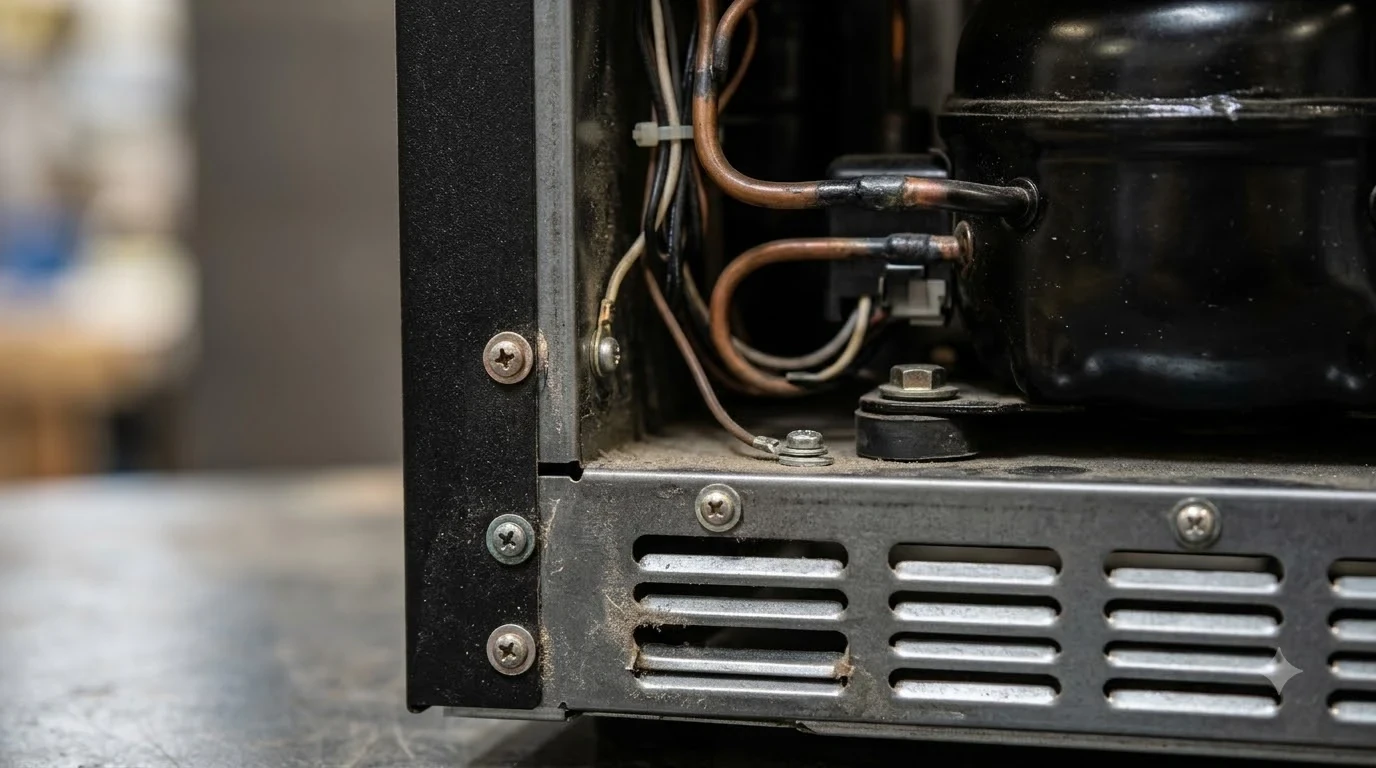
The compressor itself works by compressing refrigerant, letting it give up heat in a condenser, and then drawing heat from the cabinet at an evaporator, as described in the Wikipedia article on vapor-compression refrigeration. Because the cycle moves heat out of the cabinet, the unit needs airflow around the condenser. This is why placement matters as much as capacity when you compare models.
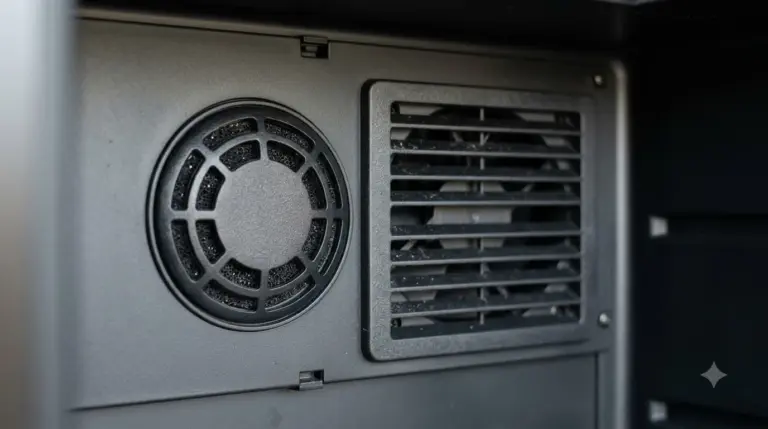
Installation and upkeep also shape how well a compressor cooler performs over time. Set the unit on a level surface so the door seals evenly and the shelves do not tilt bottles. Dust the condenser grille or coils every few months, because a clogged surface makes the compressor work harder to shed heat. Keep the door closed as much as possible, and avoid loading warm bottles all at once, since a large batch of warm glass can push the cabinet temperature up for a while before it settles back.
Plan for the rest of the room, too. A cooler that sits next to an oven, a radiator, or a window that gets afternoon sun has to fight the room’s heat, and a steady setting becomes harder to hold. Choose a location that stays within a comfortable range through the year, and check the cabinet thermometer after a hot week to see how the unit is handling the conditions. Small adjustments in placement often do more for stability than buying a larger model.
Frequently Asked Questions
What is a compressor wine cooler?
A compressor wine cooler uses a refrigeration cycle, with a compressor, condenser, and evaporator, to keep the cabinet at a set temperature. It is the same basic technology as a kitchen refrigerator, scaled to hold wine.
Is a single-zone or dual-zone compressor cooler better?
A single-zone unit suits people who keep one wine style or a large collection. A dual-zone unit is better if you serve both reds and whites and want each at its own temperature.
What temperature should a wine cooler hold?
The Wikipedia article on wine cellars describes 13 °C as ideal for short-term storage and long-term aging, and says storage between about 7 and 18 °C can work if changes are gradual. Set your cooler to a steady point in that range and avoid large swings.
Where should I put a compressor wine cooler?
Place it where the room stays cool and the unit has airflow. Keep it away from direct sunlight and heat sources, and leave clearance around the vents so the compressor can release heat.
A compressor cooler is an investment in steady storage, and the right model is the one that matches your space and your habits. To compare smaller options, see the guide to under counter wine coolers, or the roundup of single zone wine coolers for a simpler single-temperature setup. For more on how long a bottle keeps once it is opened, read how long wine lasts after opening.
More in Wine Fridges by Type
 Best White Wine Fridge for Reliable Chilling and StorageUpdated Nov 20, 2026
 Best Smart Wine Fridge for Steady Temperatures and Remote ChecksUpdated Nov 18, 2026
 Best Black Under Counter Wine Fridge Options for Kitchens and IslandsUpdated Nov 18, 2026
 Best Black Slim Wine Fridge for Narrow Gaps and Dark KitchensUpdated Nov 18, 2026
 Best Built In Dual Zone Wine Fridge Options by Kitchen LayoutUpdated Nov 18, 2026
 Best Slim Built in Wine Cooler: 5 Space-Saving Styles for Tight KitchensUpdated Nov 18, 2026