

We may earn a commission when you buy through links on this page, at no extra cost to you. Learn more.
The best energy efficient wine fridge is usually a compressor unit sized to your bottle count and kept in a cool room. Compressor cooling is the more efficient technology, so it suits everyday storage. A smaller cabinet uses less energy simply because it has less space to cool, and placement in a cool, well-ventilated spot cuts the workload further. The right pick depends on how many bottles you keep, where the unit will sit, and whether quiet operation matters more than efficiency.
Energy use in a wine fridge comes down to how hard the cooling system has to work. Wikipedia’s article on thermoelectric cooling notes that compression-cycle systems reach roughly 40 to 60 percent of the ideal refrigerator efficiency, while thermoelectric (Peltier) modules reach only about 10 to 15 percent. Thermoelectric units have other advantages, such as no moving parts and no refrigerants, but they are generally used where those features matter more than raw efficiency. This guide compares five buying angles, then gives a checklist for keeping energy use low without sacrificing storage.
Quick Comparison of Energy Efficient Wine Cooler Styles
The table below compares the main decision points for efficient wine refrigerators: the cooling method, the cabinet size, where the unit fits, and how much noise it tends to make. Use it to match a style to your room before you look at specific features.
| Buying angle | Cooling method | Energy profile | Typical placement | Noise |
|---|---|---|---|---|
| Compact compressor units | Compressor | Efficient for a small load | Kitchen or bar | Audible hum |
| Mini units with low draw | Compressor or thermoelectric | Low total use from a small cabinet | Desk, dorm, or counter | Varies by design |
| Thermoelectric units | Thermoelectric (Peltier) | Lower efficiency per unit of cooling | Quiet rooms | Very quiet |
| Cool-room placement | Compressor | Less work when the room stays cool | Interior wall, pantry | Audible hum |
| Long-term storage | Compressor | Steady operation with fewer temperature swings | Quiet, dark area | Audible hum |
The main trade-off is between efficiency and quiet operation. Compressor units cool more efficiently but make a steady hum, while thermoelectric units run silently and have no moving parts, at the cost of more energy for the same cooling. Choose the method that fits the room, then match the size to the bottles you keep.
Best for Everyday Storage with a Compressor
A compressor-cooled wine fridge is the standard choice for keeping a steady temperature over time. It suits the bottles you open every week and the ones you keep for a few months, and it handles changes in room temperature better than a thermoelectric unit.
Why it stands out. Compression-cycle cooling reaches the higher efficiency range described in the Wikipedia overview of thermoelectric cooling, so each unit of cooling costs less energy. A well-sized compressor unit also holds its setting without running constantly.
Keep in mind. Compressor units produce an audible hum and may need clearance for airflow. A unit packed tightly into a cabinet works harder to shed heat, which can reduce its efficiency, so follow the install guide for spacing.
Best for. Kitchens, bars, and anyone who wants the most efficient everyday option without giving up stable temperatures.
Best for Small Mini Units with Low Draw
A mini wine fridge uses less energy in total because it has far less space to cool. It suits a single shelf of wine, a desk corner, or a dorm room where a full-size cabinet would be overkill.
Why it stands out. Less interior volume means fewer bottles to keep cool and a smaller cabinet to heat up each time the door opens. For a small collection, that can make a mini unit the lowest-energy option in the house.
Keep in mind. A mini unit holds only a few bottles, so it works best for wine you drink soon. Check the temperature range before buying, because some small units are designed mainly for chilling rather than holding a steady storage band.
Best for. Students, studio apartments, and anyone who keeps a small rotation of open bottles. For a closer look at size options, see the mini wine fridge range and the small wine fridge range.
Best for Quiet Rooms with Thermoelectric Cooling
A thermoelectric wine cooler uses no compressor and no refrigerant, so it runs silently. It suits a bedroom, a home office, or a living area where a humming appliance would be a nuisance.

Why it stands out. The Wikipedia overview of thermoelectric cooling lists the solid-state design, long life, and low maintenance as key advantages, along with compact size. For a quiet room, these features matter more than efficiency alone.
Keep in mind. The same article describes thermoelectric cooling as less efficient than compression cooling, so energy use per bottle is higher. Thermoelectric coolers also depend on the room temperature, so place them in a cool space and avoid direct heat.
Best for quiet spaces where noise matters most and the wine is stored for short periods. Thermoelectric units are not the first choice for long aging, so pick them for convenience rather than efficiency.
Best for Cool-Room Placement
A wine fridge works harder when the room around it is warm. Placing the unit in a cool, shaded area reduces the work the cooling system has to do, and that is the simplest efficiency gain available to any owner.
Why it stands out. The Wikipedia overview of wine cellars describes a stable storage range of about 7 to 18 °C (45 to 64 °F), with roughly 13 °C (55 °F) considered ideal, and it stresses that large temperature swings are the real concern. A cool, steady room helps the fridge hold that range with less effort.
Keep in mind. Avoid placing the unit beside an oven, dishwasher, or a sunny window, and leave clearance for the vent. A garage or utility room may be too warm or too cold for the setting, so test the temperature before you move the bottles in.
Best for homes where the kitchen is warm or the best location is an interior wall, pantry, or closet. Placement often matters more than the model you choose.
Best for Long-Term Storage with Fewer Swings
A steady, well-sealed unit saves energy over time because the cooling system does not have to correct large temperature swings. This suits wine kept for months or years rather than for weekly drinking.
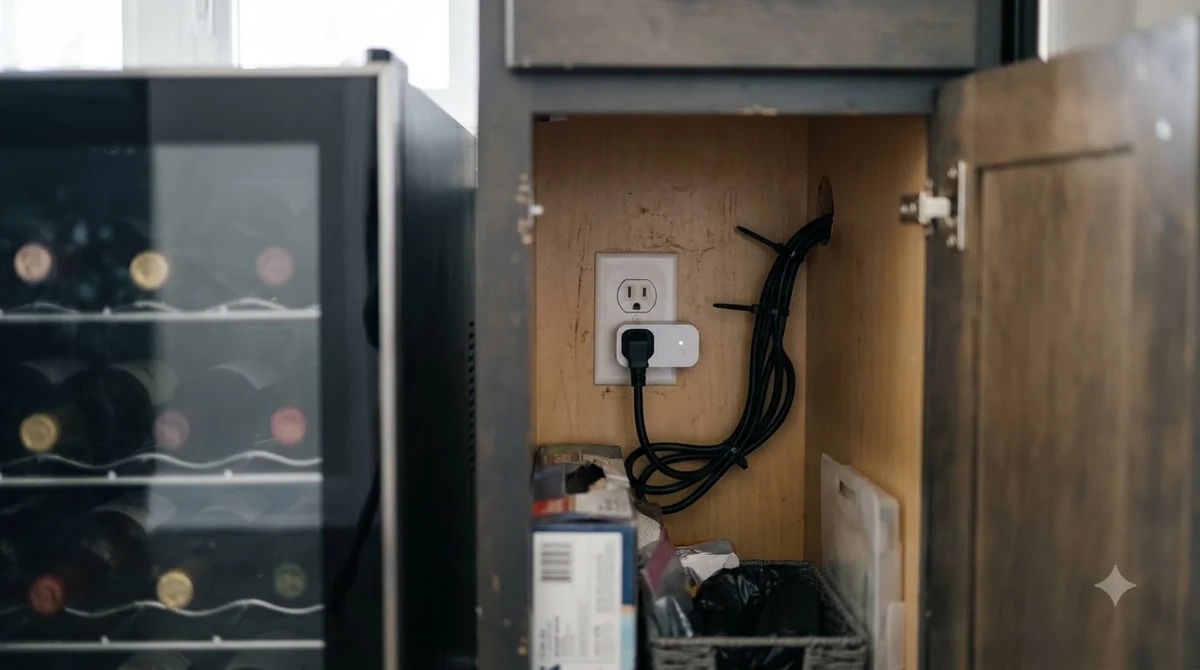
Why it stands out. The Wikipedia overview of wine cellars notes that large temperature swings can make wine breathe through the cork and speed up aging. Keeping the temperature stable protects the wine, and it also prevents the compressor from cycling hard to recover from swings.
Keep in mind. Light and vibration also matter. Keep the unit away from direct sun and from appliances that shake, and check that the door seal closes firmly, since a loose seal lets warm air in each time the door is closed.
Best for collectors and households that keep a small aging stock. If you wonder how long an opened bottle will last, read how long does wine last after opening before you plan the rotation.
How to Choose an Energy Efficient Wine Fridge
Use these checks before you buy. They help you keep the energy use low while still holding a steady storage temperature.
- Cooling method: choose compressor cooling for efficiency and thermoelectric cooling for silence.
- Size: match the capacity to the bottles you keep, since extra empty space still has to be cooled.
- Room temperature: place the unit in a cool, shaded, well-ventilated spot.
- Ventilation: leave the clearance the install guide asks for, especially in a cabinet.
- Door seal: check that the gasket closes tightly and stays clean.
- Temperature range: confirm the unit can hold the storage band you need, not only a single set point.
An efficient wine fridge is one that holds a steady temperature with the least work. A well-sized unit in a cool room is the simplest way to achieve that, and it protects the wine at the same time.
Frequently Asked Questions
Which type of wine fridge uses the least energy?
A compressor unit is usually the more efficient choice for steady cooling, because compression-cycle systems reach a higher share of the ideal refrigerator efficiency than thermoelectric modules do. A thermoelectric unit trades some efficiency for silent operation and the absence of moving parts.
Does a smaller wine fridge always save energy?
Generally, yes, because a smaller cabinet has less space to cool and warms up less each time the door opens. The saving only makes sense if the unit still holds the bottles you need and keeps a stable temperature.
Does room temperature affect how much energy a wine fridge uses?
Yes. A fridge in a warm room works harder to hold its set point. Placing the unit in a cool, shaded spot with good airflow reduces that workload and helps the temperature stay steady.
Is a thermoelectric wine cooler good for long-term storage?
It can hold wine for shorter periods, but it is less efficient than compression cooling and depends more on the room temperature. For long-term aging, a compressor unit with a stable temperature range is generally the better choice.
An energy efficient wine fridge works best when its size, cooling method, and location all suit the way you store wine. Once you know your bottle count, compare the wider By type options to find the cabinet that fits your room.
More in Wine Fridges by Type
 Best White Wine Fridge for Reliable Chilling and StorageUpdated Nov 20, 2026
 Best Smart Wine Fridge for Steady Temperatures and Remote ChecksUpdated Nov 18, 2026
 Best Black Under Counter Wine Fridge Options for Kitchens and IslandsUpdated Nov 18, 2026
 Best Black Slim Wine Fridge for Narrow Gaps and Dark KitchensUpdated Nov 18, 2026
 Best Built In Dual Zone Wine Fridge Options by Kitchen LayoutUpdated Nov 18, 2026
 Best Slim Built in Wine Cooler: 5 Space-Saving Styles for Tight KitchensUpdated Nov 18, 2026