

We may earn a commission when you buy through links on this page, at no extra cost to you. Learn more.
The best wine label remover depends on the label and the glue: most paper labels come off best with warm water and gentle scraping, while stubborn adhesive usually needs an oil-based or adhesive-safe remover. Soaking loosens the paper, a plastic scraper lifts it without scratching the glass, and a final wipe with an oily or solvent-free remover clears the glue. Choose a remover that matches the label type, and avoid sharp tools that can mar the bottle.
Removing a label sounds simple, but a bottle can keep its glue and paper residue for days if the wrong method is used. Keepsake labels, gift bottles, and empty bottles for crafts all have different needs. This guide groups the main approaches by what they do well so you can match the method to the bottle in front of you.
Quick Comparison
The main approaches differ in how much heat or chemistry they use and how much time they take. Gentle methods preserve a decorative label, while stronger removers clear heavy adhesive quickly. The table compares the common approaches on the points that matter most when you are working on a glass bottle.
| Approach | Best for | Speed | Glass risk |
|---|---|---|---|
| Warm soak and gentle scrape | Paper labels on empty bottles | Moderate | Low |
| Oil-based remover | Sticky glue residue | Moderate | Low |
| Adhesive remover spray | Heavy or old adhesive | Fast | Low to moderate |
| Plastic scraper or razor tool | Stubborn paper edges | Fast | Moderate if misused |
Best for Paper Labels on Empty Bottles
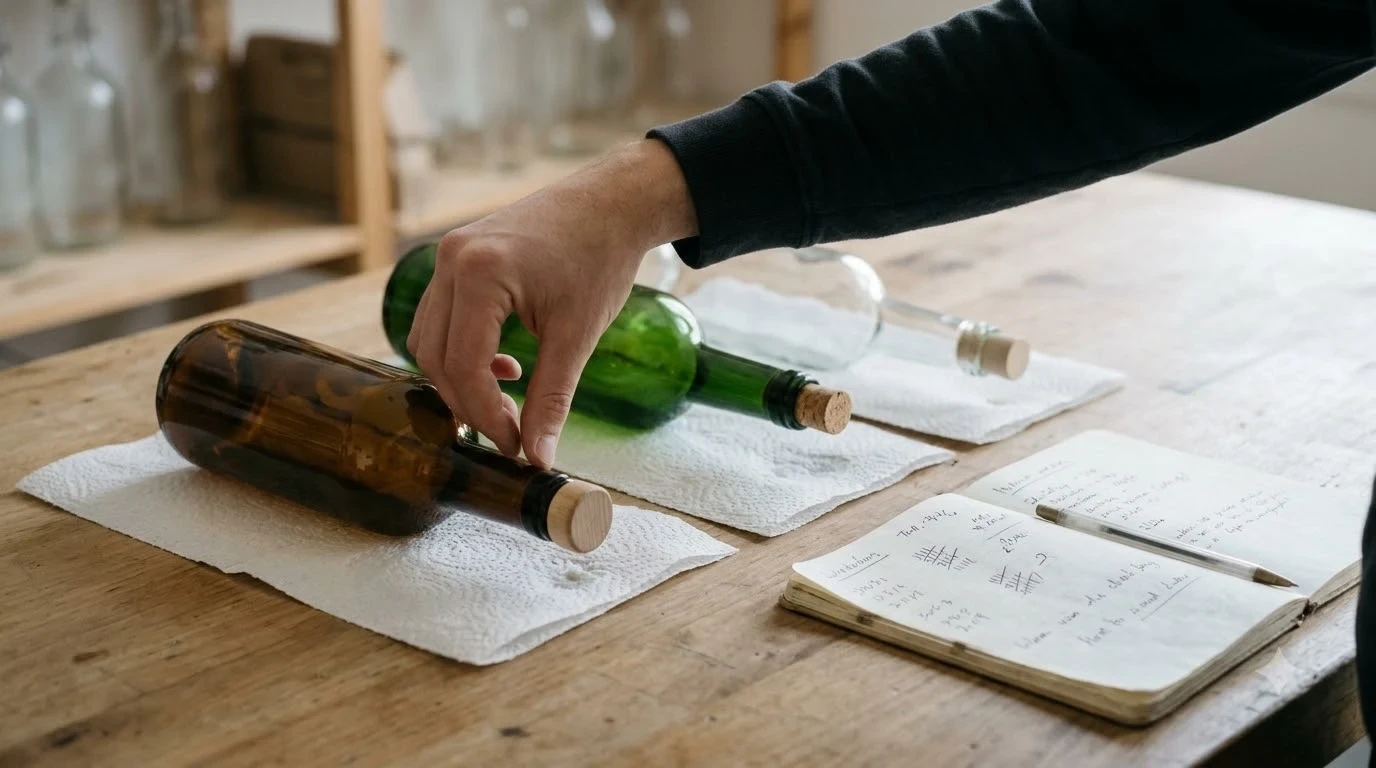
Most wine labels are printed paper glued to the glass. Soaking the bottle in warm water for a while softens the paper and loosens the adhesive, so the label can be peeled away in larger pieces. This approach is cheap and gentle, and it works well on the bottles people keep for decoration or refilling.
Why it stands out: It uses ordinary household items and does not require chemicals. Warm water is also the least likely to damage a decorative bottle finish.
Keep in mind: Avoid very hot water on a bottle that is still cold inside, because sudden temperature changes can stress glass. Use warm water and let the bottle sit rather than forcing the label off.
For a typical bottle, the soak is the part that takes the most patience. Fill a basin or sink with warm water deep enough to cover the label, and let the bottle rest for several minutes before you start. Some paper labels release on their own once they are fully wet, and others need a gentle press with a thumb to start the edge. Peel from the top corner, keeping the paper close to the glass so it does not fold back on itself and tear.
Best for: Empty bottles, craft projects, and labels that peel off cleanly once the paper is wet.
Best for Sticky Glue Residue
After the paper is gone, a film of glue often remains. Oil-based removers and a small amount of mild oil loosen this residue without scratching the glass, and they are easy to wipe away with a soft cloth.
Why it stands out: Oil breaks down the glue gently and keeps the surface from drying out. It is a good final step after a soak.
Keep in mind: Oily residue can leave a film if you do not wash the bottle with dish soap afterward. Rinse thoroughly and dry the bottle before using it again.
Best for: Clean-up after a soak, and bottles where the paper came off but the glue stayed.
Best for Heavy or Old Adhesive
Labels that have been on a bottle for years, or that were applied to a cold, damp surface, can bond very strongly. An adhesive remover is designed to break down this kind of glue faster than water or oil alone.
Why it stands out: It works on tough adhesive in a short time, which saves effort on bottles with stubborn residue.
Keep in mind: Read the label on any solvent-based remover, ventilate the room, and test a small spot first. Some removers can cloud certain finishes or leave an odor.
Best for: Older bottles, gift bottles with long-lasting adhesive, and residue that resists oil.
Best for Stubborn Paper Edges
Sometimes a few corners of paper stay stuck after the main label is gone. A plastic scraper, a wooden tool, or a soft-edged razor designed for glass can lift those edges without scratching the surface.
Why it stands out: A targeted tool removes small spots that a soak cannot reach, and it is faster than repeated scrubbing.
Keep in mind: Always hold the blade at a low angle and keep it flat against the glass. A metal edge pressed hard can leave fine scratches, so plastic or wood is the safer choice.
Best for: Edges, corners, and small patches of paper on curved bottles.
Best for Keepsake and Gift Labels
Some people want to remove a label without ruining it, for example to keep a commemorative or special-occasion label in a scrapbook. A slow, dry-peel approach and a careful soak keep the paper intact so it can be framed or saved.
Why it stands out: Patience and a light touch preserve the design, and the label can be kept flat and dry afterward.
Keep in mind: Many wine labels are printed on thin paper that tears easily when wet. Work slowly, and let the label dry between paper towels under a light weight.
If you plan to display the label, consider a clear sleeve or a shadow box with UV-filtering glass so the ink fades more slowly in sunlight.
Best for: Keepsake labels, wedding or anniversary bottles, and labels you want to frame.
Preparation makes almost every method work better. Start by removing the foil or capsule at the neck, since it can tear or leave shiny flecks in the glue. If the bottle is dusty or has a sticky outer coat from sugar or spilled liquid, wash it first with warm soapy water and dry it completely. A dry, clean surface lets the remover grip the adhesive instead of spreading it, and it shows you clearly where the paper ends and the glue begins.
Timing matters too. A soak that is too short leaves the paper stiff and prone to tearing, while a soak that runs for a very long time can soften the paper so much that it smears. Check the label every so often, and lift a corner to see whether it peels cleanly. Work in a well-lit area so you can see the last traces of glue, and keep a towel under the bottle to catch drips and protect your counter.
How to Choose
Pick the method that fits the label and the bottle. The right choice depends on how the label was applied, how much glue remains, and whether you want to keep the paper.
- Label type: Paper labels respond best to soaking. Foil, metallic, or laminated labels may need a different approach or a remover made for that finish.
- Residue: Oil cleans light glue. Adhesive removers handle heavy, old glue.
- Glass finish: Test any remover on a hidden spot, especially on frosted or decorated bottles.
- Tools: Use plastic or wood scrapers, not metal, to protect the surface.
Glass bottles are fairly sturdy, but they still respond to heat and pressure. The Wikipedia article on wine bottles notes that wine bottles use fairly thick glass, and that the foil at the top can serve as a decorative element of the label, so it is worth removing the top foil and any paper strip under it before working on the main label. Doing that first makes the rest of the process cleaner.
Frequently Asked Questions
What is the easiest way to remove a wine label?
Soak the bottle in warm water until the paper softens, then peel the label slowly. Most paper labels come off in large pieces. Follow with an oil or dish soap wash to remove the leftover glue.
Will removing a label scratch the glass?
It can if you use a metal blade or press hard. A plastic or wooden scraper, held at a low angle, is much less likely to mark the surface. Work gently and avoid abrasive pads on clear glass.
What removes sticky glue from a wine bottle?
A small amount of oil or an adhesive remover breaks down glue residue. Wash the bottle with warm soapy water afterward so no oily film remains, then rinse and dry it.
Can I keep a wine label in one piece?
Yes, if you soak the bottle gently and peel slowly. Let the label dry flat between paper towels under a light weight. Thin paper tears easily when wet, so patience matters more than speed.
A clean bottle is easier to reuse, decorate, or display, and the right label remover makes that job quicker. For more ideas on keeping a home bar organized once the bottles are clean, see the guide to a bar cart, or check out the number of glasses in a bottle of wine if you are planning a gathering around the bottles you have just cleaned.
More in Wine Accessories
 Coravin Vs Vacu Vin: Choose the Right Wine Saver for Your BottlesUpdated Nov 21, 2026
 Zwilling Wine Stopper Review: Preserve Open Bottles LongerUpdated Nov 21, 2026
 Wine Enthusiast Wine Preserver Review: Features, Benefits and LimitationsUpdated Nov 21, 2026
 Wine Enthusiast Wine Stopper: An Easier Way to Reseal Open BottlesUpdated Nov 21, 2026
 Vintorio Wine Opener: Two-Step Cork RemovalUpdated Nov 21, 2026
 Zwilling Wine Aerator Review: Aerate, Pour, and Seal With One ToolUpdated Nov 21, 2026