


We may earn a commission when you buy through links on this page, at no extra cost to you. Learn more.
The best wine glass dishwasher rack holds each glass by the stem, keeps bowls from touching, and leaves the upper basket open for water and detergent to reach every surface. Stem holders and inverted-glass racks do most of the work, while cup and stemware inserts suit mixed sets. Check the rack against your own dishwasher’s upper basket before you buy, because the fit matters more than the number of slots.
Wine glasses are among the most fragile items in a dishwasher. Thin bowls can knock against plates and cutlery, stems can bend, and the glass itself can pick up a cloudy film over time. A dedicated rack solves most of these problems by fixing each glass in place and lifting it clear of its neighbors. This guide explains the main rack types, how they behave in a standard upper basket, and what to check before buying one.
Brand names are left out on purpose. The aim is to help you judge a rack by its design and fit, so you can compare options that look alike on a product page.
Quick Comparison of Glass Rack Types
Most racks use one of three holding methods: a grip on the stem, a cup or socket under the base, or a flat tray that rests the bowl. Each method suits a different glass shape, so start with the glasses you own.
| Rack type | How it holds the glass | Best glass shape | Fit risk | Drying |
|---|---|---|---|---|
| Stem holder rack | Clamps or cups the stem | Stemmed wine glasses | Low if sized right | Good, bowls face down |
| Inverted cup insert | Holds the rim or base in cups | Mixed glassware | Moderate | Good |
| Flat tray or mat | Keeps glasses apart on a flat surface | Stemless and tumbler glasses | Low | Fair, water can pool in bowls |
| Upper basket divider | Separates glasses with fixed dividers | Any, if the basket is standard | Moderate, depends on basket size | Good |
The table is a guide to fit rather than a ranking. A stem holder rack is usually the best match for stemmed wine glasses, while a flat mat suits stemless glasses that would otherwise tip over in a basket.
Best for Stemmed Wine Glasses
A stem holder rack is designed for glasses with long stems. Each glass sits by its stem in a clamp or cup, so the bowl hangs clear of its neighbors and the rack keeps the glasses from knocking together during the cycle.
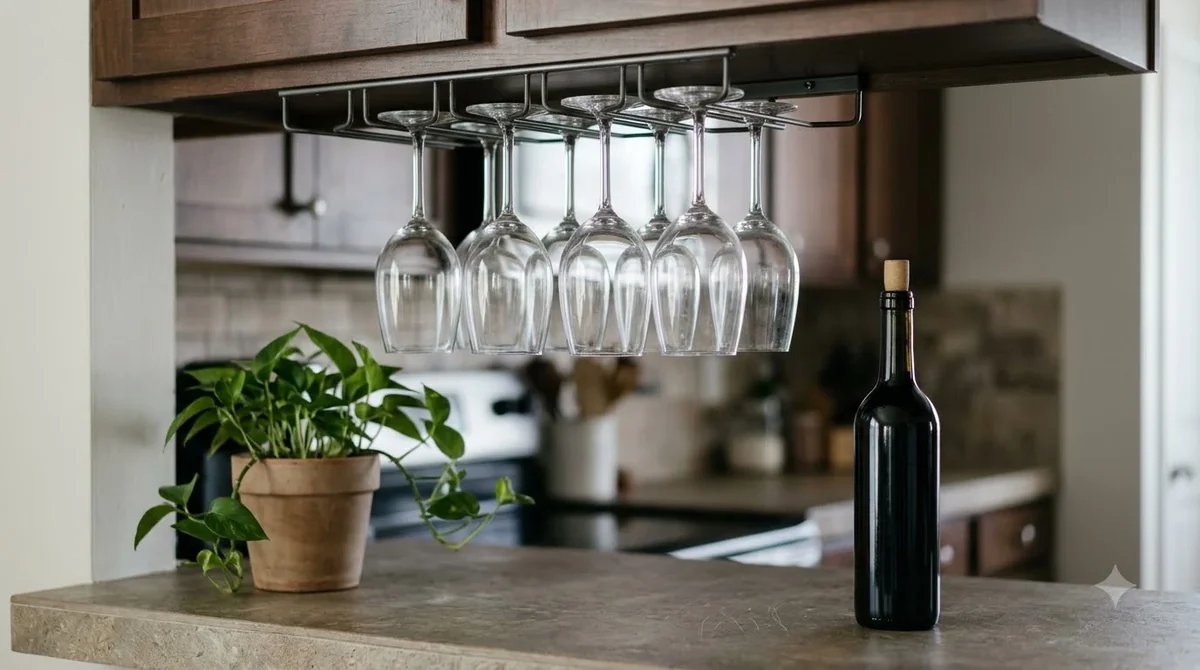
Why it stands out: The stem is the strongest part of a wine glass, and holding it keeps the bowl out of harm’s way. The Wikipedia article on stemware explains that the stem raises the bowl above the foot and lets the drinker hold the glass without warming the drink. A rack that keeps that structure intact protects the glass’s shape as well as its surface.
Keep in mind: Stem holders only work if they match the stem’s diameter. A clamp that is too tight can crack a thin stem, and one that is too loose lets the glass tip. Check the fit with your own glasses before the first full cycle.
Best for: households with a set of stemmed wine glasses that gets washed often.
Best for Mixed Glassware
An inverted cup insert suits a basket that holds several glass types, including tumblers, small stemmed glasses, and dessert wine glasses. Cups keep each glass in its own place, which is useful when the bowls differ in size.
Why it stands out: Mixed sets are hard to load in a flat basket because taller glasses lean on shorter ones. Cups hold the base or rim in a fixed spot, so the load stays stable and the bowls face down to drain.
Keep in mind: Cup inserts take up space in the upper basket, so they can crowd out other items. Check the height of the inserts against the height of your tallest glass, and make sure the basket can still close fully.
Best for: hosts who wash a mix of wine, water, and dessert glasses in one cycle.
Best for Stemless and Tumbler Glasses
A flat tray or mat keeps stemless glasses apart on a flat surface. It suits glasses that have no stem to hold, and it spreads the load across the whole basket.
Why it stands out: A flat tray is simple and cheap to replace. It keeps stemless glasses from rolling or clinking, and the base of each glass rests on a fixed spot, which reduces the risk of cracks from sharp contact.
Keep in mind: Water can pool in the bowls of a flat-set glass, which can leave spots. Choose a tray with a slight tilt or raised edges, and dry the glasses promptly after the cycle. Check that the tray sits flat on the basket’s base.
Best for: stemless wine glasses, tumblers, and everyday glassware that does not need a stem holder.
Best for Standard Upper Baskets
A divider that fits the upper basket separates glasses with fixed walls. It suits a standard basket and gives each glass a defined space without a separate rack.
Why it stands out: Dividers are simple to load and do not add much weight. Because they sit in the basket, they can be removed when the basket is needed for other items.
Keep in mind: Dividers depend on the basket’s size, and a divider that does not match the basket can rock or block the spray arms. Upper baskets also differ in design across machines, so measure yours before ordering. The Wikipedia article on dishwashers notes that the upper rack is the usual place for glassware, and that modern machines commonly have two or three racks.
Best for: anyone with a standard dishwasher who wants a simple, removable divider.
Best for Protecting Heirloom and Lead Crystal
Some glassware needs more care than a standard rack can give. Heirloom pieces and lead crystal are better washed by hand, because high heat and strong detergent can damage them over time.
Why it stands out: A rack cannot protect a glass from the dishwasher’s chemistry. The Wikipedia article on dishwashers notes that high temperatures and strong alkaline detergents can change lead in lead crystal into a soluble form, which is a health concern for later users. A rack that keeps the glass in place does not change that risk.
Keep in mind: Wash lead crystal and antique glassware by hand in mild detergent and warm water. Dry it with a soft cloth or let it air-dry on a towel. If you are unsure what the glass is made of, treat it as lead crystal and avoid the machine.
Best for: heirloom sets, cut crystal, and any glass with an unknown history.
How to Choose a Wine Glass Dishwasher Rack
Start with the shape of your glasses, then the size of your upper basket, and finally the detergent and water you use. Those three answers narrow the field faster than any feature list.
- Glass shape: stemmed glasses need a stem holder, stemless glasses need a flat tray, and mixed sets do best with cup inserts.
- Basket size: measure the upper basket before buying. A rack that does not fit can block the spray arms or fail to close.
- Drying: choose a design that lets water drain from the bowls. Pooled water causes spots.
- Water and detergent: hard water leaves spots, and the Wikipedia article on dishwashers notes that rinse aid helps reduce them. Strong detergent can cloud glass over time, so the detergent load matters too.
- Materials: look for a rack that is sturdy and easy to remove for cleaning.
Racks are only one part of the process. Load the glasses so they do not touch, run the upper basket on a standard cycle, and remove them promptly to avoid spots. For accessories that help with storing glasses between uses, see the wine glass rack guide and the wine glass charms guide, which help tell glasses apart at a gathering.
Frequently Asked Questions
Can I put wine glasses in the dishwasher?
Many wine glasses are fine in the dishwasher, especially on the upper rack with a holder. Thin, delicate, or antique glasses are better washed by hand, because the heat and detergent can cloud or damage them.
Why do my wine glasses come out cloudy?
The Wikipedia article on dishwashers describes a white haze that develops as a film on glass, which is linked to strongly alkaline detergent and can be limited by managing water hardness, detergent amount, and temperature. Limescale spots are different and can be removed with an acid such as vinegar.
Should wine glasses go on the top or bottom rack?
The Wikipedia article on dishwashers notes that glassware usually goes in the upper rack, where it is less exposed to the heating element. A rack that holds the glasses in place keeps them from moving during the cycle.
Is a rack necessary for stemless glasses?
It is not strictly necessary, but a flat tray or divider keeps stemless glasses from rolling or clinking. Without one, a basket can let glasses shift and knock together during the cycle.
A good wine glass dishwasher rack keeps glasses steady, lets water reach every surface, and protects the shape of each bowl. Match the rack to the glass shape, measure the upper basket, and check how the bowls drain. For a quick look at how many glasses a bottle yields when you plan a gathering, see how many glasses in a bottle of wine, and the Accessories Library lists related tools for keeping a glass set in good shape.
More in Wine Accessories
 Coravin Vs Vacu Vin: Choose the Right Wine Saver for Your BottlesUpdated Nov 21, 2026
 Zwilling Wine Stopper Review: Preserve Open Bottles LongerUpdated Nov 21, 2026
 Wine Enthusiast Wine Preserver Review: Features, Benefits and LimitationsUpdated Nov 21, 2026
 Wine Enthusiast Wine Stopper: An Easier Way to Reseal Open BottlesUpdated Nov 21, 2026
 Vintorio Wine Opener: Two-Step Cork RemovalUpdated Nov 21, 2026
 Zwilling Wine Aerator Review: Aerate, Pour, and Seal With One ToolUpdated Nov 21, 2026