

We may earn a commission when you buy through links on this page, at no extra cost to you. Learn more.
The best french door wine cooler is a freestanding unit with two doors, a stable temperature setting, and enough shelf depth for your bottle size, and it suits homes that store a larger, mixed collection. The layout splits the cabinet into two doors, so you can reach part of the interior without opening the whole unit. Before you buy, match the capacity to the number of bottles and confirm the unit can hold the temperature you want for red and white.
Wine fridges are sold in many layouts, and the french door style is one of the less common ones. It borrows its look from a kitchen refrigerator, which many buyers like when the wine unit needs to sit beside a main fridge or in a dining area. This roundup sorts the options by the room and collection they fit, and it explains what the two-door layout changes in daily use.
Quick Comparison of Wine Cooler Layouts
The table places the french door style next to the other common layouts. Compare footprint, access, and zoning before looking at individual models, because the layout decides how the unit will be used day to day.
| Layout | Doors | Typical zones | Best use |
|---|---|---|---|
| French door freestanding | Two doors | Single or dual | Larger collections, kitchens |
| Single-door freestanding | One door | Single or dual | General use, mid-size sets |
| Under-counter | One door | Usually single | Built-in look, limited space |
| Thermoelectric compact | One door | Single | Small spaces, few bottles |
The coolers section of the Wikipedia overview of wine accessories notes that most units let the user select a target temperature, and some have two separate zones so that reds and whites can be kept at different settings. The french door layout is most useful when the unit is large enough to take advantage of a second door, and it works best as a freestanding piece with room around it for airflow.
French Door Wine Fridges: What the Layout Changes
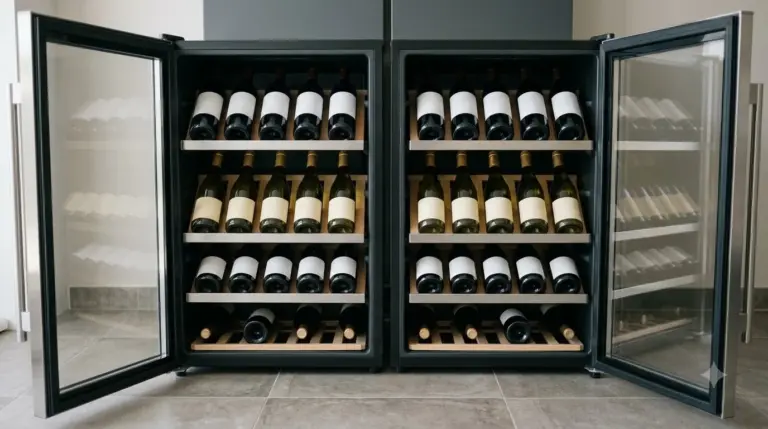
A french door wine fridge replaces the single door of a standard wine cooler with two doors that meet in the middle. The inside is usually organized into shelves that run across the full width, so the two-door design mostly changes access rather than storage capacity.
In practice, the two doors let you reach one side of the cabinet without opening the other. That can make it easier to grab a bottle from the front rows while the rest of the cabinet stays closed. The style also reads as a familiar kitchen appliance, which helps the unit blend with other fridges.
French Door Wine Refrigerators for Larger Collections
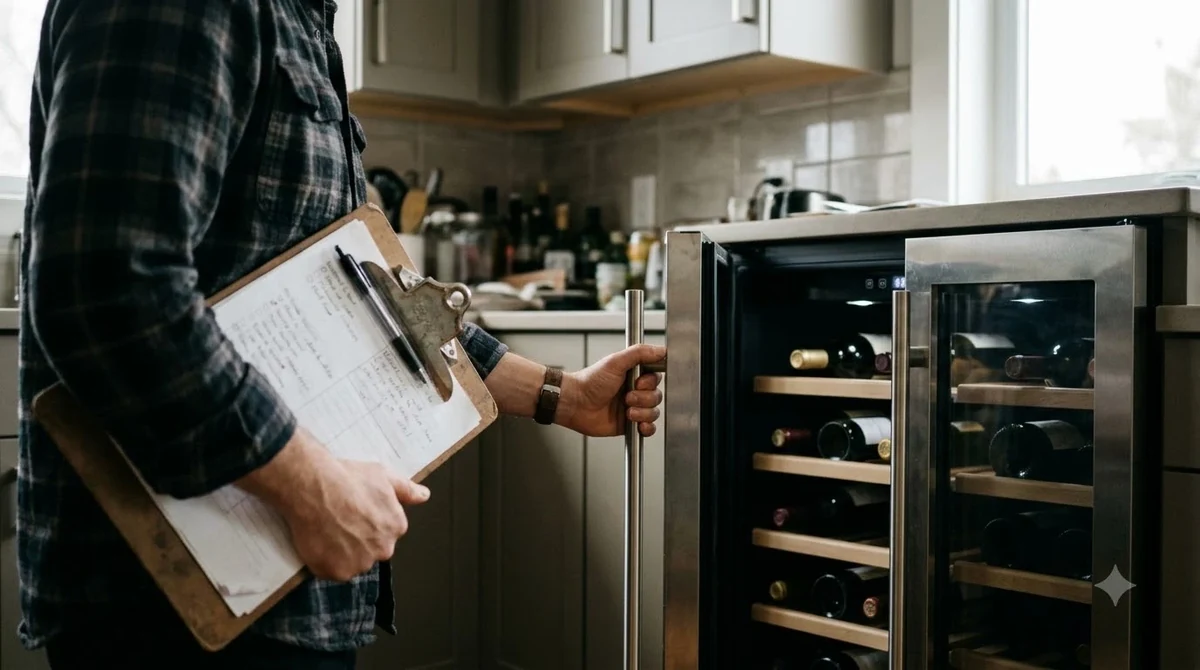
When the collection grows beyond a few dozen bottles, the french door wine refrigerator is a sensible step up. The larger cabinet gives room for bottle storage at several levels, and the two doors help keep the front section organized.
Larger units need more floor space and a clear path for airflow. A unit that is pushed tight against a wall or cabinet can run warmer than the setting shows, so leave the recommended gap at the back and sides.
Best for Large Collections in a Dedicated Room
A freestanding french door unit works well in a dedicated wine room, pantry, or spare room where the cabinet can stay in one place. The size suits a collection that is bought in cases and rotated over a long period.
Why it stands out: the larger cabinet can hold more bottles, and the two doors make the front rows easier to manage. A stable temperature setting matters more here, since a large collection is harder to move if conditions change.
Keep in mind: a big cabinet needs floor space and a clear path to the outlet. Check the power requirement and make sure the circuit can carry it.
Best for: collectors who keep wine for months or years and want a single unit for the whole stock.
Best for Entertaining Spaces With Mixed Bottles
A french door unit with two zones fits a dining or entertaining space where red and white bottles are served at different temperatures. Some models allow a separate setting for each zone, which keeps both types in their target range without a second appliance.
Why it stands out: the two-zone design avoids moving bottles between a warm and a cool unit before a meal. The doors also keep the serving bottles separate from the rest of the stock.
Keep in mind: dual-zone units have more controls and a little more to set up. Label the zones so guests do not change the settings.
Best for: hosts who serve several wine styles in the same evening.
Best for Kitchens Where Access Matters
In a busy kitchen, a french door unit can be easier to use than a single door that swings wide. Opening one half of the cabinet can be enough to reach a bottle, which suits a space with little clearance in front of the unit.
Why it stands out: the narrower door leaves can open in tight spots, and the layout looks consistent with a kitchen refrigerator. That makes it easier to fit the unit into a planned kitchen run.
Keep in mind: a kitchen is warmer and busier than a cellar, and frequent opening raises the temperature inside. Keep the unit away from the oven and dishwasher, and avoid leaving the doors open while you browse.
Best for: cooks who store everyday bottles near the prep area.
Best for Rooms With Steady Temperature
Wine keeps best when the temperature stays steady. The overview of wine cellars describes a comfortable range of roughly 7 to 18 °C (45 to 64 °F), with 13 °C (55 °F) described as ideal for both short-term storage and long aging. Sudden swings of 14 degrees or more can let air move through the cork, so the room matters as much as the unit.
Why it stands out: a unit placed in a room with a stable temperature will hold its setting more easily. This is the main reason a french door unit should sit in an interior room away from sunny windows.
Keep in mind: a garage, unfinished basement, or sun room can swing through a wide range over a day. In those spaces, a unit with a strong temperature control and a clear set point is more important than the door layout.
Best for: interior rooms with consistent heat and no direct sun on the cabinet.
Best for Households That Open the Unit Often
Some households reach for wine every evening and open the unit several times a week. For that pattern, the two-door layout reduces the amount of cold air that leaves when one bottle is taken out.
Why it stands out: with two doors, a quick grab can use only one side, which limits how much of the cabinet is exposed to warm air. The layout also keeps the most-used bottles at the front of one side for easy reach.
Keep in mind: frequent opening still lets warm air in, so the unit will work harder to hold its setting. Store the bottles you open most often close to the door, and keep the rest in the back.
Best for: daily drinkers and households where several people reach for wine during the day.
How to Choose a French Door Wine Cooler
Start with the number of bottles, the space available, and the temperature range you need. A french door unit makes most sense when the collection is large and the space can hold a freestanding cabinet.
| Factor | What to check |
|---|---|
| Capacity | Count current bottles and plan for growth before choosing the cabinet size |
| Zones | Dual-zone if you serve both red and white at different settings |
| Location | Interior room, away from sun, heat, and the dishwasher |
| Cooling type | Thermoelectric units are compact but less efficient, so check the size and room temperature |
Thermoelectric cooling is a useful thing to understand before buying a small unit. This type of cooler has no moving parts and can be compact, but it is far less efficient than compression systems and works best in a moderate room. Larger french door units are more often compressor-based, which handles bigger cabinets more easily.
Tip: Set the unit a day before you load it, then check the actual temperature with a separate thermometer. The display can show the target while the interior is still settling.
Frequently Asked Questions
Is a french door wine cooler better than a single-door unit?
It depends on the collection and the space. The two doors help with access and can reduce the cold air lost on a quick grab, but they do not change the basic job of holding temperature. A single-door unit is often simpler and smaller for a modest collection.
What temperature should a french door wine fridge hold?
Many people keep red and white in a range that suits both, with 13 °C (55 °F) described in the general wine storage guidance as ideal for short-term and long aging. Dual-zone models let you set each side separately if you serve wines at different temperatures.
Does a french door layout hold more bottles?
Not necessarily. The two doors mainly change how you reach the bottles. Capacity depends on the internal shelving and the cabinet size, so compare the stated bottle count and shelf design rather than the door style.
Can I put a french door wine fridge in a garage?
A garage often has temperature swings through the day and across seasons, and those swings can stress wine. An interior room with a stable temperature is a better home. If a garage is the only option, choose a unit rated for that environment and watch the temperature closely.
If you are weighing layouts, the under counter wine cooler guide covers built-in options, and the single zone wine cooler guide explains the simpler setup. For how long an opened bottle keeps after you pull it out, see how long wine lasts after opening. The full list of cooler types is under By type.
More in Wine Fridges by Type
 Best White Wine Fridge for Reliable Chilling and StorageUpdated Nov 20, 2026
 Best Smart Wine Fridge for Steady Temperatures and Remote ChecksUpdated Nov 18, 2026
 Best Black Under Counter Wine Fridge Options for Kitchens and IslandsUpdated Nov 18, 2026
 Best Black Slim Wine Fridge for Narrow Gaps and Dark KitchensUpdated Nov 18, 2026
 Best Built In Dual Zone Wine Fridge Options by Kitchen LayoutUpdated Nov 18, 2026
 Best Slim Built in Wine Cooler: 5 Space-Saving Styles for Tight KitchensUpdated Nov 18, 2026