

We may earn a commission when you buy through links on this page, at no extra cost to you. Learn more.
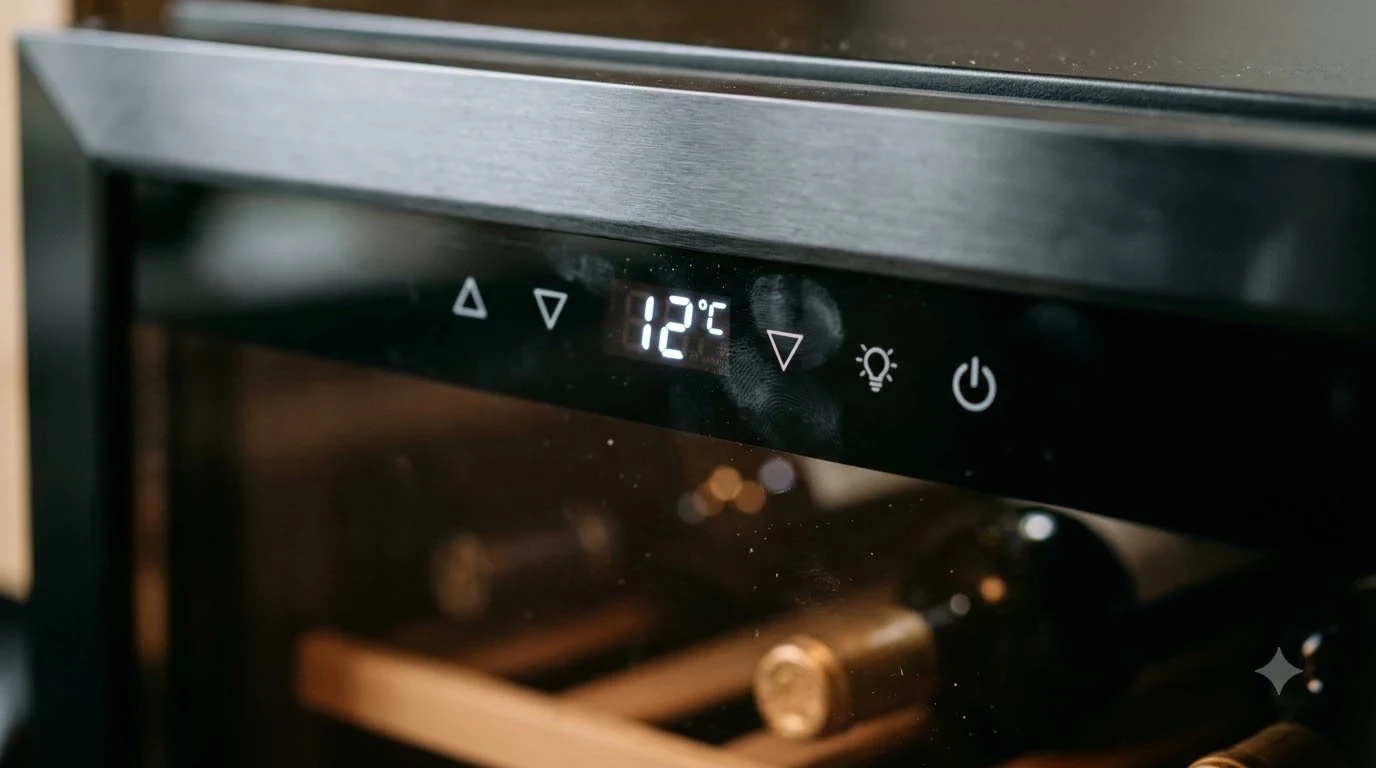
The best wine fridge with humidity control is a unit with a sealed door, a stable temperature, and a visible humidity reading, because those three features let you check the storage conditions instead of guessing. Humidity matters most in dry climates and for bottles you plan to keep for years, so the feature is worth paying attention to. For short-term storage, a well-sealed fridge with steady temperature covers most needs.
Humidity is one of the less discussed factors in home wine storage. Many people focus on temperature and light, then wonder whether the air inside a fridge is dry enough to affect the cork. The answer is more nuanced than a simple yes or no. Experts disagree on how much humidity matters, and the Wikipedia entry on wine cellars notes that active humidifying is generally needed only in very dry climates. This guide explains what humidity control does, which types exist, and how to decide whether it is worth the extra feature.
Quick Comparison
Wine fridges handle humidity in different ways, and the differences matter more for some storage plans than others. The table below compares the common approaches.
| Approach | How it works | Visibility | Best fit |
|---|---|---|---|
| Sealed door, no humidity control | Relies on the cabinet to hold moisture | Temperature only | Short-term storage in a normal home |
| Humidity reading on the display | Shows the level so you can monitor it | Live reading | Owners who want to check conditions |
| Humidity tray or pan | Adds moisture to the cabinet passively | Usually no reading | Dry rooms with steady use |
| Active humidity control | Maintains a target level | Reading and setting | Long-term storage and dry climates |
Temperature matters just as much. The Wikipedia entry on wine cellars describes storage between about 7 and 18 °C (45 to 64 °F) as workable if changes are gradual, with about 13 °C (55 °F) described as ideal for both short-term and long-term aging. A humidity-controlled fridge should hold a steady temperature first, because sudden swings are a bigger risk than a small change in moisture.
Best for short-term storage in a normal home
If you buy a few bottles a month and drink them within a year or two, a sealed fridge with stable temperature is usually enough. Humidity control adds little for this pattern, so the decision rests on the other features.
Why it stands out. A well-sealed door keeps the interior from drying out too quickly, and a steady temperature protects the wine from swings. These fridges are often simpler to use and easier to find in a range of sizes.
Keep in mind. Without a reading, you cannot confirm the level inside the cabinet. If you live in a dry climate or keep bottles for many years, the lack of a reading becomes a real gap.
Best for. Households that drink through their stock steadily and do not plan to age wine for long periods.
Best for owners who want a humidity reading
A fridge with a visible humidity display lets you check the conditions without a separate gauge. The reading tells you whether the cabinet is drifting dry, which helps you decide whether to add moisture.
Why it stands out. A live reading removes the guesswork. You can see the level at a glance, which is useful when the room changes with the seasons or when a heater runs in winter.
Keep in mind. A reading shows the level but does not change it. If the number drifts, you will still need a tray, a pan, or a control feature to bring it back to where you want it.
Best for. Owners who like to monitor their storage and act on what they see.
Best for dry climates and heated homes
Homes with low humidity, such as those in arid regions or those with strong central heating in winter, lose moisture faster. The Wikipedia entry on wine cellars notes that active humidifying is needed in very dry climates, so this is where the feature earns its place.
Why it stands out. A humidity tray or pan adds moisture to the cabinet without electronic control. It is a passive step that helps a fridge hold more of the level you want, especially when it is placed in a room that dries out.
Keep in mind. A pan needs refilling and cleaning, and it can add moisture unevenly if the fridge is overfilled. Check the level regularly, and avoid placing the fridge in direct sun or near a vent.
Best for. Owners in dry regions or in heated homes where the air is consistently low in moisture.
Best for long-term aging and cellar-style storage
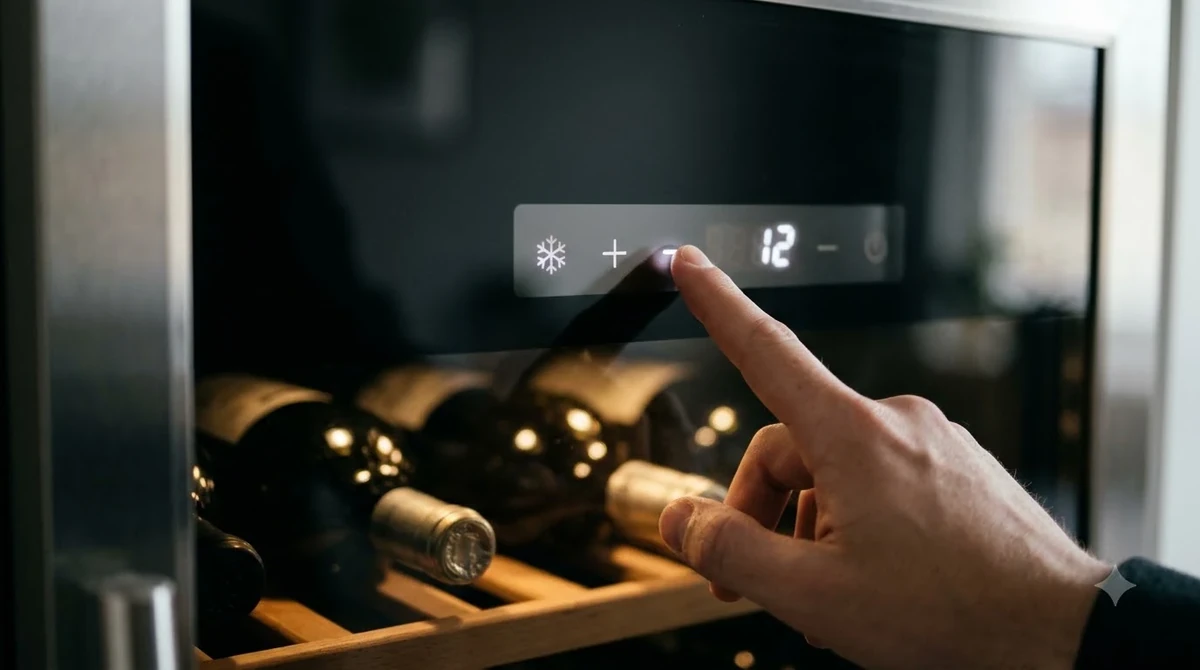
When you plan to hold bottles for many years, humidity control becomes more important. Over long periods, a dry environment can affect the cork, and a stable level helps the closure stay sound.
Why it stands out. Active humidity control maintains a target level, which suits long-term storage. It pairs well with a steady temperature and a dark, still location, the conditions a cellar is designed to provide.
Keep in mind. Active control costs more to buy and run than a simple fridge. The Wikipedia entry on wine cellars points out that experts disagree on how much humidity matters, so match the feature to your plan rather than adding it by default.
Best for. Collectors and owners who keep bottles for years and want the storage environment managed closely.
Best for a mixed collection with shared storage
Some owners keep both young wines for drinking and older bottles for aging in the same fridge. A unit that handles humidity and temperature across the cabinet suits that mix, as long as the layout supports separate zones.
Why it stands out. A fridge with humidity control and a reading lets you manage a mixed collection from one place. You can see that the cabinet is steady and decide which bottles to move as they are ready.
Keep in mind. Mixed storage means frequent door openings, and each opening lets air in. Plan the layout so the bottles you use most sit near the door, and keep the aging bottles deeper in the cabinet.
Best for. Owners who drink young wine and age a smaller set at the same time.
How to Check Humidity in a Wine Fridge
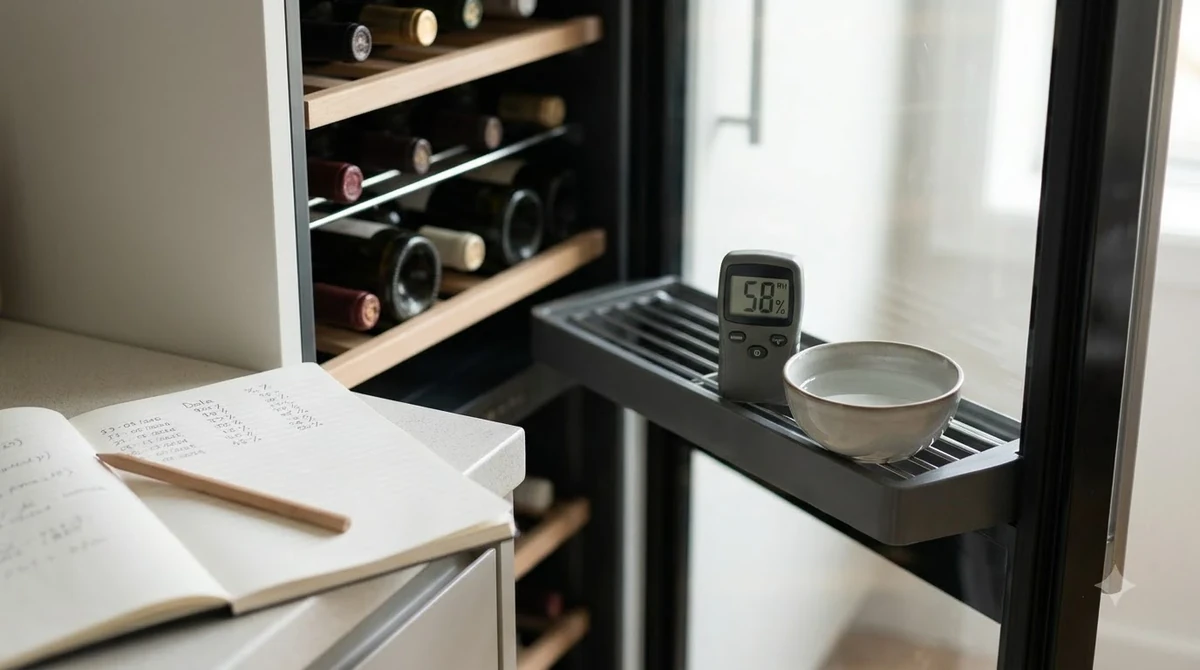
You can check the conditions without special equipment, but a reading makes it much easier. The steps below show how to set up the fridge and keep an eye on the level over time.
- Place the fridge away from direct sun, heaters, and vents, so the interior stays steady.
- Let it run for a day before you load bottles, and check the reading or gauge at the same time each day.
- If the level drifts dry, add a tray or pan, or adjust the control if the model has one.
- Keep the door closed as much as possible, since each opening lets in outside air.
Tip: A stable reading matters more than a perfect one. Aim for a level that holds steady over weeks rather than chasing a single number.
How to Choose
Choose by your climate, how long you keep bottles, and how often you want to check the conditions. The checklist below covers the main decisions.
- Climate: dry or heated homes benefit more from active control or a humidity tray.
- Storage length: long aging justifies active control, while short storage needs less.
- Monitoring: a visible reading helps you act early if conditions drift.
- Placement: a steady, shaded spot away from vents matters as much as the feature list.
If you are comparing styles, the guides to a wine and beer fridge and a wine fridge sideboard show how the same features appear in different cabinets. For a full list of specs and features to look for, the Specs & Features section is a useful reference. The Wikipedia entry on wine cellars covers the storage conditions in more detail.
Frequently Asked Questions
Do I need humidity control in a wine fridge?
Not always. For short-term storage in a normal home, a sealed fridge with steady temperature is often enough. Humidity control is more useful for long aging or in very dry climates.
What humidity level is best for wine?
Sources do not agree on one exact target. The practical goal is a steady level rather than a specific number, since large swings are more of a concern than a small difference from one reading to another.
Can dry air damage wine?
Very dry conditions over long periods can affect the cork, which is why some owners of aging collections watch the level. Keeping the bottles on their side and storing them in a steady environment helps the closure stay sound.
Is a humidity pan enough, or do I need active control?
A pan can help in a dry room with steady use. Active control is more useful when you need a fixed target over many years or when the room changes a lot with the seasons.
A wine fridge with humidity control is worth it when your climate or storage plan calls for it. Start with temperature, check the level over time, and add humidity features only as your collection and environment require. For more on storing your wine well, browse the Specs & Features section.
More in Wine Fridge Features
 Best Wine Fridge Bar Cabinet Setups for a Better Home BarUpdated Nov 20, 2026
 Wine Fridge for Champagne Bottles: Sizes and Storage GuideUpdated Nov 18, 2026
 Best Wine Fridge for Champagne Bottles: Shelf and Bottle FitUpdated Nov 18, 2026
 Best Wine Fridge with Display Shelf: Glass Doors and Open RacksUpdated Nov 18, 2026
 Best Wine Fridge With Drawers for Easy Access to Every BottleUpdated Nov 18, 2026
 Best Wine Fridge With Freezer: Combo Styles for Kitchens and BasementsUpdated Nov 18, 2026