

We may earn a commission when you buy through links on this page, at no extra cost to you. Learn more.
The best wine glass hanger keeps stemware off the counter, lets the bowls air out, and fits the shelf or cabinet where you actually store your glasses. Under-shelf racks suit a kitchen with cabinet space, freestanding stands suit a bar cart, and wall rails suit a small room with a bare wall. Choose by how many glasses you own, the stem height of your stemware, and whether the rack has to be installed or can stand on its own.
A wine glass hanger holds stemware by the stem, so the glass hangs above a counter instead of sitting on a shelf. That keeps the bowls clear of dust and water spots and saves room in a crowded cupboard. This guide groups the options by where they fit and how many glasses they hold, since the placement usually matters more than the finish.
Quick Comparison of Hanger Types
Each hanger type makes a different trade-off between space and convenience. A rack that mounts under a cabinet frees the most counter room, while a freestanding stand can move with you. According to the Wikipedia entry on the wine glass, most wine glasses are stemware with three parts, the bowl, the stem, and the foot, which is why a hanger that grips the stem or the rim is the common design. The table below compares the main types.
| Hanger type | How it mounts | Best for | Main drawback |
|---|---|---|---|
| Under-cabinet rail | Screws into the underside of a cabinet | Kitchens with cabinet space | Needs installation and a solid mount |
| Freestanding stand | Sits on a counter or bar cart | Renters and bar setups | Takes counter or cart space |
| Wall rail | Mounts flat on a wall | Small rooms with a bare wall | Visible, so the style must match the room |
| Ceiling or hanging rack | Hangs from a ceiling frame | Dedicated wine spaces | Needs ceiling support and height |
Best for Kitchens With Cabinet Space
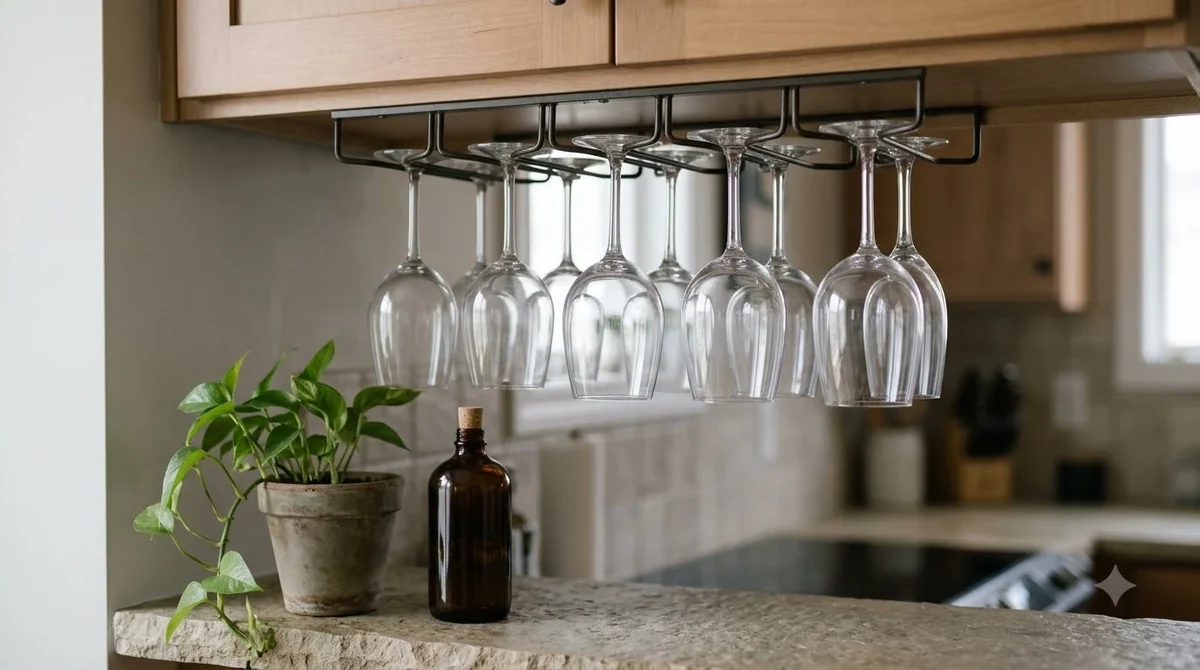
An under-cabinet rail is the most space-efficient option when the underside of a cabinet is free. It lifts stemware clear of the counter and keeps the glasses in easy reach while you cook or pour.
Why it stands out: It frees counter space and keeps glasses close to the spot where they are poured.
Keep in mind: Check the cabinet thickness and the mount before you hang heavy stemware, because a loose rail can drop glasses onto the counter.
Best for: Homeowners with a kitchen layout that has open cabinet space and a steady routine of pouring wine at home.
Before you commit to an under-cabinet rail, sketch the spot where it will sit. Measure the distance from the counter to the cabinet bottom, then add the height of your tallest stemware. If the clearance is too small, the glasses will knock against the counter or the rail. Keep the rail away from the range hood and the sink splash zone, since steam and water can dull the finish over time and leave spots on the glass.
Best for Bar Carts and Renters
A freestanding stand suits a bar cart or a rented apartment where you cannot drill into the cabinets. It moves with you, which is useful if you rearrange the room often or prefer not to make permanent changes.
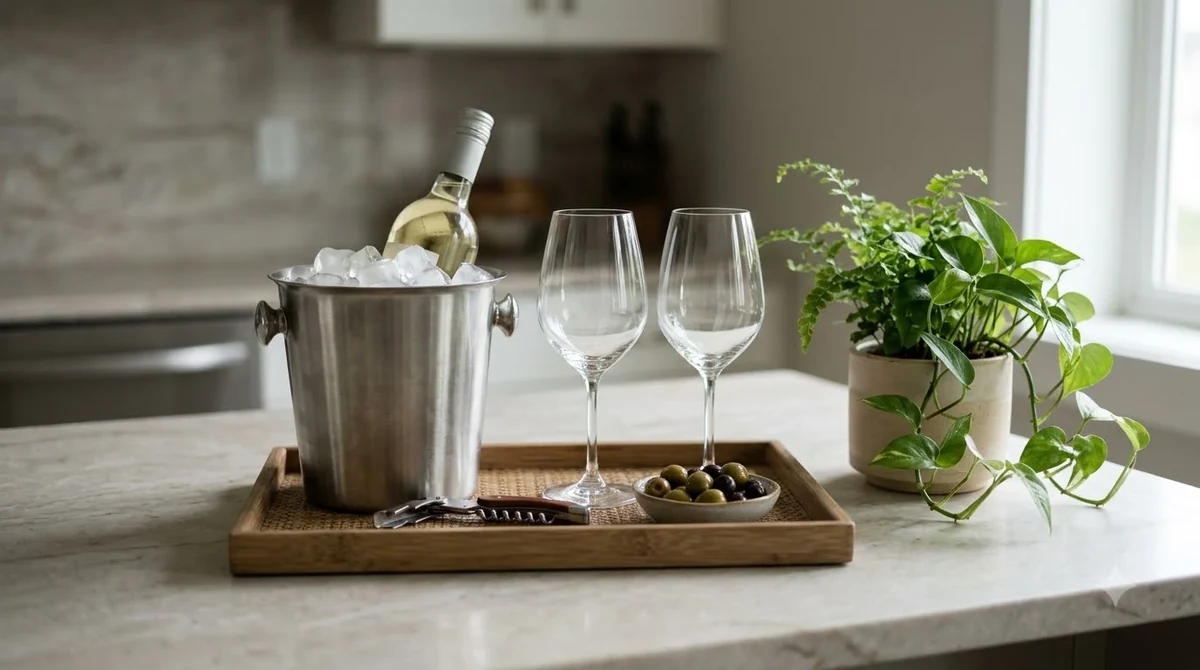
Why it stands out: It needs no tools or installation, and it can sit beside the bottles you are serving from.
Keep in mind: A stand takes up floor or counter space, and a tall rack can tip if it is loaded unevenly, so set it on a level surface and keep heavier glasses low.
Best for: Renters and anyone who sets up a home bar on a cart and wants glasses on display and within reach. A cart often pairs well with a wine glass holder for the glasses you use least.
Best for Small Rooms With a Bare Wall
A wall rail keeps a few glasses in view on a single wall, which suits a small dining area or a compact kitchen with no cabinet space. It doubles as decor, so the finish and spacing should match the rest of the room.
Why it stands out: It uses vertical space and makes a clear display of your everyday glasses.
Keep in mind: Wall rails show dust, so a regular wipe keeps both the rail and the glasses looking clean.
Best for: Small homes where a visible glass rail is a feature rather than a storage problem.
A wall rail also works well when the glasses are a regular part of the decor. Group them by type so the stemware reads as a deliberate display, with red wine glasses on one side and white or sparkling glasses on the other. Leave a clear gap between each glass so the bowls do not knock together when a door closes nearby. If the wall is near a window, keep the rail out of direct sun, since strong light can fade a painted finish over time and make the room feel busier than it is.
Best for Dedicated Wine Spaces
A ceiling or hanging rack fits a wine room, a cellar corner, or a home bar with high clearance. It holds many glasses at once and can be arranged by type, so red and white stemware are easy to tell apart.
Why it stands out: It holds a large number of glasses in one spot and turns the glassware into part of the room.
Keep in mind: It needs a secure ceiling mount and enough clearance for the glasses to hang without touching anything below.
Best for: Collectors with a larger set of glasses or a dedicated space for entertaining.
Best for Gifts and Entertaining
A decorative hanger makes a useful present for someone who hosts often. It holds a set of stemware for a dinner party and can be packed away afterward. It pairs well with a set of wine glass charms if you want each guest to find their own glass easily.
Why it stands out: A hanger is practical for a dinner party and easy to store when not in use.
Keep in mind: Decorative designs can be less sturdy than plain steel, so check the weight limit against the glasses you plan to hang.
Best for: Hosts and gift-givers who want a useful, attractive item that is easy to store between events.
How to Choose
Start with the number of glasses you own and the shape of the stems. A hanger that suits short stems may be too tight for tall flutes, and a rack built for heavy goblets may feel loose with thin stemware.
- Glass count: Count the glasses you use most often and leave room to add more later.
- Stem height: Measure the tallest stemware you own, since a champagne flute and a large red wine glass need different clearance.
- Mounting: Permanent mounts save space but need a solid surface, while freestanding stands need no tools.
- Handling: Some wine writers recommend holding a glass by the stem, which keeps the bowl clean and avoids warming the wine. A hanger that lets you lift a glass by the stem fits that habit, so look for an open design with room to grip.
Plan the placement before you buy. A hanger works best where you already pick up glasses, such as beside the sink or the bar cart, and not in a spot you have to walk around.
Frequently Asked Questions
Does a wine glass hanger damage stemware?
A well-made hanger grips the stem or the rim without pressure on the bowl. Check the fit with your glasses before loading the rack, and avoid hanging glasses that touch each other.
Can I hang every type of wine glass?
Most stemware works, but very tall flutes or wide-bowled glasses may need a rack with more clearance. Measure the tallest glass you own before you buy.
How many glasses should a wine glass hanger hold?
It depends on the rack. Plan for the glasses you use weekly, and add a few spare spots for guests. The number of wine glasses you need for a meal also depends on how many people you serve, and our guide on how many glasses are in a bottle of wine can help you plan.
Should wine glasses be washed before hanging?
Yes. Dry glasses hang better and do not leave water spots as they dry on the rack. Wash them by hand when possible, and dry them fully before they go back on the hanger.
A good wine glass hanger keeps your stemware accessible and clear of the counter. Decide where the glasses live, measure the tallest stem, and pick a mount that fits the room. For more ideas on setting up a home bar, browse the Accessories Library.
More in Wine Accessories
 Coravin Vs Vacu Vin: Choose the Right Wine Saver for Your BottlesUpdated Nov 21, 2026
 Zwilling Wine Stopper Review: Preserve Open Bottles LongerUpdated Nov 21, 2026
 Wine Enthusiast Wine Preserver Review: Features, Benefits and LimitationsUpdated Nov 21, 2026
 Wine Enthusiast Wine Stopper: An Easier Way to Reseal Open BottlesUpdated Nov 21, 2026
 Vintorio Wine Opener: Two-Step Cork RemovalUpdated Nov 21, 2026
 Zwilling Wine Aerator Review: Aerate, Pour, and Seal With One ToolUpdated Nov 21, 2026