

We may earn a commission when you buy through links on this page, at no extra cost to you. Learn more.
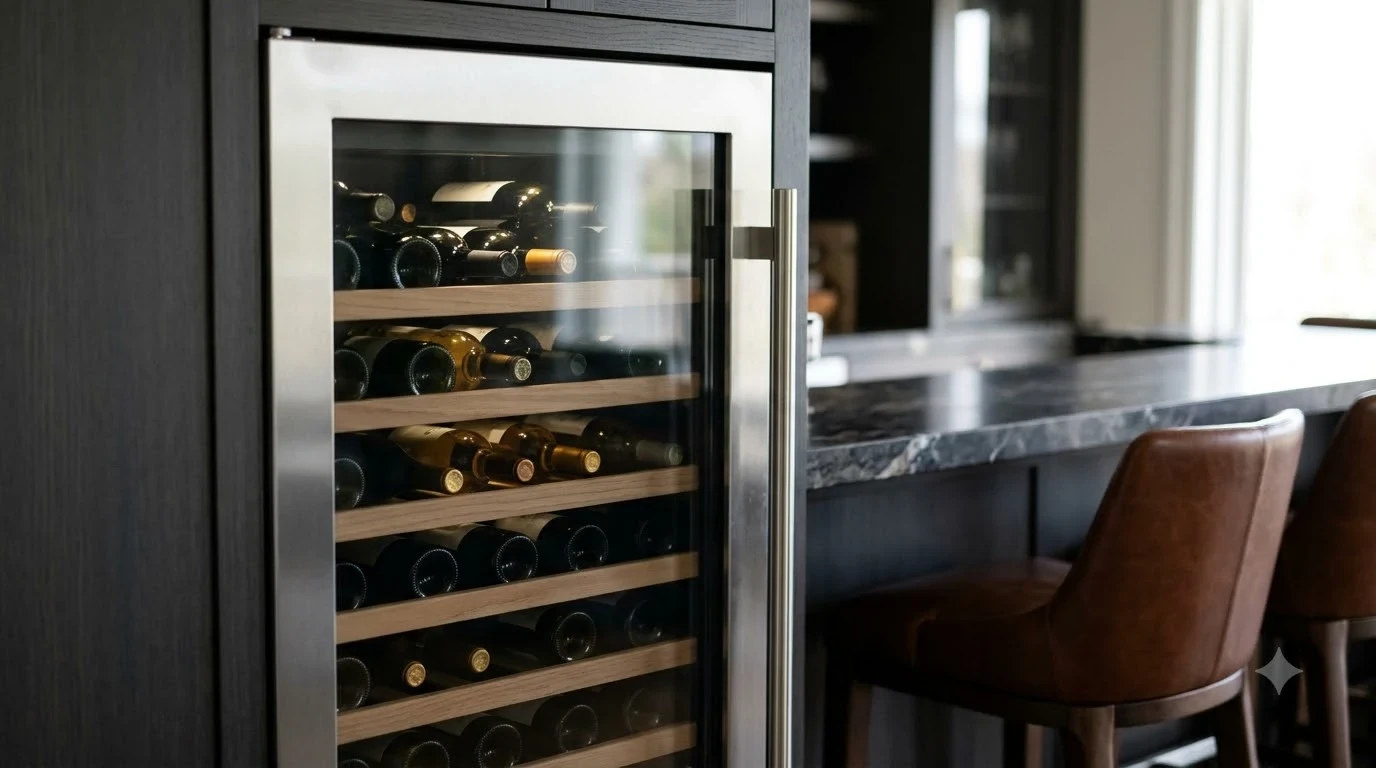
The best wine fridge stand is a sturdy, level base that lifts the unit off the floor and leaves room for air to reach the back and sides. A wine fridge pulls heat out of its cabinet and releases it through the condenser, so a stand that blocks airflow can make the unit work harder. Wood, metal, and stainless steel stands are the most common materials, and each suits a different room. Choose a stand rated for the full weight of the fridge plus a few bottles, and check the airflow before you buy.
A wine fridge stand is a base, frame, or cabinet that sits under a compact wine refrigerator or a drinks fridge. It raises the unit to a comfortable working height, keeps it level, and often adds a small shelf or storage space underneath. Some people buy one to match a bar cart or a kitchen counter. Others need it because the fridge is too heavy to sit directly on a floor that is uneven or cold. This guide covers the main stand types, the airflow rules that matter most, and what to check before you order one.
Brand names are left out on purpose. The goal is to help you judge a stand by its build, its clearance, and its stability, so you can compare options that look similar on a product page.
Quick Comparison of Wine Fridge Stand Types
Stands fall into a few families, and each one trades strength, looks, and airflow in a different way. Start with the material and the open space around the fridge, then compare the finish.
| Stand type | Typical material | Airflow | Stability | Best room |
|---|---|---|---|---|
| Open wooden frame | Wood, often solid or engineered | Good if the fridge sits clear of the frame | Strong when level | Living room, dining room |
| Metal frame | Painted or powder-coated steel | Good, usually open | Very strong | Garage, basement, bar |
| Stainless steel stand | Stainless steel | Good, usually open | Strong | Kitchen, wet areas |
| Cabinet-style base | Wood or laminate panels | Limited, panels can block the back | Strong | Rooms where looks matter most |
The table is a guide to fit rather than a ranking. An open frame is often the best choice when airflow is the main concern, while a cabinet-style base can look tidier but needs careful planning to keep the back of the fridge clear.
Best for Kitchens and Bars
A stainless steel stand suits a kitchen or a bar setup where spills and cleaning come up often. According to the Wikipedia article on wine racks, stainless steel resists corrosion and staining and is easy to clean, which matters around food and drink.

Why it stands out: The surface is easy to keep clean and matches most kitchen finishes. Its frame is usually open underneath, so air can move freely around the fridge’s base and sides.
Keep in mind: Stainless steel is heavier and costs more than many alternatives. Check that the stand’s feet are adjustable, because a kitchen floor is rarely perfectly level, and a fridge that rocks can strain its own mounts and doors.
Best for: kitchen counters, home bars, and any room where liquids may splash near the stand.
Best for Living Rooms and Dining Rooms
An open wooden frame suits a room where the fridge should look like part of the furniture. Wood gives a warm finish, and an open frame keeps the fridge’s back and sides free for air.
Why it stands out: Wood is the most common material for racks, and it blends with other pieces in a dining or living space. A frame that leaves the sides open lets heat escape without a fan or extra work from the owner.
Keep in mind: Wood needs a level floor and a frame built strong enough for the fridge’s full weight. Check the joints and the feet, and seal or finish the wood so spills and humidity do not warp it over time. Keep the wood at a distance from the fridge’s back and vents.
Best for: dining rooms, living rooms, and apartments where the fridge is part of the décor.
Best for Garages, Basements, and Heavy Loads
A metal frame is the sturdiest choice for a heavy unit or a room that is not finished. Steel frames hold a load well, and their open structure is easy to clean and keep clear of dust.

Why it stands out: A metal frame handles weight and vibration better than most decorative stands. It does not warp or sag, and its open shape keeps the condenser area clear. That makes it a practical choice where the fridge may sit in a cool, damp, or dusty room.
Keep in mind: Garages and basements can get colder or hotter than a living space, and a fridge may run less efficiently at the edges of its temperature range. Some units must stay within set external temperature limits to run properly, so check the unit’s rated range before you place it in an unheated room, and make sure the stand’s footprint fits without blocking the vents.
Best for: basements, garages, and bars where the fridge is heavy or the room is rough.
Best for Tight Spaces and Small Setups
A compact cabinet-style base or a low open frame suits a small apartment or a corner where the fridge must sit close to a wall. The key is to measure the clearance first, then choose a stand that fits without crowding the back.
Why it stands out: A low stand keeps the fridge at a comfortable reach height and can add a small shelf for glassware or bottle accessories. A cabinet-style base also hides cables and can give a tidy finish.
Keep in mind: Cabinet-style bases are the easiest type to get wrong for airflow. Panels that wrap the back or sides can trap heat, and the Wikipedia article on refrigerators notes that the condenser coils release heat to the room air, so the space around them needs to stay open. Keep the back of the fridge clear, and do not push it against the wall or into a tight cabinet.
Best for: small apartments, corners, and any spot where the fridge must sit close to a wall.
Best for Looks and Matching Furniture
A wood-faced or laminate cabinet base suits a room where the fridge should match other furniture. These stands are designed to look finished, and many include doors, drawers, or open shelves underneath.
Why it stands out: A cabinet base can hide cords and supplies, and a matching finish makes the fridge feel like a deliberate part of the room. It is a good fit for a dining room or a bar cabinet that will be seen often.
Keep in mind: Looks can come at the cost of airflow and access. Check how far the stand sits from the back of the fridge, and whether the cabinet doors open without blocking the fridge’s vents. Keep the cabinet ventilated, and do not store anything in the space that will block air.
Best for: dining rooms and bar cabinets where the fridge sits in full view.
How to Choose a Wine Fridge Stand
Start with the fridge’s weight and dimensions, then the room’s airflow, then the finish. Those three answers rule out most options before you compare details.
- Load rating: the stand must carry the full weight of the fridge plus a few bottles, and the frame should be level and stable under load.
- Airflow: keep the back, sides, and vents of the fridge clear. Open frames are the safest choice for airflow.
- Material: wood suits living spaces, metal suits heavy or rough rooms, and stainless steel suits kitchens and bars.
- Adjustability: adjustable feet help the fridge sit level on an uneven floor, which protects the doors and mounts.
- Clearance: measure the space behind and above the fridge before you order. A stand that looks right can still block the vents once the unit is in place.
The Wikipedia article on refrigerators also notes that cleaning the condenser coils and leaving room for air to move around the unit can improve efficiency. Make that a routine step, not an afterthought. For storage ideas beyond the fridge, see the Accessories Library and the bar cart guide, which covers compact drinks storage that pairs well with a wine fridge.
Frequently Asked Questions
Does a wine fridge need a stand?
Not always. A fridge can sit on a flat, level floor if it has space around it. A stand helps when the floor is uneven, when you want the fridge at a comfortable reach height, or when you need storage underneath.
How much space should a wine fridge have around it?
The sources we could read do not give a single clearance figure. Leave enough room at the back and sides for air to move, and check the manufacturer’s installation guide for the exact spacing, because it varies by model.
Can a wine fridge stand go in a garage?
A metal frame suits a garage well, but check the fridge’s ambient temperature limits first. Some units run less efficiently when the room is very cold or hot, so the room must fall within the unit’s rated range.
Should I choose a cabinet base or an open frame?
An open frame is usually the safer choice because it keeps airflow clear. A cabinet base looks more finished but needs careful planning so the panels do not trap heat around the fridge.
A good wine fridge stand is level, strong, and open enough for air to move. Pick the material that suits the room, check the load rating, and measure the clearance before you order. For more ideas on bar layout and storage around the fridge, the bar cart guide is a useful next step, and the how many glasses in a bottle of wine guide helps when you plan how much stock to keep on hand.
More in Wine Accessories
 Coravin Vs Vacu Vin: Choose the Right Wine Saver for Your BottlesUpdated Nov 21, 2026
 Zwilling Wine Stopper Review: Preserve Open Bottles LongerUpdated Nov 21, 2026
 Wine Enthusiast Wine Preserver Review: Features, Benefits and LimitationsUpdated Nov 21, 2026
 Wine Enthusiast Wine Stopper: An Easier Way to Reseal Open BottlesUpdated Nov 21, 2026
 Vintorio Wine Opener: Two-Step Cork RemovalUpdated Nov 21, 2026
 Zwilling Wine Aerator Review: Aerate, Pour, and Seal With One ToolUpdated Nov 21, 2026