

We may earn a commission when you buy through links on this page, at no extra cost to you. Learn more.
The best wine bottle display is one that shows labels and bottle shapes without leaving bottles in direct sun, near heat, or where they get bumped. Open shelves and sideboards suit most dining rooms, bar carts suit entertaining, and wall or tabletop displays suit a few favorites. Display is not storage: a bottle that sits in a lit room for weeks will age faster and differently than one kept in a cool, dark cellar.
A wine bottle display turns a collection into part of the room. The challenge is choosing a setup that lets people see the labels and the silhouettes of the bottles while keeping the wine itself stable. This roundup sorts display options by the room and bottle mix they fit best, so you can pick a setup before you think about hardware or finish.
Quick Comparison of Wine Bottle Display Options
The table compares the common display formats by where they sit, how many bottles they show, and how much light the bottles get. Use it to narrow the field before comparing individual pieces.
| Display type | Where it sits | Bottles shown | Light exposure |
|---|---|---|---|
| Dining sideboard rack | Against a wall, away from windows | Medium, often 6 to 12 | Low to moderate |
| Open shelf | Wall or built-in niche | Flexible, depends on depth | Moderate |
| Bar cart | Living or dining area | Small to medium | Moderate |
| Tabletop riser | Counter or console | Few bottles | Low |
| Corner display | Room corner, floor level | Medium to large | Low |
Light is the factor most often overlooked. A cellar is dark by design, and the overview of wine cellars points to darkness as a protection against outside influences. Display bottles do not have that protection, so the best spot is usually one that gets indirect light, with the bottles moved out of direct sun. The same guidance favors stable temperatures, so a display near a radiator, oven vent, or sunny window will work against the wine over time.
Best for Dining Room Sideboards
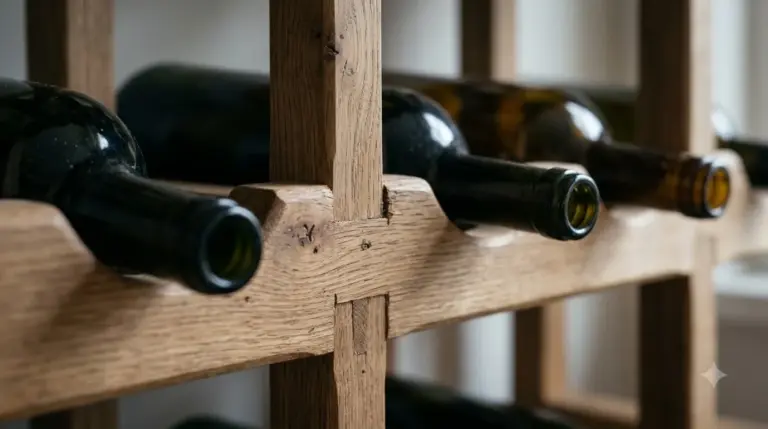
A low, wide sideboard is the most practical home for a visible collection. Bottles lie flat on a rack or sit in a grid at the back, with a small group of favorites at the front. The surface also doubles as serving space during meals.
Why it stands out: a sideboard sits at eye level, so guests see the labels without anyone opening a cabinet. Racks designed for this spot usually hold bottles at a comfortable angle and keep them off the surface.
Keep in mind: sideboards often sit near a heat source or a window, so check the spot before you commit. Keep the display away from direct sun and from the kitchen door where it can get bumped.
Best for: dining rooms that double as tasting spaces and homes where the display should look like furniture.
Best for Showing Off Different Bottle Shapes
A collection with mixed shapes is easier to display than it sounds, as long as the rack or shelf fits the widest bottle. The Wikipedia overview of wine bottles describes the main shapes by region. Bordeaux bottles are straight-sided with high shoulders. Burgundy bottles are taller with sloping shoulders. Rhine and Mosel bottles are narrow and tall. Champagne bottles are wider and have thicker walls, so they need more room.
Why it stands out: open shelves with adjustable spacing let each shape sit on its own level, so the silhouettes read clearly. This is the format that best shows off regional differences.
Keep in mind: spacing should account for the widest bottle in the set. A narrow cell that fits a Rhine bottle may not hold a Champagne or a Bordeaux with a deep shoulder.
Best for: collectors who buy across regions and want the shapes to be part of the display.
Best for Bar Carts and Entertaining
A bar cart works well when the display needs to move. It can hold a short run of bottles, a few glasses, and a bucket or chiller, then roll to the spot where guests gather.
Why it stands out: a cart puts the bottles at arm’s reach during a party, and it can be stored in a closet afterward. It also keeps the display from taking up a permanent wall.
Keep in mind: the cart moves, so bottles can be jostled on the way. Use a lip or a raised edge on each shelf, and avoid leaving bottles on the cart for long stretches in a hot room.
Best for: hosts who want the bottles visible for a few hours at a time and then out of the way.
Best for Magnums and Large-Format Bottles
Large bottles are the hardest to display because they are heavy and need more room. A magnum is twice the size of the standard 750 ml bottle, and bigger formats go up from there. Most display racks are built for the standard size, so large bottles need a dedicated shelf or a floor position.
Why it stands out: a magnum on a low, sturdy shelf makes a strong focal point, and the weight stays near the floor. Floor displays also avoid the risk of a heavy bottle falling from a wall-mounted shelf.
Keep in mind: check the shelf’s stated weight limit before adding large bottles. Some sparkling large formats also need extra care in transit, so keep them out of the path of a door or pet.
Best for: celebration collections and homes with a few large bottles on display.
Best for a Quiet Corner or Floor Display
A corner display uses space that often goes unused. A tall, narrow unit in the corner of a living room or hall holds bottles at several levels, and the back of the corner keeps them out of the main traffic.
Why it stands out: corner units show many bottles without taking up a wall, and the layered shelves let the room feel full without being crowded. The floor position is steady.
Keep in mind: a corner is often a dim spot, which suits wine but makes labels harder to read. Add a small lamp or keep the top shelf for the bottles you most want to see.
Best for: larger collections in rooms where wall space is limited.
How to Choose a Display That Protects the Wine
Start with where the display will sit, then match the format to the number of bottles and the way you plan to rotate them. Bottles you drink within a few weeks can sit on display. Bottles you plan to age should move to a cooler, darker place.
| Factor | What to check |
|---|---|
| Light | Indirect light only; avoid direct sun on the bottles |
| Temperature | Away from radiators, ovens, and sunny windows |
| Bottle shape | Spacing wide enough for the widest bottle in the set |
| Weight | Shelf rating checked against full bottles, especially magnums |
Guidance on wine cellars gives a useful reference point for temperature. The same overview suggests that about 13 °C (55 °F) suits both short-term storage and long aging, and that sudden swings of 14 degrees or more can speed aging by letting air move through the cork. A display in a room with big daily swings may not be the best home for a bottle you want to keep for years.
Tip: Rotate the display. Move the bottle you are drinking to the front, and return the rest to storage. This keeps the display current and limits how long any single bottle sits in the light.
Frequently Asked Questions
Does displaying wine bottles damage the wine?
Short periods on display are generally fine. The risks come from direct sunlight, heat, and repeated temperature swings. A bottle that sits in a lit room for several weeks is more exposed than one kept in a dark, cool space, so rotate display bottles regularly.
Should display bottles lie flat or stand upright?
Bottles with corks are usually displayed lying flat, which keeps the cork moist. Upright display is common for bottles that will be opened soon. Shape can decide the choice, since some bottles look best standing on a riser.
What is the best display for a small apartment?
A wall-mounted shelf or a tabletop riser suits small spaces. Choose a spot away from windows and heat sources, and limit the display to the bottles you will drink in the next few weeks.
How many bottles should a display hold?
Many people keep the visible set small, since a short display is easier to rotate. Larger collections work better with a separate storage rack, with only the current favorites on show.
If the display is also your storage, a dedicated rack is easier to manage. The 6 bottle wine rack and the 12 bottle wine rack guides cover sizes that fit a typical counter or closet. For a sense of how many bottles a case holds before you plan the shelf, the case size guide is a helpful reference, and the Racks & Storage section lists the categories we follow.
More in Racks & Storage
 Best Wine Barrel Racks for Distinctive Bottle StorageUpdated Nov 20, 2026
 Best Wine Storage Tower: Sizing, Protection and Room LayoutUpdated Nov 18, 2026
 Best Pyramid Wine Rack: Materials, Sizes and Where It FitsUpdated Nov 18, 2026
 Best Kitchen Cabinet Wine Rack Insert for Built-In Bottle StorageUpdated Nov 18, 2026
 Best 16 Bottle Wine Rack Options for Kitchens, Bars and CellarsUpdated Nov 18, 2026
 Best 48 Bottle Wine Rack Options for Cellars, Kitchens, and Tight SpacesUpdated Nov 18, 2026