


We may earn a commission when you buy through links on this page, at no extra cost to you. Learn more.
The best wine glass drying rack is the one that holds stemware upside down without touching the bowl, fits your counter or sink, and lets water drain away from the glass. For most home kitchens, a rack with a peg or slot for each glass works better than a flat dish rack, because the glasses dry faster and keep their shine. Small spaces suit a folding or over-sink model, while a large collection needs a wider rack with more slots.
Hand-washed wine glasses leave water spots and lint when they sit wet on a towel or get stacked in a cabinet. A dedicated drying rack solves both problems, and it keeps the thin bowl and the stem from knocking against other dishes. This guide compares the main rack types, explains what to check before buying, and shows how to get a streak-free finish.
Quick Comparison of Drying Rack Types
Most racks fall into four groups: peg racks for stemware, folding racks for small kitchens, over-sink racks that span the basin, and dish-rack inserts with a dedicated stemware section. The table below compares them on the points that matter most day to day.
| Rack type | Best for | Counter footprint | Stemware fit | Main drawback |
|---|---|---|---|---|
| Peg rack | Regular wine drinkers with several stemmed glasses | Medium | Excellent, glasses hang upside down | Uses open counter space |
| Folding rack | Small kitchens and apartments | Small when folded | Good when it has a stemware section | Can feel less stable when fully loaded |
| Over-sink rack | Sinks wide enough to span the basin | None on the counter | Fair, depends on the design | Must match your sink width |
| Dish-rack insert | Households that wash all dishes by hand | Medium to large | Good, usually with a separate slot | Stemware sharing space with plates is less ideal |
Why Air Drying Beats a Towel
Stemware dries best when the bowl faces down, so water runs out of the rim and does not pool at the base. A rack that holds each glass by the stem or the rim lets air move around the whole piece, which cuts down on the water spots that form when droplets dry on the glass surface.
A towel can work for a final polish, but it is the usual source of lint and faint streaks on thin glass. The safer order is to let the glass drain first and buff with a clean, dry, lint-free cloth only at the end. That keeps the cloth from picking up residue from a wet bowl and smearing it across the rim.
Best for Small Kitchens and Apartments
A compact folding peg rack is the most practical choice when counter space is tight. It collapses flat against the wall or into a cabinet, and it still gives each stem room to drain. Look for a rack with rubber feet or a non-slip base, since a light frame can shift when a heavy glass is set down. If you are still deciding between a freestanding model and a wall-mounted one, the wine glass rack guide covers the storage side in more detail.
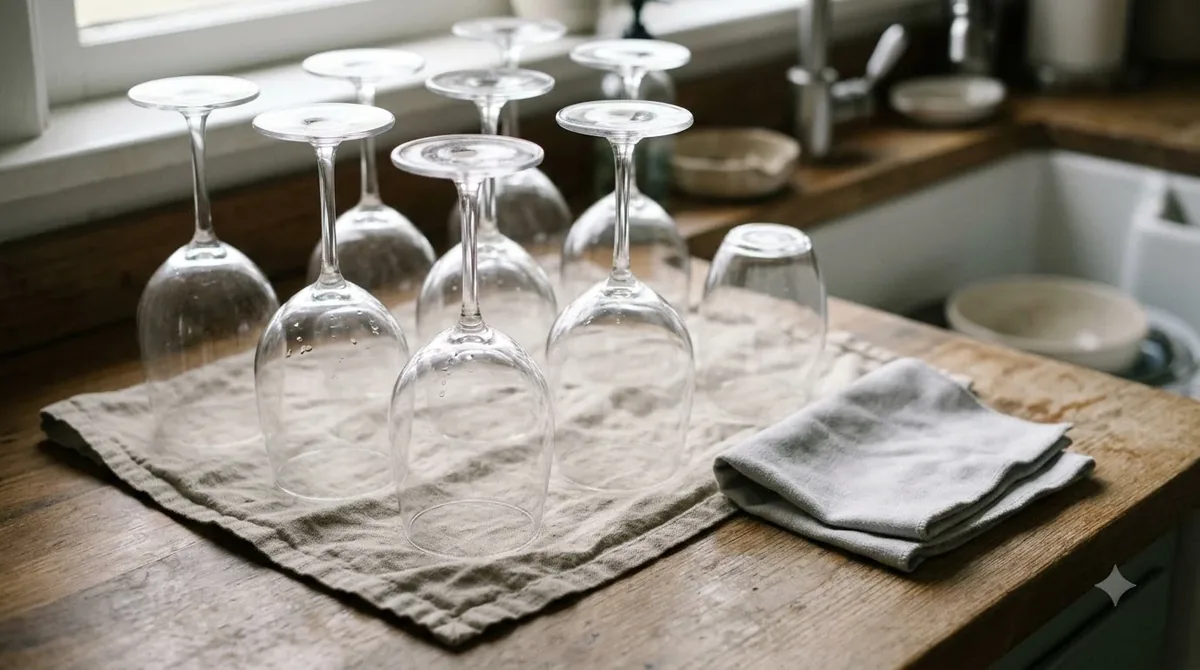
Why it stands out: It takes up little room when not in use and handles a few glasses after dinner without taking over the sink area. Many folding designs also include a tray that catches drips, which keeps the counter dry.
Keep in mind: Capacity is limited. A rack built for six glasses will feel crowded after a larger gathering, so check the slot count against the number of glasses you own rather than the number you use on an average night.
Best for: Apartment dwellers and anyone who hand-washes a few glasses after each meal.
Best for Large Stemware Collections
When you own a full set of red, white, and sparkling glasses, a wide peg rack with separate rows keeps them organized. Each glass hangs by its stem or rim, so the bowl never rests on a flat surface and water runs off quickly. Racks built for larger sets usually have a stable base and a drip tray that fits under the whole frame.
Glassware shape matters here. According to the wine glass article on Wikipedia, bowl shape changes with the style of wine, from the tall, broad Bordeaux glass to the narrow flute used for sparkling wine. A rack with a mix of peg heights and spacing handles those differences better than a row of identical pegs.
Why it stands out: It keeps different glass shapes grouped, so you can find a Burgundy glass or a flute without searching a cabinet.
Keep in mind: Wide racks need a clear counter band about the width of the frame. Measure before you buy and allow room for the tallest glass in your set to stand upright beside it.
Best for: Collectors and households that host often.
Best for Counters With No Spare Room
Some kitchens have no open counter at all, and the sink is the only free surface near the dishes. An over-sink rack spans the basin and uses no counter space. These work best when the sink is wide enough to hold the rack and the glasses rest safely above the water line.
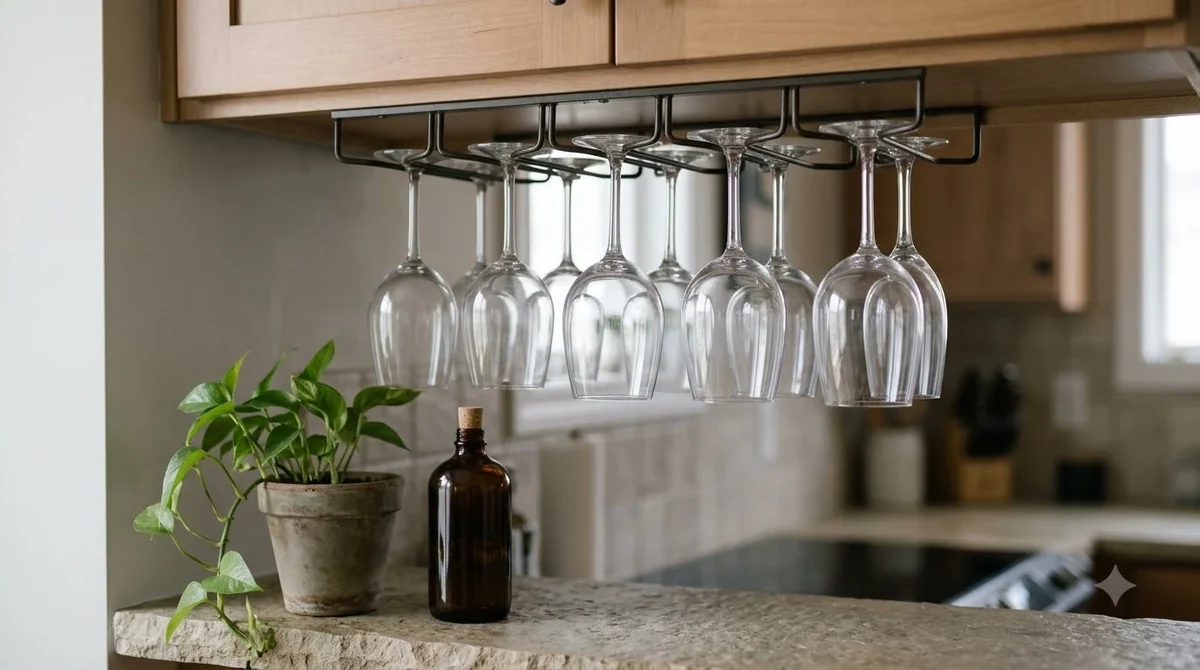
Why it stands out: It frees the counter entirely and lets water drip straight into the sink, which is a clean setup for a busy kitchen.
Keep in mind: Some models rest on the sink rim, so confirm the fit with the faucet, the basin depth, and the sink edge before ordering. Keep glasses clear of running water, since a stream can knock them against each other.
Best for: Compact kitchens and homes where the sink is the main work surface after a meal.
Best for Mixed Dishes and Stemware
A dish-rack insert with a dedicated stemware section suits a household that washes plates, pans, and glasses in one routine. The stemware slots keep glasses off the plate tray, which protects the bowls from knocks and keeps the rest of the rack from crowding them.
If you already own a dish rack, check whether it has a separate upright area before buying a second rack. Some inserts add one, and it is worth checking before you buy a second rack. The wine glass dishwasher rack guide explains which glass-safe layouts work in both the dishwasher and a drying rack.
Why it stands out: It combines two jobs in one place and keeps the drying area tidy.
Keep in mind: Stemware in a shared tray can still tip when the plates are heavy, so place the glasses in the upright slots rather than laying them flat.
Best for: Households that hand-wash everything and want one drying station.
Best for Gift Sets and Entertaining
A rack with a clean finish and a simple frame suits a kitchen that hosts guests and displays its glassware. These pieces often have fewer compartments but a tidier look, and some can sit on a bar cart or a sideboard when they are not in use, so they double as a display.
Finish matters more here than capacity. Stainless steel and powder-coated metal hold up to repeated wet use better than bare wire, and a neutral color blends with most glassware. Avoid wood that has not been sealed, because it can stay damp near a sink.
Why it stands out: It looks deliberate on the counter and works as a small piece of kitchen decor.
Keep in mind: A decorative rack may hold fewer glasses than a utility model. Count your set before you choose a design you love.
Best for: Hosts, gift buyers, and anyone who wants the rack to look intentional.
How to Choose the Right Rack
Use these checks before buying, in roughly this order:
- Count your glasses. Buy slots for your largest set, plus a few more for guests.
- Measure the space. Note the counter depth, the sink width, and the height of your tallest glass.
- Check the stems. Pegs or slots should hold the stem or rim without pinching the bowl.
- Look at the base. A non-slip foot and a drip tray prevent slipping and water on the counter.
- Consider the material. Stainless steel and coated metal resist rust better than bare wire, and unsealed wood needs care near a sink.
Tip: Let glasses air-dry upside down for a few minutes, then buff with a clean, dry, lint-free cloth. Avoid rough towels, which can leave fibers on the rim.
Frequently Asked Questions
Is a drying rack better than a towel for wine glasses?
A rack lets air move around the whole glass, so water drains from the bowl and the rim dries without contact. A towel can leave lint or streaks, although a clean, dry microfiber cloth works well for a final polish.
How many glasses should a wine glass drying rack hold?
Count the glasses you wash in a typical week, then add a few for guests. For a standard home, six to twelve slots cover most routines. Households that host often may need more room, which is easier to plan with a wider rack.
Can I put a drying rack over the sink?
Yes, if the rack fits the basin and rests securely on the sink edges. Check the width and depth before buying, and keep the glasses away from running water so they do not knock together.
Does the number of glasses in a set affect which rack to buy?
It does. A set of two or four glasses fits a small folding rack, while a full collection with several glass shapes needs a wider peg rack. If you are planning how many glasses to keep, the guide to how many glasses are in a bottle of wine helps you estimate how many you will use after a dinner.
Pick the rack that matches your counter space and your glass count, and drying becomes a quick step rather than a chore. For more storage and drying ideas, browse the Accessories Library, where the other kitchen tools are sorted by use.
More in Wine Accessories
 Coravin Vs Vacu Vin: Choose the Right Wine Saver for Your BottlesUpdated Nov 21, 2026
 Zwilling Wine Stopper Review: Preserve Open Bottles LongerUpdated Nov 21, 2026
 Wine Enthusiast Wine Preserver Review: Features, Benefits and LimitationsUpdated Nov 21, 2026
 Wine Enthusiast Wine Stopper: An Easier Way to Reseal Open BottlesUpdated Nov 21, 2026
 Vintorio Wine Opener: Two-Step Cork RemovalUpdated Nov 21, 2026
 Zwilling Wine Aerator Review: Aerate, Pour, and Seal With One ToolUpdated Nov 21, 2026