

We may earn a commission when you buy through links on this page, at no extra cost to you. Learn more.
The bollinger wine price typically ranges from about $55 to $400 for a standard 750 ml bottle in the United States, depending on the Champagne cuvée, vintage, and retailer. Bollinger Special Cuvée is generally the most accessible starting point, while Rosé, La Grande Année, and R.D. occupy progressively more expensive buying categories. Understanding the differences between these wines makes it easier to decide whether a standard non-vintage bottle, a vintage Champagne, or a more specialized release deserves the additional spending.
Bollinger is a recognizable name in Champagne, particularly among drinkers who appreciate Pinot Noir-driven wines, substantial texture, and the complexity associated with extended cellar aging. However, the brand’s selection includes several distinct bottlings, and their retail prices can differ considerably. This guide explains typical American retail price ranges, what influences those differences, and how to compare bottles without paying more than the particular Champagne is worth to your occasion.
Who This Is For: Understanding Bollinger’s Price Categories
Bollinger appeals to Champagne buyers who want a richer, more structured style rather than a particularly delicate or neutral sparkling wine. Its portfolio ranges from non-vintage Special Cuvée to vintage releases and more specialized bottlings, so shoppers should establish their intended spending category before comparing individual labels.
The most useful starting point is Special Cuvée. This non-vintage Champagne represents the house’s signature style and combines wines from different harvests with reserve wines. Bollinger specifies a blend of 60% Pinot Noir, 25% Chardonnay, and 15% Meunier. More than 85% of its grapes come from Grand Cru and Premier Cru vineyards, according to the producer’s official product information.
That composition helps explain why Special Cuvée occupies a premium position among non-vintage Champagnes. Pinot Noir supplies much of its structure and depth, while Chardonnay contributes freshness and Meunier adds another dimension to the blend. The reserve wines help maintain a recognizable house character between releases.
Buyers interested in a bottle for a dinner party, anniversary, holiday gathering, or special gift should consider what they expect from the wine. A standard 750 ml bottle of Special Cuvée can serve as a celebratory centerpiece without requiring the expenditure associated with a vintage prestige bottling.
For a closer look at the wine itself, the Bollinger Special Cuvée profile provides a useful companion to this price guide. Readers comparing different Champagne producers can also explore our broader Wine Brands coverage.
Collectors and experienced Champagne drinkers may have different priorities. Vintage identity, disgorgement information, bottle provenance, and cellar condition can become more important than simply finding the lowest advertised retail price. A rare older bottle should not be evaluated using the same expectations as a current non-vintage release.
The central distinction is between buying Bollinger as an introduction to the house and purchasing a bottle for its particular vintage or rarity. Both can be worthwhile choices, but the more expensive option should offer something that matters to the intended buyer.
Key Factors to Compare When Checking Bollinger Wine Price
The largest pricing differences usually come from the cuvée, vintage status, bottle format, and retailer. Comparing these factors together provides a more realistic picture than looking at a single advertised price.
Prices below are indicative US retail ranges for standard 750 ml bottles, not fixed producer prices. They reflect the listings and price comparisons from Vino Alert, Total Wine, and Woodland Hills Wine Company; individual vintages and market availability can move outside these ranges.
| Bollinger Champagne | Typical US retail range | Buying category |
|---|---|---|
| Special Cuvée NV | About $55–$85 | Signature non-vintage Brut |
| Bollinger Rosé NV | About $85–$135 | Non-vintage Rosé |
| Bollinger PN | About $100–$150 | Pinot Noir-focused expression |
| La Grande Année Brut | About $145–$245 | Vintage Champagne |
| La Grande Année Rosé | About $175–$250 | Vintage Rosé Champagne |
| R.D. Extra Brut | About $275–$400 or more | Prestige aged release |
These are practical comparison bands rather than guaranteed prices or formal producer recommendations. The Special Cuvée range is supported by Vino Alert’s multi-retailer comparison and retailer listings, while the higher categories reflect the vintage and premium bottlings listed by Total Wine and Woodland Hills Wine Company. Prices vary by state and retailer, and some older or particularly scarce bottles can exceed the ranges shown.
1. The cuvée matters more than the brand name
Special Cuvée is the logical reference point because it is the house’s signature non-vintage Champagne. Bollinger Rosé uses a different stylistic approach, while La Grande Année represents a vintage expression. R.D. is a more specialized release for buyers interested in mature Champagne and its distinctive production choices.
Consequently, two bottles carrying the same producer name should not automatically be considered equivalent purchases. A shopper comparing Special Cuvée with R.D. is comparing different levels of production, aging, and intended drinking experience.
2. Vintage and non-vintage labels serve different purposes
Special Cuvée is a non-vintage blend that combines wines from multiple harvests. Vintage Champagne, by contrast, identifies a particular harvest and expresses the conditions and character associated with that year.
Vintage bottlings can command higher prices because they represent a different production category and are not interchangeable with standard non-vintage releases. Their availability can also be more limited, particularly when older bottles attract collector interest.
3. Bottle format changes the comparison
A 750 ml bottle is the standard reference for most US retail comparisons. Bollinger also appears in formats such as 375 ml half-bottles and 1.5-liter magnums, with larger formats available for selected cuvées.
A magnum contains twice the wine of a standard bottle, but its price is not necessarily exactly twice the standard retail price. Packaging, supply, demand, and format-specific availability can all influence the total cost.
4. Retailer and state availability affect the final cost
Alcohol distribution in the United States is affected by state regulations, shipping restrictions, local taxes, and retailer policies. A bottle listed online may not be available for delivery to every state, even if the retailer advertises nationwide shipping for other products.
Vino Alert’s Special Cuvée comparison illustrates why multiple listings matter. Its opened comparison includes 31 retailers and an average of $71.98 per 750 ml bottle, while individual retailer listings differ considerably. The Vino Alert Bollinger Special Cuvée price comparison is useful for checking the spread across participating stores.
Step-by-Step: How to Compare Bollinger Bottles Before Buying
A good Bollinger purchase starts with a clear bottle category and a consistent comparison method. The following steps help separate meaningful differences in Champagne from differences that are simply caused by bottle size or retailer availability.
-
Choose the type of Bollinger Champagne.
Start by deciding between Special Cuvée, Rosé, PN, La Grande Année, and R.D. For a general celebration, Special Cuvée is a practical reference point. For a vintage-focused purchase, begin with La Grande Année instead.
-
Decide whether vintage matters.
If a particular harvest is important, compare the same vintage across retailers. For non-vintage Special Cuvée, concentrate on the bottle’s current retail category rather than looking for a vintage designation that the wine does not carry.
-
Standardize the bottle size.
Use 750 ml as your baseline. A 375 ml half-bottle, 1.5-liter magnum, and 3-liter format should be compared on a per-volume basis rather than by total bottle cost alone.
-
Compare at least three retailers.
Look at a specialist wine merchant, a larger retailer, and a price-comparison service. Check whether each listing represents the same cuvée, vintage, and format. Do not treat a different vintage as an equivalent comparison simply because the producer name matches.
-
Confirm availability and shipping eligibility.
Check whether the store actually has the bottle available. Some listings indicate pre-arrival stock, while others may be limited to local pickup or delivery within selected states.
-
Examine the bottle’s condition.
For an older vintage, ask about storage history, provenance, capsule condition, and signs of leakage. A lower advertised price may not be attractive if the bottle has been stored improperly.
-
Make the decision according to the occasion.
For a dinner with several guests, a standard Special Cuvée bottle may be the sensible option. For a milestone celebration or a collector’s purchase, a vintage bottling or R.D. may better match the occasion.
This process avoids one of the most common Champagne-buying mistakes: comparing wines that differ in vintage, production category, or bottle volume and assuming the cheapest listing represents the best overall value.
Tip: Keep the cuvée, vintage, and bottle size identical when comparing two Bollinger listings. A 750 ml Special Cuvée and a 1.5-liter La Grande Année are not meaningful direct price comparisons, even if both come from the same Champagne house.
Types or Styles Explained: What Your Bollinger Budget Buys
Bollinger’s portfolio covers several distinct Champagne styles, from its signature non-vintage Brut to vintage wines and more specialized Pinot Noir expressions. Understanding the purpose of each bottling helps explain why the retail prices differ.
Special Cuvée: The starting point
Special Cuvée is generally the most accessible route into Bollinger’s style. Its blend contains 60% Pinot Noir, 25% Chardonnay, and 15% Meunier, according to the producer. Reserve wines, including some held in magnums for between 7 and 15 years, help give the blend its characteristic complexity.
Bollinger also states that Special Cuvée is aged for twice the minimum period required by Champagne appellation regulations. Its recommended dosage is 7 to 8 grams per liter, placing it within the Brut category.
The producer describes aromas and flavors including roasted apples, peach, pear, brioche, walnut, and spice. These characteristics make the wine a versatile choice for seafood, poultry, richer appetizers, and celebratory meals.
For buyers who want the Bollinger identity without moving into vintage pricing, Special Cuvée is the natural benchmark. Its combination of reserve wines, Pinot Noir emphasis, and extended aging provides a clear explanation of the house’s signature approach.
Bollinger Rosé: A different expression
Bollinger Rosé is a non-vintage pink Champagne rather than a vintage prestige bottling. It offers a different presentation and a natural choice for shoppers who want a rosé style while retaining the producer’s recognizable character.
Its price generally sits above Special Cuvée. The comparison should account for the different wine style and intended occasion, rather than treating the higher cost as a simple upgrade in quality.
Rosé Champagne can work particularly well with dishes that combine savory and fruity flavors. Smoked salmon, duck, mushroom appetizers, and roasted poultry are useful pairing directions, although the exact match depends on the dish’s seasoning and richness.
PN: A Pinot Noir-focused selection
Bollinger PN is a Blanc de Noirs Champagne, meaning it is made from black grapes. Its emphasis on Pinot Noir makes it a useful choice for drinkers interested in the variety that plays such an important role in the producer’s identity.
It is not simply another name for Special Cuvée. The wines have different blending objectives, and shoppers should compare the particular PN release rather than assume every bottle represents the same vintage or composition.
For buyers who enjoy the structure and depth associated with Pinot Noir, PN provides an alternative to the standard non-vintage blend. It also occupies an intermediate purchasing category between Special Cuvée and some of the more expensive vintage selections.
La Grande Année: Vintage Champagne
La Grande Année is Bollinger’s vintage Champagne category. Unlike Special Cuvée, it is associated with a specific harvest, making the vintage an important part of the buying decision.
Vintage Champagne can command a higher retail price because of its distinct production identity, aging, and availability. The difference between two La Grande Année vintages can be substantial, so a shopper should compare the same harvest across merchants whenever possible.
La Grande Année is a natural choice for anniversaries, formal dinners, and gifts where vintage identity matters. It also makes sense for Champagne enthusiasts who want to explore how different harvests influence the style of a particular producer.
La Grande Année Rosé: Vintage pink Champagne
La Grande Année Rosé combines the vintage category with the rosé style. It is a more specialized purchase than standard non-vintage Rosé, and its retail price reflects the particular bottling rather than a simple color-based difference.
Buyers should pay close attention to the vintage and format. A bottle from an older harvest may have different availability and pricing from a more recent release, and older stock requires greater attention to storage history.
R.D.: A premium aged release
Bollinger R.D. stands for Recently Disgorged. The name refers to the relationship between extended lees aging and disgorgement, a production detail that distinguishes this bottling from ordinary non-vintage Champagne.
R.D. generally occupies the highest spending category among the main Bollinger Champagne offerings covered in this guide. Its limited releases, vintage identity, and specialized aging make it a purchase for drinkers who specifically want a more mature and distinctive Champagne.
It is not necessary to spend at this level to experience the Bollinger house style. Special Cuvée offers a more accessible introduction, while La Grande Année provides a vintage-focused alternative for shoppers who want a step beyond the standard blend.
Those interested in how Bollinger’s different bottlings fit together can also consult our broader Bollinger wine overview.
Common Mistakes When Comparing Bollinger Prices
Many misleading Champagne comparisons come from treating every Bollinger bottle as if it were the same product. The most useful way to avoid overpaying is to separate the wine’s actual characteristics from retailer presentation and purchasing assumptions.
Comparing different vintages as equivalent bottles
La Grande Année is a vintage Champagne, so the year matters. A retailer offering a particular harvest at a different price from another vintage is not necessarily offering a better or worse deal. The wines may have different availability, maturity, and market demand.
The same principle applies to R.D. and vintage Rosé. An older release should not automatically be considered a better purchase simply because it has spent more time in the market or carries a higher advertised price.
Assuming a more expensive bottle is always better
A higher-priced Champagne can offer a different production style, but it does not automatically suit every occasion or personal preference. Someone looking for an aperitif or a versatile dinner wine may prefer Special Cuvée to a much more expensive vintage release.
The correct question is whether the additional characteristics justify the extra spending for the intended occasion. If the buyer does not particularly value vintage expression or extended maturation, paying substantially more may not improve the experience.
Ignoring bottle volume
A magnum contains 1.5 liters, twice the amount of a standard 750 ml bottle. Comparing its total retail cost directly with a standard bottle can create the impression that the larger format is disproportionately expensive.
Calculate the price per 750 ml equivalent before deciding. Also remember that larger formats may be less widely stocked, and their packaging and availability can affect the total price.
Overlooking storage and provenance
Older Champagne requires particular care. Excessive heat, large temperature fluctuations, bright light, and poor storage conditions can compromise a bottle, regardless of the reputation of the producer.
When purchasing an older La Grande Année or R.D., ask the merchant about its provenance and storage. A well-documented bottle from a specialist retailer may be a more sensible purchase than an apparently cheaper bottle with an uncertain history.
Confusing advertised prices with the final purchase cost
Retail listings can differ in whether shipping, taxes, and local collection costs are included. A bottle that appears cheaper online may not remain the least expensive option after delivery charges and applicable taxes are added.
Also distinguish between an available bottle and a pre-arrival listing. A merchant’s inventory status is especially important for older vintage Champagne, where replacement stock may not be easy to obtain.
Finally, avoid assuming that a price comparison website includes every US retailer. Its displayed average reflects the listings it tracks, not necessarily the entire American Champagne market.
Care and Storage Tips for Protecting Your Bollinger Purchase
Proper storage helps preserve the quality of Champagne, particularly when purchasing a bottle intended for a future celebration. Temperature stability, limited light exposure, and careful handling are more important than simply putting an expensive bottle somewhere out of sight.
Store unopened bottles consistently
A storage temperature near 55 degrees Fahrenheit is a useful target for Champagne and other wines. Keep bottles away from direct sunlight, heating equipment, and locations that experience substantial daily temperature changes.
For long-term storage, bottles can be kept on their sides so the cork remains in contact with the wine. A dedicated wine refrigerator or suitable cellar is preferable to a warm kitchen cupboard or an area near an oven.
Do not assume that a premium Champagne must be stored for many additional years after purchase. Special Cuvée can be enjoyed upon purchase, according to Bollinger, while vintage releases may have greater potential for further development depending on the bottling and storage conditions.
Serve at the appropriate temperature
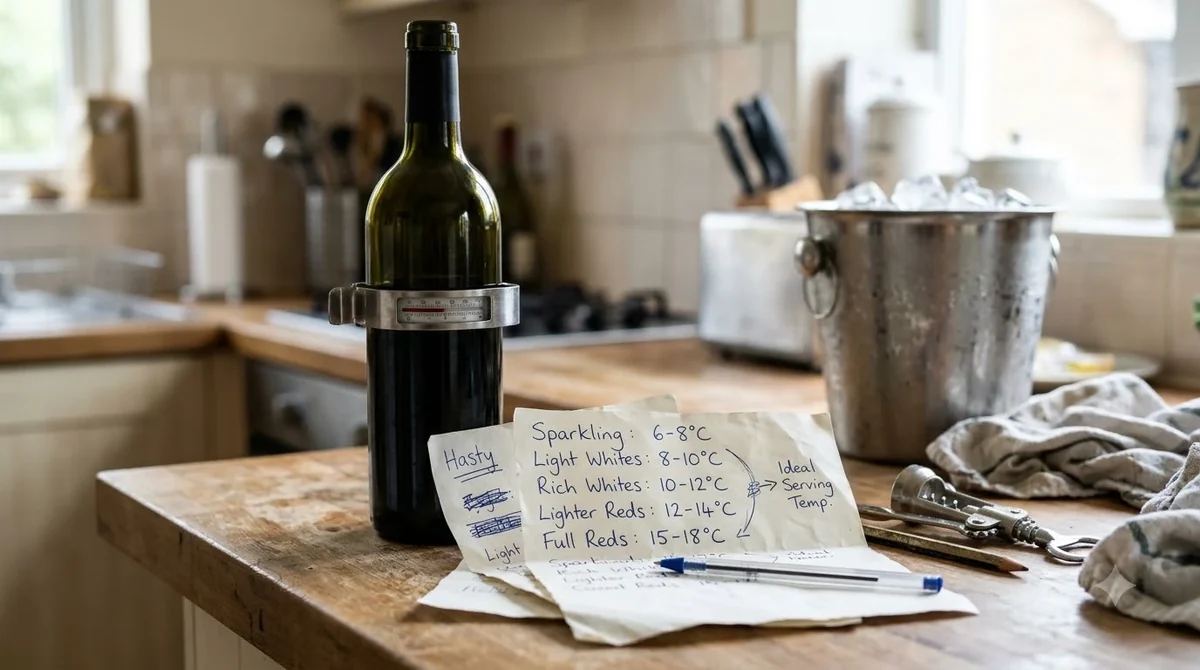
Bollinger recommends serving Special Cuvée between 8 and 10 degrees Celsius, approximately 46 to 50 degrees Fahrenheit. This is consistent with the general serving range for sparkling wine and helps retain freshness while allowing the wine’s aromas to develop.
A bottle served too cold may appear less expressive, while excessive warmth can make the bubbles seem less refreshing and the alcohol more prominent. If the bottle has been stored at approximately 55 degrees Fahrenheit, a period in an ice bucket or refrigerator can bring it closer to serving temperature.
Open and pour carefully
Champagne bottles are pressurized, so remove the foil and loosen the wire cage while maintaining control of the cork. Keep a hand over the cork, angle the bottle away from people, and rotate the bottle rather than pulling the cork forcefully.
Pour slowly into clean Champagne glasses. A standard 750 ml bottle provides approximately five 5-ounce servings, making it useful to estimate the number of bottles needed for a gathering.
For a dinner party of ten guests, two standard bottles provide approximately ten standard servings. Guests who want a second glass will require additional bottles, so plan according to the length of the event and the number of people attending.
Preserve opened Champagne
Unlike still wine, sparkling Champagne gradually loses carbonation after opening. A suitable sparkling-wine stopper can help preserve the remaining bubbles, but the bottle should still be refrigerated promptly.
Opened sparkling wine is generally best consumed within one to three days under refrigeration. The actual result depends on the wine, how carefully it is sealed, and how much air remains in the bottle.
A final storage consideration is transportation. Avoid leaving a newly purchased Bollinger bottle in a hot vehicle for an extended period. For a premium vintage bottle, careful handling between the retailer and the home is part of protecting the purchase.
Frequently Asked Questions
Is Bollinger considered an expensive Champagne?
Bollinger occupies the premium Champagne category, but its wines cover several spending levels. Special Cuvée is considerably more accessible than R.D. or certain vintage releases. Its position is influenced by the house’s Pinot Noir emphasis, reserve-wine program, and extended aging practices.
How many glasses are in a standard Bollinger bottle?
A 750 ml bottle provides approximately five standard 5-ounce servings. A 1.5-liter magnum contains twice as much wine and therefore provides approximately ten standard servings. Smaller tasting pours will naturally increase the number of glasses.
Does Bollinger use oak barrels to make Champagne?
Yes. Bollinger identifies oak-barrel winemaking as an important part of its house style. The producer explains that its barrel practices contribute to the texture and aromatic complexity of its wines. This is one of the production characteristics that distinguishes the house’s approach from producers relying more heavily on stainless-steel fermentation.
Can Bollinger Champagne be kept for several years?
Some Bollinger vintage releases can develop further with suitable cellar conditions, although their aging potential varies by cuvée and harvest. The producer says Special Cuvée can be enjoyed immediately or aged in a cellar. For a collectible vintage bottle, provenance and consistent storage conditions are particularly important.
What does recently disgorged mean on Bollinger R.D.?
Disgorgement is the Champagne production step in which the yeast sediment accumulated during bottle aging is removed. The R.D. designation refers to a wine released after extended aging on its lees and relatively recent disgorgement. This production approach is central to the identity of the R.D. bottling and distinguishes it from standard non-vintage Champagne.
Bollinger offers several Champagne styles, but Special Cuvée is the most practical starting point for buyers seeking the house’s signature character. La Grande Année, Rosé, PN, and R.D. provide different expressions for more specific preferences and occasions. Compare the same vintage and bottle size across reputable retailers, and prioritize storage history and genuine availability when purchasing premium or older bottles.
More in Wine Brands
 Marqués de Riscal Wine Price: Compare Bottles and Find the Right RiojaUpdated Nov 21, 2026
 Mateus Rose Price: What to Expect for a 750 ml BottleUpdated Nov 21, 2026
 Kim Crawford Rose Price: Find a Fair 750 ml Bottle RangeUpdated Nov 21, 2026
 Marchesi Antinori Wine Price: Compare Bottles by Style and TierUpdated Nov 21, 2026
 Marques De Riscal Wine Review: How to Choose the Right Spanish BottleUpdated Nov 21, 2026
 Lussory Wine Review: Choose the Right Alcohol-Free StyleUpdated Nov 21, 2026