

We may earn a commission when you buy through links on this page, at no extra cost to you. Learn more.
Yeti wine glasses on sale are worth considering if you want a durable, insulated alternative to traditional wine glasses for camping, patios, boats, and outdoor entertaining. The YETI Rambler 10 oz Wine Tumbler combines double-wall vacuum insulation, a splash-resistant MagSlider Lid, and a ceramic-lined interior in a compact stainless-steel design. Its biggest strengths are durability, temperature retention, and easy cleaning, while its weight, limited capacity, and reduced wine aeration make it less suitable for formal tastings and traditional wine service.
Shopping for YETI wine tumblers involves more than comparing colors or waiting for a seasonal promotion. The current Rambler Wine Tumbler has a DuraSip Ceramic Lining, while older versions used a different interior and slightly different styling. Understanding those differences helps shoppers choose the right version, recognize meaningful features, and avoid paying for a design that does not match their drinking habits. This review examines the current model, owner feedback, practical limitations, and the situations where conventional wine glasses remain the better choice.
Specs and Key Features of the YETI Rambler Wine Tumbler
The YETI Rambler 10 oz Wine Tumbler is a compact insulated drinking vessel designed for wine outside the traditional dining room. Its double-wall construction protects the drink from surrounding temperatures, while the ceramic-lined interior and included magnetic sliding lid add practical features for everyday use.
The current DuraSip version measures 3.4 inches wide and 4.5 inches tall, according to YETI. Its empty weight is 0.55 pounds, and its 10-ounce capacity provides room for a conventional wine pour without making the vessel excessively large. The exterior uses kitchen-grade 18/8 stainless steel, which YETI describes as rust-resistant and puncture-resistant. The insulation separates the inner drinking surface from the outside wall, helping reduce temperature transfer from warm hands and surrounding air.
| Specification | Current Rambler Wine Tumbler |
|---|---|
| Capacity | 10 fluid ounces |
| Width | 3.4 inches |
| Height | 4.5 inches |
| Empty weight | 0.55 pounds |
| Construction | 18/8 stainless steel |
| Interior | DuraSip Ceramic Lining |
| Insulation | Double-wall vacuum insulation |
| Lid | MagSlider splash-resistant lid |
| Cleaning | Dishwasher safe |
| Warranty | Five years |
One of the most important changes to understand is the DuraSip Ceramic Lining. This is not a conventional ceramic wine glass or a removable ceramic insert. YETI describes the lining as a nonstick interior fused to the stainless-steel construction. Its purpose is to provide a smooth drinking surface that resists staining from acidic beverages and makes cleanup easier. The company also describes the surface as scratch-resistant.
The MagSlider Lid uses magnets to make opening and closing convenient. It adds a barrier against splashes, insects, and accidental movement, which can be useful beside a swimming pool or around a campsite. However, YETI specifically states that the lid is not leakproof. That distinction matters because a splash-resistant cup should not be treated like a sealed travel bottle.
For a broader look at conventional glassware, the site’s guide to wine glasses explains how bowl shapes, materials, and glass construction affect different drinking occasions. The Rambler serves a different purpose: protecting wine and reducing breakage rather than reproducing the complete experience of a traditional wine glass.
The official YETI Rambler Wine Tumbler specifications provide the most useful reference for checking the current construction, dimensions, lid limitations, and cleaning instructions. Those details are particularly important when comparing an older stainless-interior version with the newer ceramic-lined design.
What Owners Like About the Rambler Wine Tumbler
Owner feedback and independent product coverage point to three recurring strengths: dependable temperature retention, resistance to breakage, and convenient cleaning. These advantages are most relevant to people who drink wine outdoors or want a reusable cup that can handle more than occasional dinner-party use.
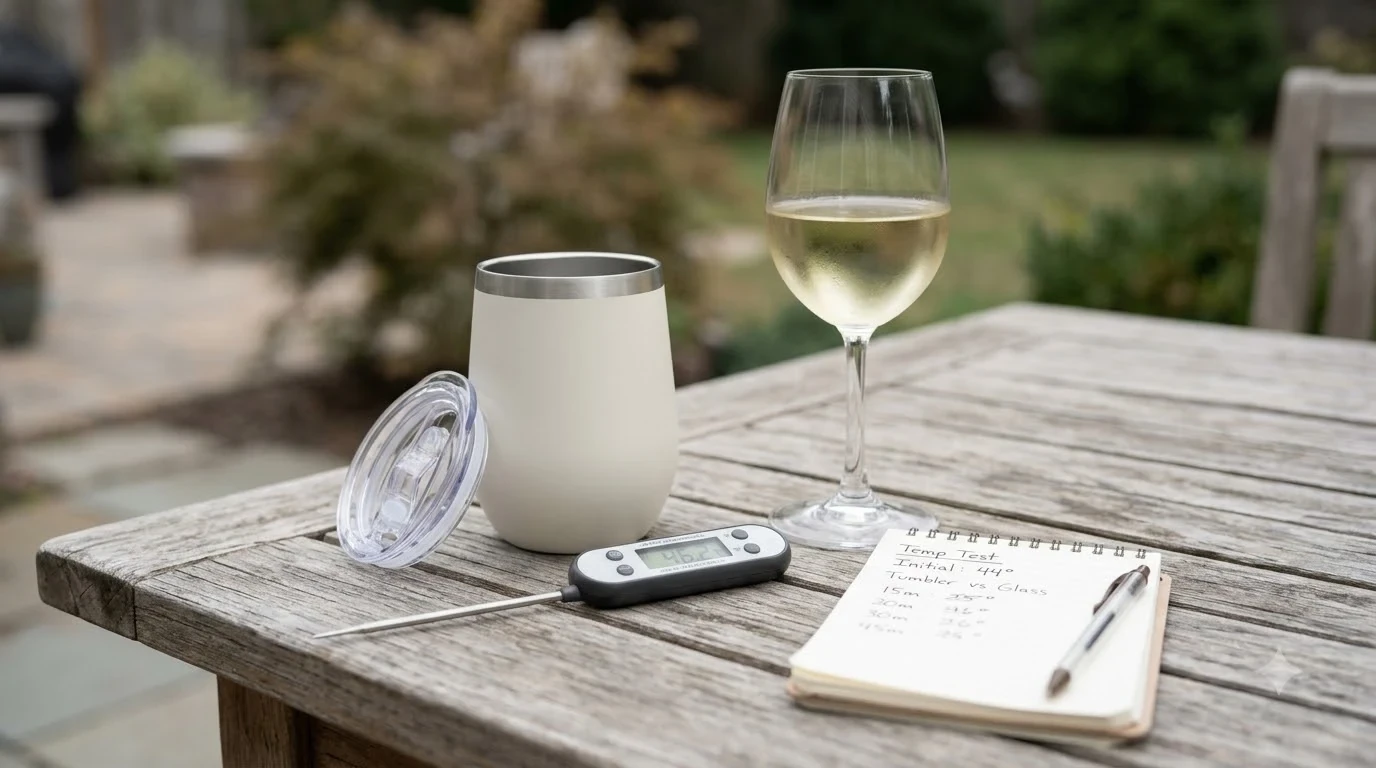
Temperature retention is a major attraction. Traditional thin wine glasses provide little insulation, and the temperature of a cold white wine or rosé can rise quickly outdoors. Double-wall vacuum insulation helps slow that change. It also limits the effect of warm hands on the beverage, making the Rambler practical for long afternoons on a patio, at a campsite, or beside a pool.
The insulated construction can also help preserve the serving temperature of chilled sparkling wine, although the 10-ounce capacity is not intended to accommodate a large bottle pour or extensive ice additions. A smaller serving is generally more practical than filling the tumbler to its rim. For people who regularly drink Sauvignon Blanc, Pinot Grigio, or sparkling wine outside, maintaining a cooler serving temperature can be a meaningful advantage.
Another frequently appreciated feature is the solid construction. Traditional stemmed wine glasses are vulnerable to chips, cracks, and breakage when carried between a kitchen, deck, boat, or picnic area. Stainless steel removes much of that concern. The Rambler is not a disposable outdoor cup; its reusable construction is intended for repeated use, and its exterior is designed to withstand ordinary outdoor handling.
WIRED’s review highlights the tumbler’s durability, insulated walls, dishwasher compatibility, and comfortable matte exterior. The publication also describes why a more substantial drinking vessel makes sense for beaches, parks, and environments where fragile glassware is inconvenient. Its discussion provides a useful independent perspective in addition to YETI’s product specifications.
Owners also appreciate the ceramic interior on the updated version. Nordstrom customer feedback includes comments from buyers who prefer the newer lining because they do not notice the metallic character they associated with older stainless-steel interiors. Other customers describe the tumbler as particularly useful for camping and everyday beverages.
The MagSlider Lid is another practical benefit. It makes it less likely that a small bump will send wine over the rim, and it can help keep insects and outdoor debris away from the beverage. The lid is especially useful when a cup is resting on a camp chair, picnic table, or boat surface. Its magnetic mechanism is convenient to operate without removing the entire lid for every sip.
Finally, dishwasher-safe construction simplifies regular maintenance. The interior does not require the same delicate handling as a thin crystal bowl. For households that use the tumbler several times each week, being able to put the vessel through an ordinary cleaning routine is a meaningful convenience.
Common Complaints and Important Limitations
The Rambler Wine Tumbler is designed around convenience rather than traditional wine presentation. Its substantial construction, compact bowl, and optional lid make it practical outdoors, but those same characteristics can become disadvantages for people who prioritize aroma, swirling, and a lighter drinking experience.
Weight is one of the clearest compromises. An empty current ceramic-lined Rambler weighs 0.55 pounds, which is noticeably more substantial than an ordinary thin wine glass. That weight is part of the insulated stainless-steel design, but it can feel unnecessary when the cup is being used at a dining table or carried around a crowded gathering. Shoppers who prefer lightweight glassware may find the difference immediately noticeable.
The second limitation is the 10-ounce capacity. This is enough for a conventional wine serving, but it leaves less room for generous pours, ice, fruit, or mixed drinks. Nordstrom owner feedback includes a customer wishing for a larger version for white sangria. Another customer mentions that ice takes up too much of the available space. These comments illustrate why capacity should be considered in relation to the beverages actually served.
The lid also changes the drinking experience. Wine benefits from contact with air, particularly when aromatic red varieties are poured into a suitable bowl. The MagSlider Lid restricts the opening and makes swirling less convenient. WIRED specifically identifies reduced aeration as a disadvantage. Removing the lid improves access to the beverage, but the Rambler still does not have the same open bowl shape as a traditional wine glass.
Another potential disappointment concerns the difference between splash resistance and leakproof performance. The magnetic slider helps reduce accidental splashes, but the manufacturer does not describe it as a watertight closure. A tumbler with wine inside should remain upright during transport. It is not a substitute for a sealed bottle when packing luggage or placing drinkware inside a backpack.
Existing owners of older Rambler wine tumblers may also notice that the updated version looks and feels different. Nordstrom feedback includes a customer who preferred the older stainless-steel interior and wanted the previous shape to match an existing collection. The ceramic-lined design is an improvement for some drinkers, but it is not necessarily an aesthetic improvement for everyone.
There is also a difference between maintaining temperature and serving wine correctly. Insulation can keep a beverage cold for longer, but it does not replace thoughtful serving temperatures. A heavily chilled red wine may taste less expressive, while an overly warm white wine can lose some of its freshness. The Rambler is a useful container, not a substitute for understanding the wine itself.
Finally, the tumbler does not offer the visual clarity of glass. Drinkers cannot easily judge the color, clarity, or appearance of a wine through its stainless-steel body. That may not matter during a casual outdoor gathering, but it is a disadvantage for formal tasting sessions and educational wine events.
Who Should Buy the YETI Wine Tumbler and Who Should Skip It
The Rambler makes the most sense for people who regularly drink wine in places where ordinary glassware is inconvenient or vulnerable to breakage. Its insulation and sturdy construction are practical features, but buyers who mainly drink wine at a dining table may get more value from conventional glassware.
Who should consider buying it
Campers and outdoor enthusiasts are among the strongest potential buyers. A lightweight picnic setup, a campsite dining area, and a camp chair all benefit from drinkware that does not have a fragile stem. The 10-ounce Rambler is compact enough for a small outdoor table and offers an insulated alternative to disposable cups.
Boat owners and poolside hosts also have a practical reason to consider the design. Broken glass around a pool or on a boat can create a difficult cleanup situation. The stainless-steel body avoids that particular risk, while the MagSlider Lid offers some protection from splashes and insects. The lid is not a guarantee against spills, so users should still keep the cup upright.
People who drink chilled white wine and rosé may appreciate the insulation most. A Sauvignon Blanc served at approximately 45 to 50 degrees Fahrenheit or a Chardonnay served around 50 to 55 degrees Fahrenheit can become less refreshing as the surrounding temperature rises. An insulated vessel helps slow that process.
Busy households and frequent entertainers may appreciate dishwasher-safe construction and the reusable stainless-steel body. The tumbler is suitable for informal gatherings where guests move between indoor and outdoor spaces and where conventional wine glasses might be knocked over.
Who should skip it
Dedicated wine tasters should consider traditional glassware instead. A proper wine bowl gives aromatic compounds more room to develop and provides space for swirling. It also makes it easier to examine the wine’s color. These characteristics are especially important when comparing Cabernet Sauvignon, Pinot Noir, Riesling, or other wines with distinctive aromas.
Formal dinner hosts may prefer stemmed glassware because it offers a more traditional appearance and a lighter drinking experience. The Rambler’s outdoor styling does not necessarily complement a carefully arranged dining table, particularly when the occasion involves several wine varieties and different glass shapes.
People who prefer large servings or wine cocktails with substantial amounts of ice should also consider a larger vessel. The 10-ounce capacity can become restrictive once ice, fruit, or other ingredients are added. A larger drinking cup may be more practical for sangria or mixed drinks.
For shoppers who want a more traditional alternative, the site’s recommendations for red wine glasses cover options designed around bowl size and aromatic development. Those who like the stemless appearance but prefer actual glass construction can also compare stemless wine glasses.
How the Rambler Compares to Traditional Wine Glasses
The biggest difference between a YETI Rambler and a conventional wine glass is the intended drinking environment. A traditional glass is designed to present wine, while the Rambler is designed to protect it from outdoor conditions and everyday accidents.
A standard stemmed wine glass typically has a thin bowl, a narrow stem, and a foot that keeps the drinker’s hand away from the wine. Its shape helps control the wine’s exposure to air and gives the drinker room to swirl the liquid. Different bowl sizes can also suit different wine styles.
The Rambler takes a different approach. Its double-wall stainless-steel construction offers greater insulation and resistance to breakage. Its short, stemless shape is easier to place on outdoor surfaces, and the included lid provides additional protection against accidental splashes. It sacrifices some of the sensory benefits of traditional wine glassware in exchange for convenience.
The difference becomes especially noticeable with aromatic reds. Pinot Noir has relatively low-to-medium tannin and high acidity, while Cabernet Sauvignon typically has higher tannin. Both can benefit from a glass that allows the drinker to observe the wine and experience its aromas. The Rambler can certainly hold either wine, but it is not specifically shaped to optimize those characteristics.
White wine presents a slightly different comparison. Temperature retention is particularly useful for chilled Sauvignon Blanc, Riesling, and sparkling wines. A conventional glass may allow the wine to warm faster, especially outdoors, while the insulated Rambler helps preserve its initial temperature. However, a standard wine glass provides better visibility and makes it easier to appreciate the wine’s aromatic profile.
There is no need to treat these two styles as competing products for every occasion. A household can use conventional glassware for dinner and tasting sessions while keeping insulated tumblers for camping, outdoor parties, and casual use. That combination is often more practical than expecting one vessel to handle every situation.
YETI’s broader drinkware range is also worth considering. The ordinary Rambler tumbler is designed for general beverages, while the wine version has a wine-oriented shape and a shorter profile. The 10-ounce format is particularly useful for moderate wine servings, but buyers who regularly want larger cold beverages should examine other drinkware sizes rather than assuming the wine model will meet every need.
Serving, Cleaning, and Maintaining Your Rambler
Getting the most from an insulated wine tumbler involves using it according to its intended purpose. Proper serving temperatures, sensible pouring, and straightforward cleaning can make the vessel more useful without sacrificing the character of the wine.
For white wines, the Rambler is especially useful when the surrounding environment is warm. Light-bodied whites such as Sauvignon Blanc and Pinot Grigio are generally served around 45 to 50 degrees Fahrenheit. Fuller-bodied Chardonnay is usually more enjoyable around 50 to 55 degrees Fahrenheit. Insulation helps slow temperature changes after pouring, although it does not actively chill wine that has already become warm.
Light reds such as Pinot Noir can be served around 55 to 60 degrees Fahrenheit. Fuller reds such as Cabernet Sauvignon and Syrah are generally served around 60 to 65 degrees Fahrenheit. A cold Rambler should not be used as a reason to serve every red wine directly from the refrigerator. Starting with an appropriate wine temperature remains important.
Pouring a moderate amount also makes the experience more comfortable. A traditional wine serving is approximately 5 ounces, and a standard 750 ml bottle provides about five such servings. The 10-ounce Rambler has sufficient nominal capacity for a typical pour, with additional room depending on the amount served. Leaving space near the rim reduces accidental splashing and makes the lid easier to use.
Tip: For the best balance of convenience and wine aroma, remove the MagSlider Lid when drinking at a stationary table. Put it back on when moving around outdoors, but remember that the magnetic closure is splash-resistant rather than leakproof.
Cleaning is straightforward because YETI identifies the current wine tumbler and its lid as dishwasher safe. The manufacturer recommends placing the lid on the top rack and putting the gasket and magnetic slider in the utensil basket. This arrangement helps keep the smaller lid components in an appropriate position during the cleaning cycle.
For everyday maintenance, rinse the interior after drinking wine rather than leaving red wine residue inside for extended periods. The DuraSip Ceramic Lining is designed to resist stains, but prompt cleaning remains sensible. Pay attention to the lid’s sliding mechanism because residue can collect around moving parts if the tumbler is used for sweet wine, cocktails, or beverages other than wine.
Do not confuse the ceramic lining with a conventional ceramic coating that can simply be removed or replaced. YETI describes DuraSip as a surface fused to the stainless-steel construction. That design is intended to combine the practical benefits of a smooth interior with the durability of the Rambler body.
When storing the tumbler, allow it to dry completely after washing. Keeping the lid separate until both components are dry can help prevent unwanted moisture from remaining around the gasket and slider. The same general approach is useful for any reusable drinking vessel with moving lid components.
For warranty questions, YETI states that Rambler drinkware has a five-year warranty. Buyers should review the manufacturer’s warranty information for coverage conditions rather than assuming that every type of damage or cosmetic change qualifies. Retaining purchase information is also sensible if warranty support is needed later.
Frequently Asked Questions
Are YETI wine glasses on sale throughout the year?
Availability of promotional offers depends on the retailer, color selection, and seasonal inventory. Some retailers also change their assortment when new colors arrive or older finishes are discontinued. Compare the complete product description before purchasing so an older version is not mistaken for the current ceramic-lined model.
Can the YETI Rambler wine tumbler hold sparkling wine?
Yes, the 10-ounce tumbler can hold sparkling wine such as Prosecco, Champagne, or Cava. The magnetic slider is not designed to create a pressure-tight seal, so the vessel should not be treated as a bottle for storing carbonated beverages. For the best drinking experience, remove the lid while enjoying the wine.
Does the ceramic lining change the taste of wine?
The DuraSip lining provides a different drinking surface from the older stainless-steel interior. Some owner comments on Nordstrom describe preferring the ceramic-lined version because they notice less metallic character. Individual taste perceptions vary, and the lining does not turn the tumbler into a traditional glass wine bowl.
Can the Rambler Wine Tumbler be used for coffee?
Yes, YETI states that the insulated ceramic-lined tumbler can be used for hot and cold beverages. The DuraSip interior is also designed to resist staining from acidic drinks such as coffee. Allow the vessel to be cleaned before switching beverage temperatures, since immediately changing from a hot drink to a cold one can affect temperature-holding performance.
Does the Rambler wine tumbler fit every car cupholder?
YETI describes the updated wine tumbler as having a slimmer design that fits into a camp-chair cupholder. That does not establish compatibility with every vehicle or furniture holder. Measure the available opening before purchasing if a specific cupholder is an important requirement.
The YETI Rambler 10 oz Wine Tumbler is a strong choice for outdoor wine drinking, casual entertaining, and situations where insulation and resistance to breakage matter more than traditional wine presentation. The current ceramic-lined model adds practical cleaning benefits, while its weight, capacity, and lid limitations deserve consideration before buying. Compare the exact version and its features before choosing, and consider keeping traditional wine glasses for occasions when aroma, swirling, and presentation take priority.
More in Wine Glasses
 Spiegelau Crystal Wine Glasses That Bring Clarity to Every PourUpdated Nov 21, 2026
 Zalto Crystal Wine Glasses: Are They Worth the Investment?Updated Nov 21, 2026
 Villeroy And Boch White Wine Glasses for a More Cohesive TableUpdated Nov 21, 2026
 Zalto Wine Glasses On Sale: Find the Right Denk’Art GlassUpdated Nov 21, 2026
 Zwiesel Glas Champagne Glasses: Features, Quality and Buying AdviceUpdated Nov 21, 2026
 Zwiesel Glas Decanter Review: A Durable, Elegant Choice for Wine ServiceUpdated Nov 21, 2026