

We may earn a commission when you buy through links on this page, at no extra cost to you. Learn more.
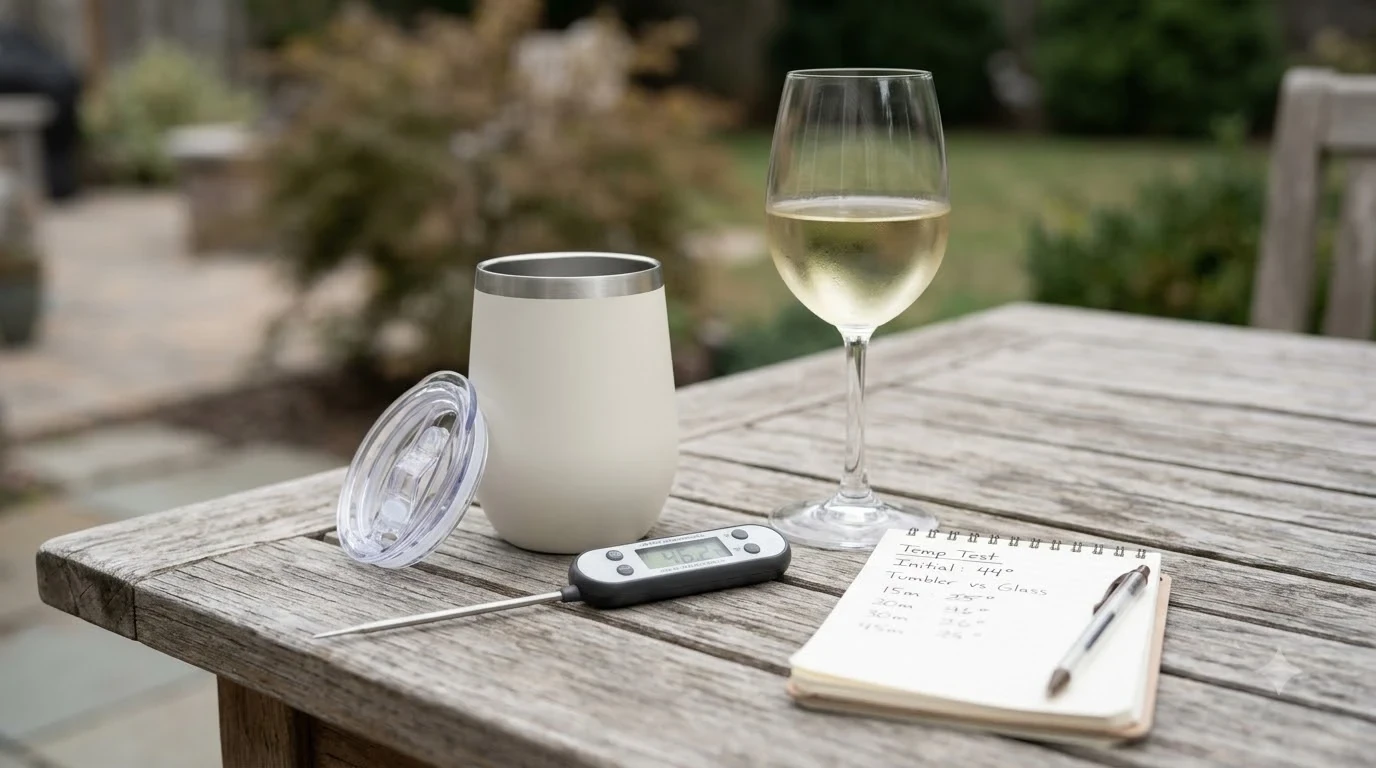
The yeti wine tumbler is a smart choice for keeping a modest pour protected and temperature-stable outdoors, but its splash-resistant lid is not leakproof. The current Rambler 10 oz Wine Tumbler pairs double-wall vacuum insulation with a DuraSip ceramic lining and a magnetic slider lid. Its strongest points are durability, easy cleanup, and a compact profile; its limits are a 10-ounce capacity and a covered opening that does not offer the aroma access of a stemmed glass.
The design targets patios, campsites, and boats, where broken glass or warm wine can spoil the occasion.
Specs and Key Features
The Rambler wine tumbler has a 10-fluid-ounce capacity, a 3.4-inch width, and a 4.5-inch height, with an empty weight of 0.55 pounds according to YETI. Its footprint is compact, but insulation and a lid make it different from traditional stemware.
| Specification | Current Rambler 10 oz Wine Tumbler |
|---|---|
| Capacity | 10 fl. oz. |
| Dimensions | 3.4 in. wide × 4.5 in. high |
| Empty weight | 0.55 lb. (about 8.8 oz.) |
| Outer body | Kitchen-grade 18/8 stainless steel |
| Interior | DuraSip ceramic lining fused to stainless steel |
| Insulation | Double-wall vacuum insulation |
| Lid | MagSlider magnetic slider; splash-resistant, not leakproof |
| Cleaning | Dishwasher safe |
The body uses kitchen-grade 18/8 stainless steel, which YETI describes as rust- and puncture-resistant. Double-wall vacuum insulation slows heat transfer, helping a chilled white or rosé stay cooler in warm weather than it would in ordinary thin-walled glass. It preserves the starting temperature; it does not chill wine that has already become too warm. YETI’s current product details list the updated material and dimensions. DuraSip ceramic is the main difference between the current version and older stainless-interior Rambler wine tumblers. YETI says the lining is fused to the steel rather than being a separate ceramic vessel, and is designed for easy cleanup and stain resistance. For drinkers who dislike the sensation of drinking directly from stainless steel, the coated surface may be a meaningful improvement.
The included MagSlider lid uses magnets to move its slider into the open or closed position. It helps keep insects, leaves, and incidental splashes away from the drink, but the manufacturer is explicit that it does not create a leakproof seal. The lid is therefore useful while sitting by a pool or around a campfire, not a substitute for a sealed travel mug inside a backpack. The distinction matters: the tumbler is meant to be carried upright and enjoyed, not tossed into a bag full of clothing or electronics. The proportions suit a wine serving rather than an all-day hydration routine. Ten ounces leaves room for a typical 5-ounce pour and some headspace, but ice, fruit, or a mixer quickly uses the remaining space. YETI describes the current design as slimmer than earlier versions and sized for camp-chair cupholders.
Tip: Pour about 5 ounces at a time, remove the lid when you want to swirl or assess aromas, and keep the cup upright while walking because the MagSlider is not leakproof.
What Owners Like
Owner feedback consistently points to outdoor temperature control, sturdy construction, and the ceramic interior as the most appreciated features. Written comments on retailer pages connect its appeal to summer white wines, camping, and outdoor gatherings.
One REI reviewer says white wine stays cold outdoors in summer. Another likes the size and shape for hosting, noting that the cup will not break like glass and that the lid helps keep insects away. A Nordstrom owner praises the ceramic interior for avoiding the metallic taste they associate with bare stainless steel. These are personal reports, but the pattern is clear: buyers want a more practical outdoor wine cup, not a fine-dining glass. The insulation is useful during a long afternoon. A chilled Sauvignon Blanc or Pinot Grigio can warm in a conventional glass as it sits in the sun or is held in a warm hand; vacuum insulation slows that change. It does not replace chilling the bottle first, but it helps maintain the temperature of wine poured properly cold.
The exterior also resists the condensation common with cold single-wall glass. That makes it more comfortable to hold and less likely to leave a wet ring on a table; one REI reviewer specifically says the ceramic-lined version does not need a coaster in their use. This is convenient on a patio table or picnic bench. Some owners who used older stainless-interior versions say the ceramic surface avoids a metallic tang. Taste perception varies, so not every drinker will notice the same difference, but the lining is more than a cosmetic update for those buyers.
Durability is another reason to choose steel over glass. The body can still scratch or dent, but it is far less fragile than a thin wine stem and bowl. Its low, stemless shape is also less tippy than a tall glass with a narrow base.
Common Complaints
The two most important limitations are the MagSlider lid’s lack of a leakproof seal and the fixed 10-ounce capacity. YETI states that the lid is splash-resistant rather than leakproof, and owner reviews show that some buyers expected stronger spill control when walking.
The lid reduces splashes and keeps debris out while the tumbler is upright; it is not designed to contain wine if the cup is tipped or carried on its side. An REI reviewer reports splashing while walking, and YETI’s reply reiterates that the slider is not leakproof. Anyone carrying a filled vessel from a car to a concert lawn should use a bottle with a threaded, leakproof cap instead. Capacity is the other recurring drawback. Ten ounces is enough for a standard 5-ounce serving with space around it, but it leaves less room for ice, fruit, or a generous cocktail. One owner specifically wishes for a 12-ounce option for white sangria, while another says ice takes up too much of the cup’s volume. If the intended drink is a chilled white wine with a little ice, a spritz, or a large sangria, measure the recipe and ice first rather than assuming that a 10-ounce vessel will feel roomy.
Drinkers who care about aroma may find the lid and shape restrictive. A traditional wine glass has a bowl that allows swirling and concentrates aromas toward the nose. Removing the MagSlider lid helps, but the compact body still lacks the shape of dedicated stemware. Insulation is a mixed benefit for drinkers who want wine to warm in the hand or change quickly as it opens. A full-bodied red served at 60 to 65 degrees Fahrenheit can be enjoyed from it, but the steel body will not imitate the feel or temperature behavior of a thin glass bowl. For a formal tasting, it is a compromise.
The weight is noticeable compared with thin glassware. At 0.55 pounds empty, it is sturdy, but it is not the lightest option for a picnic basket or a bag that is already full. The trade-off makes sense for regular outdoor use, while someone who values minimum weight may be happier with a lightweight stemless glass or an uninsulated reusable cup. It is also worth remembering that the lid adds a component to clean and keep track of, even though the product is dishwasher safe. The current interior and shape may not match older Rambler wine tumblers. One REI owner says the revised shape and white ceramic interior no longer coordinate with earlier stainless-inside cups. That is a style concern, but collectors should compare the interior and profile before adding a replacement.
Who Should Buy and Who Should Skip
The YETI is best for people who drink wine outdoors, value temperature retention, and want a durable cup with a lid that discourages splashes and insects. Its 10-ounce capacity comfortably fits a 5-ounce wine pour, while its 0.55-pound body gives up some portability in exchange for a sturdy, insulated build.
Choose it for backyard dinners, camping, boat days, picnics, and tailgates where broken glass is a concern. Its low profile is easy to set down, and the double-wall construction helps a chilled rosé or sparkling wine stay cooler than it would in a thin glass. It also suits people who already like YETI drinkware and want an easy-clean wine cup. It suits casual drinkers who prefer convenience over formal presentation. A crisp Albariño, Provence rosé, or lightly chilled red can be enjoyable from it on a warm deck. The ceramic lining may also appeal to anyone who dislikes drinking from bare stainless steel, while dishwasher-safe construction makes cleanup simple after a campsite weekend.
Skip it if you want a vessel for serious wine evaluation, formal dining, or a tasting where aroma is central. A Bordeaux blend, Nebbiolo, or aromatic Riesling benefits from a bowl that allows swirling and directs the bouquet toward the nose. A lid is useful outdoors but unnecessary at a quiet dinner table, and the tumbler’s thick insulated wall does not provide the delicate rim and stem feel of quality glassware. For those settings, dedicated wine glasses remain the more appropriate choice. It is also the wrong buy for anyone who needs a cup that can be sealed and packed horizontally. The MagSlider is a splash guard, not a travel-bottle closure, so it should stay upright while being carried. Commuters who want wine or another beverage in a work bag should use a genuinely leakproof container designed for transport. Someone shopping primarily for a large mixed drink should compare larger wine tumbler options before settling on a 10-ounce model.
Compare the features you will use most: ceramic lining, slim shape, insulation, and the magnetic slider lid. For indoor wine, ordinary glass may be enough; shoppers comparing makers can browse Glassware Brands before choosing a set.
How It Compares to Alternatives
The YETI sits between traditional wine glassware and a general-purpose insulated cup: it gives up some tasting performance to gain insulation and durability. Its 10-ounce capacity, ceramic lining, and MagSlider lid make it purpose-built for casual wine drinking, while a stemmed glass or simple open tumbler serves a different priority.
Compared with a stemmed wine glass: the YETI is more practical around grass, pool decks, boats, and crowded outdoor tables. Its steel body is not going to shatter if knocked off a camp table, and insulation helps chilled whites or rosé in warm weather. A stemmed glass wins on aroma, swirling, and visual clarity. A WIRED review of the earlier Rambler version also identifies weight and limited aeration as compromises that remain relevant to this style of covered wine cup. For formal dinners or structured tastings, glassware remains the better choice.
Compared with a general insulated tumbler: the YETI wine model has a lower profile and 10-ounce serving size rather than the taller shape of many water or coffee cups. Its ceramic lining suits drinkers who dislike bare steel, and the MagSlider can be moved aside while sipping. A larger insulated tumbler is more versatile for iced drinks, but may be oversized for wine on a small table. An insulated wine tumbler roundup can help compare capacity, lid design, and cup-holder fit. Outdoor temperature control points toward insulation; aroma and visual assessment point toward open glass. For a short picnic where insulation is unimportant, a light stemless cup may be enough.
Older Rambler wine tumblers used a stainless interior; the current version uses DuraSip ceramic fused to steel. YETI also describes the revised profile as slimmer and shaped for a camp-chair cupholder while retaining 10 ounces. Owners adding to a collection should compare the inside and silhouette as well as the outside finish.
Frequently Asked Questions
These answers cover details that affect daily use of the 10-ounce cup, including hot-drink compatibility, dishwasher handling, and the five-year Rambler warranty. They also clarify material and safety information not obvious from the exterior.
Can the YETI wine tumbler hold hot drinks?
Yes. YETI says the double-wall vacuum insulation can keep hot drinks hot as well as cold drinks cold, so the cup can also serve coffee, tea, or another warm beverage. Switching directly from a hot drink to a cold one may reduce its ability to hold the next drink’s temperature, so let the vessel return closer to room temperature between uses.
Is the YETI wine tumbler BPA-free?
REI lists the Rambler 10-ounce wine tumbler as BPA-free in its technical specifications. That detail is separate from the DuraSip interior and does not change the lid’s splash-resistant, non-leakproof design. Keep the tumbler upright when it contains wine.
Does the DuraSip lining resist coffee stains?
YETI says the lining resists staining from highly acidic drinks such as coffee. The company also describes the surface as scratch-resistant, while clarifying that it is fused to stainless steel rather than formed as a standalone ceramic cup.
What warranty comes with the Rambler wine tumbler?
YETI states that Rambler drinkware carries a five-year warranty. Keep the purchase details and review the brand’s warranty terms for the conditions and exclusions that apply to a specific claim. The warranty does not turn the MagSlider lid into a leakproof closure.
How should the lid parts be washed in the dishwasher?
YETI recommends placing the lid or cap on the top rack and putting removable gaskets in the utensil basket. This helps keep the small sealing pieces separate from the larger cup during the wash cycle. The tumbler itself is also dishwasher safe.
The YETI Rambler 10 oz Wine Tumbler is a practical outdoor wine cup, not a replacement for every glass in a home bar. Its ceramic-lined interior, insulation, and durable body make it appealing for patios and trips, provided the 10-ounce size is enough and the lid’s splash-resistant limits are understood. Choose it for convenience and protection; choose traditional stemware when aroma, swirling, and presentation matter most.
More in Wine Glasses
 Zwiesel Glas Champagne Flutes for Durable Everyday Sparkling WineUpdated Nov 20, 2026
 Vera Wang Crystal Wine Glasses: Design, Quality and Buying AdviceUpdated Nov 20, 2026
 West Elm White Wine Glasses: Compare Designs for Better Everyday Wine ServiceUpdated Nov 20, 2026
 Zalto Stemless Wine Glasses: Discover Their Distinctive DesignsUpdated Nov 20, 2026
 Viski Champagne Glasses That Match Your Style and Sparkling WineUpdated Nov 20, 2026
 Vista Alegre Decanter Review: Crystal Style and Wine ServiceUpdated Nov 20, 2026