

We may earn a commission when you buy through links on this page, at no extra cost to you. Learn more.
The waring wine stopper is a reusable bottle-sealing accessory designed for Waring’s compatible electric wine-preserving systems, particularly the WC400 Professional Wine Center. Its main advantage is that it works with an electric preserver to remove air from an opened bottle, while its date indicator helps track when the bottle was sealed. However, it is not a standalone electric vacuum stopper, so buyers looking for a replacement should confirm compatibility with their existing Waring appliance before purchasing.
The Waring name appears on several wine accessories, including electric corkscrews, cordless preservers, and replacement bottle stoppers. That makes identifying the correct component particularly important. A replacement stopper intended for the WC400 wine center is different from a conventional silicone bottle plug or a universal vacuum stopper. This review examines the Waring stopper’s construction, operation, compatibility, advantages, limitations, and practical alternatives so buyers can decide whether the original accessory makes sense for their wine-storage routine.
Specs and Key Features
The Waring wine stopper is best understood as one part of a larger preservation system rather than an independent wine-storage product. Its rubber-and-metal construction, date indicator on compatible versions, and connection to an electric preserver distinguish it from ordinary manual stoppers.
There are two particularly important product references. The WC400 Professional Wine Center manual documents the original operating system, while PartSelect identifies replacement stopper 032820 as a rubber-and-metal component specifically designed for that wine center. Buyers should distinguish this replacement part from the complete electric preserver assembly.
According to the Waring WC400 instruction booklet, the original system includes two bottle stoppers alongside its electric opener, electric preserver, charging base, and foil cutter.
| Specification | Waring stopper and compatible system |
|---|---|
| Replacement part number | 032820 |
| Compatible appliance | Waring WC400 wine center |
| Stopper material | Rubber and metal |
| Included stoppers in original WC400 system | 2 |
| Preservation method | Electric air removal through a fitted stopper |
| Preserver component | Part number 032819 |
| Date indicator | Adjustable silver ring on documented WC400 stoppers |
| Recommended bottle position | Upright after sealing |
| Preservation cycle | Approximately 20 seconds |
The replacement-part information comes from PartSelect’s Waring WC400 parts listing, while operating specifications come from the original instruction booklet. These details matter because a stopper alone cannot reproduce the complete preservation process. The electric preserver provides the suction, while the stopper forms the connection between the appliance and the bottle.
The original WC400 package includes two stoppers, an electric preserver, a cordless wine opener, a charging base, and a foil cutter. This combination makes sense for households that want opening and preservation equipment in one organized station. However, someone who only needs to replace a missing stopper does not necessarily need another complete wine center.
One additional distinction concerns the WP55 Cordless Wine Preserver. Its product documentation also identifies two date-indicator stoppers and an electric preservation system. Although the WP55 and WC400 share a similar preservation concept, their documentation does not establish universal interchangeability between every component. Buyers should verify the exact model and replacement part before ordering.
PartSelect identifies 032820 as a manufacturer-sourced replacement component, but its listing marks the stopper as no longer available. That makes checking the precise part number particularly important when looking through older appliance inventories or secondhand equipment listings. A generic stopper that looks similar may not connect correctly to the original Waring preserver.
What Owners Like
The Waring stopper’s strongest selling point is its integration with an electric vacuum-preserving appliance. Instead of relying entirely on manual pressure, the compatible system removes air through the stopper and provides a repeatable sealing process for unfinished bottles.
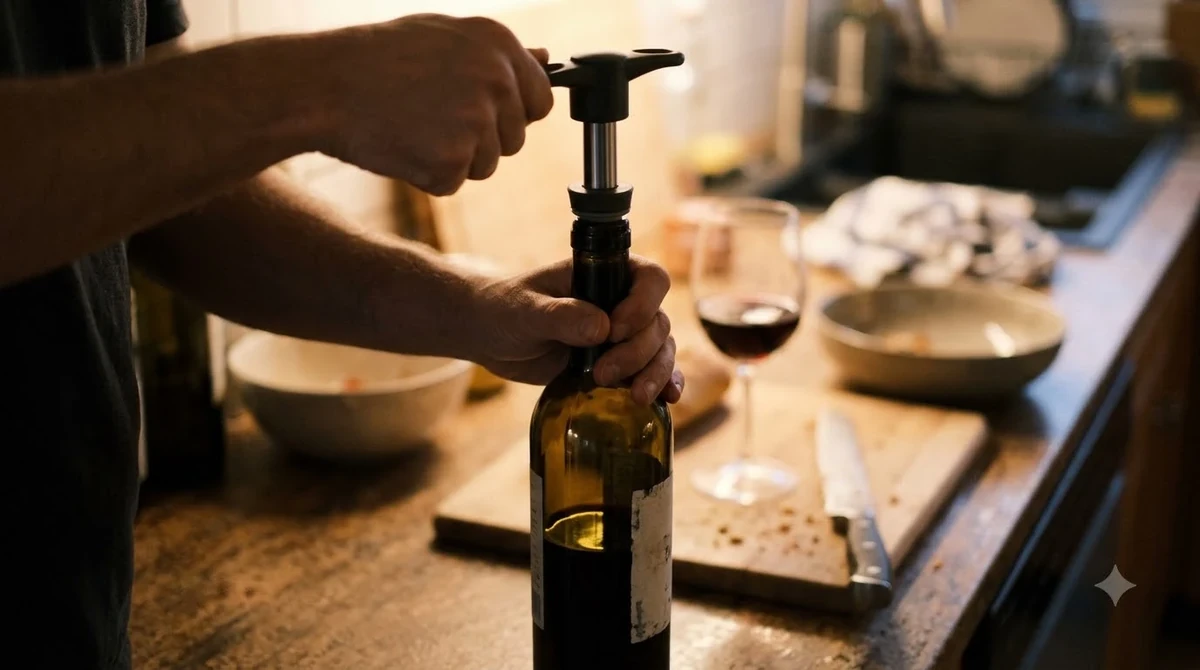
Electric preservation is the main attraction. The WC400 manual describes a process in which the user inserts the stopper, positions the preserver over it, and operates the power button. The appliance removes air while producing a clacking sound that gradually slows before stopping. According to Waring’s instructions, this process takes approximately 20 seconds.
That approach can be convenient for people who regularly open bottles without finishing them. A traditional stopper simply closes the bottle opening. The Waring arrangement adds a mechanical air-removal step, which makes it more involved but gives the user a different preservation method.
The date indicator is another useful feature. The documented WC400 stopper uses a silver ring that swivels to align the correct date with an arrow symbol. This gives users a simple visual reminder of when they sealed a bottle. It can be particularly helpful when several unfinished bottles are stored together.
For example, someone entertaining guests over a weekend might open a Cabernet Sauvignon on Friday and a Chardonnay on Saturday. Marking the sealing dates helps distinguish the two bottles without relying on memory. The feature is straightforward, but it adds practical organization to a reusable accessory.
The two-stopper arrangement also offers flexibility. The original WC400 package contains two bottle stoppers, so users have another accessory available when one is already being used. This is convenient for households that sometimes open two bottles during the same evening.
The rubber-and-metal construction documented for replacement part 032820 also gives buyers more information than a generic listing that simply describes an item as a wine plug. The rubber provides the sealing interface, while the metal component forms part of the original accessory’s construction. Correct fit is more important than appearance when replacing this kind of component.
Another practical advantage is that the system keeps its accessories together on the charging base. The WC400 manual identifies designated storage positions for the electric opener, electric preserver, and stoppers. For households with a dedicated wine station or bar cart, having the equipment organized in one location can make the preservation routine easier.
The WP55 documentation provides another indication of Waring’s approach to this product category. It describes a cordless preserver with a rechargeable NiMH battery pack, charging base, and two date-indicator stoppers. Its brushed stainless steel finish also gives the appliance a coordinated appearance alongside other bar accessories.
There is an important distinction between documented features and independently verified owner satisfaction, however. Available product documentation establishes how the accessory works, but it does not establish a reliable consensus about long-term durability or the percentage of owners who are satisfied. Buyers should therefore treat the design advantages as documented product characteristics rather than guaranteed performance outcomes.
Common Complaints
The Waring stopper has several limitations that buyers should understand before searching for a replacement. Compatibility, the need for an electric preserver, and the availability of older replacement components are more significant concerns than the stopper’s basic design.
The biggest limitation is dependence on the matching appliance. A standard wine stopper can be inserted into a bottle and removed by hand. The Waring WC400 stopper, however, is designed to work with the electric preserver. Without that appliance, the user cannot perform the documented vacuum-removal process.
This distinction can create confusion when shopping online. A listing that simply says Waring wine stopper may refer to the original WC400 replacement part, a stopper included with the WP55 system, or an accessory for another Waring appliance. Similar appearance does not establish compatibility.
Replacement availability is another concern. PartSelect identifies part 032820 as the WC400 wine stopper but marks it as no longer available in its displayed parts listing. That does not prove that every remaining replacement has disappeared from the market, but it does indicate that finding an original component may require more effort than buying a widely distributed universal stopper.
Owners of older Waring appliances should pay attention to the distinction between an individual stopper and the electric preserver. PartSelect separately identifies part 032819 as the electric wine preserver. Replacing one component will not necessarily solve a problem caused by the other.
The PartSelect WC400 replacement-parts listing is useful for checking the original part number, the rubber-and-metal construction, and the separate preserver component before looking for a replacement elsewhere.
The preservation process also requires attention. The WC400 instructions specify that the bottle must remain upright on a flat surface while the preserver operates. The appliance should be aligned with the bottle, and the user must keep the power button pressed until the operating cycle ends. This is less convenient than inserting an ordinary manual stopper and putting the bottle away.
The instructions also mention that the preserver’s non-slip foot can attach itself to the stopper. When that happens, the user should hold the bottle neck and stopper securely, then tilt the appliance away to break the attachment. This is a small but relevant operating detail that first-time users should understand.
Horizontal storage is not recommended. The WC400 manual specifically warns that wine may leak if a sealed bottle is placed on its side. This matters because many wine owners are accustomed to storing cork-closed bottles horizontally in a wine refrigerator. The Waring vacuum-sealed arrangement requires a different storage habit.
Finally, the stopper is not a complete solution to every wine-preservation problem. Removing air does not make an opened bottle permanently fresh, and it does not eliminate the need for sensible storage. Wine can continue changing after opening, even when a bottle is resealed. Buyers who want an accessory that requires no charging, motor, or dedicated appliance may prefer a simpler manual design.
Who Should Buy and Who Should Skip
The Waring wine stopper makes the most sense for someone who already owns a compatible Waring electric wine preserver and needs the correct replacement accessory. Buyers without that equipment should consider whether a complete vacuum system or a conventional manual stopper is more appropriate.
Who should consider it
Existing WC400 owners are the clearest audience. If the electric preserver still works and the original stopper is missing, damaged, or worn, finding the correct replacement part is a logical first step. The original part number, 032820, provides a useful starting point for identifying the component.
Owners of compatible Waring preservation equipment may also benefit from the date-indicator design and electric air-removal process. The WP55 documentation describes a similar arrangement, although buyers should verify the precise replacement compatibility for their appliance rather than assuming that all Waring stoppers fit every model.
People who regularly save unfinished wine may appreciate the convenience of a dedicated preservation station. For example, a household that opens bottles of Pinot Noir, Chardonnay, and Sauvignon Blanc on different evenings may value having a consistent method of resealing bottles and recording the dates.
It is also a reasonable accessory for someone who prefers keeping an original appliance operational rather than replacing an entire system because one small component is missing. Matching replacement parts preserve the intended arrangement and avoid unnecessary substitutions.
Who should skip it
Buyers without a Waring electric preserver should generally skip the standalone replacement stopper. It is not the same as a universal hand-operated wine closure. Without the matching equipment, the main vacuum-preservation function is unavailable.
People who want the simplest possible solution may prefer a manual stopper. A basic reusable closure does not require a charging base, electrical appliance, or additional operating steps. This is particularly useful for someone who opens wine only occasionally.
Owners who store bottles horizontally should also consider another preservation arrangement. The WC400 manual recommends upright storage after sealing, so the accessory is not a natural match for a storage routine that depends on keeping every opened bottle on its side.
Buyers who cannot confirm their model number should avoid ordering an unverified replacement. The Waring name alone is not enough to establish that a stopper will fit a particular preserver. Checking the appliance identification label and comparing the part number against the original documentation can prevent a compatibility mistake.
Tip: Before buying a replacement, photograph the model identification label on your Waring appliance and compare it with the replacement part number 032820. Also confirm that the electric preserver is still operational. A correctly matched stopper cannot compensate for a broken vacuum motor.
For shoppers who are comparing different accessories, a conventional wine drip stopper solves a separate problem: controlling drips during pouring rather than sealing an unfinished bottle. Understanding that distinction helps prevent purchasing the wrong kind of wine accessory.
How It Compares to Alternatives
The Waring wine stopper occupies a narrower category than universal wine closures. Its primary distinction is that it belongs to an electric preservation system, while manual stoppers and other bottle closures can operate independently.
The most useful comparison is therefore based on the preservation method, equipment requirements, and everyday convenience rather than appearance alone. A replacement accessory should be selected according to the appliance already available in the kitchen or bar.
Waring stopper versus a standard manual stopper
A standard manual stopper is the simplest alternative. It closes the bottle opening through a physical seal and does not need electricity. This makes it suitable for occasional wine drinkers and people who prefer fewer accessories.
The Waring arrangement adds the electric air-removal step. Its date indicator is another difference, particularly for households that frequently keep several opened bottles. The trade-off is that the Waring stopper depends on compatible equipment and requires a more involved routine.
Waring stopper versus universal vacuum stoppers
Universal vacuum stoppers are designed to work with compatible hand-operated or electric vacuum pumps. Some systems use a separate pump that attaches to the stopper, while others integrate the pumping mechanism into a single accessory.
The Waring WC400 system follows the separate-appliance approach. Its stopper and preserver are distinct components, and the user must align the preserver correctly with the stopper. A universal stopper may be more flexible for someone who does not want to remain tied to an older appliance, but compatibility with a particular pump still needs to be checked.
Waring stopper versus sparkling-wine closures
Sparkling wine requires a closure designed to retain pressure. A regular vacuum wine stopper is not an appropriate substitute for a dedicated sparkling-wine stopper because carbon dioxide retention is a different requirement from removing air from still wine.
Someone who regularly saves Prosecco, Cava, or Champagne should choose a pressure-rated sparkling-wine closure instead of assuming that the Waring preserver is suitable for every bottle. The Waring WC400 manual describes its use with opened wine bottles, not a dedicated sparkling-wine preservation system.
Comparison table
| Accessory type | Requires electricity | Main function | Best suited to |
|---|---|---|---|
| Waring WC400 stopper | Yes, with compatible preserver | Vacuum-assisted bottle sealing | Existing compatible Waring owners |
| Manual wine stopper | No | Physical bottle closure | Occasional wine drinkers |
| Universal vacuum stopper | Depends on pump | Air removal and bottle sealing | Owners of compatible vacuum pumps |
| Sparkling-wine stopper | Usually no | Pressure retention | Prosecco, Cava, and Champagne |
These alternatives are not interchangeable in every situation. The correct choice depends on the wine being stored, the equipment already available, and the user’s preferred level of convenience. For a household that already owns a functioning WC400, an original replacement is the most direct option. For a new buyer, a complete modern preservation system may be easier to maintain than tracking down an older proprietary component.
It is also useful to distinguish preservation equipment from general wine accessories. A wine stopper seals an opened bottle, a drip stopper helps control pouring, and a corkscrew opens a bottle. A coordinated accessory collection can make a home bar more practical, but each item should serve a clearly defined purpose.
Frequently Asked Questions
What is the Waring wine stopper part number?
PartSelect identifies the WC400 replacement wine stopper as part number 032820. The complete electric wine preserver is listed separately as part number 032819. These identifiers should be checked against the appliance model before ordering.
Does the Waring wine stopper have a date indicator?
The documented WC400 stopper has an adjustable silver date-indicator ring. The ring is rotated until the correct date aligns with the indicator arrow. This is a mechanical reminder rather than an electronic freshness monitor.
Does the Waring stopper fit a standard 1.5-liter wine bottle?
The WC400 documentation describes its use with the compatible wine-preserving appliance but does not provide a universal bottle-neck diameter specification. A bottle with an unusual neck or closure design should not be assumed compatible simply because it holds wine.
Can the Waring stopper be used on a half bottle?
The WC400 instructions address bottles with different remaining wine volumes. For less than half a bottle remaining, Waring recommends repeating the preservation procedure for a second cycle. The instructions do not establish a separate bottle-size rating for every half-bottle format.
Does the Waring stopper indicate how long wine remains drinkable?
No. Its date ring records when the bottle was sealed, not a guaranteed consumption deadline. The ring does not measure oxidation, temperature exposure, or changes in the wine’s aroma and flavor.
The Waring wine stopper is a specialized replacement accessory rather than a universal bottle closure. Its value comes from restoring the intended operation of a compatible Waring electric preservation system, particularly the WC400, but older replacement-part availability makes model verification essential. If the original preserver is still working, identifying the correct stopper is the most sensible first step; otherwise, comparing complete preservation systems may be a better long-term decision. Keep the model number and part number together when researching replacements, and use the same approach when evaluating other Accessory Brands or planning a wine-themed collection such as a wine advent calendar.
More in Wine Accessories
 Coravin Vs Vacu Vin: Choose the Right Wine Saver for Your BottlesUpdated Nov 21, 2026
 Zwilling Wine Stopper Review: Preserve Open Bottles LongerUpdated Nov 21, 2026
 Wine Enthusiast Wine Preserver Review: Features, Benefits and LimitationsUpdated Nov 21, 2026
 Wine Enthusiast Wine Stopper: An Easier Way to Reseal Open BottlesUpdated Nov 21, 2026
 Vintorio Wine Opener: Two-Step Cork RemovalUpdated Nov 21, 2026
 Zwilling Wine Aerator Review: Aerate, Pour, and Seal With One ToolUpdated Nov 21, 2026