


We may earn a commission when you buy through links on this page, at no extra cost to you. Learn more.
Screwpull wine opener instructions depend on the model, but most lever-style Screwpull openers work by gripping the bottle neck, lowering the lever to insert the screw, and raising it to extract the cork. Traditional twist-style Screwpull models use a different process: position the guide over the bottle and turn the handle clockwise until the cork comes out. Understanding which design you own helps prevent stuck corks, damaged mechanisms, and unnecessary force.
Screwpull corkscrews are designed to make opening wine more controlled than using a basic handheld corkscrew. The brand includes traditional self-pulling models and lever-operated designs, so the correct technique depends on the opener’s construction. This review explains how to identify your model, operate it correctly, remove the cork, troubleshoot common problems, and maintain the mechanism for repeated use.
Specs and Key Features of Screwpull Lever Openers
Screwpull lever openers combine a coated metal screw, a bottle-neck gripping mechanism, and a long operating handle. The design reduces the amount of manual pulling needed to extract a cork, while the included foil cutter on selected models simplifies bottle preparation.
Two recognizable models are the LM-200 Classic Lever Model and the LM-250 Lever Model. Both follow the same general principle: secure the opener over the bottle, insert the screw with the lever, and reverse the lever movement to extract the cork. However, individual release mechanisms and compatibility instructions can differ, making model identification important.
| Feature | LM-200 Classic | LM-250 Lever Model |
|---|---|---|
| Product category | Lever corkscrew | Lever corkscrew |
| Dimensions | 19.7 x 5 x 13.7 cm | Not specified in the consulted product description |
| Weight | 330 g | Not specified in the consulted product description |
| Foil cutter | Included | Included |
| Opening mechanism | Lever-operated screw | Lever-operated screw with bottle-neck grips |
| Natural corks | Designed for cork removal | Supported |
| Synthetic corks | Check model-specific instructions | Supported by the product description |
| Cleaning | Damp cloth or warm, soapy water | Damp cloth or warm, soapy water |
| Dishwasher-safe | No | No |
The LM-200 product specifications published by Le Creuset give it a footprint of 19.7 cm wide, 5 cm deep, and 13.7 cm high, with a weight of 330 g. These measurements make it a relatively substantial countertop or drawer accessory rather than a compact pocket corkscrew. The LM-250 product description from Culinaris identifies its four-wheel foil cutter and bottle-neck grips, although it does not provide equivalent dimensional specifications.
The coated screw is a particularly important component. Its surface treatment is intended to help it move through cork and reduce resistance during extraction. Like any coated metal working part, it can wear with repeated use. Le Creuset recommends considering replacement when the coating shows wear or the mechanism becomes difficult to operate.
For model-specific details, consult the Le Creuset wine accessory care and use instructions. They distinguish important operating and maintenance precautions that apply across the lever-opener range.
What Owners Like About the Screwpull Design
The main attraction of a Screwpull lever opener is its mechanical advantage: one controlled lever movement inserts the screw, and the reverse movement pulls the cork out. The bottle-neck grips also help keep the mechanism aligned, reducing the need to pull directly on a slippery cork.
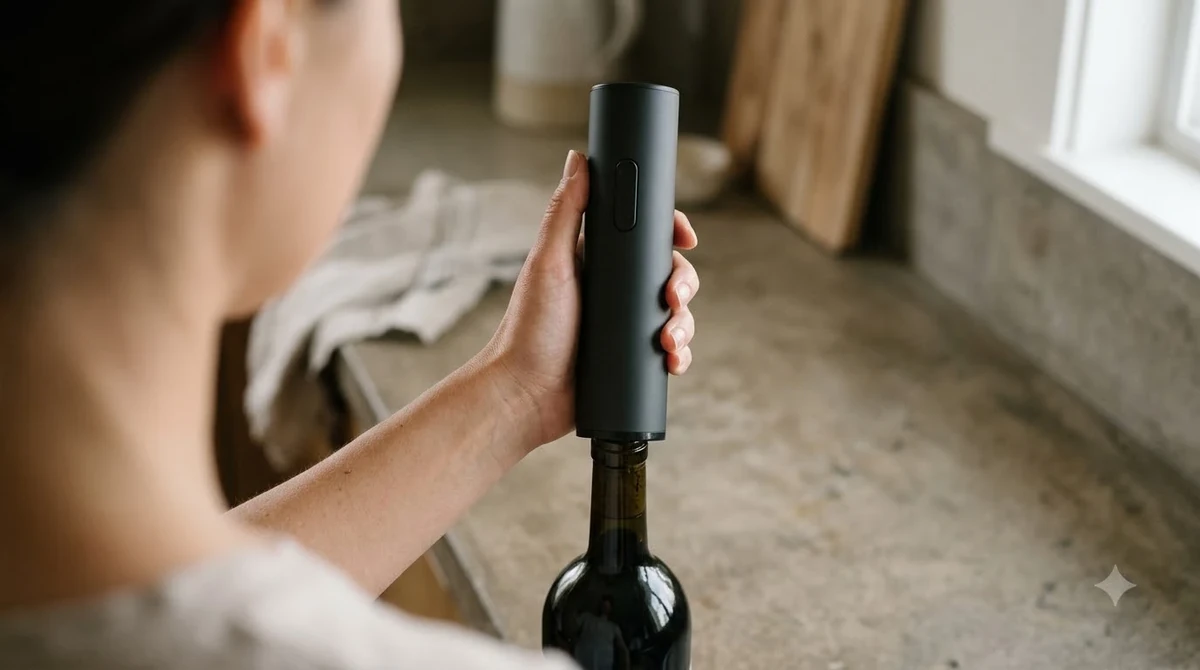
The design has a practical advantage for people who regularly open several bottles during a dinner party or tasting. Instead of repeatedly twisting a small handle or applying force to a traditional corkscrew, the user operates a larger lever. Once the motion becomes familiar, opening a conventional still-wine bottle is a straightforward sequence.
A more controlled opening process
Alignment is one of the most useful features of the lever mechanism. When the opener sits squarely over the bottle neck, the screw enters the cork along a more consistent path. This helps reduce sideways pressure and makes extraction more predictable.
The gripping arms are another useful feature. They secure the opener around the bottle neck while the lever moves. This is especially helpful with bottles that have slightly different neck profiles, although the opener still needs to be positioned correctly before operation.
Less direct pulling
A traditional handheld corkscrew requires the user to stabilize the bottle and pull the cork upward. A lever opener changes the direction of the effort: the handle supplies the mechanical movement while the bottle-neck grips provide support. This makes the opening process easier to control for people who dislike pulling against a tight cork.
The traditional Screwpull twist model offers a different benefit. Its guide centers the screw over the cork, and continuous clockwise turning draws the cork upward. WineConneXtion describes this self-pulling action as a simple two-part operation involving the guide and handled screw. It is a useful alternative for someone who prefers a smaller, less elaborate tool.
Useful accessories
Selected Screwpull lever sets include a dedicated foil cutter. Removing the foil before opening keeps the cork area exposed and helps the screw enter cleanly. A matching cutter also makes the accessory easier to keep organized with other wine-service equipment.
For a home bar, a lever opener can be stored alongside glasses, stoppers, and pouring accessories. A dedicated bar cart provides a convenient location for the opener and its cutter, provided the mechanism remains dry and protected from accidental knocks.
Common Complaints and Problems During Cork Removal
The most common Screwpull problems involve incorrect positioning, synthetic cork compatibility on older models, and difficulty releasing a cork from the screw. Most of these issues can be addressed by identifying the opener type and following the correct release sequence instead of forcing the handle.
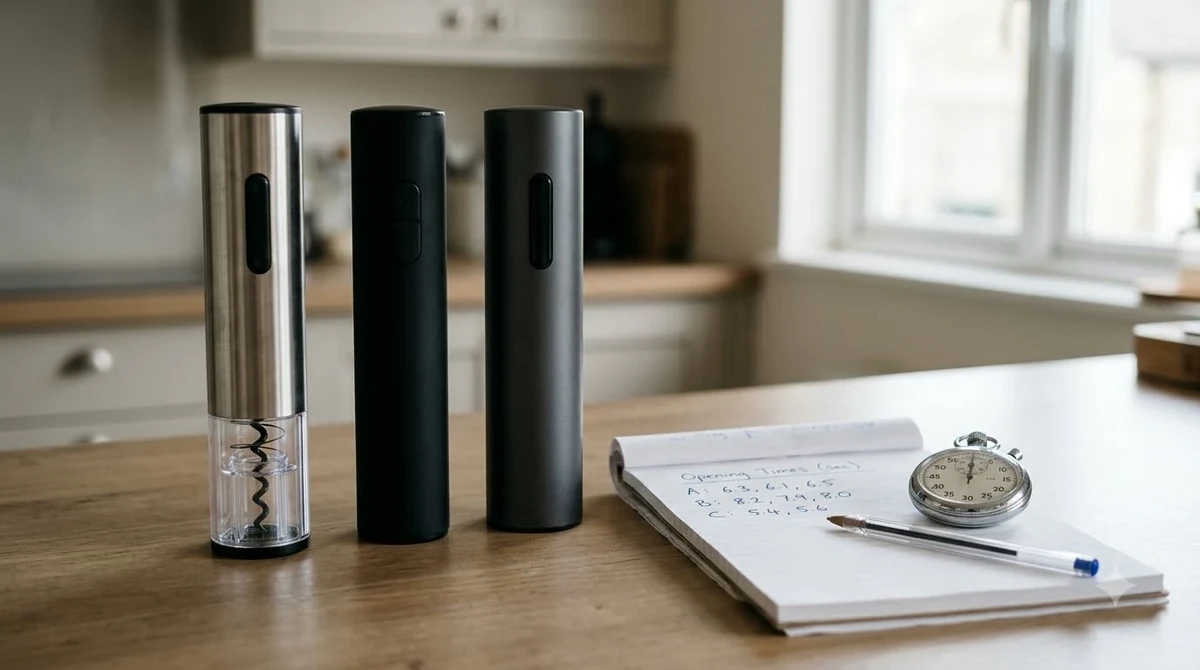
A lever opener may feel stuck if the bottle grips are not properly engaged or the screw has not entered the cork along a straight path. Older mechanisms can also behave differently from newer designs, particularly when used with synthetic closures. The manufacturer’s care instructions specifically warn that some older lever models may jam when synthetic corks remain attached to the screw.
The opener does not grip the bottle
First, return the lever to its fully open position. Position the opener over the center of the bottle neck and close the gripping arms until they hold the bottle securely. The opener should not wobble or sit at an obvious angle.
If the bottle has an unusually shaped or damaged neck, do not compensate by squeezing harder. Inspect the bottle rim and neck for chips or cracks. Le Creuset recommends checking these areas before opening because damage can weaken the glass.
The cork stays on the screw
This is a familiar problem with certain older lever mechanisms and synthetic closures. The cork may come completely out of the bottle but remain attached to the metal screw when the opener is lifted away.
For older models, Le Creuset advises carefully twisting the stuck synthetic cork off the screw by hand. Keep fingers away from the sharp point and avoid pulling the cork sideways with excessive force. If the mechanism has a specific self-release function, follow the instructions for that model instead.
The lever feels unusually difficult to operate
Resistance can indicate that the screw is worn, the opener is misaligned, or the cork is unusually tight. Stop rather than forcing the handle through a difficult movement. Check whether the bottle is stable and the grips are secure before trying again.
If the mechanism repeatedly becomes difficult to operate, inspect the screw coating. Le Creuset recommends replacing a coated screw that shows signs of wear or has become difficult to use. A replacement component designed for the particular model is preferable to an improvised repair.
The cork breaks during extraction
Old natural corks can become dry and fragile, especially after extended bottle storage. A lever opener is not necessarily the right tool for a cork that is already crumbling or broken.
Le Creuset recommends a two-prong Butler’s Friend for old, brittle, fragile, or broken corks. This type of extractor works by sliding two narrow prongs between the cork and bottle neck rather than driving a conventional screw through the cork. Avoid repeatedly operating a lever opener against a deteriorating closure because additional pressure can push fragments into the wine.
Who Should Buy and Who Should Skip a Screwpull Lever Opener
A Screwpull lever opener is a strong choice for households that regularly open still wine and prefer a consistent mechanical process. It is less suitable for occasional users who prioritize compact storage or anyone looking for one opener to handle every type of bottle closure.
Frequent wine drinkers can benefit from the stable grip and repeatable lever movement. The design is particularly appealing when several bottles need to be opened during a dinner, tasting, or gathering. A dedicated foil cutter can also simplify preparation before guests arrive.
Who should consider buying one?
Regular wine drinkers: Anyone opening conventional cork-finished bottles several times a week may appreciate the mechanical assistance and predictable movement.
Home entertainers: People who serve wine to guests can benefit from a tool that makes bottle opening easier to repeat. Keeping the opener and cutter together also reduces preparation time.
People who prefer guided alignment: The bottle-neck grips and centered screw help users position the opener consistently. This is useful for people who find small handheld corkscrews awkward.
Gift buyers: The LM-200 is supplied with a foil cutter and gift box according to Le Creuset’s product information. Its matching accessories and recognizable lever design make it a practical wine-service gift.
Who should skip it?
Minimalist travelers: A lever opener takes up more room than a compact traditional corkscrew. Travelers who want something for a picnic bag or small kitchen drawer may prefer a pocket model.
Sparkling wine drinkers: Le Creuset specifically says its lever models are not suitable for Champagne, Prosecco, or other sparkling wines. Sparkling closures require a different opening technique because of the pressure inside the bottle.
Owners of very old bottles: A fragile or deteriorating cork is better handled with an appropriate two-prong extractor. The lever screw may damage a closure that is already breaking apart.
Occasional users with limited storage: A simple handheld corkscrew can be more practical if only a few bottles are opened each year. The larger lever mechanism makes more sense when its additional convenience will be used regularly.
For someone building a compact wine-service collection, a wine bottle opener keychain offers a more portable alternative for carrying an emergency opener. It does not provide the same guided lever extraction, but it takes up considerably less space.
How Screwpull Compares to Alternative Wine Openers
Screwpull lever models prioritize guided mechanical extraction, while winged corkscrews, traditional twist models, and two-prong extractors solve different opening problems. The right choice depends on the type of cork, frequency of use, and amount of storage space available.
A comparison is particularly useful because the name Screwpull is associated with more than one mechanism. The traditional twist model should not be confused with the larger lever-operated opener, even though both use a self-pulling screw design.
| Opener type | How it works | Main advantage | Main limitation |
|---|---|---|---|
| Screwpull lever | Lever inserts and extracts the screw | Controlled mechanical extraction | Bulkier storage and model-specific operation |
| Traditional Screwpull twist | Clockwise handle rotation draws out the cork | Simple guided screw action | Requires repeated turning |
| Winged corkscrew | Rotating screw raises two wings | Familiar and widely available design | Requires additional lifting force |
| Two-prong Butler’s Friend | Two prongs slide beside the cork | Useful for fragile or broken corks | Requires careful positioning |
| Rabbit-style lever opener | Lever-operated screw extracts the cork | Similar mechanical operating principle | Different construction and handling |
Screwpull versus a traditional twist corkscrew
The traditional Screwpull is a simpler design that uses a guide to position the screw over the bottle. After the guide rests on the bottle top, the user turns the upper handle clockwise. The screw travels into the cork, and continued rotation pulls the cork upward.
Unlike the lever version, the traditional model does not use gripping arms and a large lever to perform the extraction. It is generally easier to store and has fewer moving parts. However, it requires repeated handle rotation, which may not appeal to someone who prefers a single controlled lever movement.
Screwpull versus a winged corkscrew
A winged corkscrew uses a central screw and two side arms that rise as the screw enters the cork. Pressing both wings down then extracts the cork. It is a familiar design, but the amount of force required depends on the closure and the opener’s construction.
The Screwpull lever design uses its bottle-neck grips to stabilize the mechanism during extraction. A winged model can be less expensive and easier to find, but the larger Screwpull mechanism offers a different operating feel. The two tools should be compared by handling preference rather than assuming that either design works equally well for every cork.
Screwpull versus a Rabbit-style opener
Rabbit-style openers also use a lever-operated mechanism. Both designs aim to reduce the effort required to remove a cork, but their grips, handle geometry, and release procedures can vary. A buyer familiar with one type should not assume the operating sequence is identical on another.
The important comparison is how securely each opener fits the bottle neck and how easily the screw releases the extracted cork. The exact model instructions should determine the correct sequence.
Screwpull versus a two-prong extractor
A Butler’s Friend serves a different purpose. Rather than drilling through the cork, its two prongs slide down along opposite sides of the closure. Gentle twisting and lifting can remove a fragile cork that might otherwise break apart under a conventional screw.
This makes the two-prong tool a useful companion for collectors who open older bottles. It is not a replacement for a regular lever opener when dealing with ordinary intact corks, but it can solve a problem that the Screwpull mechanism is not designed to handle.
People assembling a broader wine-accessory collection may also consider a wine opener and preserver set. Pairing an appropriate corkscrew with a stopper helps cover both bottle opening and storage after the wine has been served.
Frequently Asked Questions
What year was the original Screwpull corkscrew invented?
Herbert Allen invented Screwpull in 1979, according to Le Creuset’s historical account. The original development work began in 1975. This makes the design distinct from newer lever-operated revisions and modern electric wine openers.
Can Screwpull openers be used on bottles with wax seals?
A wax seal needs to be removed or cleared sufficiently to expose the cork before using the screw. Wax can collect around the metal spiral and interfere with its movement. Remove loose wax carefully without damaging the bottle rim or cork.
Does a Screwpull opener work with every bottle-neck shape?
Not every bottle has an identical neck profile, and compatibility depends on the opener’s gripping geometry. The LM-250 product description specifically mentions a stable grip on flanged bottles. Unusual bottle shapes should be checked for secure seating before the lever is operated.
Can the original Screwpull screw be replaced with a universal corkscrew worm?
A universal replacement should not be assumed compatible with a Screwpull mechanism. The screw must fit the opener’s connection and protective cap correctly. Le Creuset directs owners to the instructions for the relevant model when selecting and replacing the screw.
How can you tell whether a Screwpull opener is an older model?
Look for the model identification, original packaging, and construction details rather than relying only on the brand name. Older mechanisms may have different synthetic-cork compatibility and release behavior from later designs. Comparing the physical opener with the appropriate model instructions is the most reliable identification method.
A Screwpull lever opener can be a practical long-term wine accessory when it is used with the correct technique and maintained properly. Identify the model, secure the bottle before operating the lever, and avoid using the mechanism on sparkling wine or damaged corks. With appropriate care, the opener can remain a dependable part of a home wine-service setup.
More in Wine Accessories
 Coravin Vs Vacu Vin: Choose the Right Wine Saver for Your BottlesUpdated Nov 21, 2026
 Zwilling Wine Stopper Review: Preserve Open Bottles LongerUpdated Nov 21, 2026
 Wine Enthusiast Wine Preserver Review: Features, Benefits and LimitationsUpdated Nov 21, 2026
 Wine Enthusiast Wine Stopper: An Easier Way to Reseal Open BottlesUpdated Nov 21, 2026
 Vintorio Wine Opener: Two-Step Cork RemovalUpdated Nov 21, 2026
 Zwilling Wine Aerator Review: Aerate, Pour, and Seal With One ToolUpdated Nov 21, 2026