


We may earn a commission when you buy through links on this page, at no extra cost to you. Learn more.
If your houdini wine opener not working problem involves a slipping cork, stuck lever, or cork that will not release, start by checking the bottle grip, resetting the lever mechanism, and inspecting the spiral for wear. Most problems with the manual Houdini lever corkscrew come from incorrect positioning, insufficient pressure on the gripping handles, residue, or a worn spiral. Many of these issues can be corrected without replacing the entire opener, although damaged gears or a broken mechanism may require warranty service or a replacement.
A Houdini wine opener is designed to make removing a cork easier through mechanical leverage, but that mechanism still depends on correct positioning and regular care. The troubleshooting steps below focus primarily on the Houdini lever corkscrew associated with Rabbit Wines, including the instructions provided by its manufacturer. If your opener is an electric, winged, or waiter’s-style model, some solutions will differ. Identifying the design first can save time and prevent unnecessary damage.
Specs and Key Features of the Houdini Lever Corkscrew
The Houdini lever corkscrew uses a mechanical lifting system rather than an electric motor or a traditional hand-twisted worm. Its gripping handles stabilize the bottle neck while the lever drives the spiral into the cork and extracts it.
Understanding these parts makes troubleshooting easier because each component has a specific job. The gripping handles hold the opener in position, the spiral penetrates the cork, and the upper lever supplies the movement needed for extraction and release.
| Feature | What It Does | What to Check |
|---|---|---|
| Lever handle | Moves the spiral into and out of the cork | Check for sticking, unusual resistance, or loose movement |
| Gripping handles | Secure the opener around the bottle neck | Make sure both sides hold the bottle firmly |
| Spiral or worm | Penetrates the cork and pulls it upward | Look for coating damage, bending, and cork residue |
| Automatic release | Removes the extracted cork from the spiral | Check whether the lever completes its full movement |
| Foil cutter | Removes foil before opening | Clear the bottle opening before positioning the opener |
| Replacement spiral | Restores performance when the original worm wears out | Check compatibility with the specific Houdini model |
One important maintenance detail comes from Rabbit Wines: its spiral is designed for approximately 800 to 1,000 cork removals. That is an estimated service life rather than a guarantee. Pulling corks through foil or wax, neglecting cleaning, and continuing to use a visibly damaged spiral can shorten its useful life.
The manufacturer also explains that non-electronic Houdini corkscrews have a five-year warranty. This matters if the lever or internal mechanism develops a genuine fault rather than simply needing cleaning or a replacement spiral. Warranty coverage and the appropriate service process should be confirmed with Rabbit Wines before attempting extensive repairs.
What Owners Like About the Houdini Design
The main appeal of the Houdini lever corkscrew is its combination of mechanical leverage and bottle stabilization. Rather than requiring repeated twisting, the design uses a controlled lever movement to insert and extract the cork.
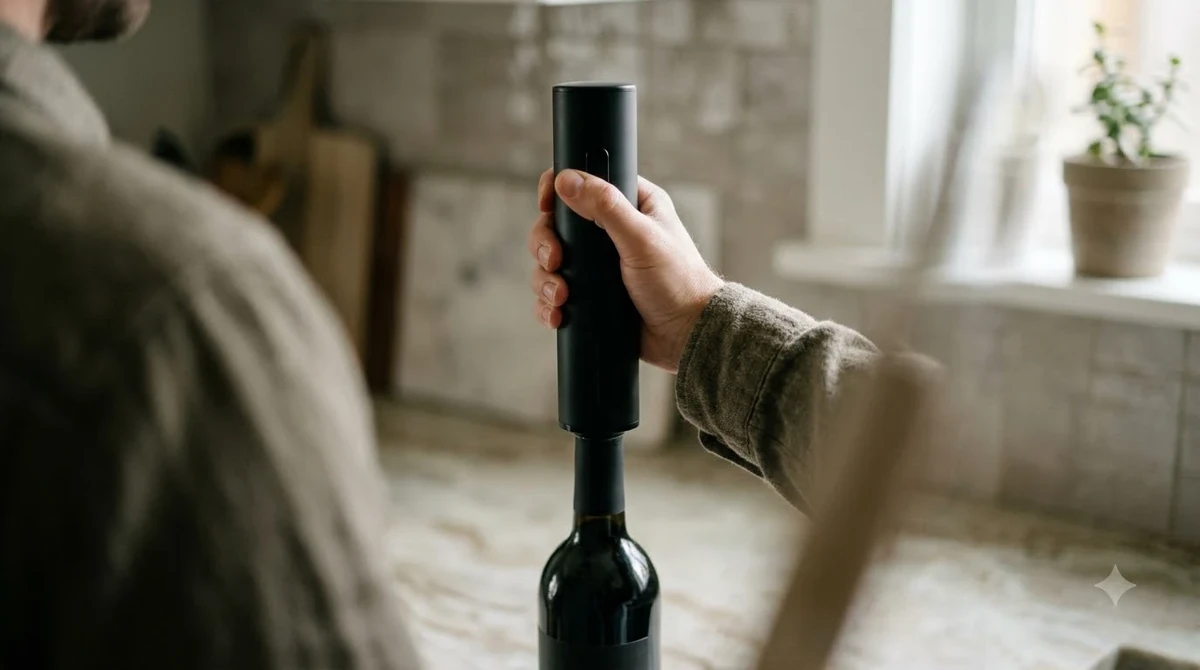
The gripping handles are particularly important. When positioned correctly around a standard wine bottle neck, they help keep the spiral centered over the cork. This makes the opener useful for people who prefer a lever mechanism to a traditional waiter’s corkscrew, especially when opening several bottles for a dinner or gathering.
Another practical advantage is the replaceable spiral. A worn corkscrew does not automatically mean the whole device has reached the end of its useful life. Rabbit Wines specifically recommends replacing the spiral when its nonstick coating becomes visibly damaged or when extraction and automatic cork release become more difficult.
The included foil cutter and spare spiral on certain Houdini lever sets also make the accessory more practical. Having a spare spiral available can reduce downtime if the original worm wears out. However, replacement parts should be matched to the correct product rather than assumed to fit every opener carrying the Houdini name.
There is also a straightforward learning curve once the sequence is understood. The opener needs to be positioned vertically, held firmly around the bottle neck, and operated through its complete lever movement. Users who understand those steps are less likely to encounter slipping or incomplete extraction.
For a home bar, the lever design can be a useful alternative to keeping several different opening tools. It also fits naturally alongside other serving accessories on a bar cart, where a foil cutter, stopper, and wine glasses can remain organized in one place.
Common Complaints and Why the Opener Stops Working
Most reported mechanical problems can be grouped into a few categories: the cork moves without coming out, the cork enters the bottle, the spiral becomes difficult to release, or the lever stops moving smoothly. Each symptom points toward a different part of the opening mechanism.
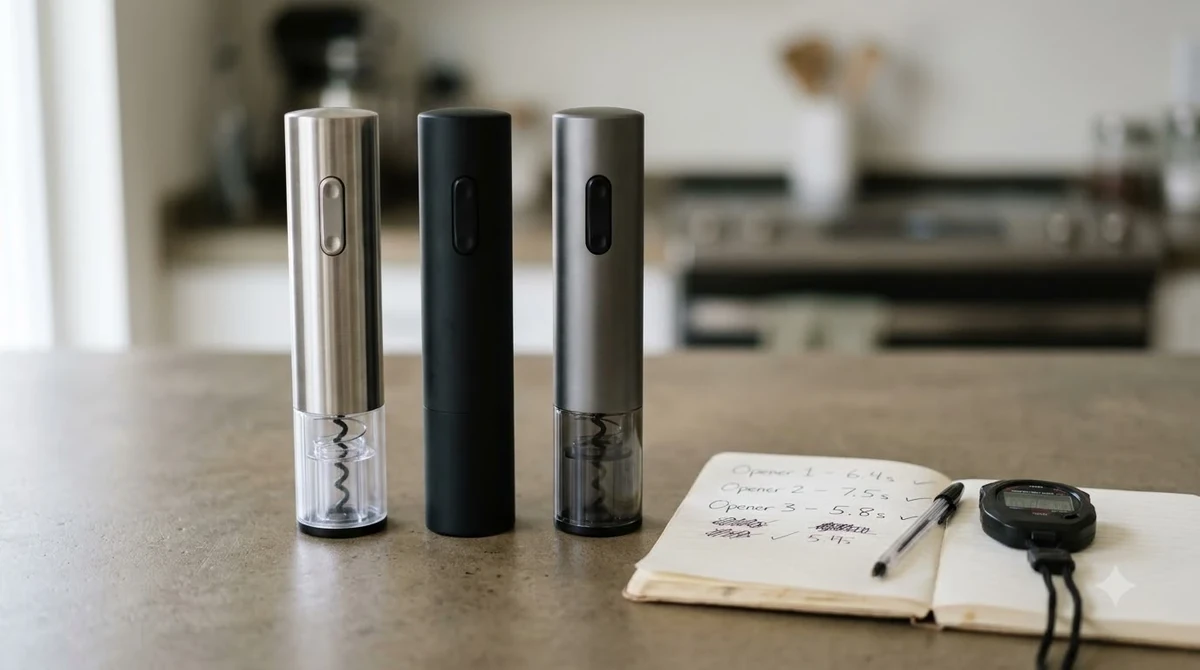
The opener pushes the cork into the bottle
This problem can happen when the mechanism is not positioned or operated correctly, or when a cork has previously been removed manually from the spiral. The manufacturer’s troubleshooting instructions recommend resetting the lever before attempting another bottle.
Remove the opener from the bottle and swing the upper handle fully backward and forward without a bottle attached. This restores the mechanism’s starting position. Then repeat the opening sequence, making sure the gripping handles are firmly secured around the neck.
The spiral enters the cork but does not pull it out
If the spiral penetrates the cork but moves without extracting it, the most likely issue is insufficient pressure from the gripping handles. The opener needs to remain firmly attached to the bottle throughout extraction.
Position both gripping handles around the neck, squeeze them securely, and maintain that grip while moving the lever. If the opener shifts during the process, the spiral may fail to pull the cork upward even though it has entered correctly.
The cork remains attached to the spiral
A cork that will not release can indicate that the automatic release sequence is incomplete or that the spiral coating has deteriorated. The manufacturer warns against removing the cork by hand because doing so can interfere with the mechanism’s intended operation.
Instead, use the lever’s full release movement. If the cork repeatedly sticks despite correct operation, inspect the spiral for worn coating, cork fragments, or residue.
The lever feels stiff or sticks
Dried wine, cork particles, and accumulated dirt can interfere with smooth movement. Mechanical gears may also become difficult to operate if they are not properly maintained.
Begin with a visual inspection and clean away residue. If the mechanism remains stiff after cleaning, follow the manufacturer’s lubrication guidance. Do not force a lever that appears jammed or has a visibly damaged internal component.
The opener works inconsistently
Inconsistent performance may indicate that the spiral is approaching the end of its service life. Rabbit Wines identifies visible flaking and silver metal showing through the black nonstick coating as signs that the spiral probably needs replacement.
It is also possible that the problem comes from the bottle rather than the opener. A damaged, unusually fragile, or poorly centered cork can make extraction more difficult. Try a properly positioned opener on another suitable bottle before deciding that the mechanism has failed.
Who Should Buy and Who Should Skip a Replacement
A replacement Houdini spiral is worth considering when the lever mechanism still moves correctly but the worm has become worn. A complete replacement opener makes more sense when the body, gripping handles, or internal mechanical components are damaged beyond reasonable repair.
The distinction is important because replacing a working lever corkscrew simply because its spiral has deteriorated can be unnecessary. Rabbit Wines specifically encourages customers to try a replacement spiral before returning the complete product.
Replace the spiral if these conditions apply
- The black nonstick coating is flaking or visibly worn.
- Silver metal is showing through the coating.
- The opener has become increasingly difficult to use after repeated cork removals.
- Automatic cork release has become unreliable despite correct technique.
- The internal lever mechanism still moves normally without a bottle attached.
Rabbit Wines estimates approximately 800 to 1,000 cork removals for its spiral, but actual performance depends on use and maintenance. A spiral can require replacement earlier if foil or wax has damaged its coating. Conversely, a properly maintained spiral may continue working beyond a particular number of openings.
Consider replacing the complete opener if these conditions apply
- The lever is visibly bent or broken.
- The gripping handles cannot secure the bottle neck.
- The internal mechanism has damaged or missing components.
- The opener remains stuck after appropriate cleaning and resetting.
- The correct replacement spiral is unavailable for your particular model.
Before purchasing parts, identify the exact opener. Houdini products include several designs, and a replacement spiral for a lever corkscrew should not be assumed to fit a winged corkscrew or an electric model.
If your current opener is beyond repair, compare other styles before choosing another one. A traditional two-step wine key is compact and requires less storage space, while a lever opener prioritizes mechanical assistance. A wine bottle opener keychain can also be useful as a backup for travel or occasional use, although it is not a direct substitute for a full-size lever mechanism.
How It Compares to Alternatives and How to Choose a Model
The Houdini lever corkscrew is best understood as one of several manual opening systems. Its closest practical alternatives include a winged corkscrew and a two-step waiter’s corkscrew, both of which use different mechanics and have different maintenance requirements.
Houdini lever versus Houdini winged corkscrew
The lever design uses gripping handles and a moving upper handle to insert and extract the cork. The winged design instead clamps onto the bottle, uses a rotating central handle to drive the spiral into the cork, and lifts the cork when its two wings are pushed down.
These designs should not be confused when diagnosing a malfunction. A lever opener that pushes a cork into the bottle may need a mechanism reset, whereas a winged opener that does not lift the cork may need better alignment or a different operating technique.
Target identifies the Houdini winged model as a manual opener made with ABS plastic, zinc, iron, and steel. Its listed overall dimensions are approximately 7.87 inches high and 3.35 inches wide. The retailer also describes its spiral as nonstick and its body as designed to clamp onto the bottle.
Houdini lever versus a two-step waiter’s corkscrew
A two-step waiter’s corkscrew relies on a folding handle and a hinged support that rests against the bottle rim. It requires the user to turn the spiral into the cork and extract it in controlled stages.
This design is generally easier to carry and store than a larger lever opener. It also has fewer large moving components, although it requires more manual effort and a degree of technique to remove a stubborn cork without breaking it.
The Houdini lever is more suitable for people who prefer a guided mechanical movement and a stable grip around the bottle. The waiter’s corkscrew is a sensible choice for compact storage, travel, or a minimalist wine accessory collection.
Choosing the right replacement or alternative
Before buying anything, consider what actually failed. If the spiral coating is damaged but the lever works, look for a compatible replacement spiral. If the gripping handles or lever have failed, replacing the entire opener may be more practical.
It is also useful to consider the accessories you already own. A wine opener and preserver set may be more convenient if you want opening and storage accessories together. For people maintaining several types of wine tools, the broader Accessory Brands category provides another way to compare equipment and opening styles.
Do not choose a replacement solely because it looks similar. Confirm the manufacturer, model family, and compatibility of any replacement component. Rabbit Wines notes that some competing products resemble its corkscrews, so appearance alone is not sufficient to establish that a part will fit.
Care, Cleaning, Storage, and Warranty Support
Regular maintenance helps prevent the most common performance problems. The manufacturer’s recommendations focus on removing residue, keeping the spiral clean, maintaining the gears, and avoiding damage from foil and wax.
After opening a bottle, inspect the spiral for cork fragments and wipe away any visible residue. Rabbit Wines recommends using a damp cloth or sponge for occasional cleaning. A clean spiral is less likely to accumulate material that interferes with cork removal and automatic release.
Clean the spiral and remove residue
Start by making sure the opener is not attached to a bottle. Wipe the spiral carefully with a damp cloth or sponge and remove any cork pieces that remain attached. Avoid pulling on the mechanism or bending the spiral during cleaning.
The manufacturer specifically warns against submerging the mechanical corkscrew in water. A damp cleaning cloth is sufficient for routine maintenance. Keep the opener dry afterward, especially around its metal components and moving joints.
Protect the spiral from foil and wax
Always remove the foil cap before using the opener. The spiral should enter the exposed cork rather than passing through the foil. Drilling through foil can scrape away the nonstick coating and shorten the spiral’s useful life.
Wax seals should also be removed before opening. Wax can stick to the spiral and interfere with its operation. Rabbit Wines describes briefly placing a wax-contaminated removable spiral in boiling water to soften the wax, followed by thorough drying to prevent rust. This procedure should only be considered when the spiral can be safely removed and the manufacturer’s instructions for the specific model permit it.
Maintain the mechanical gears
Rabbit Wines recommends keeping the gears well lubricated and identifies WD-40 as an example of a lubricant that can help the mechanism move smoothly. Apply maintenance products cautiously and follow the product’s instructions, avoiding unnecessary application to the spiral or bottle-contact surfaces.
Do not use excessive force when a lever stops moving. A stiff mechanism can be a maintenance issue, but a lever that is bent, cracked, or mechanically damaged needs inspection rather than additional pressure.
Tip: Before opening your next bottle, perform a quick three-part check: make sure the foil and wax are completely removed, inspect the spiral for visible coating damage, and confirm that the lever moves freely without a bottle attached. These simple checks can prevent many avoidable opening problems.
Understand the Houdini warranty
Rabbit Wines lists a five-year warranty for non-electronic Houdini corkscrews. Electric Rabbit and Houdini corkscrews have a separate one-year warranty, so identifying the product type is important before requesting assistance.
If the opener still fails after the recommended troubleshooting steps, contact Consumer Service before mailing it in. The company requests a photograph and a description of the problem so that its specialists can provide specific instructions. Proof of purchase may be needed when submitting a warranty return.
For a damaged item received directly from RabbitWine.com, the manufacturer also provides a separate replacement-request process. A suspected mechanical failure should therefore be handled through the appropriate support channel rather than through improvised repairs.
The official Rabbit Wines troubleshooting and warranty information is the most useful starting point for replacement spirals, cleaning instructions, product identification, and warranty questions. The Rabbit and Houdini corkscrew instruction manual also provides the operating sequence and specific solutions for a cork pushed into the bottle or a spiral that fails to extract it.
Frequently Asked Questions
Can a Houdini wine opener damage an old or fragile cork?
Yes. An old cork can become brittle, dry, or structurally weakened during long-term bottle storage. If the cork begins crumbling, avoid repeatedly forcing the spiral through the same damaged area. A two-prong cork puller may be a more appropriate alternative for certain fragile corks because it works between the cork and bottle neck rather than relying on a conventional spiral.
Why does my Houdini opener work on one bottle but not another?
Different bottles can have different neck dimensions, cork conditions, and sealing materials. A synthetic cork may behave differently from a natural cork, while a brittle cork may resist extraction unevenly. If the opener works correctly on several bottles but struggles with one particular bottle, inspect the cork and neck rather than assuming the lever mechanism has failed.
Can I use a Houdini lever corkscrew on sparkling wine?
A conventional corkscrew should not be used to extract a pressurized sparkling-wine cork. Sparkling wine has internal pressure that can eject the cork unexpectedly. Remove the wire cage carefully while keeping a hand over the cork, then hold the bottle at an angle and rotate the bottle rather than pulling the cork with a lever opener.
How can I identify the correct Houdini replacement spiral?
Start by identifying whether the opener is a manual lever model, winged model, or electric model. Check the product’s shape and any available model identification, then compare the replacement component with the manufacturer’s parts information. If the model is uncertain, send Rabbit Wines Consumer Service a clear photograph before ordering a replacement.
Should I repair a Houdini opener with a bent spiral?
A visibly bent spiral should generally be replaced rather than straightened by force. Bending can affect its alignment and make cork extraction unreliable. If the spiral is damaged but the lever mechanism remains intact, ask the manufacturer about a compatible replacement; if the surrounding mechanism is also damaged, warranty evaluation or complete replacement may be more appropriate.
A Houdini lever corkscrew that stops working does not necessarily need to be replaced. Start with correct bottle positioning, a firm grip, and a complete lever reset, then inspect the spiral and clean the mechanism. If those steps do not restore normal operation, a compatible replacement spiral or Rabbit Wines warranty support may be the most practical next step.
More in Wine Accessories
 Coravin Vs Vacu Vin: Choose the Right Wine Saver for Your BottlesUpdated Nov 21, 2026
 Zwilling Wine Stopper Review: Preserve Open Bottles LongerUpdated Nov 21, 2026
 Wine Enthusiast Wine Preserver Review: Features, Benefits and LimitationsUpdated Nov 21, 2026
 Wine Enthusiast Wine Stopper: An Easier Way to Reseal Open BottlesUpdated Nov 21, 2026
 Vintorio Wine Opener: Two-Step Cork RemovalUpdated Nov 21, 2026
 Zwilling Wine Aerator Review: Aerate, Pour, and Seal With One ToolUpdated Nov 21, 2026