


We may earn a commission when you buy through links on this page, at no extra cost to you. Learn more.
The crenova wine opener is a rechargeable electric corkscrew that makes opening traditional cork-finished wine bottles easier, with a foil cutter, aerator pourer, vacuum stopper, and storage base included in its WO-213B Mini set. Its advertised capacity of up to 70 bottles per charge and approximately 2.5-hour charging time make it appealing for regular home entertaining. However, correct vertical alignment, battery maintenance, and the distinction between a storage base and a charging station are important considerations before buying.
An electric wine opener can be a useful addition to a home wine collection, particularly for people who regularly serve bottles at dinner parties or prefer not to operate a traditional corkscrew. Crenova takes a bundle-oriented approach, combining automatic cork extraction with several accessories for opening, pouring, and temporarily preserving wine. The WO-213B Mini is the model to examine when evaluating this product line, although buyers should confirm that the package they receive includes the same accessories and specifications described in its documentation.
Specs and Key Features
The Crenova WO-213B Mini combines a rechargeable electric corkscrew with five supporting components. Its main appeal is the combination of automatic cork removal, a relatively short charging period, and accessories that cover several steps of ordinary wine service.
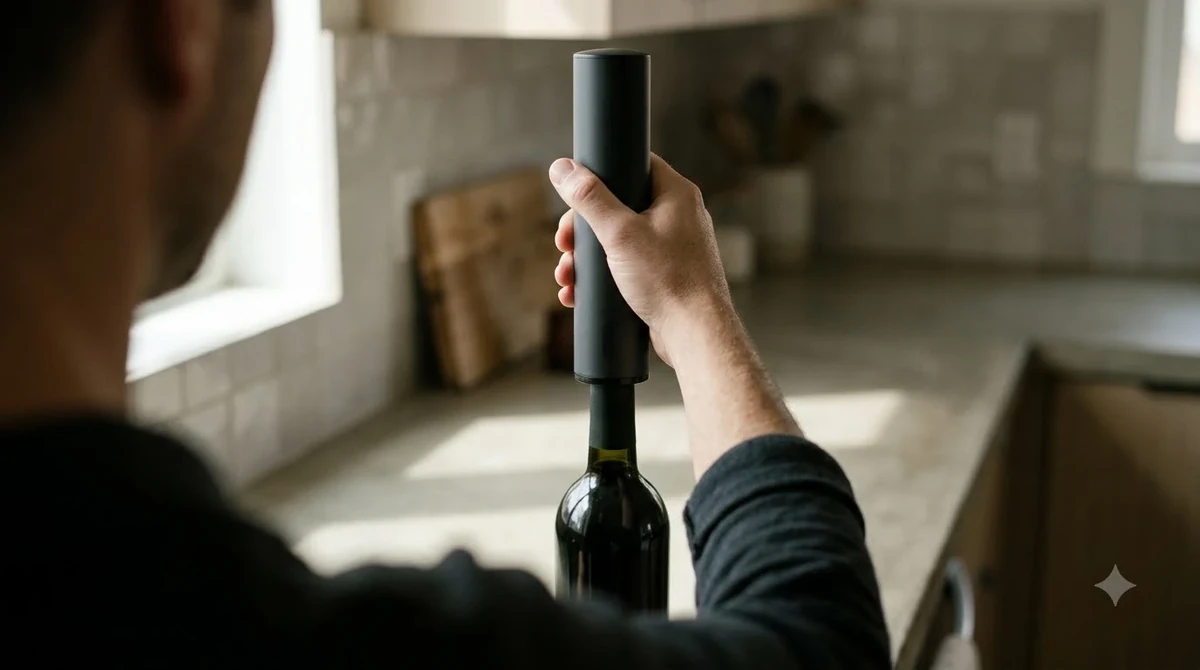
The manufacturer’s product documentation and accompanying instruction information describe a stainless-steel opener with a two-button operating system. Pressing Down drives the corkscrew into the cork and extracts it, while pressing Up reverses the mechanism to release the cork. This separates the two stages of operation and makes the basic process straightforward once the device is properly positioned. The Crenova WO-213B Mini instruction manual provides additional operating and maintenance details.
The following specifications are those identified in the WO-213B Mini product documentation. Performance figures such as bottle capacity are advertised figures rather than independent measurements.
| Specification | Crenova WO-213B Mini |
|---|---|
| Product type | Rechargeable electric wine opener |
| Listed material | Stainless steel |
| Listed dimensions | 5.5 x 1.9 inches |
| Listed weight | 0.45 kg |
| Charging time | Approximately 2.5 hours |
| Advertised battery capacity | Up to 70 bottles per charge |
| Operating controls | Down and Up buttons |
| Charging connection | USB charging cable |
| Foil removal | Included manual foil cutter |
| Wine serving accessory | Aerator pourer |
| Wine preservation accessory | Vacuum stopper |
| Storage accessory | Display base |
The six listed package components are the electric opener, foil cutter, aerator pourer, vacuum stopper, display base, and USB charging cable. This is a useful combination because buyers do not have to source several basic wine-serving accessories separately. The display base also provides a dedicated place to keep the opener and its smaller components together rather than scattering them across kitchen drawers.
One detail deserves particular attention: the display base is intended for storage, not direct charging. The USB cable connects to the opener itself. This matters because some electric wine openers use a powered docking station, and the Crenova arrangement should not be confused with that design.
The advertised 70-bottle capacity is generous for a rechargeable accessory intended for domestic use. Nevertheless, actual battery performance can depend on battery condition, charging habits, and how frequently the motor operates. It is sensible to regard the figure as a manufacturer’s capacity claim rather than a guarantee that every unit will open exactly that number of bottles.
For buyers comparing different types of wine tools, a traditional wine accessory collection can also include manual corkscrews, bottle stoppers, foil cutters, and pouring equipment. The Crenova set groups several of these functions into one package, but the electric mechanism is its defining feature.
What Owners Like
The most frequently mentioned advantages in the available customer comments are convenient operation, reduced effort, attractive presentation, and the usefulness of having several accessories together. These benefits make the Crenova particularly appealing to people who open wine regularly at home.
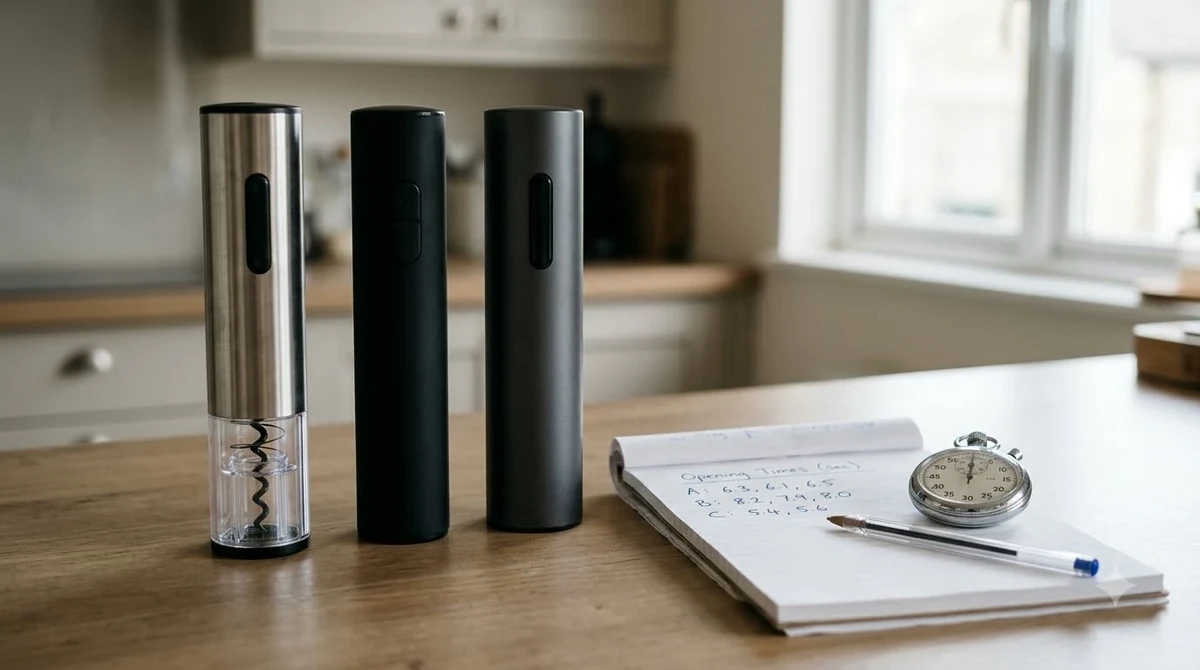
Automatic cork removal reduces the physical effort involved. A conventional corkscrew requires the user to position a worm, drive it into the cork, and pull the cork out. The Crenova replaces most of that manual work with a motorized mechanism controlled by two buttons. This can be especially helpful for someone who finds twisting and pulling uncomfortable or simply prefers a quicker opening routine.
Customer comments on Advanced Mixology describe the opener as easy to use and convenient. Several reviewers also mention its presentation as a positive feature. One customer appreciated that the device had a dedicated place on a wine-tools shelf, while another described it as a successful gift. These comments suggest that its appeal extends beyond the mechanical function.
The rechargeable design is another practical advantage. Rather than replacing disposable batteries, owners can recharge the built-in battery using the supplied USB cable. The stated charging time of approximately 2.5 hours is manageable if the opener is returned to its usual storage location and charged between occasions.
For a household that opens one or two bottles during a typical dinner gathering, the advertised capacity of up to 70 bottles per charge offers substantial convenience. It also reduces the need to think about battery replacement during an ordinary evening of entertaining. However, keeping the device charged is still important, especially if it spends several weeks unused.
The accessory package adds considerable practical value. The foil cutter handles the capsule around the bottle neck, the aerator pourer supports serving, and the vacuum stopper is intended for bottles that will not be finished immediately. These are recognizable tasks in everyday wine service, so the accessories are more useful than decorative additions with little practical purpose.
The aerator pourer is particularly relevant for people who serve young red wines. Introducing air during pouring can help some wines release their aromas more quickly. It is not a substitute for a proper decanter in every situation, but it offers a convenient serving option when there is little time to prepare a bottle in advance.
The vacuum stopper is similarly useful for households that do not finish every bottle in one sitting. Its pumping mechanism is designed to remove some air from the bottle after the stopper is inserted. This can help slow oxidation, although it does not preserve wine indefinitely or replace appropriate refrigeration.
Finally, the display base gives the collection a more organized appearance. Keeping the opener, foil cutter, and other components together makes it easier to find everything when guests arrive. For someone arranging a dedicated bar cart, that organized presentation can be as useful as the opener’s automatic mechanism.
Common Complaints and Limitations
The main practical limitation is that the Crenova opener needs to remain upright and centered over the cork. Other considerations include battery longevity, charging arrangements, and the difference between the advertised performance figures and results from everyday use.
Alignment is the most important operating detail. The instruction manual specifically recommends positioning the opener vertically over the center of the cork while holding the bottle firmly. An angled position can cause the corkscrew to enter unevenly, making extraction less reliable.
One Advanced Mixology customer described an unsuccessful opening attempt when another user held the opener at an angle. After demonstrating how to position the device vertically, the customer reported that the problem did not recur. This is a useful practical observation because it points to an operating technique rather than automatically indicating a defective motor.
Electric corkscrews also require a little more attention than simple manual tools. The user must keep the battery charged, store the cable, and make sure the mechanism is correctly positioned. Someone who opens only a few bottles each year may find that a traditional waiter’s corkscrew is simpler and needs less maintenance.
Battery longevity is another reasonable consideration. One customer comment on Advanced Mixology expressed uncertainty about how long the battery would continue performing well. The advertised 70-bottle capacity describes the claimed output of a charged battery, not its total lifetime capacity across years of ownership.
Rechargeable batteries gradually lose capacity through use and aging. Regular charging and sensible storage can help, but the available product documentation does not establish a guaranteed number of years of battery service. Buyers who expect to keep an opener for a long time should consider the lack of a clearly documented battery replacement procedure.
The storage base can also create confusion. Although it holds the components neatly, it does not directly charge the opener. Anyone expecting to place the unit in a powered dock and have it recharge automatically may be disappointed. The USB cable must be connected to the opener separately.
The included accessories are useful, but they are not professional wine-service equipment. The aerator pourer offers a convenient way to serve wine, yet it does not provide the same control as a dedicated decanter. Likewise, the vacuum stopper is a basic preservation accessory rather than a guarantee of long-term freshness.
There are also cleaning limitations. The main electric body contains electrical components and should never be immersed in water. The manual recommends wiping the exterior with a damp cloth, while the foil cutter, pourer, and stopper can be rinsed and air-dried.
Buyers should also recognize that an electric corkscrew is designed around conventional cork-finished bottles. It is not a universal wine-opening tool for every closure. Screw-cap bottles do not need a corkscrew, and unusual closures may require a different approach.
Finally, package descriptions and seller listings can vary. Some listings describe the collection as a four-in-one or six-in-one gift set even though the physical component list identifies six separate pieces. Confirming the exact model number and included components before purchase is more useful than relying on the marketing name alone.
Who Should Buy and Who Should Skip
The Crenova WO-213B Mini makes the most sense for people who regularly open cork-finished wine, appreciate rechargeable convenience, and want several basic wine accessories in one coordinated package. It is less compelling for occasional drinkers who prefer minimal equipment or people who need a particularly durable professional-grade tool.
Regular home entertainers are among the clearest potential buyers. Opening several bottles during a dinner party can make a motorized corkscrew more convenient than repeatedly operating a manual tool. The two-button mechanism also provides a simple routine that guests can understand after a short explanation.
People with limited hand strength may also appreciate the electric design. Pulling a tightly fitted cork can require considerable grip strength and coordinated movement. Although the bottle still needs to be held securely and the opener positioned correctly, the motor performs the extraction work rather than requiring the user to pull manually.
Gift buyers may find the complete set attractive because it contains more than a single opener. A foil cutter, aerator pourer, stopper, and display base make the package feel like a coordinated wine accessory collection. It can be appropriate for a housewarming, birthday, or occasion involving someone who enjoys serving wine at home.
People building a home wine station may also value the storage arrangement. Having the components together helps keep the opening and serving process organized. The display base is particularly practical for a kitchen counter, wine cabinet, or bar area where accessories need a regular home.
On the other hand, traditional corkscrew enthusiasts may prefer a manual waiter’s opener. A quality manual tool is compact, does not need charging, and offers direct control over cork extraction. It is also easier to pack for travel and can be stored in a drawer without allocating space to a display base.
Professional servers and high-volume hospitality businesses should consider their requirements carefully. An advertised capacity of 70 bottles per charge may sound substantial, but a busy restaurant has different demands from a domestic kitchen. Charging downtime, battery replacement, continuous use, and service support all become more important in commercial settings.
Buyers who frequently encounter fragile, old, or crumbly corks may also prefer a specialized wine-opening tool. Older corks can break apart during extraction, and a standard electric spiral is not necessarily the best solution for every delicate bottle. A two-pronged wine opener or another specialist tool may be more appropriate for those situations.
The Crenova is also not necessary for households that primarily purchase screw-cap wines. If most bottles in the collection open without a corkscrew, the automatic mechanism may spend more time stored than used. In that situation, a compact bottle opener and a simple wine stopper could be more practical.
Overall, the best buyer is someone who values convenience and a complete set of accessories more than minimal size or mechanical simplicity. The product’s advantages are easiest to appreciate when it becomes part of a regular home wine routine.
How It Compares to Alternatives
The Crenova should be compared with other opening systems according to their operating method, included accessories, charging requirements, and intended use. Its main distinction is the combination of an electric corkscrew and a coordinated set of wine-serving tools.
A manual waiter’s corkscrew remains the straightforward alternative. It typically combines a small spiral, a folding lever, and a foil-cutting blade. There is no battery to maintain, and the compact design makes it suitable for a kitchen drawer, picnic basket, or restaurant service kit.
However, manual opening requires more physical effort and a little more technique. The Crenova is designed to reduce that work by using a motorized mechanism. Someone who opens wine frequently and finds conventional corkscrews inconvenient may appreciate the difference.
Another alternative is a basic electric wine opener sold without accessories. Such a product may be sufficient for someone who already owns a foil cutter, pourer, and wine stoppers. The Crenova package is more attractive to buyers starting from scratch because its additional components cover several common serving tasks.
Docking-style electric openers provide another point of comparison. Some models recharge through a dedicated charging station, which can make storage and charging feel like a single operation. The Crenova’s display base is not a powered charging dock, so the USB cable remains part of the charging routine.
The distinction matters more than it might initially seem. A powered station can be convenient for a permanent countertop setup, whereas a cable-connected opener may be easier to store in a cabinet. Neither arrangement is automatically better; the choice depends on available counter space and personal preferences.
The accessory package also differs from a separate wine opener and preserver set. Buying a coordinated collection can simplify shopping, while assembling individual pieces allows buyers to choose accessories that better match their preferred wine-service methods.
For example, someone who frequently pours young Cabernet Sauvignon may prefer to invest in a larger decanter rather than relying mainly on a small aerator pourer. Someone who typically drinks one glass of Pinot Noir at a time may place greater importance on the vacuum stopper and suitable bottle storage.
These distinctions help put the Crenova into perspective. It is not necessarily the most specialized product in every category, but it provides a useful combination of functions in one package. Buyers who want a general-purpose home wine toolset may find that combination more convenient than purchasing each accessory separately.
For a broader comparison, the following points summarize where each opening method makes the most sense:
| Opening system | Main advantage | Main limitation | Best suited to |
|---|---|---|---|
| Crenova electric opener | Automatic extraction and accessory bundle | Needs charging and correct alignment | Regular home wine drinkers |
| Manual waiter’s corkscrew | Compact and requires no charging | Requires manual effort | Travel and occasional opening |
| Basic electric opener | Motorized cork removal | May require separate accessories | Buyers who already own wine tools |
| Charging-dock electric opener | Convenient countertop charging | Requires a dedicated dock and space | Permanent home wine stations |
One additional point is important for buyers comparing specifications: accessories and operating features should be evaluated separately. A package containing six pieces is not necessarily more effective at extracting corks than a simpler electric opener. The motor, corkscrew alignment, battery condition, and ease of handling matter more for the central opening function.
The Crenova’s appeal is therefore its overall convenience rather than a claim that it outperforms every other type of wine tool. Its strongest selling points are the rechargeable operation, included serving accessories, and organized storage arrangement.
How to Use, Maintain, and Store the Opener
Correct positioning and basic maintenance make a significant difference to the everyday experience of using the Crenova. Following the recommended sequence helps reduce failed extraction attempts and keeps the electrical components away from unnecessary moisture.
Opening a bottle correctly
- Charge the opener. Before the first use, connect the supplied USB cable to the opener and a compatible power source. Allow approximately 2.5 hours for a full charge according to the product documentation.
- Remove the capsule. Position the included foil cutter over the top of the bottle, squeeze its sides, and rotate it around the neck to cut the foil. Remove the loose capsule before proceeding.
- Position the opener. Place the electric corkscrew directly over the center of the cork. Keep it vertical rather than tilting it toward either side.
- Stabilize the bottle. Hold the bottle firmly with one hand and keep the opener steady with the other. Avoid moving the bottle during the extraction process.
- Press Down. Activate the lower control button. The corkscrew enters the cork and pulls it upward through the motorized mechanism.
- Remove the opener. Once the cork has been extracted, lift the opener away from the bottle without forcing the mechanism.
- Release the cork. Press Up to reverse the mechanism and release the cork from the spiral.
- Serve the wine. If desired, insert the aerator pourer firmly into the bottle neck and pour into clean wine glasses.
The two-button arrangement is simple, but the distinction between extraction and release should be understood before using the opener. Pressing the wrong button at the wrong stage can interrupt the process or leave the cork attached to the spiral.
Tip: Keep the opener vertically aligned with the bottle throughout extraction. If the corkscrew enters at an angle, stop rather than forcing the mechanism. Correct positioning is the first thing to check if a cork does not come out cleanly.
Charging and battery care
The rechargeable battery is one of the product’s most useful features, but it requires occasional attention. The instruction manual recommends regular charging even when the opener is not used frequently. This is particularly relevant for seasonal entertainers who may store the product for several weeks between gatherings.
Keep the USB cable somewhere accessible and avoid leaving the opener discharged for extended periods. The approximate 2.5-hour charging period makes it practical to recharge the unit before a planned dinner party. Remember that the display base does not perform this task automatically.
Cleaning and storage
Use a clean, slightly damp cloth to wipe the stainless-steel exterior of the electric opener. Never submerge the motorized body or expose its charging connection to running water. Allow the exterior to dry before putting the opener away.
The foil cutter, aerator pourer, and vacuum stopper can be rinsed under running water and air-dried. Make sure these accessories are completely dry before returning them to the display base. This helps prevent unwanted moisture from collecting around the stored components.
For wine preservation, use the vacuum stopper according to its instructions. Insert it firmly into the bottle neck and pump several times until resistance develops. Refrigerate opened still wine and aim to consume it within the usual three-to-five-day storage window, depending on the wine and its condition.
The display base is useful for keeping everything organized in a dry location away from heat and direct moisture. A dedicated spot on a kitchen counter, wine cabinet, or home bar makes it easier to maintain the complete set and locate the accessories when needed.
With these straightforward practices, the Crenova can remain a convenient part of regular home wine service. The most important habits are charging the opener periodically, maintaining vertical alignment during extraction, and keeping the electrical body dry.
Frequently Asked Questions
Can the Crenova wine opener handle synthetic corks?
The WO-213B Mini documentation does not provide a specific compatibility guarantee for synthetic corks. Synthetic materials can differ in firmness and friction, so results may vary between bottle closures. Avoid forcing the mechanism if the cork does not move normally.
Can the Crenova opener be used for sparkling wine bottles?
No electric corkscrew should be used to extract a pressurized sparkling-wine cork. Champagne and other traditional-method sparkling wines contain substantial internal pressure, so their closures require a different opening technique. Keep a hand over the cork and twist the bottle gently while controlling its release.
Does the Crenova vacuum stopper fit every wine bottle?
The supplied stopper is intended for compatible standard wine-bottle openings, but the documentation does not establish universal compatibility with every bottle neck. Unusual shapes, oversized openings, and some specialty closures may prevent a proper seal. Check that the stopper sits firmly before using its pump.
Does the Crenova opener automatically switch off after removing a cork?
The available operating instructions describe manual Down and Up button controls but do not establish a separate automatic shutoff timer. The safest approach is to follow the normal extraction and cork-release sequence rather than leaving the motor running unnecessarily. Refer to the instructions supplied with the exact unit for any model-specific operating details.
Can the Crenova electric wine opener be packed in checked luggage?
The WO-213B Mini uses a built-in rechargeable battery, so airline battery rules are relevant when traveling with it. Requirements can differ between airlines and destinations, and battery-powered devices generally need to be packed according to applicable battery regulations. Check the airline’s current instructions before placing the opener in checked baggage.
The Crenova WO-213B Mini is a convenient option for households that want automatic cork removal alongside a foil cutter, aerator pourer, vacuum stopper, and organized storage. Its rechargeable design and advertised 70-bottle capacity make it attractive for regular home use, although correct alignment and battery maintenance remain important. For buyers who value a coordinated wine accessory set more than the simplicity of a manual corkscrew, it is a worthwhile model to consider.
More in Wine Accessories
 Coravin Vs Vacu Vin: Choose the Right Wine Saver for Your BottlesUpdated Nov 21, 2026
 Zwilling Wine Stopper Review: Preserve Open Bottles LongerUpdated Nov 21, 2026
 Wine Enthusiast Wine Preserver Review: Features, Benefits and LimitationsUpdated Nov 21, 2026
 Wine Enthusiast Wine Stopper: An Easier Way to Reseal Open BottlesUpdated Nov 21, 2026
 Vintorio Wine Opener: Two-Step Cork RemovalUpdated Nov 21, 2026
 Zwilling Wine Aerator Review: Aerate, Pour, and Seal With One ToolUpdated Nov 21, 2026