

We may earn a commission when you buy through links on this page, at no extra cost to you. Learn more.
The corkcicle wine opener is a manual Wine Key designed to remove wine corks with a ratcheting mechanism, curved handle, integrated foil cutter, and additional crown-cap opener. Its distinctive design aims to provide better leverage and reduce cork displacement during extraction. It is a practical option for wine drinkers who prefer a reusable, non-electric opener with several functions in one compact accessory, although its specialized mechanism may not be necessary for everyone.
Corkcicle is known for drinkware and wine accessories, but its Wine Key takes a different approach from the insulated bottles and chilling products associated with the brand. Rather than relying on batteries or a large lever assembly, this opener combines a manual corkscrew with a ratcheting extraction system. The result is an interesting alternative to a conventional waiter’s friend, particularly for people who open bottles regularly and want a little more mechanical assistance. This review examines its construction, advertised features, practical advantages, possible drawbacks, and the types of wine drinkers most likely to appreciate it.
Specs and Key Features
The Corkcicle Wine Key is a multifunctional manual opener with a ratcheting corkscrew, curved handle, foil cutter, and crown-cap opener. Its main selling point is the extraction mechanism, which Corkcicle says provides additional leverage while displacing less cork during removal.
The manufacturer describes the product as a professional-grade corkscrew developed with input from a former Napa Valley winemaker. Its design is intended to improve on the traditional corkscrew concept rather than replace the basic process of inserting a spiral into the cork and extracting it mechanically. Corkcicle also says development took four years, suggesting that the unusual extraction arrangement is central to the product’s identity rather than simply a cosmetic change.
There are several useful distinctions between the manufacturer’s description and the additional details provided by retailers. Corkcicle highlights a ratcheting mechanism and curved handle, while Belle & Blush describes the Wine Key as having a dual-hinge arrangement, a non-stick worm, and stainless steel construction. Together, these descriptions help explain the product’s intended function and construction.
| Specification | Available information |
|---|---|
| Product name | Corkcicle Wine Key |
| Product category | Manual wine corkscrew |
| Main mechanism | Patented ratcheting mechanism |
| Handle design | Curved handle for enhanced leverage |
| Corkscrew | Non-stick worm, according to Belle & Blush |
| Additional function | Crown-cap bottle opener |
| Foil removal | Integrated foil cutter |
| Construction | Stainless steel, according to Belle & Blush |
| Cleaning | Handwash only |
| Development period | Four years, according to Corkcicle |
| Manufacturer’s cork displacement claim | 30% less cork displacement |
One particularly interesting specification is the manufacturer’s claim that the mechanism displaces 30% less cork. This is a design claim, not a guarantee that every cork will emerge intact. Cork condition, insertion angle, moisture, and the age of a bottle can all influence extraction. Nevertheless, reducing unnecessary movement through the cork is a sensible objective, especially for people who encounter older natural corks.
The integrated foil cutter and crown-cap opener also make the Wine Key more versatile than a basic corkscrew. These additions can be useful during a dinner party, a picnic, or an informal gathering where different bottled drinks are served. They do not turn the product into a complete bar tool, but they cover several common opening tasks.
For the most reliable specification reference, consult Corkcicle’s official Wine Key product description. It provides the manufacturer’s feature list and care instructions without requiring assumptions about unlisted dimensions, materials, or mechanical components.
What Owners Like
The most appealing characteristics of the Corkcicle Wine Key are its multiple opening functions, leverage-oriented design, and relatively compact manual format. Its features address several practical frustrations associated with ordinary corkscrews, although the manufacturer’s specifications should not be confused with independently verified owner feedback.
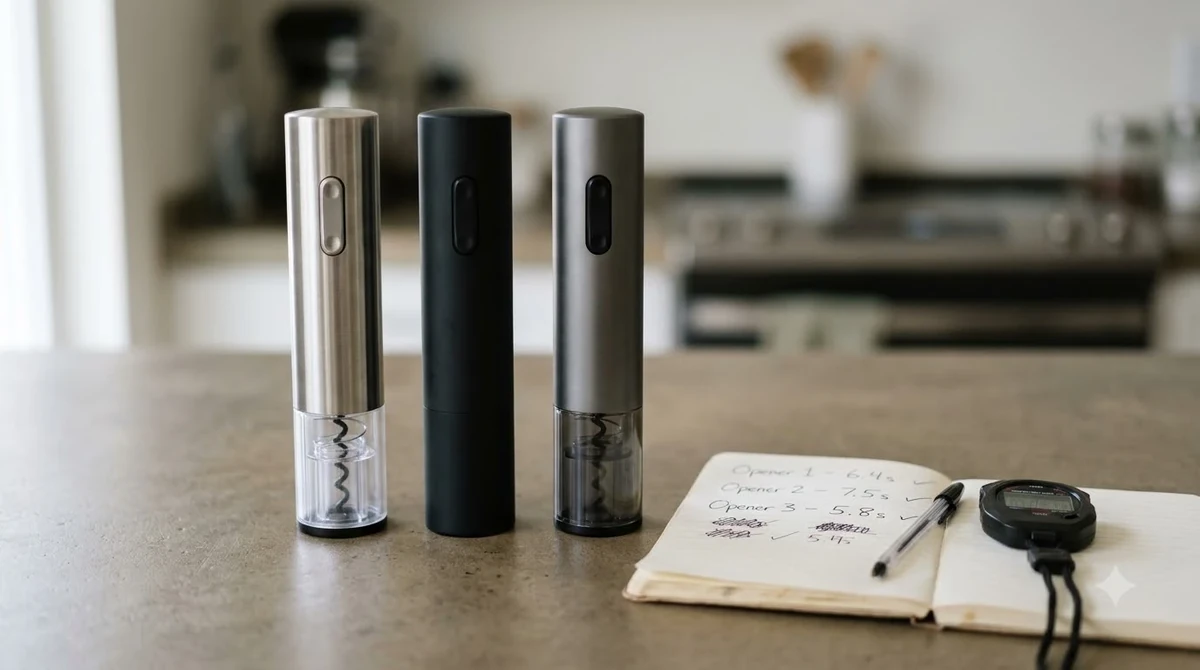
A more distinctive extraction mechanism. A conventional waiter-style opener relies on the user positioning a hinge against the bottle lip and pulling upward. Corkcicle instead promotes a ratcheting arrangement intended to assist extraction. This can be appealing to people who dislike the awkward pulling motion associated with some traditional wine keys. The curved handle is another design detail intended to improve leverage and make the opener more comfortable to operate.
Three useful functions in one accessory. The Wine Key includes a corkscrew, foil cutter, and crown-cap opener. That combination means a wine drinker does not necessarily need to keep separate tools for removing wine corks, cutting foil, and opening capped bottles. It is particularly useful in a compact home bar where keeping equipment organized matters.
A design focused on cork preservation. Corkcicle’s claim of 30% less cork displacement will interest people who regularly open natural-cork bottles. Cork fragments can be frustrating, especially when a bottle is being served directly at the table. A mechanism designed to grip and remove a cork with less displacement has an understandable practical appeal. However, cork preservation still depends on technique and the condition of the closure.
A slim alternative to large electric devices. The Wine Key does not require charging, batteries, or a dedicated countertop space. This makes it easier to keep in a kitchen drawer, bar cabinet, or serving station. Someone who opens one or two bottles during an ordinary evening may prefer a manual accessory over an electric opener that needs to be stored and maintained separately.
A gift-friendly accessory. Corkcicle’s recognizable design language and focus on drinkware accessories make the Wine Key an appropriate gift for someone who enjoys entertaining. It can also complement other bar accessories without requiring the recipient to learn an entirely different category of equipment. The useful combination of corkscrew and bottle-cap opener gives it more everyday purpose than a decorative wine accessory.
Retailer descriptions provide additional context. Belle & Blush identifies stainless steel construction, a non-stick worm, and a dual-hinge arrangement. These features are relevant to people who value a traditional wine-key appearance but want a more specialized extraction design. Its slim form also makes it a more practical choice for a drawer than a bulky tabletop corkscrew.
There is an important distinction between advertised advantages and confirmed user experience. A retailer listing is useful for understanding the construction and intended functions, but it does not establish that every owner finds the mechanism easier or that the opener performs better than competing designs in controlled comparisons. Buyers should treat the leverage and cork-displacement claims as reasons to consider the product rather than proof of universal superiority.
Common Complaints and Limitations
The Corkcicle Wine Key has several design advantages, but its manual construction and specialized mechanism also create limitations. The main considerations are the learning curve, hand-operated extraction, cleaning requirements, and the absence of published performance measurements for every type of cork.
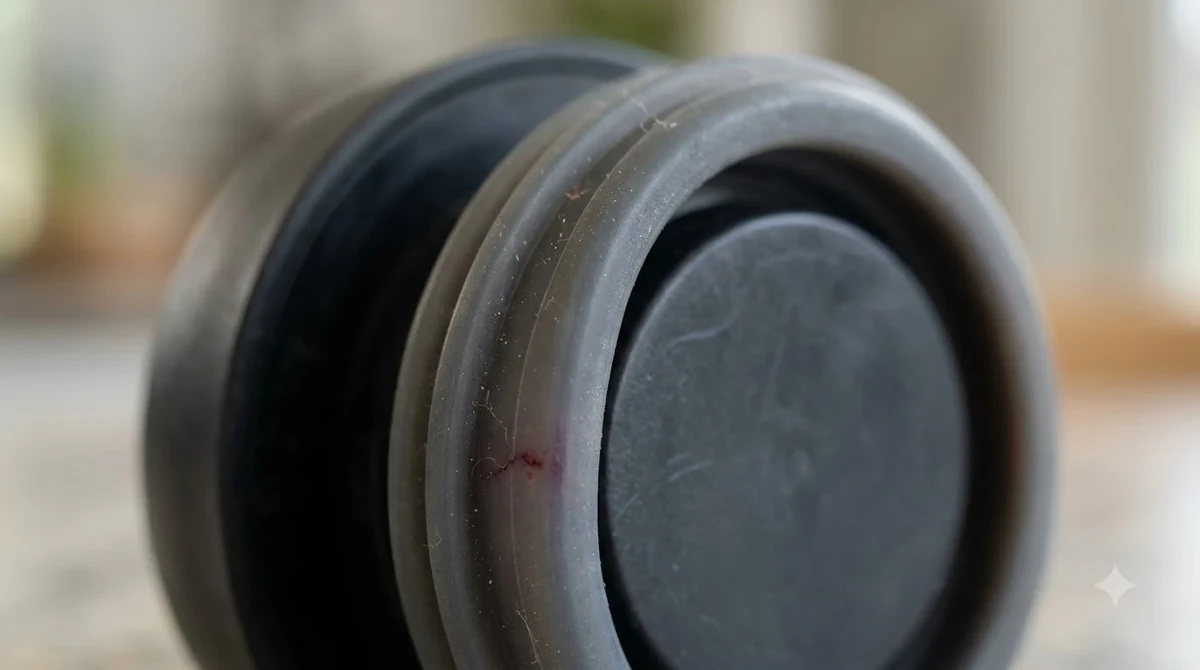
It is still a manual opener. The ratcheting mechanism may assist with extraction, but it does not eliminate the need to position the tool correctly and operate it by hand. Anyone looking for a push-button experience should consider an electric model instead. The Corkcicle Wine Key is a mechanical accessory, not an automated appliance.
The mechanism may require familiarization. A basic corkscrew has a straightforward operating principle: insert the worm, establish leverage, and pull. A less familiar ratcheting design can take a little practice before its movement feels natural. This matters particularly when someone is opening bottles in front of guests and wants to avoid a prolonged struggle with the closure.
Its advertised cork-preservation benefit has limits. The 30% figure comes from Corkcicle’s own product description. It should not be interpreted as a guarantee that the opener will never break a cork or leave fragments behind. Very old, brittle, unusually dry, or damaged corks can still present difficulties. Even an effective corkscrew cannot reverse deterioration in the closure itself.
Cleaning requires attention. Corkcicle specifies handwashing only. That is less convenient than placing a stainless steel kitchen accessory in a dishwasher. The foil cutter and corkscrew also have working edges and moving contact points that should be cleaned carefully. People who prefer low-maintenance kitchen equipment may consider this an inconvenience.
There is no reason to assume universal bottle compatibility. The product is designed for ordinary wine-bottle cork removal, but Corkcicle does not provide a complete published compatibility chart covering every closure material and bottle format. Natural cork, synthetic cork, and specialty closures can behave differently. Buyers should avoid assuming that a specialized wine opener will work equally well with every possible stopper.
It may offer more features than some users need. Someone who opens a bottle once every few months may be perfectly happy with an inexpensive traditional corkscrew. The foil cutter and crown-cap opener are useful additions, but they are not essential if separate tools are already available. The Wine Key makes more sense when its particular design and combination of functions solve a recurring problem.
Another limitation is the lack of independently published dimensions and detailed operating instructions on the official product listing. Buyers who need an exact handle length, weight, or storage measurement should obtain that information from the retailer or manufacturer before purchasing rather than relying on assumptions based on photographs.
Tip: Keep the wine bottle upright on a stable surface while opening it. Center the corkscrew before applying extraction force, and avoid twisting the opener sideways. With an older natural cork, work slowly rather than trying to remove it in one sudden movement.
For people who routinely encounter fragile older corks, it is also useful to understand the alternatives. A two-prong cork puller, for example, works differently from a conventional worm corkscrew and may be worth considering for certain delicate closures. The Wine Key is best evaluated as a general-purpose manual opener rather than a specialist solution for every difficult bottle.
Who Should Buy and Who Should Skip
The Corkcicle Wine Key is best suited to wine drinkers who want a manual opener with additional leverage-oriented engineering and several integrated functions. It is less appropriate for people who prioritize fully automated operation or need a specialized tool for unusually fragile corks.
Who should consider buying it
Regular home wine drinkers. People who open bottles several times each week may appreciate having a dedicated opener that combines cork extraction, foil cutting, and crown-cap removal. The manual format is convenient for everyday use because it does not depend on batteries or charging. Its compact style also fits naturally into a home bar setup.
People who prefer manual equipment. Some wine drinkers want to control the opening process rather than rely on an electric mechanism. A manual wine key gives the user direct feedback throughout cork removal. Corkcicle’s ratcheting system adds a distinctive mechanical element while preserving the basic manual character of the tool.
People who dislike awkward extraction. The curved handle and ratcheting design are the main reasons to consider this particular model. Anyone who finds conventional pull-style corkscrews uncomfortable may appreciate an alternative arrangement. The best way to judge that advantage is to understand the operating mechanism and compare its shape with the opener already used at home.
Entertainers and gift buyers. The combined features are convenient when several different bottled beverages are served. A wine opener with an additional crown-cap function can also be a useful addition to a gift set alongside stemware, a wine chiller, or other bar accessories.
Who should skip it
People who want one-button operation. An electric opener is a better match for someone who wants to remove the cork without manually operating a corkscrew. Food Network’s wine opener recommendations include the Cuisinart Electric Wine Opener as an example of this category. The Corkcicle Wine Key cannot provide the same automated experience.
Buyers who need the simplest possible tool. A traditional waiter-style corkscrew can be sufficient for someone who already knows how to use one. If a basic two-stage extraction system feels comfortable, the extra mechanism on the Corkcicle may not provide enough practical value to justify choosing a specialized design.
People who prioritize dishwasher cleaning. Corkcicle specifically instructs users to handwash the Wine Key. Anyone who wants all kitchen accessories to be dishwasher-safe should consider this requirement before buying.
People who mainly open fragile collectible wines. Older natural corks can deteriorate and require more specialized handling. Although Corkcicle advertises reduced cork displacement, it does not establish that its opener is the ideal solution for every aged bottle. A dedicated older-cork extraction tool may be more appropriate for a collection containing particularly delicate closures.
For a broader look at equipment choices, the site’s Accessory Brands section provides a useful starting point for comparing wine-related accessories. The right choice depends on opening frequency, preferred operating style, storage requirements, and the type of closures encountered most often.
How It Compares to Alternatives
The Corkcicle Wine Key occupies the manual wine-opener category, but its ratcheting mechanism distinguishes it from a basic waiter-style corkscrew. Electric and vertical lever models provide different operating experiences, so the most useful comparison is based on effort, portability, and the amount of control required.
Compared with a traditional waiter-style corkscrew: Both are manual tools intended for extracting wine corks. A standard waiter-style opener generally uses a hinged support that rests against the bottle lip, allowing the user to extract the cork in stages. The Corkcicle emphasizes a ratcheting mechanism and curved handle instead. Its appeal is the alternative leverage arrangement and integrated crown-cap opener, while a traditional wine key may appeal to someone who prefers a familiar, straightforward design.
Compared with a lever corkscrew: A lever opener generally uses a larger handle and a more pronounced mechanical movement. Food Network identifies the OXO Steel Vertical Lever Corkscrew as an example of this category. Such devices can be convenient for repeated opening, but their larger format may take more cabinet space. The Corkcicle offers a more compact manual-tool approach, although it does not provide the same large lever arrangement.
Compared with an electric opener: Electric openers reduce the amount of manual work by using a powered mechanism. Food Network includes the Cuisinart Electric Wine Opener among its recommendations. This category is more appropriate for users who prefer button-operated extraction. The Corkcicle has advantages in portability and independence from electrical power, but it requires direct manual operation.
Compared with a basic winged corkscrew: A winged corkscrew has two arms that rise as the central worm enters the cork. The user pushes the arms downward to extract the closure. This familiar format can be convenient for occasional home use, although the resulting tool is often bulkier than a slim manual wine key. The Corkcicle offers a different extraction mechanism and combines additional bottle-opening functions.
These differences are important because there is no single opener that suits every household. A person who opens one bottle each weekend may prefer a conventional wine key. Someone who frequently entertains might favor a lever opener, while a person who wants minimal physical effort may choose an electric device.
The Corkcicle also fits into a broader collection of wine accessories. For example, people interested in maintaining serving temperature can explore Corkcicle wine chiller reviews. A chiller and a corkscrew solve different problems, so buying both only makes sense if both functions are useful. Those looking for a combined opening and storage approach can also compare a wine opener and preserver set, particularly if they frequently save unfinished bottles.
For additional perspective on manual wine-opening tools, Good Housekeeping’s corkscrew and wine opener overview explains the differences among waiter-style, lever, and winged designs. Those distinctions are useful when deciding whether the Corkcicle’s specialized mechanism offers something that a conventional opener does not.
Frequently Asked Questions
Can the Corkcicle Wine Key open synthetic corks?
The manufacturer does not publish a comprehensive compatibility list for synthetic closures. Synthetic corks can vary in density, flexibility, and friction, so extraction behavior may differ from natural cork. A centered insertion and controlled extraction are sensible precautions when using any manual corkscrew on an unfamiliar closure.
Does the Corkcicle Wine Key require batteries?
No battery or charging requirement is listed for the manual Wine Key. Its ratcheting mechanism is operated mechanically by the user rather than through an electric motor. This makes it suitable for use in locations without convenient access to power.
Can the Corkcicle Wine Key be used for sparkling wine?
The Wine Key is designed for corkscrew-style wine closures, not the pressure-retained closures used on sparkling wine bottles. Traditional sparkling wine corks are removed using controlled hand pressure after the wire cage is loosened. Do not insert a corkscrew into a pressurized sparkling wine closure.
Does the Wine Key need lubrication?
Corkcicle does not list a lubrication schedule or recommend applying household oil to the mechanism. Keep the working parts clean and dry after handwashing, and avoid introducing substances that could transfer to the cork or bottle opening. If the mechanism develops resistance or damage, contact the manufacturer for appropriate maintenance guidance.
Is the Corkcicle Wine Key suitable for travel?
Its manual construction means it does not require a charger, batteries, or a large storage base. However, it includes a foil-cutting component and should be packed securely rather than left loose with clothing or other belongings. Travelers should also check airline and destination rules concerning sharp accessories before carrying it in luggage.
The Corkcicle Wine Key is an interesting manual opener for people who appreciate a specialized extraction mechanism, a curved handle, and useful additional functions. Its ratcheting design and integrated accessories give it a distinct position among traditional wine keys, although its handwashing requirement and manual operation will not suit everyone. For regular wine drinkers who want a compact, multipurpose opener, it is a worthwhile accessory to consider; buyers who prioritize simplicity or electric operation may be better served by a different style.
More in Wine Accessories
 Coravin Vs Vacu Vin: Choose the Right Wine Saver for Your BottlesUpdated Nov 21, 2026
 Zwilling Wine Stopper Review: Preserve Open Bottles LongerUpdated Nov 21, 2026
 Wine Enthusiast Wine Preserver Review: Features, Benefits and LimitationsUpdated Nov 21, 2026
 Wine Enthusiast Wine Stopper: An Easier Way to Reseal Open BottlesUpdated Nov 21, 2026
 Vintorio Wine Opener: Two-Step Cork RemovalUpdated Nov 21, 2026
 Zwilling Wine Aerator Review: Aerate, Pour, and Seal With One ToolUpdated Nov 21, 2026