


We may earn a commission when you buy through links on this page, at no extra cost to you. Learn more.
The corkcicle wine aerator, known as the Corkcicle Air, combines a freezer-cooled wine chiller with a built-in pour-through aerator, making it a convenient choice for people who want to cool and aerate wine while serving directly from the bottle. Its main advantages are its dual-purpose design, simple pouring process, and ability to maintain chilled white wine or cool room-temperature red wine. However, it requires freezer preparation, occupies space inside the bottle, and does not offer the same capacity or presentation as a traditional wine decanter.
The Corkcicle Air is an interesting alternative to buying separate wine-serving accessories. Instead of pouring wine through a small aerator and keeping a separate cooling sleeve nearby, this accessory combines both functions in a long insert that sits inside the bottle. The result is a practical serving tool for casual dinners, outdoor entertaining, and wine drinkers who prefer a simple setup. This review examines its specifications, reported owner experiences, limitations, cleaning requirements, and the situations where a dedicated aerator or decanter makes more sense.
Specs and Key Features: What the Corkcicle Air Includes
The Corkcicle Air is designed to perform three functions: chilling, aerating, and pouring. Its 12-inch form extends into the wine bottle, while the top section provides a controlled pouring path that allows wine to pass through the built-in aerator.
It is important to distinguish the Corkcicle Air from the company’s separate, shorter Aerator-Pourer. The Air is the combination chiller and aerator, whereas the smaller accessory focuses on aeration and pouring without the same in-bottle cooling function. This review focuses on the longer Air model because it is the product most closely associated with the combination of chilling and aerating wine.
| Specification | Corkcicle Air |
|---|---|
| Product category | Wine chiller and pour-through aerator |
| Listed length | 0.94 inches |
| Listed width | 0.94 inches |
| Listed height | 12 inches |
| Listed weight | 0.11 pounds |
| Freezer preparation | At least 90 minutes |
| White wine chilling claim | Up to 1 hour |
| Red wine cooling claim | Approximately 15 minutes to cellar temperature |
| Construction | BPA-free plastic and cork, according to World Market |
| Pouring design | Integrated pour-through aerator |
| Cleaning | Handwash only |
| Manufacturer warranty | 1 year |
The dimensions and weight above come from Corkcicle’s product listing. World Market provides slightly different rounded measurements, describing the accessory as approximately 1 inch in diameter and 11.5 inches high. Small differences between retailer measurements and manufacturer specifications are not unusual, but the main practical point remains the same: this is a relatively long insert that needs sufficient clearance inside the bottle and space for storage.
The combination of a cooling element and a pour-through aerator is the defining feature. A conventional wine aerator primarily introduces air during pouring. A bottle chiller changes the wine’s temperature. The Air attempts to handle both jobs without requiring a separate decanter or an ice bucket.
For product-specific details, the official Corkcicle Air product listing provides the manufacturer’s dimensions, weight, and basic feature description. The World Market product information also identifies the materials and cleaning instructions.
What Owners Like About the Corkcicle Wine Aerator
The strongest appeal of the Corkcicle Air is convenience. Rather than managing several accessories, users can prepare one insert, place it in the bottle, and pour through the same device throughout a gathering.

This arrangement is particularly useful for people who serve wine gradually rather than opening a bottle and immediately pouring the entire contents into a decanter. A bottle can remain on the dining table or outdoor serving area, with the Air providing a ready-to-use pouring mechanism. It also avoids the need to repeatedly transfer wine between containers.
Convenient pouring without removing the accessory
One of the more practical design details is the cap. Corkcicle explains that users can remove the cap and pour directly through the accessory without taking the entire insert out of the bottle. This makes subsequent servings simpler because the cooling element remains in position.
That arrangement can be useful at a dinner party where guests serve themselves. A traditional aerator may need to be held over a glass or fitted onto the bottle opening. With the Air, the serving mechanism stays in place. The bottle can be lifted and tilted in much the same way as a regular wine bottle.
There is also less need to manage a separate aerator between servings. Anyone arranging a small home wine station or bar cart may appreciate having a single accessory that handles multiple tasks.
Cooling without adding ice
Another advantage is that the Air cools wine from inside the bottle. Adding ice directly to wine can dilute its flavor as the ice melts. The Corkcicle design instead uses a pre-frozen cooling accessory, avoiding the need to put ice cubes into the wine itself.
This is especially useful for white wine served outside the refrigerator. A chilled bottle can gradually warm during a meal, particularly on a patio or during a summer gathering. Corkcicle states that the Air can maintain chilled white wine for up to one hour.
The same principle makes it useful for red wine. Many people serve red wine too warm because they assume room temperature is always appropriate. In a warm home, a bottle may be considerably warmer than the cellar-temperature range generally preferred for many reds.
Positive gifting and entertaining feedback
Corkcicle’s published customer testimonials highlight long-term use, gifting, and serving chilled white wine during outdoor gatherings. These comments suggest that the product’s visual design and combined functions are part of its appeal, particularly for people who enjoy wine accessories that are easy to demonstrate to guests.
The long insert is also distinctive enough to become a conversation piece. Instead of using an ordinary bottle stopper or a conventional pouring attachment, the Air has a recognizable shape that makes its cooling function immediately apparent.
However, manufacturer-published testimonials should be treated as selected customer feedback rather than a complete picture of ownership experiences. They provide useful examples of what some customers appreciate, but they do not establish how every unit performs over several years.
Common Complaints and Practical Limitations
The Corkcicle Air has several compromises that potential buyers should understand. Its cooling function requires advance preparation, its long body occupies bottle space, and its combined design makes it less specialized than a dedicated aerator or decanter.
Freezer preparation takes planning
The first limitation is the 90-minute freezing requirement. This is not an accessory that can be taken out of a kitchen drawer and used immediately. It needs to spend at least an hour and a half in the freezer before serving.
That requirement is manageable for planned dinners, but it becomes inconvenient when guests arrive unexpectedly or someone decides to open a bottle without preparation. Keeping the Air in the freezer between uses can reduce this problem, provided there is enough room and it is stored clean and ready for the next occasion.
It also means that the accessory needs a dedicated storage routine. Someone who already has a crowded freezer may find this less appealing than using a simple room-temperature aerator.
The insert occupies bottle space
The 12-inch listed height is a substantial part of the design. Because the Air sits inside the bottle, some wine must be poured out before inserting it. Corkcicle’s instructions specifically explain that users should make room for the accessory before putting it into the bottle.
This can be awkward if the bottle is nearly full and there is no glass ready to receive the initial pour. It also means the device is not completely invisible during service. Anyone who prefers the appearance of an untouched bottle on a formal dining table may prefer a separate aerator placed over the glass.
Compatibility also deserves attention. World Market describes the accessory as fitting most standard wine bottles, but that wording does not mean every bottle shape or opening is guaranteed to work. Unusually shaped bottles and narrow-necked specialty packaging may be less suitable.
Cooling performance is not universal
Corkcicle’s stated performance figures are useful reference points, but actual cooling depends on the wine’s starting temperature, the surrounding environment, and the condition of the frozen insert. A bottle starting at a particularly warm temperature may need more attention than one stored in a moderately cool room.
The advertised 15-minute red-wine cooling period should therefore be understood as a manufacturer performance claim rather than a guarantee for every bottle. Similarly, the one-hour white-wine claim describes the intended cooling performance, not a promise that every bottle will remain at precisely the same serving temperature throughout an entire gathering.
Temperature is important because wine styles have different serving requirements. Light reds such as Pinot Noir generally benefit from serving around 55 to 60 degrees Fahrenheit, while fuller reds such as Cabernet Sauvignon are often served around 60 to 65 degrees Fahrenheit. A cooling accessory is useful, but it does not automatically determine the ideal serving temperature for every wine.
Durability deserves consideration
The Air is a reusable accessory with a cooling component, so its condition matters. Owners should inspect the body, joints, and pouring area periodically for visible cracks, damage, or leakage rather than assuming that a reusable product will remain in perfect condition indefinitely.
One independently surfaced owner report describes a previous unit developing a crack around the aerator joint and losing its cooling liquid. The customer also described a replacement developing a similar problem. This is an individual complaint, not evidence of a widespread defect, but it illustrates why construction quality and warranty coverage matter when evaluating a product that combines multiple functions.
The manufacturer advertises a one-year warranty. Buyers should retain their purchase documentation and review the applicable warranty terms if a defect develops. The warranty does not remove the inconvenience of having to replace an accessory during a period when it is needed.
Tip: Keep the Air clean and dry between uses, inspect its body before placing it in a wine bottle, and avoid using an accessory that shows cracks, damage, or signs of leakage.
Who Should Buy the Corkcicle Air and Who Should Skip It
The Corkcicle Air makes the most sense for wine drinkers who value convenience and temperature control more than specialized aeration performance. It is particularly appealing for casual entertaining, regular white-wine service, and households that prefer to pour directly from the original bottle.
Who should consider buying it
White-wine drinkers: People who regularly serve Sauvignon Blanc, Pinot Grigio, Chardonnay, or other chilled whites may appreciate the built-in cooling function. The Air is designed to help maintain the temperature of an already chilled bottle for up to one hour, which is useful during a meal when the bottle stays on the table.
Casual red-wine drinkers: People who store red wine at normal room temperature may find the cooling function useful. Corkcicle’s advertised 15-minute cooling period provides a reason to consider the Air when a bottle needs to move closer to cellar temperature before serving.
Small gatherings: The pour-through arrangement works well when a bottle is shared among a few people. Guests can pour directly from the bottle without needing a separate aerator, decanter, or wine-serving station.
People who enjoy practical gifts: The combined cooling and pouring design is an appealing option for someone who already owns basic wine glasses and bottle-opening tools. It is more distinctive than an ordinary stopper, while still serving a recognizable purpose.
Who should skip it
Dedicated wine collectors: Collectors who regularly open structured, young red wines may prefer a full-size decanter. A decanter provides more surface area for wine to interact with air and allows the wine to rest before serving.
People who want immediate aeration: Someone who wants to open a bottle and pour a glass immediately may prefer a simple standalone aerator. The Air’s chilling function is useful, but the freezer preparation requirement is unnecessary if temperature control is not a priority.
Frequent formal hosts: A traditional decanter offers a more conventional presentation for formal dinners. The Air is functional, but its long insert remains inside the bottle and may not suit every serving style.
People with limited freezer space: The requirement to freeze the accessory for at least 90 minutes can become an inconvenience if there is no convenient place to store it between uses.
Consider your usual wine choices
Wine style should influence the decision. A person who primarily drinks crisp Sauvignon Blanc may value the cooling feature more than someone who usually opens mature Cabernet Sauvignon and prefers to decant it before dinner.
For lighter reds, a modest amount of cooling can be helpful, particularly during warm weather. For fuller reds, serving temperature and aeration can both influence how the wine presents itself. The Air combines these functions, but it should not be considered a substitute for every technique used in more elaborate wine service.
How It Compares to Other Wine Aeration Accessories
The Corkcicle Air occupies a particular category: an in-bottle chiller with a pour-through aerator. It should be compared with other accessories according to the job they perform rather than assuming every product marketed as an aerator offers the same features.
Corkcicle Air versus a standalone aerator
A standalone aerator focuses on introducing air during pouring. The separate Corkcicle Aerator-Pourer, for example, is a shorter accessory measuring approximately 4.94 inches high according to U.N. Luggage. Its listed construction is BPA-free plastic, and its main functions are aeration and pouring.
The difference is straightforward. The standalone accessory does not require the same freezer preparation because its purpose is not to cool the wine. It is more convenient for someone who wants to aerate a bottle immediately, while the Air offers additional temperature control.
People interested in a broader selection of serving tools can explore our guide to wine accessory brands for more context about the different types of products available.
Corkcicle Air versus a decanter with an aerator
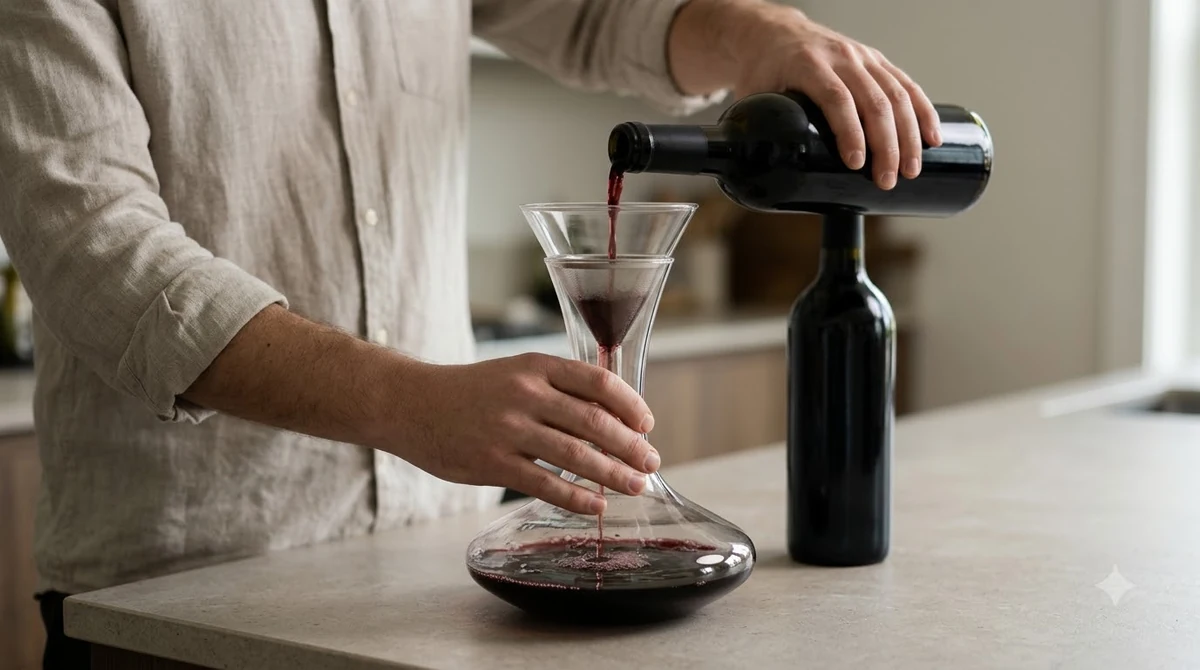
A decanter with aerator is a better option when the priority is preparing wine for a table of several guests. A decanter can accommodate an entire bottle, offers a more traditional presentation, and gives the wine a larger exposed surface during service.
The Corkcicle Air has a different advantage: it keeps the wine in its original bottle. That reduces the number of containers involved and makes it convenient for someone who wants to pour one glass at a time.
There is also a difference in preparation. A decanter does not need freezer time, although some wines benefit from resting after being poured. The Air requires at least 90 minutes of freezer preparation, but it can simultaneously help manage wine temperature.
Corkcicle Air versus a dedicated wine chiller
A dedicated wine chiller focuses primarily on temperature maintenance. Depending on its construction, it may surround the bottle, hold the bottle in an insulated compartment, or use a cooling element to keep wine cold.
The Corkcicle Air instead places its cooling element inside the bottle. This means it does not require a separate bucket or sleeve around the bottle, but it also occupies space within the wine itself.
For someone who regularly serves sparkling wine or prefers to keep several bottles ready at different temperatures, a dedicated external chiller may be more practical. The Air is more appropriate when one bottle is being served and the user values the combined pouring and cooling functions.
Choosing the right accessory for your serving style
The best option depends on the number of guests, the wine being served, and the amount of preparation involved. A small standalone aerator is convenient for an immediate glass. A decanter is useful for preparing a bottle for a group. A dedicated chiller focuses on temperature, while the Corkcicle Air attempts to combine cooling and aeration in one insert.
These products are not interchangeable in every situation. A person who regularly opens young, tannic reds may benefit more from a decanter, while someone who serves chilled white wine outdoors may appreciate the Air’s in-bottle cooling feature. The right accessory is the one that solves the most common serving problem without adding unnecessary steps.
Frequently Asked Questions
The following answers address practical details that can affect everyday use, including bottle preparation, storage, aeration, and choosing the correct Corkcicle accessory.
Can the Corkcicle Air be used with sparkling wine?
The Air is marketed primarily for still red and white wine rather than sparkling wine service. Sparkling wine depends on retaining dissolved carbon dioxide, and introducing additional air is not generally the priority. A properly fitted sparkling-wine stopper is a more appropriate accessory for preserving an opened bottle of Champagne, Cava, or Prosecco.
Should wine be poured out before inserting the Corkcicle Air?
Yes. The accessory extends into the bottle, so sufficient room must be available before insertion. Pouring an initial glass first also provides a convenient opportunity to check that the bottle opening and insert are compatible.
Can the Corkcicle Air be stored in a kitchen drawer?
It can be stored outside the freezer between uses once it has been cleaned and dried. However, it will need another freezer preparation period of at least 90 minutes before its cooling function is available again. A clean, dry storage location also helps prevent dust and residue from accumulating around the pouring mechanism.
Does the Corkcicle Air remove sediment from older red wine?
No. The Air is an aerating and cooling accessory, not a sediment filter. Older bottles that have developed natural deposits should be handled carefully, and a suitable decanting process may be more appropriate when the goal is to separate clear wine from sediment.
Is the separate Corkcicle Aerator-Pourer interchangeable with the Air?
They serve related but different purposes. The shorter Aerator-Pourer is designed primarily for aerating and pouring, while the Air adds an in-bottle cooling function. Their different listed heights, approximately 4.94 inches and 12 inches respectively, also make them distinct products rather than interchangeable components.
The Corkcicle Air is a useful option for wine drinkers who want one accessory to handle cooling and pour-through aeration without transferring wine into another container. Its freezer preparation and in-bottle design are genuine compromises, but the combination can make everyday wine service simpler. For people who regularly serve chilled whites or moderately cooled reds at casual gatherings, the Corkcicle Air is a practical accessory to consider; serious decanting needs are better served by a dedicated decanter.
More in Wine Accessories
 Zwilling Wine Stopper Review: Preserve Open Bottles LongerUpdated Nov 21, 2026
 Wine Enthusiast Wine Preserver Review: Features, Benefits and LimitationsUpdated Nov 21, 2026
 Wine Enthusiast Wine Stopper: An Easier Way to Reseal Open BottlesUpdated Nov 21, 2026
 Vintorio Wine Opener: Two-Step Cork RemovalUpdated Nov 21, 2026
 Zwilling Wine Aerator Review: Aerate, Pour, and Seal With One ToolUpdated Nov 21, 2026
 Zazzol Wine Opener Review: Features, Comfort, and Buying AdviceUpdated Nov 21, 2026