

We may earn a commission when you buy through links on this page, at no extra cost to you. Learn more.
Brookstone wine accessories offer practical options for opening, aerating, chilling, pouring, and preserving wine, with the best choice depending on which tasks matter most to your drinking routine. The collection includes electric corkscrews, battery-powered aerators, reusable chilling sticks, and multi-piece wine tool sets. Some accessories combine several functions, while others focus on one job, so buyers should compare cleaning requirements, power sources, included components, and replacement availability before choosing.
Wine accessories can make serving a bottle more convenient, especially when entertaining or enjoying wine regularly at home. Brookstone has offered several useful wine-related products, but its assortment includes different generations of accessories rather than one consistent product family with identical features. That distinction matters because an electric opener, a rechargeable wine center, and a manual chilling stick have very different maintenance needs. This review examines the documented features, practical advantages, and potential drawbacks of these products to help buyers decide which tools deserve space in a home wine collection.
Specs and Key Features
Brookstone wine accessories cover several stages of serving wine, from removing a cork to keeping an opened bottle fresh. The strongest options are products that solve a specific recurring problem, such as opening bottles without a manual corkscrew or cooling white wine at the table.
The product documentation reveals three particularly interesting categories: electric opening and preservation systems, dedicated wine aerators, and multifunctional chilling accessories. Retail listings also identify simpler automatic openers and compact gift sets. Specifications differ between models, so it is important not to assume that every Brookstone electric opener includes rechargeable batteries or a charging stand.
The following comparison summarizes documented specifications rather than treating every product as part of one interchangeable collection.
| Accessory | Power or preparation | Main function | Important specification |
|---|---|---|---|
| Automatic Wine Opener | 4 AA batteries | Electric cork removal | 28 cm long |
| Aero Wine Aerator | 2 AAA batteries | Wine aeration | 30-second automatic cycle |
| Aerating Chilling Stick | Freezer preparation | Cooling, aerating, pouring | Minimum 2-hour freeze |
| Wine Center | Rechargeable battery | Opening and preservation | Approximately 12-hour charge |
| Compact Accessories Kit | Manual operation | Opening, stopping, pouring | Includes 4 cork coasters |
The Automatic Wine Opener listed by Kohl’s measures 9 cm by 6.5 cm by 28 cm and uses four AA batteries that must be purchased separately. Its construction includes ABS, polystyrene, carbon steel, and stainless steel. The Aero, by contrast, uses two AAA batteries and comes with two interchangeable aeration stems. These differences illustrate why checking the individual product description is more useful than relying on the Brookstone name alone. The Brookstone Automatic Wine Opener product listing provides additional details about its construction and included foil cutter.
The Wine Center is a more comprehensive arrangement. Its manual identifies a stainless-steel opener, a separate wine-preservation pump, a charging base, two stoppers, a pourer, and a foil cutter. It also specifies approximately 25 to 30 bottles per full opener charge. That makes it a more integrated serving solution than a standalone corkscrew.
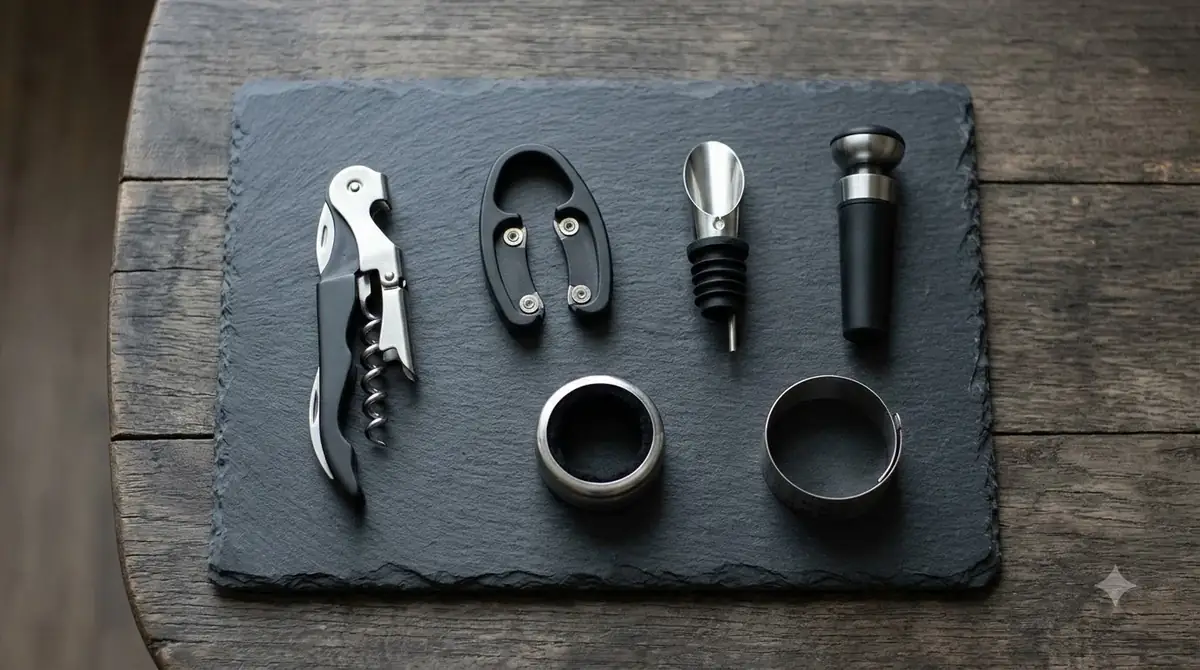
For shoppers comparing presentation and organization, the compact kit is another option. Its included corkscrew multi-tool, stopper and air pump, pourer, drip collar, and four cork coasters provide a useful selection of basic serving equipment without requiring an electric charging station.
What Owners Like About Brookstone Wine Accessories
The main attraction of Brookstone wine accessories is functional variety. Rather than focusing exclusively on decorative wine gifts, the documented assortment addresses practical tasks that occur throughout the process of opening and serving a bottle.
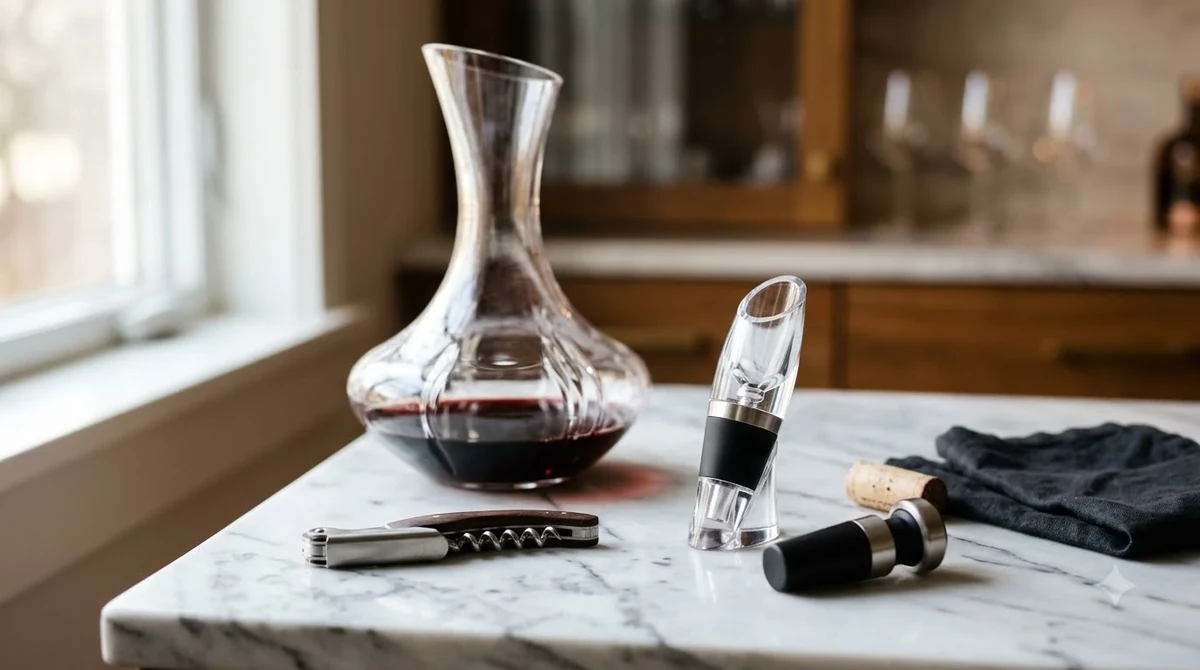
Electric wine openers are particularly appealing to people who regularly open several bottles during gatherings. A conventional corkscrew requires the user to grip the bottle and turn a spiral through the cork. An automatic opener replaces much of that manual movement with a powered mechanism. The Kohl’s-listed model is designed to operate with a button, while the Wine Center uses separate up and down controls.
Another advantage is the inclusion of accessories that complement the opening process. A foil cutter makes removing the capsule easier, while a stopper and pourer help manage the bottle after opening. The Wine Center combines these components with a dedicated preservation pump, reducing the need to purchase several separate tools.
Multifunctional accessories save serving space
The Brookstone Aerating Wine Chilling Stick is especially interesting because it combines several functions in one insert. Its components include a stopper, pouring spout, strainer, aerating hole, and flip cap. Once chilled in the freezer, it can be inserted into a bottle and used to cool the wine while serving.
Its documented cooling period of up to one hour is useful for a relaxed dinner or a small gathering. Instead of constantly returning a bottle to the refrigerator, the user can keep it on the table while the chilling stick helps maintain a cooler serving temperature. It is particularly relevant for Sauvignon Blanc, Pinot Grigio, and other whites commonly served chilled.
The flip cap is another practical detail. It opens for pouring and closes afterward, allowing the accessory to remain in the bottle between servings. The aerating and pouring components can also be unscrewed and used separately from the chilling stick.
Dedicated aeration is another useful feature
The Brookstone Aero offers a different approach to wine aeration. Rather than relying on a pouring attachment or waiting for wine to breathe in a decanter, it uses an electrically powered mechanism and interchangeable stems. One stem is intended for bottle aeration, while the other is intended for aerating wine directly in a glass.
The automatic 30-second cycle gives the device a defined operating period. Users can stop it earlier by pressing the button again. For someone who occasionally opens young Cabernet Sauvignon, Syrah, or other structured reds, this format offers a convenient alternative to setting up a separate decanter.
Still, aeration is not equally important for every bottle. A delicate older Pinot Noir may benefit more from careful handling than aggressive aeration. A younger, fuller-bodied red is generally a more logical candidate for experimenting with an aerator.
Common Complaints and Limitations
Brookstone wine accessories have some meaningful limitations, particularly around battery management, cleaning, and the reliability of older electric products. Buyers should pay attention to these practical considerations rather than choosing a device based only on its appearance or number of included functions.
The clearest documented concern involves the Automatic Wine Opener listed by Kohl’s. Its customer-review summary describes mixed experiences, including complaints about insufficient power, corks becoming stuck, and difficulties with the foil cutter. Those reports do not establish that every unit has a problem, but they are relevant when assessing the model’s reliability.
The product also requires four AA batteries that are not included. That is a relatively straightforward power arrangement, but it creates an ongoing replacement requirement. Buyers who regularly open bottles may prefer a rechargeable model, provided that the charging system and battery condition are satisfactory.
Battery requirements are not consistent
One common purchasing mistake is assuming all electric Brookstone wine openers use the same power system. The Kohl’s automatic opener needs four AA batteries, whereas the Wine Center uses rechargeable nickel-metal hydride batteries and a dedicated charging base. The Aero aerator requires two AAA batteries.
These differences affect everyday convenience. Disposable batteries are easy to replace, but they need to be kept available. Rechargeable equipment avoids routine disposable battery purchases, although a charging base introduces another item that needs counter space and an accessible electrical outlet.
The Wine Center also requires a substantial initial charging period. Its manual recommends approximately 12 hours for a full charge. Someone buying it as a gift should therefore avoid assuming that the device will be ready for immediate use straight out of the box.
Cleaning can require more attention than expected
Electric wine accessories are not necessarily dishwasher-safe simply because some of their removable components are. The Aero manual explicitly states that only the aeration tips are dishwasher safe. Its handle should be cleaned with a soft cloth and must not be submerged.
The chilling stick has different cleaning instructions. Its manual allows dishwasher cleaning and recommends wiping the accessory with a damp cloth before its first use. These differences are important for buyers who prefer kitchen equipment that can be cleaned entirely in a dishwasher.
Multifunctional designs also create additional components to maintain. Stoppers, aeration holes, pouring channels, and removable stems can collect wine residue. If they are not cleaned after use, dried wine can interfere with pouring or obstruct narrow openings.
Tip: Before purchasing a used or older Brookstone electric accessory, confirm that its charger, charging base, removable parts, and battery compartment are all present and functional. A complete-looking device without its original power components may be difficult to use as intended.
Who Should Buy and Who Should Skip
Brookstone wine accessories are most appealing to casual wine drinkers who value convenient opening, serving, and preservation tools. The right purchase depends on how frequently a household opens bottles and whether the buyer needs a single-purpose accessory or a complete serving arrangement.
Good choices for frequent wine drinkers
People who regularly open bottles for dinner parties or family gatherings may appreciate an electric opener. Removing corks manually is not particularly difficult for most people, but an automatic mechanism can simplify the process when several bottles need to be opened in succession.
The Wine Center is particularly relevant for households that also want a preservation pump. Its separate opener and preserver, two stoppers, and charging base provide several useful functions in one coordinated set. However, it makes more sense for buyers who have room to store and charge the equipment.
For someone who prefers red wine, the Aero is another interesting option. It is designed to aerate wine in either a bottle or glass, making it more flexible than a fixed pouring aerator. Its two AAA batteries and 30-second operating cycle are easy specifications to understand before purchasing.
Good choices for occasional wine drinkers
Occasional wine drinkers may find a manual accessories kit more practical than an electric system. A corkscrew multi-tool, stopper, air pump, pourer, drip collar, and coasters cover many ordinary serving needs without requiring charging or battery replacement.
The chilling stick is another sensible option for people who frequently serve white wine or rosé. It requires freezer preparation, but it does not need an electrical outlet or disposable batteries. Its compact design is also convenient for a small kitchen or a limited bar setup.
Who should skip these products?
Buyers who want a completely maintenance-free electric opener should consider whether they are comfortable cleaning removable components, replacing batteries, or keeping a charging base accessible. Someone who regularly opens natural-cork bottles may also prefer a traditional waiter’s corkscrew as a dependable backup.
People purchasing older Brookstone accessories should be particularly selective. A product that was originally supplied as a complete set may now be offered without its charger, foil cutter, stand, or other components. This can reduce its practical value even when the main device appears to be in good condition.
Buyers seeking professional wine-service equipment may also prefer specialized products with clearly documented replacement parts and long-term service arrangements. Brookstone’s assortment is more appropriate for everyday household convenience than for building a commercial wine-service station.
How It Compares to Alternatives
Brookstone accessories are best evaluated by function rather than by treating the entire assortment as one competing product. A rechargeable wine center, a battery-powered aerator, and a manual chilling stick serve different purposes, so the most useful comparison is between the types of tools a buyer could choose for the same serving task.
Electric opener versus traditional corkscrew
An electric opener is convenient because it reduces the physical effort required to remove a cork. The Brookstone automatic model uses a powered mechanism, while the Wine Center offers an electric opener with a rechargeable base. These are useful arrangements for people who prefer push-button operation.
A traditional waiter’s corkscrew remains a strong alternative for simplicity. It does not require batteries, charging, or a motor. It also takes up less storage space and is easy to carry for picnics or travel. For someone opening only a few bottles per month, a traditional corkscrew may be more practical.
The electric approach is therefore a matter of convenience rather than an automatic improvement in cork removal. Buyers who choose an electric model should still maintain a manual backup for situations where the battery is depleted or the mechanism cannot extract a difficult cork.
Electric aerator versus decanter
The Brookstone Aero is designed to aerate wine through an electric mechanism, with its two interchangeable stems providing bottle and glass options. A traditional decanter works differently by exposing a larger volume of wine to air while allowing sediment to remain behind when properly poured.
For a younger Cabernet Sauvignon or Syrah, a decanter can be useful when the wine needs time to open up. A young full-bodied red may benefit from approximately 30 to 60 minutes of decanting. The Aero offers a faster serving routine, but it does not replace every purpose of decanting.
For older wines, sediment management can be more important than rapid aeration. A carefully poured decanting process is often preferable when dealing with a mature bottle that has accumulated sediment over time.
Chilling stick versus wine bucket
The Brookstone chilling stick is designed to cool wine from inside the bottle after being frozen for at least two hours. It can keep a bottle cool for up to one hour according to its manual, making it convenient for a dinner table or a short gathering.
A traditional ice bucket provides another approach. It can cool an entire bottle from the outside and is useful for sparkling wine, white wine, and rosé. It also avoids inserting an accessory into the bottle, although it requires ice and a suitable container.
Neither solution is universally superior. The chilling stick offers compact storage and a multifunctional design, while an ice bucket is more flexible for cooling different bottle shapes and sizes. Buyers who entertain frequently may find both useful.
For organizing a serving area, a dedicated bar cart can provide space for an opener, glasses, stoppers, and serving accessories. Those interested in displaying a bottle as part of their setup can also explore a wine bottle holder.
Care, Storage, and Long-Term Ownership
Proper maintenance makes a significant difference to the usefulness of wine accessories. Brookstone’s products have different cleaning and storage requirements, so owners should follow the instructions for the particular device rather than applying one cleaning method to the entire collection.
Maintain electric openers correctly
Electric openers should be stored in a dry location away from spills and excessive heat. The corkscrew mechanism should remain protected from accidental contact, especially when the device is stored in a drawer with other utensils.
The Wine Center manual specifically warns against immersing the opener, preserver, or charging base in water. Its rechargeable units should be placed correctly into their designated charging sockets. The manual recommends approximately 12 hours for a complete charge and identifies the blue indicator light as confirmation that the units are properly seated and the base is connected.
For battery-operated models, remove or replace batteries according to the product instructions if the device will be stored for an extended period. Leaking batteries can damage electrical contacts and make an otherwise functional accessory unusable.
Clean aerators and chilling sticks after serving
The Aero’s removable aeration tips should be rinsed after use to avoid transferring one wine’s residue or flavor into another bottle. Its manual also recommends periodically soaking the tips in a water-and-vinegar solution to help prevent clogged aeration holes.
The handle requires a different approach. It should be wiped with a soft cloth rather than submerged. The removable rubber base of the stand can be taken off to make cleaning easier.
For the chilling stick, the recommended preparation begins with a clean, damp cloth before the first use. It should then be frozen for at least two hours. After serving, clean the components before freezing them again so that dried wine residue does not collect around the stopper or pouring channel.
Store wine at suitable temperatures
Wine accessories help with serving, but they cannot replace proper bottle storage. Most wine bottles intended for longer storage should be kept on their sides in a stable environment near 55 degrees Fahrenheit. A dark location with minimal temperature fluctuation is preferable to a kitchen counter exposed to sunlight or cooking heat.
Serving temperatures should also match the wine style. Sparkling wine is generally served at 40 to 50 degrees Fahrenheit, while light white wines and rosé are commonly served at 45 to 50 degrees. Fuller-bodied whites are better around 50 to 55 degrees, and lighter reds are generally served around 55 to 60 degrees.
These ranges help explain where a chilling accessory is most useful. A bottle of Sauvignon Blanc or sparkling wine may benefit from a cooler serving arrangement than a bottle of Cabernet Sauvignon. A chilling stick is therefore most useful when the wine needs to remain cool during service rather than when every bottle is already at its ideal temperature.
Opened still wines generally keep for approximately three to five days in the refrigerator when properly recorked or sealed. Sparkling wines generally keep for one to three days with a suitable sparkling-wine stopper. A preservation pump can help manage an opened bottle, although it should not be treated as a guarantee that wine will remain fresh indefinitely.
For gift buyers, a coordinated selection of accessories can be more useful than an assortment of decorative items. A practical opener, stopper, pourer, and storage arrangement will generally see more regular use than specialized gadgets purchased without considering the recipient’s wine habits. A wine advent calendar can also complement a seasonal wine gift, while shoppers comparing different manufacturers can browse the Accessory Brands collection.
Frequently Asked Questions
Can Brookstone wine accessories be used with synthetic corks?
Compatibility depends on the individual opener and the cork material. Synthetic corks can have different friction and compression characteristics from natural cork, so an electric opener should not be forced if the cork resists removal. A traditional lever or waiter’s corkscrew may be a useful alternative when a particular electric mechanism struggles.
Can a Brookstone chilling stick be used with sparkling wine?
The chilling stick is designed for a suitable still-wine bottle opening and requires room inside the bottle for insertion. Sparkling wine presents additional pressure and bottle-design considerations, so it is preferable to use a purpose-designed sparkling-wine chilling method rather than assuming the accessory is suitable for every sparkling bottle. A conventional ice bucket is a practical alternative.
Does the Brookstone Aero replace a wine decanter?
No. The Aero provides an aeration function, but it does not perform the sediment-separation function of a decanter. This distinction matters with older Bordeaux blends and other mature reds that may develop sediment during bottle aging. A decanter also provides a larger vessel for holding and serving wine.
Can the Brookstone Wine Center preserve unfinished sparkling wine?
The Wine Center documentation identifies a vacuum-preservation pump and stoppers, but that arrangement should not automatically be considered suitable for sparkling wine. Vacuum pumps can remove carbon dioxide and reduce the bubbles that make sparkling wine distinctive. A dedicated pressure-retaining sparkling-wine stopper is a more appropriate choice.
What should buyers do if a Brookstone accessory has no replacement charger?
Identify the exact model and its electrical requirements before purchasing a replacement adapter. The Wine Center documentation specifies a 9-volt DC, 200-milliamp adapter output, but those specifications should not be applied to unrelated Brookstone products. Voltage, polarity, connector type, and charging-base compatibility all need to match the original equipment.
Brookstone wine accessories are worth considering for their combination of electric opening tools, aeration equipment, chilling accessories, and practical serving sets. The Aero and chilling stick offer particularly distinct functions, while the Wine Center provides a more comprehensive opening and preservation arrangement. The best purchase is the accessory that matches the way a household actually serves wine, with battery requirements, cleaning instructions, and replacement-part availability considered before committing to an older or incomplete product.
More in Wine Accessories
 Coravin Vs Vacu Vin: Choose the Right Wine Saver for Your BottlesUpdated Nov 21, 2026
 Zwilling Wine Stopper Review: Preserve Open Bottles LongerUpdated Nov 21, 2026
 Wine Enthusiast Wine Preserver Review: Features, Benefits and LimitationsUpdated Nov 21, 2026
 Wine Enthusiast Wine Stopper: An Easier Way to Reseal Open BottlesUpdated Nov 21, 2026
 Vintorio Wine Opener: Two-Step Cork RemovalUpdated Nov 21, 2026
 Zwilling Wine Aerator Review: Aerate, Pour, and Seal With One ToolUpdated Nov 21, 2026