

We may earn a commission when you buy through links on this page, at no extra cost to you. Learn more.
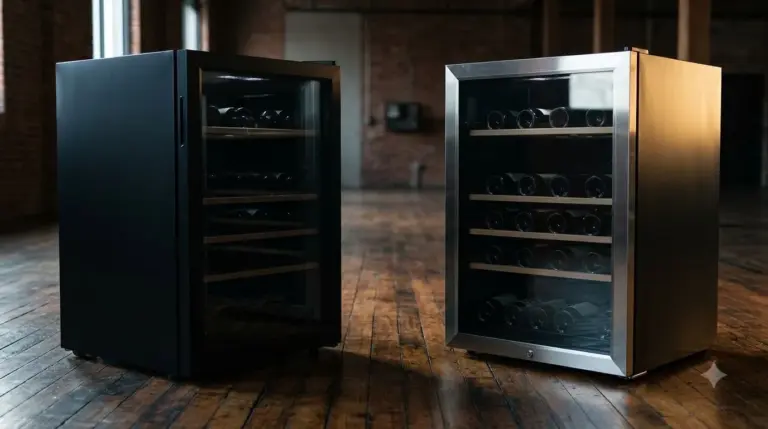
Danby vs Magic Chef comes down to storage capacity, temperature flexibility, and installation needs when choosing a wine cooler for your home. Danby offers compact freestanding options with straightforward temperature controls, while Magic Chef has models such as the HMWC44DZ with two independently controlled temperature zones. The right choice depends on how many bottles you own, whether you store reds and whites together, and how much room you have available.
Both brands offer practical wine storage for everyday collectors, apartment kitchens, and home entertaining spaces. However, comparing brand names alone can lead to the wrong purchase because individual models differ considerably in capacity, dimensions, cooling controls, and installation requirements. This comparison examines representative Danby and Magic Chef models, including their manufacturer specifications, so you can identify the features that matter before choosing.
| Comparison | Danby | Magic Chef |
|---|---|---|
| Representative model | DWC018A1BDB | HMWC44DZ |
| Bottle capacity | 16 bottles | 44 bottles |
| Temperature zones | Single zone | Dual zone |
| Temperature range | 43°F–57°F | 41°F–61°F |
| Dimensions (W × H × D) | 17.5 × 20.1 × 19.9 inches | 23.4 × 34.4 × 24.4 inches |
| Temperature controls | Programmable temperature control | Independent digital controls |
| Interior lighting | Blue LED | Two interior LED lights |
| Door | Reversible | Reversible |
| Installation | Freestanding | Built-in or freestanding |
The comparison uses the Danby DWC018A1BDB and Magic Chef HMWC44DZ as specific examples, not as a claim that every model from either brand has identical features. Danby also sells larger wine coolers, and Magic Chef has other wine and beverage appliances. Model selection matters more than a general brand label.
Storage Capacity and Available Space
Danby is a practical choice for smaller wine collections, while the Magic Chef HMWC44DZ offers considerably more storage for households that regularly keep several types of wine available. The representative models differ by 28 bottles of stated capacity, making available floor or cabinet space an important part of the decision.
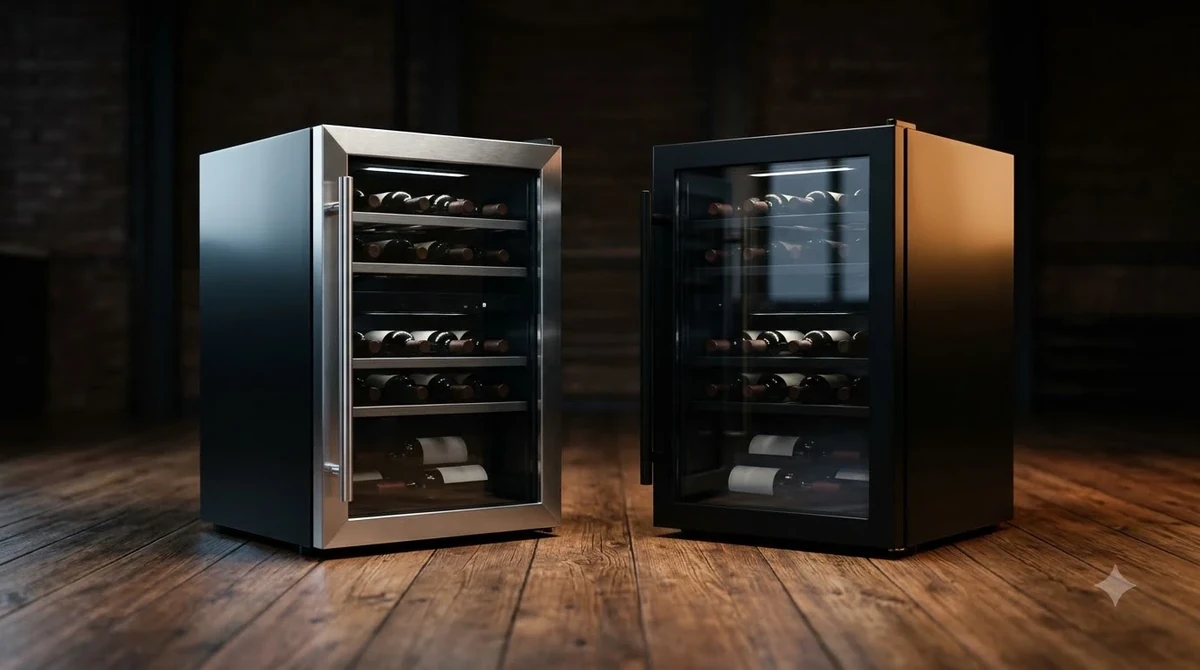
The Danby DWC018A1BDB holds up to 16 bottles in a compact 1.8-cubic-foot cabinet. At 17.5 inches wide, 20.1 inches high, and 19.9 inches deep, it is suitable for buyers who want a dedicated wine storage appliance without committing a large section of their kitchen to refrigeration. Its molded worktop also provides a small additional surface for accessories.
The Magic Chef HMWC44DZ is a substantially larger appliance. Its 44-bottle capacity is divided into 16 bottles in the upper compartment and 28 in the lower compartment. Its dimensions are 23.4 inches wide, 34.4 inches high, and 24.4 inches deep, so buyers need to measure their intended installation area carefully.
Danby also offers larger alternatives. For example, its DWC93BLSDR1 accommodates up to 36 bottles in a cabinet measuring 17.52 inches wide and 32.72 inches high. This illustrates why comparing only a compact Danby unit with a larger Magic Chef model does not tell the entire story.
Consider the number of bottles you actually intend to store rather than relying exclusively on advertised maximum capacity. Bottle shapes vary, and wider Champagne bottles, sparkling wine bottles, and larger formats can occupy more room than standard Bordeaux-style bottles. A cabinet rated for 44 bottles may therefore hold fewer bottles when the collection contains several oversized formats.
For a household that keeps six to twelve bottles ready for dinner, a smaller Danby cooler may provide sufficient room. Someone who purchases cases, collects different grape varieties, or entertains regularly may appreciate the additional capacity of the Magic Chef HMWC44DZ.
Temperature Control and Dual-Zone Storage
Temperature flexibility is one of the most important differences between these representative appliances. The Danby DWC018A1BDB provides a 43°F to 57°F setting range, while the Magic Chef HMWC44DZ provides two independently controlled zones covering 41°F to 61°F.
The Danby DWC018A1BDB is a single-zone example. Its temperature range is suitable for chilling many white wines, sparkling wines, and lighter-bodied reds, although it does not offer separate upper and lower temperature settings. Collectors who mainly store one style of wine or prefer a consistent holding temperature may find this arrangement straightforward.
The Magic Chef HMWC44DZ offers more flexibility because each compartment has its own temperature control and digital display. The upper and lower sections can be set independently between 41°F and 61°F. This allows a household to maintain different storage conditions for two groups of bottles without constantly changing one shared thermostat.
For example, a household could use the cooler’s upper section for white wines and its lower section for reds. Sauvignon Blanc and Riesling benefit from cooler serving temperatures than fuller-bodied reds, while Chardonnay is generally served somewhat warmer than light whites. A dual-zone arrangement makes it easier to prepare both categories for different occasions.
Serving temperature and long-term storage temperature are not exactly the same thing. A wine can be stored at a suitable holding temperature and then adjusted before serving. Typical serving ranges include 45°F to 50°F for light whites and rosé, 50°F to 55°F for fuller whites, 55°F to 60°F for lighter reds, and 60°F to 65°F for fuller reds.
Neither representative model covers every ideal serving temperature. The Danby DWC018A1BDB reaches 57°F, while the Magic Chef HMWC44DZ reaches 61°F. Buyers who regularly serve fuller-bodied reds at warmer temperatures may need to let bottles sit outside the appliance briefly before pouring.
Tip: Choose dual-zone storage if you regularly keep red and white wines ready for different occasions. If most of your collection consists of one wine category, a well-chosen single-zone cooler may be more practical than paying for temperature controls you rarely use.
It is also important to distinguish between a digital display and actual temperature stability. A display makes adjustments and monitoring easier, but it does not automatically establish that every shelf maintains an identical temperature. Placement, ventilation, door openings, and the surrounding room temperature can all affect appliance performance.
Installation Options and Kitchen Fit
Installation flexibility gives Magic Chef an advantage with the HMWC44DZ because its manufacturer identifies it as suitable for both built-in and freestanding installation. The Danby DWC018A1BDB is identified as a freestanding appliance, so buyers should not assume that it can be enclosed in cabinetry.
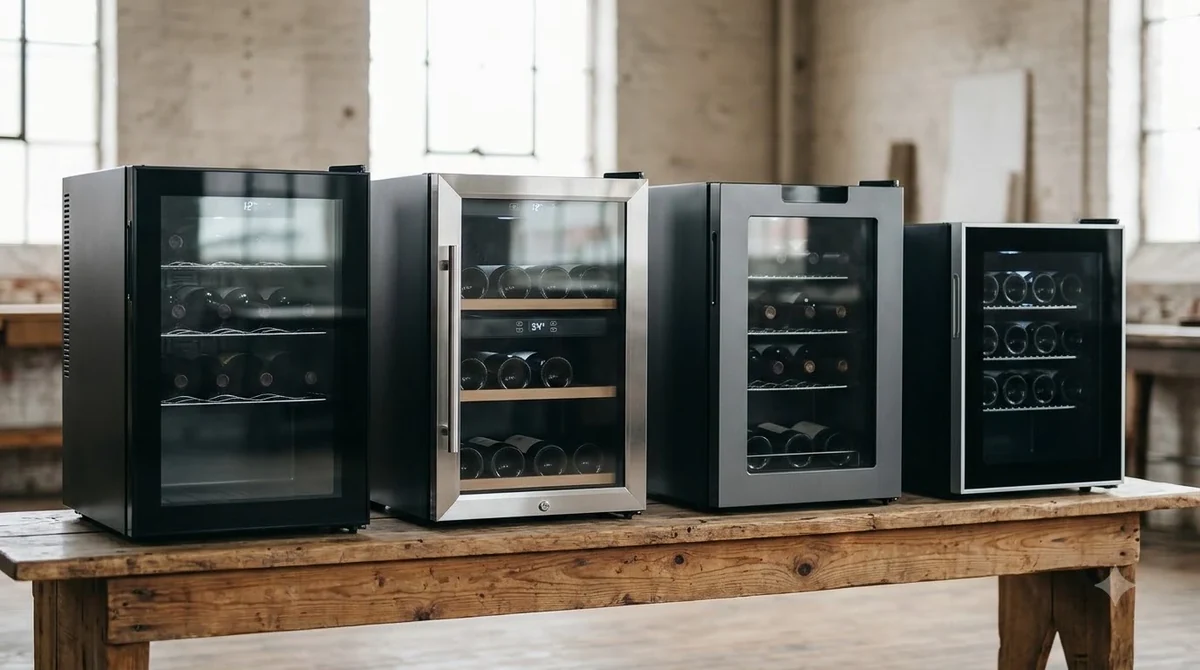
The difference matters particularly in kitchens with limited floor space. A freestanding cooler can be positioned beside a cabinet, in a dining area, or in a suitable home bar. However, its ventilation requirements must be respected, and the appliance should not be placed in a position where its cooling system cannot circulate air properly.
The Magic Chef HMWC44DZ is designed to accommodate built-in or freestanding installation. This makes it a more flexible option for buyers planning a dedicated under-counter wine storage area. Its 23.4-inch width and 34.4-inch height still require accurate measurements before installation.
The manufacturer’s installation manual specifies a minimum 24-inch cabinet cutout depth and approximately 34.5 inches of vertical clearance for its built-in installation diagram. It also explains that the door should project at least 1 inch beyond surrounding cabinets. These details matter because an appliance that fits inside an opening may still have insufficient room for its door to swing or shelves to extend.
Pay attention to the depth as well. The Magic Chef measures 24.4 inches deep, including its handle, and its manual provides specific installation guidance for cabinetry. A cabinet opening that appears large enough from the front may still be unsuitable if the door cannot open fully or shelves cannot extend far enough for convenient bottle access.
Danby’s compact DWC018A1BDB has a depth of 19.9 inches and a height of 20.1 inches. Its smaller footprint makes it easier to accommodate on suitable open floor or countertop space. Its freestanding design, however, should remain part of the installation plan.
For additional technical details, the Danby DWC018A1BDB manufacturer specifications identify its dimensions, installation type, capacity, and ventilation-related product guidance.
Both manufacturers emphasize the importance of proper positioning. Danby advises against placing its wine coolers in garages, porches, carports, and other uncontrolled environments. Magic Chef’s HMWC44DZ manual likewise says that the appliance is not intended for garage or outdoor installation.
For either brand, avoid direct sunlight and nearby heat sources such as ovens, radiators, and cooking equipment. Excessive surrounding heat can make it harder for a wine cooler to maintain its selected temperature.
Buyers planning a kitchen renovation should measure the complete opening rather than just the appliance body. Include door clearance, handle projection, electrical outlet placement, ventilation requirements, and enough room to remove shelves for cleaning.
Shelving, Bottle Access, and Interior Features
Danby emphasizes practical compact storage in the DWC018A1BDB, while the Magic Chef HMWC44DZ provides a larger interior with removable shelves and separate compartments. The better arrangement depends on whether you prioritize simple bottle organization or flexibility for a mixed wine and beverage collection.
The Danby DWC018A1BDB includes two vinyl-coated wire shelves and one staggered shelf. The staggered arrangement helps make use of its compact interior, and the shelves are intended to accommodate a smaller household collection. Its blue LED lighting makes the contents easier to see through the smoked glass door.
The Magic Chef HMWC44DZ has a more extensive arrangement. Its upper compartment accommodates up to 16 bottles, while the lower compartment holds up to 28. The owner’s manual describes removable shelving, with certain positions intended for beverage storage rather than wine bottles.
Its manual also explains that shelves can be removed to make room for larger bottles. This is particularly useful for collectors who purchase sparkling wines or bottles with wider bodies. However, removing shelves reduces the number of standard bottles that can be stored at once.
Another useful feature is the independent interior lighting. Magic Chef provides a separate light for each compartment, allowing users to see the contents without depending on the room lighting. Danby’s compact model instead uses blue LED illumination for its cabinet.
When comparing shelves, pay attention to bottle orientation. Horizontal storage is generally preferred for traditional cork-closed bottles because it helps keep the cork in contact with the wine. A rack should support bottles securely without allowing them to roll or touch one another excessively.
Collectors should also consider how frequently they retrieve bottles. A cooler with several compartments can make organization easier, but an inconvenient shelf arrangement can make everyday access frustrating. Grouping bottles by grape variety, region, drinking occasion, or intended serving temperature helps make a compact collection more useful.
For example, a household that regularly serves sparkling wine, Sauvignon Blanc, and Pinot Noir may want dedicated areas for different bottle shapes and serving needs. Buyers who store mostly standard 750 ml bottles may be satisfied with a simpler rack arrangement.
Build, Controls, and Everyday Convenience
Both brands offer useful everyday features, including glass doors and interior lighting, but the control experience differs between the representative models. Danby’s compact DWC018A1BDB favors a simpler appliance layout, while Magic Chef’s HMWC44DZ provides more extensive digital controls for its two storage zones.
The Danby DWC018A1BDB has a reversible door hinge, allowing buyers to choose whether the door opens from the left or right. This is a useful detail in a compact kitchen where a neighboring cabinet, wall, or appliance could otherwise obstruct access.
The reversible hinge is also available on the Magic Chef HMWC44DZ. Its digital controls allow users to adjust the upper and lower temperature settings independently. This is particularly helpful when different wines are stored together because changing the temperature in one compartment does not require changing the other compartment’s selected setting.
Danby’s larger DWC93BLSDR1 illustrates another level of functionality within the brand’s range. It accommodates 36 bottles, uses a mechanical thermostat, has automatic frost-free defrost, and provides five shelves. Its 43°F to 57°F temperature range makes it a different proposition from the smaller Danby model.
For buyers who prefer straightforward controls, mechanical temperature adjustment can be perfectly adequate. Digital displays are more convenient for reading numerical settings, but the presence of a digital interface should not be confused with a guarantee of more accurate real-world temperatures.
Door construction is another consideration. Both representative appliances use glass-front designs, which let users view their collections without opening the door. Danby’s DWC018A1BDB uses smoked glass, while Magic Chef’s HMWC44DZ has a tempered glass door.
Frequent opening can cause temperature fluctuations in either appliance. Keeping bottles organized and limiting unnecessary door openings can help maintain more consistent interior conditions.
Neither cooler should be treated as a substitute for a dedicated long-term wine cellar. Buyers storing particularly valuable bottles for extended aging should consider more specialized equipment with appropriate temperature stability, humidity management, and vibration control.
Warranty, Maintenance, and Long-Term Ownership
Warranty terms and maintenance requirements deserve as much attention as capacity and temperature settings. Danby publishes a 12-month parts and labor warranty for the DWC018A1BDB, while the Magic Chef HMWC44DZ documentation identifies separate warranty coverage for parts, labor, and its compressor.
Danby’s product information specifically states that the DWC018A1BDB includes 12 months of parts and labor coverage with in-home service. Its warranty information excludes installation and yearly maintenance, including cleaning. Buyers should retain their purchase documentation and confirm the applicable service conditions for their specific appliance.
Magic Chef’s HMWC44DZ warranty documentation specifies a one-year parts and labor period and a five-year compressor parts warranty for this model. This gives buyers an additional coverage detail to consider when comparing the two appliances.
These coverage periods are not directly interchangeable. A five-year compressor parts warranty does not mean that every repair, replacement component, or labor expense is covered for five years. Buyers should read the complete warranty document rather than comparing only the longest number.
Maintenance is relatively straightforward for both types of appliance. Keep the interior clean, check the door gasket for dirt or damage, and make sure the cabinet remains level. Dust and obstructions around ventilation areas can interfere with cooling performance.
Danby recommends cleaning the interior and exterior every few months using mild detergent and water. Harsh chemicals should be avoided because they can damage the appliance’s finish. Shelves should also be inspected and cleaned before bottles are returned to the cooler.
Transportation requires attention as well. Danby recommends allowing a unit transported on its side to remain upright for six hours before plugging it in. The Magic Chef HMWC44DZ manual recommends approximately four hours of upright settling time before connecting the appliance to power.
These instructions are model-specific, so buyers should follow the manual supplied with their exact appliance. Allowing the recommended settling period helps reduce the possibility of cooling-system problems following transportation.
For additional product-specific information, the Magic Chef HMWC44DZ official product page provides its bottle capacity, temperature range, installation type, dimensions, and available warranty documents.
For wine enthusiasts who entertain frequently, storage organization can also make serving easier. Keeping sparkling wine and white wine properly chilled before preparing drinks helps reduce last-minute preparation. The Aperol Spritz recipe offers one example of a drink that benefits from having chilled ingredients ready.
Which Should You Pick: Danby or Magic Chef?
Danby is the more straightforward choice for buyers who want a compact freestanding wine cooler, while Magic Chef is especially appealing if the HMWC44DZ’s 44-bottle capacity and two temperature zones match your storage needs. The best purchase is the model that fits your collection and installation space rather than the brand with the longest feature list.
Choose Danby if you want a smaller appliance for a modest collection. The DWC018A1BDB’s 16-bottle capacity, 43°F to 57°F temperature range, reversible door, and compact dimensions make it a practical option for apartments, small home bars, and kitchens with limited space.
Consider Danby’s larger models if you like the brand but need additional storage. The DWC93BLSDR1, for example, provides 36-bottle capacity in a taller cabinet. This gives Danby buyers an alternative between a compact 16-bottle appliance and the larger storage category.
Choose Magic Chef if you want a dual-zone configuration and more capacity in one appliance. The HMWC44DZ’s two independently controlled sections allow different wine categories to be stored at separate settings. Its built-in or freestanding installation capability is another useful advantage for a planned kitchen layout.
There are some important reasons to reconsider either choice. A 16-bottle Danby may quickly become restrictive for someone who purchases several cases of wine. Conversely, the Magic Chef HMWC44DZ may be unnecessarily large for someone who only keeps a few bottles on hand.
Buyers should also think about their actual wine habits. Someone who mostly drinks Cabernet Sauvignon and Merlot may not need separate temperature zones. A household that frequently serves Sauvignon Blanc, Chardonnay, Pinot Noir, and sparkling wine may find independent controls more useful.
Food and entertaining habits can influence the decision, too. For example, a household that frequently prepares chicken marsala may want to keep suitable bottles of Pinot Noir or Chardonnay available. The chicken marsala recipe offers a practical pairing inspiration for planning a small home wine collection.
For additional appliance comparisons, the Versus comparison section provides another way to evaluate competing products by their specifications and intended use.
Before ordering, verify the exact model number, dimensions, installation requirements, warranty coverage, and bottle capacity. These details are more useful than assuming that all Danby or Magic Chef wine coolers offer the same performance.
Frequently Asked Questions
Are Danby and Magic Chef wine coolers compressor-based?
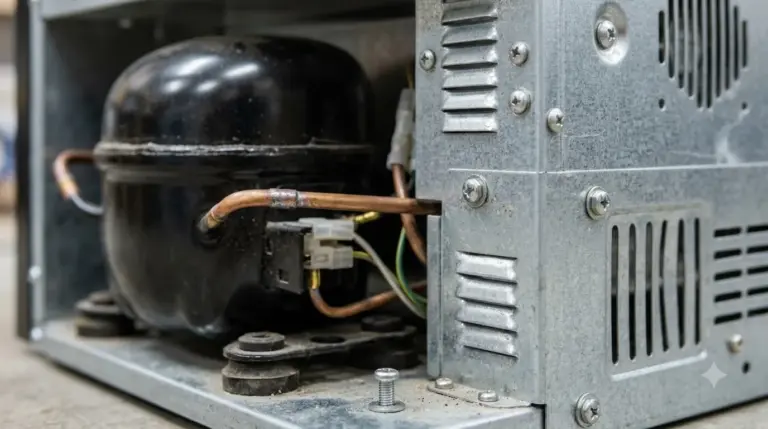
Cooling technology varies by model, so the brand name alone does not establish the system used in every appliance. The Magic Chef HMWC44DZ product specifications identify a compressor cooling unit. Buyers should consult the technical specifications for their selected Danby model before assuming it uses the same cooling arrangement.
Can wine coolers maintain humidity like a traditional wine cellar?
Most compact wine coolers do not provide the same level of dedicated humidity management as specialized wine cellars. A glass-door appliance is primarily intended to provide controlled cooling and convenient bottle storage. Collectors aging valuable wines for many years should investigate humidity specifications and environmental monitoring separately.
Do Champagne and sparkling wine bottles fit standard wine cooler shelves?
Not always. Champagne bottles often have wider bodies than standard Bordeaux bottles, and some sparkling wine bottles are heavier as well. Removing a shelf or changing its position can create additional clearance, but doing so reduces the advertised bottle capacity.
Should a wine cooler be connected to a dedicated electrical circuit?
Electrical requirements depend on the specific appliance and its installation instructions. The Magic Chef HMWC44DZ manual specifies a properly grounded 115V AC, 60Hz outlet and advises against using an extension cord. Have an electrician assess the installation if the available outlet or circuit does not meet the manufacturer’s requirements.
Can a wine cooler be used to store beverages instead of wine?
Some models support mixed beverage storage through removable or interchangeable shelving. The Magic Chef HMWC44DZ manual specifies a capacity of up to 63 cans in its upper compartment and 77 cans in its lower compartment when configured for beverages. Actual capacity depends on the shelf arrangement and beverage container dimensions.
Danby and Magic Chef both offer useful options for home wine storage, but they serve different needs across their model ranges. Danby deserves consideration for compact and straightforward storage, while Magic Chef’s HMWC44DZ is particularly attractive for buyers who need 44-bottle capacity and independent temperature zones. Compare the exact appliance specifications with your available space and wine collection before making your final decision.
More in Versus
 Edgestar Vs Kalamera: Choose the Right Wine CoolerUpdated Nov 21, 2026
 Frigidaire Vs Magic Chef: Compare Wine Cooler Features and FitUpdated Nov 21, 2026
 EdgeStar Vs Whynter Wine Coolers for Smarter StorageUpdated Nov 21, 2026
 Newair Vs Whynter: Choose the Right 46-Bottle Wine CoolerUpdated Nov 21, 2026
 Kalamera Vs Newair: Choose the Right Wine Cooler for Your HomeUpdated Nov 21, 2026
 Danby Vs Vinotemp: Choose the Right Wine Cooler for Your SpaceUpdated Nov 21, 2026