

We may earn a commission when you buy through links on this page, at no extra cost to you. Learn more.
Ca Lefort vs Wine Enthusiast comes down to whether you prefer a refrigerator with a specific capacity and feature set or a brand with more extensive published product information and a wider selection of wine storage options. Ca’Lefort offers attractive dual-zone refrigerator options, including a listed 28-bottle model, while Wine Enthusiast provides a broader range of documented configurations, including its 32-bottle Dual Zone MAX. For most buyers who prioritize comparing specifications, installation requirements, and warranty coverage, Wine Enthusiast has the advantage; Ca’Lefort remains worth considering when its particular dimensions and features match your needs.
Choosing a wine refrigerator involves more than comparing two brand names. Capacity, temperature consistency, bottle arrangement, ventilation, noise, and after-sales support all influence whether a cooler works well in your home. This comparison examines the Ca’Lefort CLF-WD15 and Wine Enthusiast 32-Bottle Dual Zone MAX as representative products, while also considering the broader product ranges offered by both companies. The distinction matters because neither brand sells just one type of wine refrigerator.
| Comparison | Ca’Lefort CLF-WD15 | Wine Enthusiast 32-Bottle MAX |
|---|---|---|
| Product category | Dual-zone wine refrigerator | Dual Zone MAX wine cooler |
| Listed capacity | 28 standard bottles | 32 standard Bordeaux bottles |
| Temperature range | 40°F–65°F | 41°F–64°F in both zones |
| Temperature zones | 2 | 2 |
| Cooling system | Compressor technology described in the product listing | Compressor cooling |
| Exterior | Stainless-steel frame and tempered-glass door | Full glass door with black trim |
| Dimensions | 15-inch product category | 33⅜”H x 19½”W x 17″D |
| Installation | Verify the individual model’s clearance and installation requirements | Freestanding; top and side ventilation |
| Published warranty information | Verify applicable refrigerator warranty | 1 year parts and labor; 3 years sealed system |
| Documentation | Product listing and model-specific manuals | Detailed product specification sheet and manuals |
Product Selection and Brand Differences
Ca’Lefort is a refrigeration-focused brand with wine coolers, beverage refrigerators, and other specialized cooling appliances. Wine Enthusiast is a wine-focused retailer and product brand offering a wider selection of storage configurations, from compact refrigerators to larger wine cellars.
That difference affects the buying experience. Ca’Lefort deserves consideration as an appliance option, particularly if a particular refrigerator offers the bottle capacity, appearance, and temperature controls you want. Its CLF-WD15, for example, is listed as a 15-inch dual-zone refrigerator with space for 28 standard wine bottles. The listing also identifies a stainless-steel frame and tempered-glass door.
Wine Enthusiast approaches the category with a more extensive range of choices. Its refrigerators include compact single-zone models, dual-zone units, undercounter cellars, and larger storage appliances. The 32-Bottle Dual Zone MAX is a useful comparison point because its manufacturer documentation identifies the temperature settings, electrical requirements, dimensions, shelving, and warranty.
Another important distinction is the amount of product-specific information available before purchase. Wine Enthusiast publishes detailed specifications for individual models, making it easier to compare physical dimensions and installation requirements. Ca’Lefort also has model-specific documentation, but information can be more fragmented across product listings and manuals.
Neither brand should be judged entirely by its name. A carefully selected Ca’Lefort refrigerator may be more appropriate than an unsuitable Wine Enthusiast model, especially when the available installation space is limited. Similarly, a larger Wine Enthusiast cellar may offer advantages that a smaller Ca’Lefort unit cannot match.
For a broader look at how competing wine storage appliances differ, the site’s Versus comparisons provide another useful starting point.
Bottle Capacity and Interior Organization
Wine Enthusiast has a small capacity advantage in this particular comparison, with 32 bottles versus the 28 bottles listed for the Ca’Lefort CLF-WD15. However, the difference of four bottles is relatively modest, and actual usable capacity depends on bottle shapes, shelf spacing, and storage arrangements.

The Ca’Lefort CLF-WD15 is listed for 28 standard 750 ml bottles. This should be adequate for someone maintaining a modest household collection, keeping a selection of everyday reds and whites, or reserving a few bottles for entertaining. Its 15-inch format is particularly relevant to buyers who want a narrower appliance rather than a larger refrigerator occupying substantial floor or cabinet space.
Wine Enthusiast’s 32-bottle Dual Zone MAX offers a little more room. Its published specification sheet identifies six storage racks, consisting of five wavy-wire racks and one fixed bin. The stated 32-bottle maximum is based on standard Bordeaux bottles, an important qualification for anyone storing wider Champagne bottles, large Pinot Noir bottles, or unusual bottle shapes.
Here is how the two products compare with other documented Wine Enthusiast capacities:
| Wine refrigerator | Maximum capacity | General use |
|---|---|---|
| Ca’Lefort CLF-WD15 | 28 bottles | Compact dual-zone storage |
| Wine Enthusiast 18-Bottle Slimline | 18 bottles | Narrow spaces and smaller collections |
| Wine Enthusiast 32-Bottle Dual Zone MAX | 32 bottles | Growing household collections |
| Wine Enthusiast Prestige S 24-inch | 46 bottles | Undercounter storage |
The Wine Enthusiast 18-bottle Slimline is especially interesting for apartments and narrow kitchens. Its published width is 10.7 inches, and it includes upright storage for up to four opened bottles. This is a different storage arrangement from a conventional wine-only refrigerator and may be more useful for households that regularly keep unfinished bottles.
For either brand, advertised bottle capacity should not be treated as a guarantee that every wine collection will fit. A standard Bordeaux bottle is relatively narrow, while Champagne and sparkling wine bottles generally require more space. Larger Burgundy bottles can also make some shelves less practical.
Think about your collection rather than your current bottle count alone. Someone who regularly buys six bottles at a time may outgrow a 28-bottle refrigerator more quickly than someone who purchases individual bottles for occasional dinners.
Temperature Control and Dual-Zone Performance
Both compared refrigerators are listed as dual-zone appliances, giving buyers separate temperature areas for different wine storage or serving requirements. Wine Enthusiast provides more detailed published information about how its two zones operate, while the Ca’Lefort CLF-WD15 listing identifies a comparable overall adjustment range.
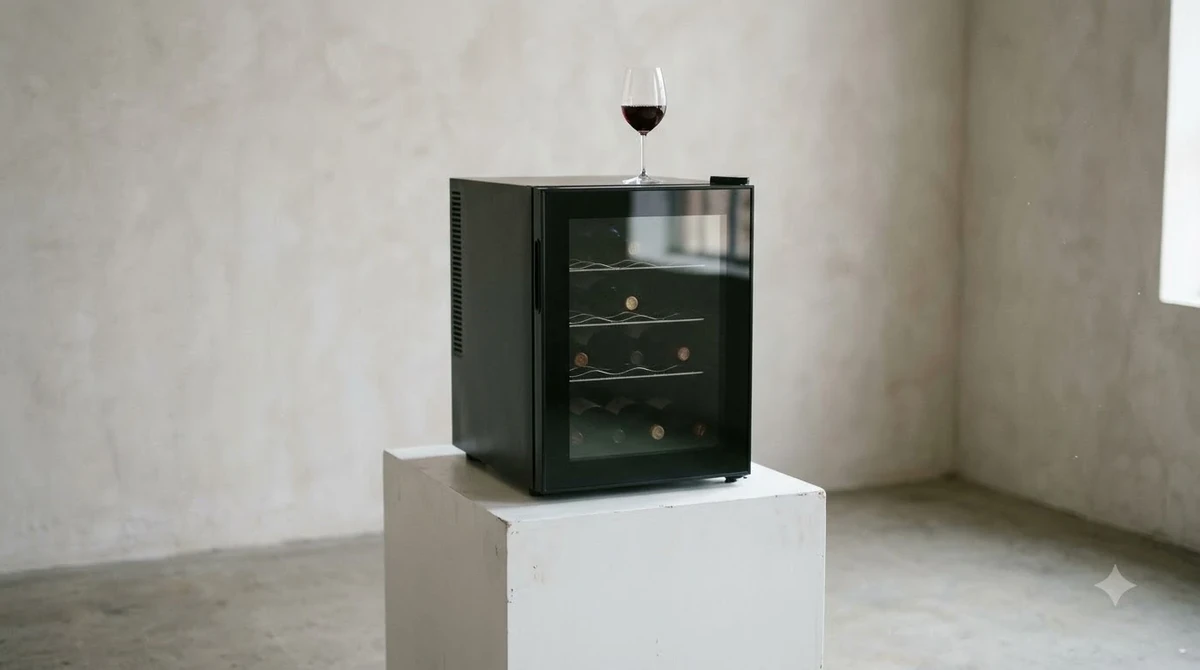
The Ca’Lefort CLF-WD15 listing specifies a temperature range of 40°F to 65°F. That range covers many common wine-serving requirements, including cooler settings for white wines and warmer settings for reds. However, buyers should confirm the individual compartment controls and their adjustment limits before relying on a particular temperature arrangement.
The Wine Enthusiast 32-Bottle Dual Zone MAX has two independently controlled compartments, each with a published range of 41°F to 64°F. Its Dual Zone MAX design also permits both compartments to operate at the same temperature when a more uniform storage environment is preferred.
This flexibility can be useful for someone whose collection changes over time. A household might initially use one compartment for whites and rosé and the other for reds. Later, the same owner could choose a more uniform temperature arrangement for a collection that is primarily intended for storage rather than immediate serving.
Understanding storage versus serving temperatures
One common mistake is assuming that red and white wines always require different long-term storage temperatures. Wine Enthusiast explains that most wines benefit from a relatively consistent storage environment of approximately 53°F to 57°F. Serving temperatures, however, vary considerably between wine styles.
For practical household use, these are useful serving guidelines:
- Sparkling wines: approximately 40°F to 50°F.
- Light white wines and rosé: approximately 45°F to 50°F.
- Full-bodied white wines: approximately 50°F to 55°F.
- Light-bodied reds: approximately 55°F to 60°F.
- Full-bodied reds: approximately 60°F to 65°F.
For example, Sauvignon Blanc generally benefits from a cooler serving temperature than a fuller-bodied Chardonnay. Pinot Noir is also usually served cooler than Cabernet Sauvignon. A dual-zone refrigerator can make these differences easier to manage when several styles are regularly available.
There is an important qualification: two temperature zones do not automatically mean that every compartment can provide ideal long-term storage conditions for every collection. Check the usable settings, temperature stability, and intended operating arrangement rather than assuming that a wider adjustment range necessarily means better preservation.
Wine Enthusiast’s explanation of single-zone versus dual-zone wine refrigerators provides additional guidance on choosing the right arrangement for storage and serving.
Dimensions, Installation, and Ventilation
Installation requirements can determine which refrigerator is practical before capacity or appearance enters the decision. The Wine Enthusiast 32-bottle model has published dimensions and a clearly identified freestanding configuration, while Ca’Lefort buyers should verify the exact measurements and ventilation requirements of the particular refrigerator they intend to purchase.
The Wine Enthusiast 32-Bottle Dual Zone MAX measures 33⅜ inches high, 19½ inches wide, and 17 inches deep. Its specification sheet identifies top and side ventilation. These details matter because a freestanding refrigerator needs sufficient clearance to release heat and maintain normal cooling performance.
The Ca’Lefort CLF-WD15 is described as a 15-inch refrigerator, which makes it potentially attractive for narrower spaces. However, the nominal product category is not a substitute for the complete installation drawing. Buyers should verify the overall width, depth, height, door swing, handle clearance, and ventilation arrangement before making a purchase.
There is also a distinction between freestanding and built-in refrigerators. A freestanding appliance may require open space around its ventilation outlets. A front-venting built-in model is designed differently and can be installed beneath a suitable counter when the manufacturer permits that application.
Never assume that a refrigerator advertised as suitable for a kitchen can automatically be placed inside an enclosed cabinet. Restricting airflow can interfere with heat removal, potentially causing inefficient cooling or additional wear on the refrigeration system.
Measuring the available space
Measure the opening at its narrowest point, not just the nominal cabinet width. Check the floor level, nearby electrical outlet, door opening direction, and the distance between the refrigerator and adjacent cabinetry.
For an undercounter installation, measure the countertop height and account for any required mounting or ventilation clearance. Also consider how much room is needed to open the door fully and pull out the shelves.
Wine Enthusiast’s compact range includes an 18-bottle Slimline measuring 10.7 inches wide, while its 46-bottle Prestige S model measures 24 inches wide. These examples show why choosing the correct model is more useful than deciding on a brand first.
Ca’Lefort may be the better fit if its actual dimensions suit an existing narrow opening. Wine Enthusiast is easier to evaluate across several installation categories because its product range includes both compact freestanding appliances and larger undercounter options.
Cooling Technology, Noise, and Construction
Both brands offer products using compressor-based refrigeration, but published specifications should be examined model by model. Noise ratings, door construction, shelving, and insulation are more meaningful purchasing considerations than broad claims about premium appearance or quiet operation.
The Wine Enthusiast 32-Bottle Dual Zone MAX uses compressor cooling and has a published noise rating of 40 dB(A). It also features a dual-pane mirrored glass door, electronic touch controls, a blue LED temperature display, and white LED interior lighting.
Its six-rack arrangement combines five wavy-wire shelves with one fixed bin. This offers a practical way to arrange standard bottles while leaving a designated area for different storage needs. The specification sheet also identifies an integrated handle and a right-side hinge.
The Ca’Lefort CLF-WD15 listing identifies compressor-based cooling, a stainless-steel frame, and a tempered-glass door. These features make the appliance visually appropriate for a contemporary kitchen or home bar. However, the available listing does not provide an equally complete noise specification or a detailed description of its shelf construction.
That difference in documentation should not be confused with proof that one refrigerator is quieter or more durable. It simply means that buyers have more published information with which to evaluate the Wine Enthusiast 32-bottle model.
Why noise matters
A wine refrigerator placed in a kitchen, dining area, or open-plan living room may operate close to people for much of the day. Compressor cycles, fans, and vibration can become noticeable in a quiet room, even when the appliance is functioning normally.
The 40 dB(A) rating for the Wine Enthusiast model provides a useful published reference point. Ca’Lefort’s separate KCC2-04 Wine Station manual specifies noise below 40 dB, but that is a different appliance and should not be used as the noise specification for the CLF-WD15.
For either refrigerator, placement can influence perceived noise. A level floor, stable positioning, unobstructed ventilation, and adequate space around the cabinet can help prevent avoidable vibration and operating problems.
Construction also deserves attention. A glass door makes bottle identification easier, but it is important to consider insulation, light exposure, and the way the door closes. An attractive exterior is useful, but it should not take priority over reliable temperature management and practical storage.
Tip: Before purchasing either brand, request the complete installation and specification documents for the exact model. Confirm the temperature settings, ventilation location, electrical requirements, door clearance, and usable bottle capacity rather than relying on a general brand description.
Warranty, Documentation, and Customer Support
Wine Enthusiast has an advantage in the amount of readily identifiable model documentation available for the 32-bottle refrigerator. Its specification sheet states a one-year parts-and-labor warranty and three years of coverage for the sealed system, giving buyers a concrete starting point for evaluating product support.
The published warranty information is particularly useful because wine refrigerators contain several components that can require service. Controls, lighting, fans, compressors, and sealed refrigeration components do not necessarily receive identical coverage. Understanding the difference between general appliance coverage and sealed-system coverage is important before buying.
Ca’Lefort also provides model-specific manuals and product support information. Its KCC2-04 Wine Station manual, for example, states a two-year warranty under normal conditions, subject to proof-of-purchase requirements and exclusions for certain types of damage or unauthorized repairs.
However, that warranty belongs to the KCC2-04 Wine Station. It should not be assumed to apply to the CLF-WD15 or another Ca’Lefort wine refrigerator. Buyers should request the applicable warranty document for the exact model and confirm the authorized service process.
The same principle applies to Wine Enthusiast. The one-year parts-and-labor and three-year sealed-system terms cited here belong to the specified 32-bottle Dual Zone MAX documentation. Other Wine Enthusiast models may have different terms.
What to check before ordering
Start by confirming who handles warranty claims. Determine whether service is provided through the retailer, manufacturer, or an authorized repair center. Ask whether replacement parts are available and whether a defective appliance must be shipped back or serviced locally.
Delivery conditions also deserve attention. Wine refrigerators can be heavy and awkward to move, particularly larger units. Check whether delivery includes bringing the appliance inside, unpacking it, and removing packaging materials.
Keep the receipt, model number, serial number, and installation documents together. If a temperature or cooling issue develops, these details can make a support request easier to process.
Documentation is one area where Wine Enthusiast makes the comparison easier for buyers. Its 32-bottle specification sheet gives a more complete technical picture than the available CLF-WD15 listing. That is a practical purchasing advantage, although it does not independently establish that its customer service will always be better.
For Ca’Lefort, the official brand website is listed as calefort.com. Buyers should use the official support channel to obtain the current warranty terms and model-specific assistance.
Which Should You Pick?
Wine Enthusiast is the stronger overall choice for buyers who want a well-documented selection of refrigerators and more options for matching capacity to installation space. Ca’Lefort is worth considering when a specific appliance offers the dimensions, bottle capacity, and design that fit an existing kitchen or home bar.
Choose the Ca’Lefort CLF-WD15 if you want a compact dual-zone refrigerator listed for 28 standard bottles and prefer its stainless-steel and glass-door appearance. Its 15-inch product category may be particularly appealing when space is limited. Before purchasing, however, confirm the full dimensions, ventilation requirements, exact temperature controls, and warranty applicable to the refrigerator.
Choose the Wine Enthusiast 32-Bottle Dual Zone MAX if you want a slightly larger collection capacity and clearly documented technical specifications. Its 32-bottle maximum, two independently adjustable compartments, 40 dB(A) noise rating, and published installation requirements make it easier to assess before ordering.
Wine Enthusiast also deserves consideration if you anticipate expanding your collection. Its range includes the 18-bottle Slimline, the 32-bottle MAX, and the 46-bottle Prestige S. These options make it easier to move between compact storage and larger configurations without treating every refrigerator as an equivalent alternative.
There are situations in which neither compared model is the best choice. If you want to age a substantial collection, a larger cellar may be more suitable than a 28- or 32-bottle refrigerator. If you mainly drink one wine style, a single-zone appliance may provide all the temperature control you actually need.
Think about how you use wine at home, too. Someone who regularly serves sparkling wine, Sauvignon Blanc, Chardonnay, and Cabernet Sauvignon may appreciate two temperature zones. Someone who mainly keeps bottles for occasional dinners may be better served by a smaller refrigerator with one consistent storage temperature.
For entertaining, a refrigerator is only one part of the preparation. A chilled bottle of sparkling wine can be used in an Aperol Spritz recipe, while a well-organized collection makes it easier to select a suitable bottle for dinner. If red wine is on the menu, a chicken Marsala recipe is another reason to keep an appropriate bottle accessible.
The final recommendation is to favor Wine Enthusiast for its documentation and broader selection, while keeping Ca’Lefort on the shortlist when a specific model fits your available space and storage requirements better. Comparing exact model numbers, rather than relying on brand reputation alone, is the most reliable way to make the decision.
Frequently Asked Questions
Is Ca’Lefort an American wine refrigerator manufacturer?
The available Ca’Lefort KCC2-04 Wine Station manual identifies China as that product’s country of origin. This information should not automatically be applied to every product sold under the brand. Buyers interested in manufacturing origin should verify the country listed for their particular refrigerator.
Can a dual-zone refrigerator store Champagne bottles?
Yes, provided the shelves and interior compartments accommodate the wider bottle shape. Standard Bordeaux bottle capacity does not guarantee equivalent Champagne capacity. Measure the bottle diameter and shelf spacing before purchasing, especially if sparkling wine makes up a significant part of the collection.
Can a wine refrigerator operate in a garage?
It depends on the appliance’s permitted ambient operating-temperature range. The Wine Enthusiast 32-bottle specification sheet identifies a suggested ambient temperature of 61°F to 90°F. An unconditioned garage that becomes colder or hotter than the specified range may not be suitable for reliable operation.
How long should a new wine refrigerator run before loading bottles?
Follow the manufacturer’s setup instructions, including any required upright settling period after transportation. Allow the cabinet to reach its selected temperature before filling it. The required waiting period can differ according to the cooling system, transportation conditions, and individual model instructions.
Does a glass wine refrigerator door protect wine from light completely?
No glass door should automatically be treated as completely blocking all harmful light. Door construction, glazing, and exposure conditions matter. Keep the refrigerator away from direct sunlight and avoid leaving interior lighting on unnecessarily, particularly when storing bottles for extended periods.
Ca’Lefort and Wine Enthusiast both offer options for organizing and chilling a home wine collection, but their products should be evaluated individually. Wine Enthusiast is the more straightforward recommendation for buyers who value detailed specifications and multiple capacity choices, while Ca’Lefort can be a sensible alternative when a particular model meets the space and storage requirements. Check the exact model documentation and warranty before ordering so the refrigerator you choose suits both your collection and your home.
More in Versus
 Edgestar Vs Kalamera: Choose the Right Wine CoolerUpdated Nov 21, 2026
 Frigidaire Vs Magic Chef: Compare Wine Cooler Features and FitUpdated Nov 21, 2026
 EdgeStar Vs Whynter Wine Coolers for Smarter StorageUpdated Nov 21, 2026
 Newair Vs Whynter: Choose the Right 46-Bottle Wine CoolerUpdated Nov 21, 2026
 Kalamera Vs Newair: Choose the Right Wine Cooler for Your HomeUpdated Nov 21, 2026
 Danby Vs Vinotemp: Choose the Right Wine Cooler for Your SpaceUpdated Nov 21, 2026