

We may earn a commission when you buy through links on this page, at no extra cost to you. Learn more.
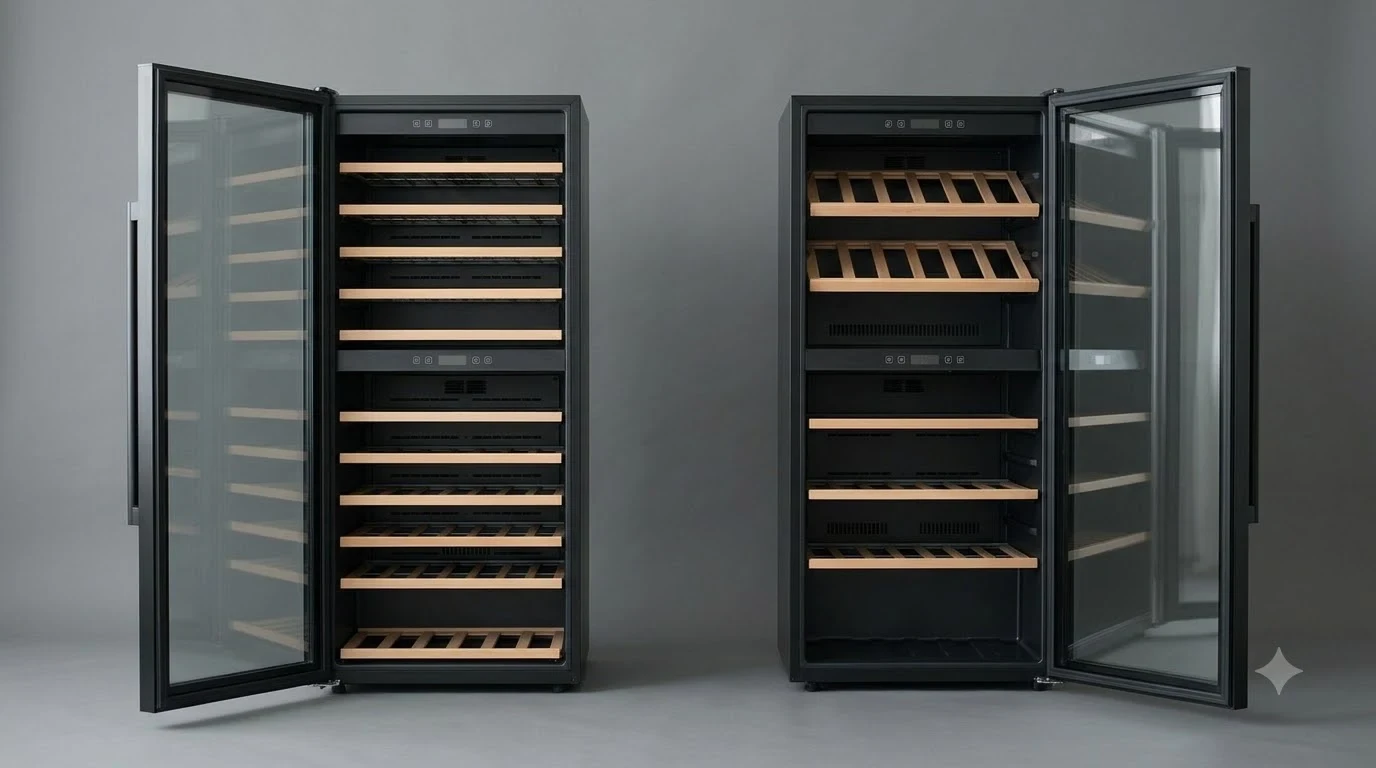
The kalamera 24 inch dual zone wine cooler is a flexible under-counter wine storage option for households that want separate temperatures for white and red wines in one appliance. The 46-bottle KRC-150DZB offers an upper zone adjustable from 40°F to 50°F and a lower zone from 50°F to 66°F. Its removable wooden shelves, reversible glass door, temperature memory, and built-in installation capability make it appealing, although actual capacity, operating noise, and long-term reliability deserve consideration before buying.
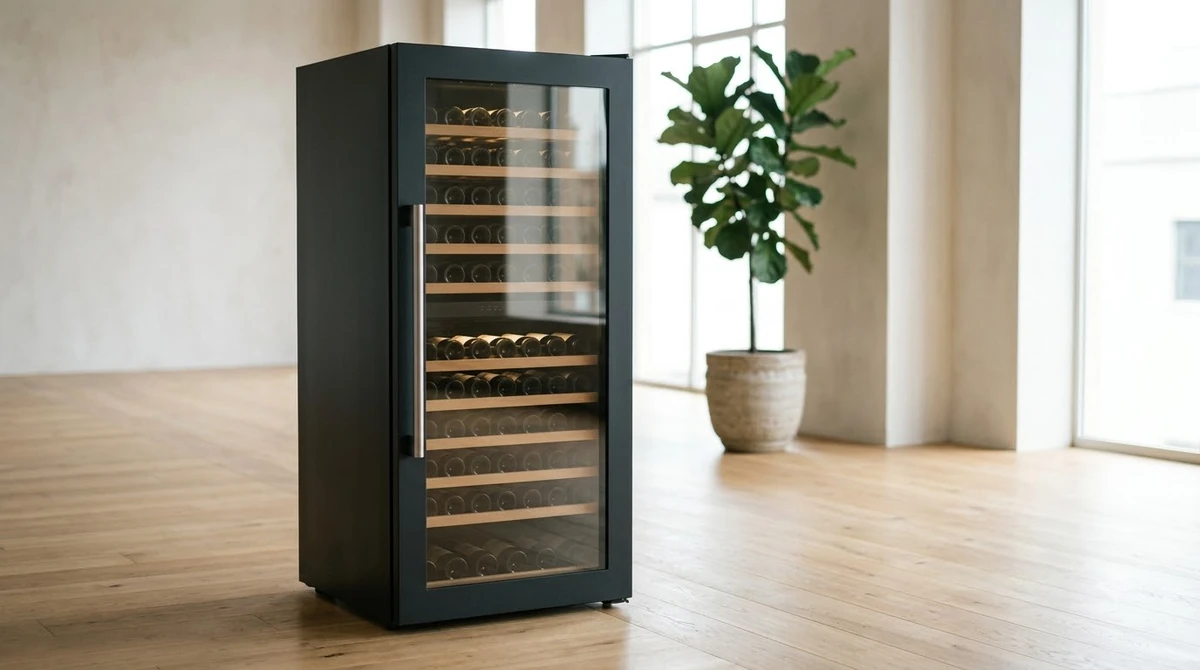
A dedicated wine refrigerator can make a noticeable difference in how conveniently a household stores and serves different bottles. Rather than keeping every wine at the same refrigerator temperature, a dual-zone appliance allows lighter whites and sparkling wines to occupy a colder compartment while fuller reds remain in a warmer environment. Kalamera’s 24-inch offering combines these functions in a cabinet-sized appliance designed for kitchens and home bars. The important distinction is choosing the correct model: the KRC-150DZB is the 46-bottle wine-only refrigerator, while Kalamera also sells a separate wine-and-beverage configuration. This review focuses primarily on the wine-only version and examines its specifications, reported ownership experiences, and practical limitations.
Specs and Key Features
The Kalamera 24-inch dual-zone wine cooler combines two independently adjustable compartments with a listed maximum capacity of 46 standard wine bottles. Its principal advantage is the ability to maintain separate storage and serving environments without requiring two refrigerators.
The KRC-150DZB measures 23.4 inches wide, 33 inches high, and 22.4 inches deep, according to Kalamera’s product specifications. That relatively compact footprint makes it a candidate for a kitchen island, beverage station, or under-counter cabinet opening designed for a 24-inch appliance. However, the advertised width should not be mistaken for a complete installation measurement: cabinet openings, door swing, leveling, and ventilation requirements all need consideration before the appliance is ordered.
The upper compartment operates between 40°F and 50°F, while the lower compartment operates between 50°F and 66°F. This division creates a practical arrangement for households that regularly serve both white and red wines. The upper zone can accommodate chilled Sauvignon Blanc, Riesling, sparkling wine, and other lighter styles, while the lower compartment provides warmer conditions for Cabernet Sauvignon, Merlot, and Syrah.
| Specification | Kalamera KRC-150DZB |
|---|---|
| Product category | Dual-zone wine refrigerator |
| Manufacturer-listed capacity | Up to 46 bottles |
| Capacity in liters | 150 liters |
| Width | 23.4 inches |
| Height | 33 inches |
| Depth | 22.4 inches |
| Upper temperature range | 40°F–50°F |
| Lower temperature range | 50°F–66°F |
| Shelf configuration | 5 removable wooden shelves |
| Shelf material | FSC-certified wood, according to Kalamera |
| Door | Reversible glass door with stainless-steel finish |
| Lighting | Interior LED lighting |
| Temperature memory | Yes |
| Net weight | 104 pounds |
| Rated voltage | 110–120V |
| Listed energy consumption | 0.91 kWh per 24 hours |
| Installation configuration | Built-in or freestanding |
These specifications are based on Kalamera’s product listing and instruction manual for the related KRC-46DZB configuration. The manual identifies the KRC-46DZB as a 150-liter model with the same listed dimensions and temperature ranges. The similar model designations make identification particularly important. Buyers should compare the actual model number rather than assuming every Kalamera 24-inch dual-zone refrigerator has identical dimensions or features.
The wooden shelves are another important part of the design. Kalamera describes them as FSC-certified, and the removable construction provides some flexibility when accommodating bottles that do not fit conventional rack spacing. Protective stoppers help prevent bottles from rolling out as shelves are pulled forward. The glass door provides visibility without requiring the refrigerator to be opened whenever someone wants to identify a bottle.
The temperature memory function is useful in households where power interruptions occasionally occur. According to the manufacturer, the appliance restores its selected temperature settings after power returns. That feature is convenient, but it should not be confused with a backup cooling system: it does not keep wine cold while electricity is unavailable.
For a closer look at other appliance categories and individual product assessments, the site’s Model reviews section provides additional buying context.
What Owners Like
Owner feedback highlights three recurring advantages: separate temperature settings, attractive presentation, and convenient installation. Buyers who regularly keep different wine styles at home particularly appreciate having a cooler that accommodates both warmer red-wine storage and colder white-wine service.
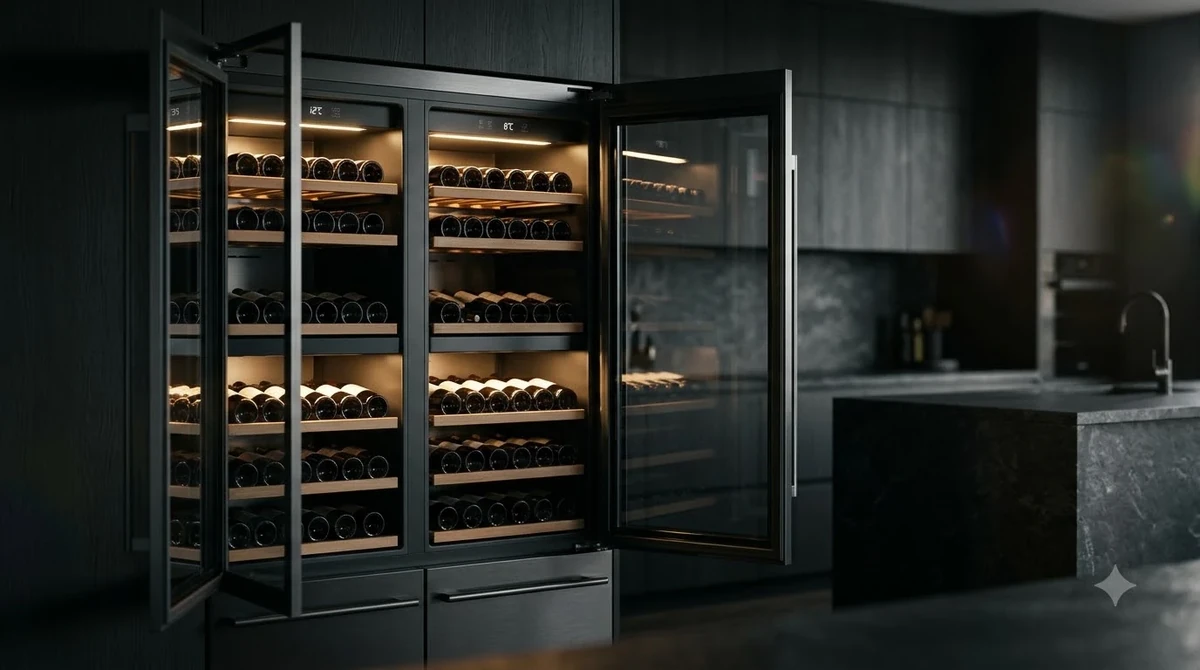
The dual-zone arrangement is arguably the product’s strongest practical feature. A Home Depot customer described using the lower compartment at 54°F as a staging area and the upper compartment at 40°F for bottles that needed additional chilling before serving. This illustrates how separate compartments can support a simple household wine routine without requiring a second appliance.
Temperature stability also appears in positive owner comments. Some Home Depot reviewers describe both compartments maintaining their selected settings, including one owner who reported successful operation over four years. Other customers praise the appliance’s appearance, particularly the glass front, stainless-steel details, and illuminated interior. These features can make a refrigerator feel like part of a kitchen design instead of an ordinary utility appliance.
The removable shelving receives attention for practical reasons. Standard 750 ml bottles are generally the easiest shape to accommodate, while removable shelves provide some flexibility for selected bottle formats. This matters to collectors who keep a mixture of everyday Cabernet Sauvignon, Chardonnay, Pinot Noir, and sparkling wine.
The reversible door is another useful design feature. Kitchen layouts differ, and a door that can be configured for the available opening may make installation more convenient. The instruction manual explains that door reversal involves removing and reinstalling hinge hardware and recommends having another person assist with the procedure. Correct alignment is important after the door has been repositioned.
Another appealing characteristic is the flexibility between built-in and freestanding placement. A homeowner might initially use the refrigerator in a separate beverage area and later incorporate it into a kitchen renovation. The manufacturer lists both configurations, although the specific installation instructions and ventilation requirements should govern the final placement.
The overall appeal is strongest for people who value organization as much as storage capacity. Separate zones allow different wines to be ready for their intended use, while the glass door makes it easier to identify bottles without repeatedly opening the refrigerator. For a home entertaining area, those conveniences can be more useful than a larger single-temperature refrigerator.
For example, someone preparing an Aperol Spritz recipe can keep sparkling wine chilled in the upper compartment, while other bottles remain available at a warmer setting in the lower section. This is a practical illustration of the convenience of separate temperature zones rather than a claim that the refrigerator is designed specifically for cocktail ingredients.
Common Complaints and Limitations
The most important drawbacks involve real-world bottle capacity, compressor noise, and inconsistent long-term ownership experiences. The advertised 46-bottle figure is a useful reference, but buyers should not assume every combination of bottle shapes will fit that maximum.
Wine bottle dimensions vary considerably. A traditional Bordeaux bottle has a relatively narrow profile, whereas some Burgundy-style Pinot Noir bottles and sparkling wine bottles have wider bodies. Those differences affect how many bottles can occupy a shelf simultaneously. Home Depot owners specifically mention reduced capacity with larger bottles, and some report that arranging bottles in alternating orientations is necessary to make better use of the available space.
This is particularly relevant for collections containing Champagne, Pinot Noir, and other wines sold in broader glass bottles. One Home Depot reviewer estimated that a collection dominated by Rhône, Burgundy, and sparkling bottles would reduce practical capacity to approximately 30 bottles. That is an individual ownership observation, not a manufacturer-guaranteed capacity figure. The practical solution is to plan around the bottle shapes already in the collection rather than buying according to the maximum number alone.
Noise is another recurring concern. Some owners describe the cooler as quiet and suitable for kitchen use, while others complain about audible compressor operation and frequent running cycles. One Home Depot reviewer specifically reported that the appliance was louder than a full-size household refrigerator. These contrasting experiences suggest that perceived noise can be an important purchasing consideration, particularly in open-plan homes.
Compressor-based cooling involves operating cycles, so complete silence should not be expected. A refrigerator positioned inside a closed kitchen cabinet may be less noticeable than one placed beside a living-room sofa or television. Buyers who are particularly sensitive to background noise should consider the intended location before committing to the appliance.
Reliability feedback is similarly mixed. Some owners describe several years of successful operation, while others report cooling problems or suspected component failures after approximately two to three years. A Home Depot reviewer described a failure after around three years and suspected a thermostat or compressor issue. Other reviewers describe shorter operating lifespans and difficulties obtaining satisfactory repair assistance.
Customer support is another area to investigate before purchase. Individual reviews describe different experiences with troubleshooting and assistance, so it would be misleading to promise a particular service outcome. Warranty duration, return eligibility, replacement-part availability, and the seller’s responsibility should be confirmed in writing.
Tip: Do not plan a collection around the advertised 46-bottle maximum. Count your wider Pinot Noir and sparkling wine bottles first, allow room for shelf movement, and leave some capacity available for future purchases.
Delivery condition also deserves attention. Glass doors and metal finishes can be vulnerable to handling damage during transportation. Inspect the cabinet, door alignment, hinges, and exterior finish when the refrigerator arrives. Documenting visible damage promptly can make it easier to resolve a delivery issue within the seller’s applicable return period.
The official Kalamera KRC-150DZB product specifications are useful for checking the advertised configuration before ordering. The instruction manual also provides important information about electrical requirements, installation, leveling, and operation.
Who Should Buy and Who Should Skip
The Kalamera 24-inch dual-zone cooler makes the most sense for households that want dedicated wine storage, have a suitable under-counter space, and regularly keep both red and white wines. Its temperature separation and relatively substantial listed capacity are more useful to a mixed collection than a refrigerator with one shared temperature setting.
For someone who regularly serves Chardonnay alongside Cabernet Sauvignon, the two compartments offer a straightforward organizational benefit. The upper zone’s 40°F to 50°F range supports colder white-wine service, while the lower zone’s 50°F to 66°F range allows fuller reds to remain warmer. A household that also serves Sauvignon Blanc, Riesling, and sparkling wines can use the colder compartment for those bottles.
It can also suit homeowners renovating a kitchen or creating a dedicated entertaining area. The 23.4-inch cabinet width and listed built-in configuration make it a potential candidate for an appropriately designed under-counter space. Its glass door and interior lighting are particularly attractive in a visible bar installation.
However, this is not necessarily the right refrigerator for someone who needs maximum bottle flexibility. Collectors with many oversized Burgundy bottles, Champagne bottles, or unusual formats may find the practical capacity restrictive. A larger refrigerator designed specifically around those bottle dimensions could be more suitable.
Noise-sensitive buyers should also consider another location or appliance if the refrigerator will sit immediately beside a quiet living area. Although some owners report satisfactory noise levels, others describe noticeable compressor operation. A buyer expecting silent operation may be disappointed.
Another reason to skip this model is a collection that consists almost entirely of beverages rather than wine. Kalamera’s separate KRC-150CB wine-and-beverage refrigerator is designed for a different purpose, with a manufacturer-listed capacity of 21 wine bottles and 75 cans. Its layout is better aligned with households that want dedicated space for cans as well as wine.
Likewise, a household that stores only one wine style may not need dual-zone cooling. Someone who primarily buys red wine or keeps a small selection of white wine could find a simpler single-zone appliance more practical. The extra temperature control is most valuable when both compartments will be used regularly.
Overall, the strongest buyer is someone with a medium-sized mixed wine collection, a suitable installation location, and realistic expectations about bottle capacity and compressor noise. Buyers who prioritize long-term repairability above all else should investigate service arrangements particularly carefully.
How It Compares to Alternatives
The most useful comparison is between the KRC-150DZB wine-only refrigerator and Kalamera’s separate 24-inch wine-and-beverage configuration. Although both belong to the same general product family, they address different storage priorities and should not be treated as interchangeable appliances.
The KRC-150DZB is designed around wine storage. Its five removable wooden shelves and separate upper and lower temperature ranges are intended to accommodate a collection that includes different wine styles. Its advertised capacity of up to 46 bottles is considerably more relevant to wine collectors than to households that mainly want a place for soda cans or other packaged beverages.
By comparison, the KRC-150CB has a manufacturer-listed configuration of 21 wine bottles and 75 cans. Its two zones are intended for different beverage requirements rather than dividing a larger wine collection between red and white storage. The manufacturer’s listing specifies a wine temperature range of 40°F to 66°F and a separate beverage range of 38°F to 50°F.
| Comparison | KRC-150DZB | KRC-150CB |
|---|---|---|
| Main purpose | Wine storage | Wine and beverage storage |
| Wine capacity | Up to 46 bottles | 21 bottles |
| Additional beverage capacity | No dedicated beverage capacity specified | 75 cans |
| Wine temperature range | 40°F–50°F upper zone | 40°F–66°F wine zone |
| Separate beverage zone | No dedicated beverage compartment | 38°F–50°F |
| Listed dimensions | 23.4 x 33 x 22.4 inches | 23.4 x 33.9 x 22.4 inches |
| Best suited to | Wine-focused collections | Mixed drinks and wine |
These are manufacturer-listed capacities and dimensions, not guarantees of identical usable space in every installation. The KRC-150CB’s beverage compartment is a meaningful advantage for someone who entertains frequently and wants cans ready for guests. On the other hand, a collector who wants room for dozens of standard wine bottles will probably find the KRC-150DZB’s wine-focused configuration more appropriate.
There is also an important distinction between a wine cooler and a conventional kitchen refrigerator. A household refrigerator is designed for general food storage and usually operates colder than the preferred serving environment for many wines. A dedicated wine cooler offers a more suitable temperature arrangement for bottles that are intended to remain available for serving or longer-term household storage.
Neither Kalamera configuration should automatically be considered a substitute for a professionally designed wine cellar. Collectors with valuable bottles intended for extended aging should consider temperature consistency, environmental conditions, vibration, and the manufacturer’s technical documentation as part of a broader storage decision.
For most households choosing between these two Kalamera configurations, the decision is straightforward: choose the KRC-150DZB when wine capacity and separate wine temperatures matter most, and consider the KRC-150CB when cans and other drinks deserve a dedicated compartment. A household that entertains with cocktails and wine can also use the Hugo Spritz recipe as inspiration for planning chilled sparkling wine service.
Frequently Asked Questions
Does the Kalamera 24-inch dual-zone cooler have a lock?
The KRC-46DZB instruction manual identifies two keys among the included spare parts, indicating a locking provision for that model. This can be useful in shared entertainment spaces or households where children might open the refrigerator unnecessarily. Confirm the lock and included keys on the exact model being purchased.
How long should the cooler stand before it is switched on after delivery?
Kalamera’s instruction manual recommends allowing the appliance to stand upright for approximately two hours before connecting it after transportation. It also recommends allowing the refrigerator’s temperature to stabilize for 24 hours before use. Follow the instructions supplied with the exact model, particularly if the appliance was transported on its side.
Can the shelves accommodate half bottles and unusual wine formats?
Removable shelving provides some flexibility, but unusual bottle dimensions can make standard rack spacing less useful. Half bottles may require different positioning, while unusually shaped bottles can reduce the number that fit on a shelf. Test the arrangement carefully rather than assuming every bottle format will be supported by the advertised capacity.
Can the cooler maintain different temperatures during seasonal weather changes?
The refrigerator has separate adjustable temperature controls, but its performance also depends on the surrounding installation environment. Extreme room temperatures, inadequate ventilation, and frequent door openings can affect cooling performance. A stable indoor location within the manufacturer’s operating requirements is preferable.
Should wine be stored upright or horizontally in this refrigerator?
For bottles sealed with natural cork, horizontal storage is a conventional choice because it keeps the cork in contact with the wine. This arrangement also makes efficient use of many wine refrigerator shelves. Screw-cap bottles can be stored upright or horizontally according to the available rack configuration.
The Kalamera 24-inch dual-zone wine cooler is a compelling option for households that want a dedicated wine refrigerator with separate temperature controls and an under-counter-friendly design. Its removable wooden shelves, glass door, and advertised 46-bottle capacity are attractive features, but buyers should account for oversized bottles, possible compressor noise, and mixed reliability reports. Compare the exact model number, verify installation requirements, and review the available warranty and return arrangements before making a purchase.
For meals served alongside wine from the cooler, a chicken Marsala recipe is another useful addition to a home entertaining menu. Matching the refrigerator’s two temperature zones to the wines regularly served at home can make everyday storage and entertaining more convenient.
More in Model Reviews
 Magic Chef 44 Bottle Wine Cooler Review for Flexible StorageUpdated Nov 21, 2026
 Whynter 164 Bottle Wine Cooler Review: Capacity, Features, and FitUpdated Nov 21, 2026
 Insignia NS WC16BK6 Review: Compact 16-Bottle Wine StorageUpdated Nov 21, 2026
 Wine Enthusiast Electric Blue Omega Review: Opening, Pouring, and Preserving Made EasierUpdated Nov 21, 2026
 Koolatron 20 Bottle Wine Cooler Review: Features, Fit, and PerformanceUpdated Nov 21, 2026
 NewAir AWC 330E Review for Home Wine StorageUpdated Nov 21, 2026