

We may earn a commission when you buy through links on this page, at no extra cost to you. Learn more.
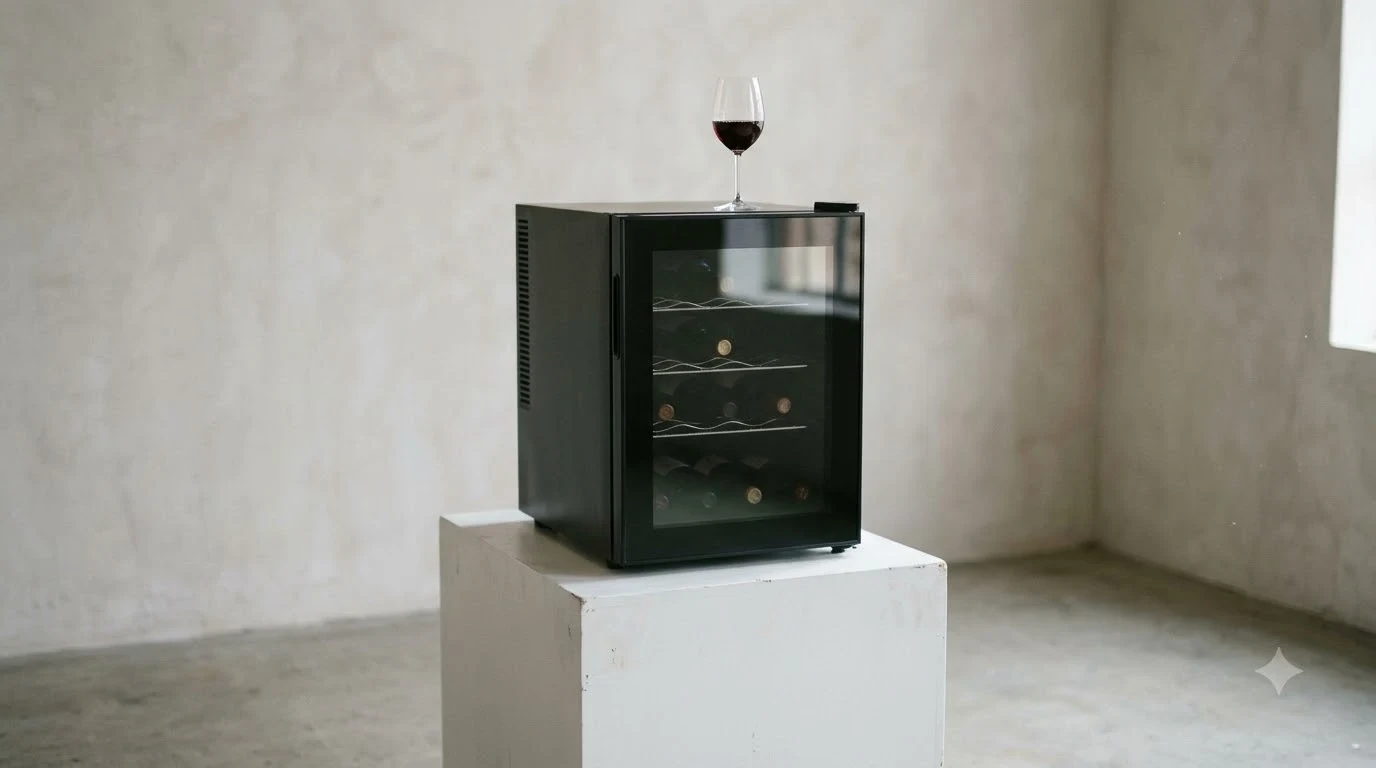
The Wine Enthusiast beverage cooler is a compact, freestanding refrigerator designed for chilling wine and everyday drinks, with compressor cooling, electronic temperature controls, and a 2.2-cubic-foot interior. The Evolution Series model 268 68 40 01 offers a temperature range of 34°F to 43°F, a UV-protected glass door, and a relatively small footprint. However, its limited temperature range, installation restrictions, and reported reliability concerns make it important to consider your intended use before choosing this appliance.
A dedicated beverage refrigerator can make a home bar more convenient without taking up the space required by a full-size refrigerator. Wine Enthusiast’s compact Evolution Series targets households that want chilled drinks within easy reach, particularly in smaller entertainment areas, kitchens, and living spaces. Its combination of compressor cooling and glass-door styling is appealing, but this is not a conventional wine-aging refrigerator. Understanding the difference between beverage chilling and wine storage is essential to deciding whether this model deserves a place in your home.
Specs and Key Features
The Evolution Series beverage center combines a compact cabinet with compressor refrigeration and adjustable electronic controls. Its strongest specifications are the 2.2-cubic-foot interior, 34°F to 43°F temperature range, and UV-protected glass door, although the available temperature settings are more appropriate for chilled beverages than traditional wine storage.
The model number is 268 68 40 01. Wine Enthusiast describes the cabinet as a freestanding beverage center with black steel construction, a glass door, and top-mounted blue LED lighting. The design makes it easier to see the contents without opening the refrigerator, while the tinted glass provides UV protection for stored bottles and cans.
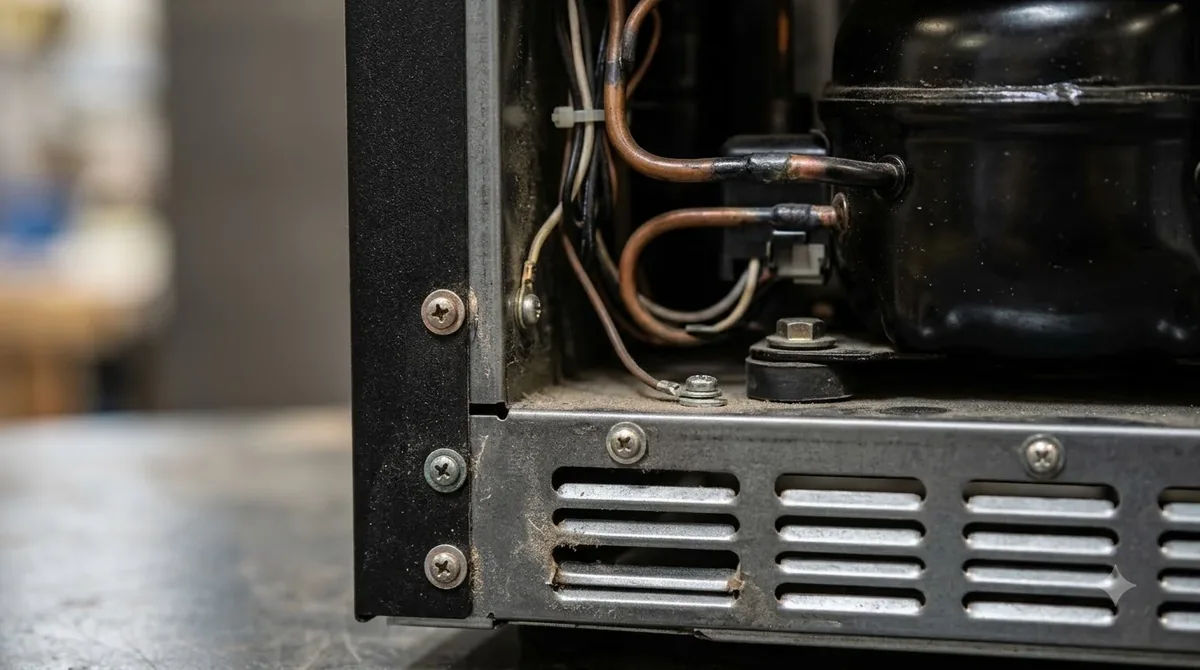
The compressor system is an important distinction. Unlike some small thermoelectric wine refrigerators, this appliance uses a compressor and R600a refrigerant. Compressor cooling is generally a practical choice for maintaining refrigerator-like temperatures, particularly when the goal is to keep soda, sparkling water, beer, and other drinks cold. The manufacturer also lists a normal temperature variance of plus or minus 4°F, so buyers should not assume the displayed setting represents an unchanging temperature at every shelf position.
The cabinet measures 17 inches wide, 18.75 inches deep, and 25.5 inches high, according to the manufacturer’s technical documentation. Its net weight is 45 pounds. Those measurements make it a relatively compact appliance, but the ventilation requirements still matter. The manufacturer identifies the top and sides as ventilation locations, meaning this refrigerator should not be treated like a built-in undercounter appliance.
| Specification | Wine Enthusiast Evolution Series |
|---|---|
| Model number | 268 68 40 01 |
| Interior volume | 2.2 cubic feet |
| Cooling technology | Compressor |
| Refrigerant | R600a |
| Temperature range | 34°F–43°F |
| Temperature variance | ±4°F |
| Rated noise level | 39 dBA |
| Dimensions | 17 x 18.75 x 25.5 inches |
| Net weight | 45 pounds |
| Electrical requirement | 115V / 60Hz |
| Installation | Freestanding only |
| Ventilation | Top and sides |
| Door | UV-protected tinted glass |
| Lighting | Top-mounted blue LED |
| Temperature controls | Electronic touch controls |
| Warranty | 1 year parts and labor; 3 years sealed-system parts |
One specification deserves particular attention: the 34°F to 43°F temperature range. This is considerably colder than the approximately 55°F storage environment commonly recommended for long-term wine storage. It is more useful for chilling beverages before serving than maintaining a collection of wines intended to mature over several years.
The official specifications also list one full-depth beverage rack and one half-depth beverage rack, with adjustable shelf spacing. That arrangement offers some flexibility for different beverage containers, but the actual number of drinks depends on their dimensions and how the shelves are configured. The manufacturer cautions that larger bottles can reduce usable storage capacity.
For a more detailed look at the manufacturer’s specifications and discontinued-product information, consult the Wine Enthusiast Evolution Series product page. The important distinction is that this is a beverage-focused refrigerator, not a dual-zone wine cellar with separate storage conditions for red and white wines.
What Owners Like
The most appealing characteristics of this beverage center are its compact dimensions, compressor-based refrigeration, and glass-door presentation. For a small household bar or entertainment area, those features can be more useful than the larger bottle capacity and specialized wine-storage features of a traditional cellar.
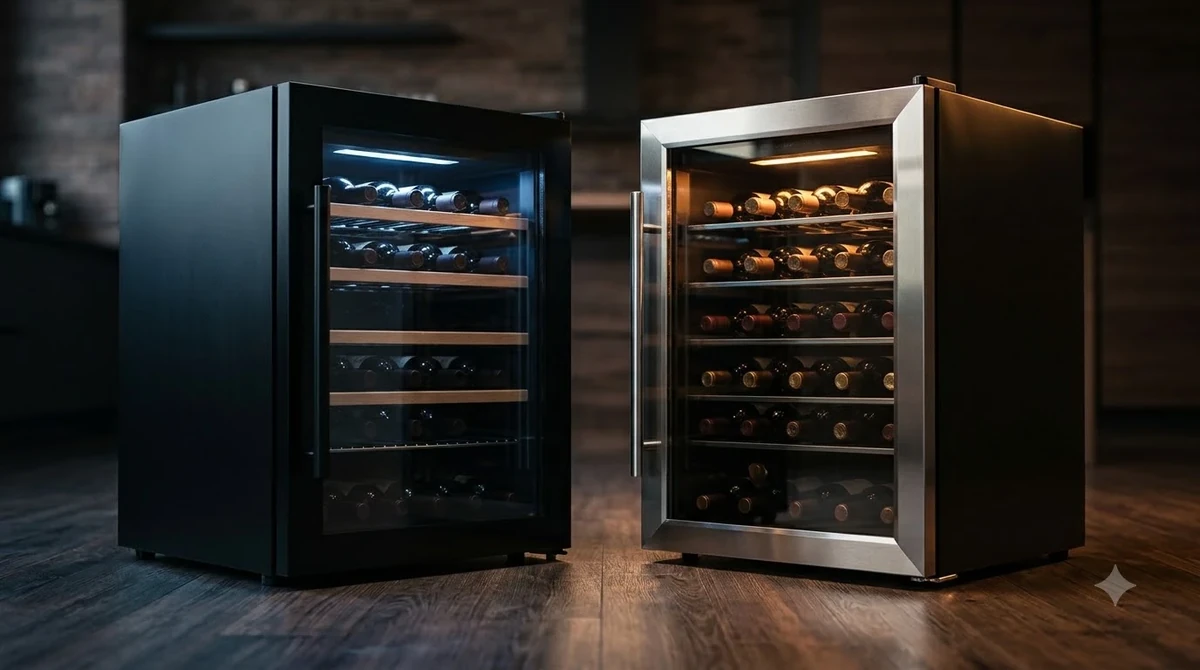
Compact proportions: At 17 inches wide and 25.5 inches high, the refrigerator can fit into locations where a full-size beverage appliance would be impractical. It is particularly attractive for homeowners who want a dedicated drinks refrigerator without sacrificing substantial cabinet or floor space. Its 45-pound net weight also makes initial placement more manageable than moving a large wine cabinet, although two people may still find handling the appliance safer.
Compressor refrigeration: The compressor design is suitable for beverage chilling at temperatures in the mid-30s to low-40s Fahrenheit. That range is useful for soda, bottled water, and many canned drinks. It also gives users a straightforward way to keep sparkling wine ready for serving, although the coldest setting is not appropriate for every wine style.
Glass-door visibility: A transparent, UV-protected door makes it easier to identify drinks before opening the refrigerator. This is a practical feature during gatherings because users can see what remains available without repeatedly checking the contents. The blue LED lighting also provides visibility in a dimly lit home bar.
Simple controls: Electronic temperature adjustment is easier to understand than a basic mechanical dial with no numerical display. The control interface provides an LED temperature readout and buttons for changing the setting. The manufacturer’s documentation also describes Fahrenheit and Celsius selection on the control panel.
Flexible beverage arrangement: The combination of full-depth and half-depth shelving gives users more options than a cabinet with only one fixed arrangement. Cans can be grouped together while taller bottles occupy a more suitable position. This flexibility is especially useful when the refrigerator serves multiple people with different beverage preferences.
Some buyers may also appreciate the manufacturer’s stated 39 dBA noise rating. This figure gives shoppers a useful specification for comparison with other beverage refrigerators. Actual perceived sound will depend on the room, surrounding surfaces, installation, and compressor cycling.
For people who entertain occasionally, the main attraction is convenience rather than specialized wine preservation. A chilled drink can be available without opening the main kitchen refrigerator, and the glass door makes the contents easy to monitor. That practical purpose is where the Evolution Series makes the strongest case for itself.
Common Complaints
The most significant concern is reported cooling reliability. Customer reviews at Lowe’s include complaints about refrigerators that arrived unable to cool, stopped working after several weeks, or lost cooling performance after approximately one year.
These reports should be considered carefully rather than treated as proof that every unit will fail. Online reviews represent individual experiences, and they cannot establish the failure rate across all manufactured units. Nevertheless, repeated complaints involving the same basic function deserve attention when comparing appliances.
Several Lowe’s reviewers specifically described problems with initial cooling performance. One purchaser reported that the appliance remained warm despite being plugged in and adjusted, while another described receiving a unit that did not work. Other reviewers reported that cooling stopped after a relatively short operating period.
The review history also illustrates why the warranty deserves more attention than cosmetic features. A beverage refrigerator that looks attractive but cannot maintain its selected temperature does not perform its primary job. Before purchasing an older or remaining-stock unit, buyers should establish exactly when the warranty begins, who handles service, and whether replacement parts are available.
Limited temperature flexibility: The 34°F to 43°F range is another important limitation. It does not provide the approximately 55°F environment normally preferred for storing wine over extended periods. A buyer expecting one appliance to chill beverages and preserve a collection of red wines at cellar temperature may be disappointed.
Installation restrictions: The manufacturer specifies freestanding installation only. The top and sides are ventilation locations, and the appliance should not be enclosed in a cabinet that blocks heat release. This restriction eliminates many potential installation locations in fitted kitchens.
Door limitations: The manufacturer does not list a reversible door or a locking mechanism. This may be inconvenient when the available room layout requires the opposite door swing or when the appliance will be placed in a shared entertainment area where access needs to be controlled.
Temperature fluctuations: The stated variance of plus or minus 4°F means the actual internal temperature can move around the selected setting. Frequent door opening, beverage loading, room temperature, and the placement of containers can also influence cooling performance.
There is also a distinction between the official product information and individual customer expectations. The manufacturer describes a compact beverage center, but buyers searching for a wine refrigerator may expect adjustable wine-storage temperatures, dual zones, or a large bottle capacity. Those are different appliance requirements.
For additional owner feedback, the Lowe’s customer review page is useful because it includes reports about cooling problems and initial product condition. Read both positive and negative experiences, and give particular attention to comments describing the length of ownership rather than relying only on first-week impressions.
Who Should Buy and Who Should Skip
The Wine Enthusiast Evolution Series is most appropriate for someone who needs a compact refrigerator for cold beverages and has a suitable freestanding location. It is less appropriate for a wine collector who needs long-term storage near 55°F or a homeowner who wants a refrigerator installed flush with kitchen cabinetry.
Who may appreciate this refrigerator
Small-home-bar owners: A compact refrigerator can provide convenient access to canned drinks, sparkling water, and other refreshments. Its glass door and blue lighting are particularly suitable for a casual entertainment area where visibility matters.
Apartment residents: The 17-inch width and 25.5-inch height may work in smaller rooms where a standard refrigerator would be too large. However, apartment buyers still need to account for the 18.75-inch depth, power access, door clearance, and ventilation space.
People who regularly serve cold beverages: The 34°F to 43°F temperature range is useful for drinks that benefit from refrigerator-level chilling. This includes many soft drinks and sparkling beverages, as well as some white wines intended for relatively cold service.
Occasional entertainers: A dedicated beverage center can reduce traffic around the kitchen refrigerator during a gathering. Guests can access drinks independently, and the visible contents make it easier to see when supplies are running low.
Who should consider another appliance
Wine collectors: Anyone planning to store bottles for several months or years should choose a wine refrigerator with a suitable storage temperature. A single-zone range that stops at 43°F does not offer the flexibility needed for conventional long-term wine storage.
Dual-zone buyers: Someone who wants to maintain red wines at approximately 55°F to 60°F and white wines at approximately 45°F to 50°F needs an appliance with separate temperature controls and a wider operating range.
Built-in kitchen planners: The freestanding-only design makes this model unsuitable for enclosed cabinetry. A proper built-in beverage refrigerator must have a ventilation system specifically designed for the intended installation.
Buyers prioritizing long-term reliability: The customer complaints about cooling failures make it sensible to compare warranty coverage, parts availability, and service arrangements before committing to this model. Someone who cannot tolerate a potentially inconvenient repair or replacement process may prefer a different appliance with a stronger documented service history.
Tip: Decide whether you primarily need a beverage refrigerator or a wine cellar before comparing models. A refrigerator that holds drinks at 38°F may be excellent for canned beverages but unsuitable for maintaining a collection of red wines near 55°F.
The best decision depends on the job rather than the appearance of the refrigerator. If your priority is convenient cold drinks in a compact space, the basic concept makes sense. If your priority is wine preservation, temperature flexibility and storage conditions should take precedence over a glass door or decorative lighting.
How It Compares to Alternatives
The Evolution Series occupies a different position from a conventional wine cellar, a dual-zone wine refrigerator, and a larger beverage refrigerator. Its compact footprint and cold operating range make it useful for everyday refreshments, but its limitations become more apparent when the requirements involve wine aging, larger bottle formats, or integrated kitchen installation.
Compared with a dedicated wine refrigerator: A conventional wine cooler is designed around horizontal bottle storage and wine-friendly temperature settings. Many single-zone wine refrigerators operate around the mid-40s to mid-60s Fahrenheit, while specialized cellars can maintain conditions closer to 55°F. That wider temperature flexibility is important for people who keep bottles beyond a few days or weeks.
The Evolution Series instead focuses on cold beverage storage. Its 34°F to 43°F range can be helpful for serving sparkling wine or refreshing drinks, but it is not a replacement for a cellar designed to hold wines at a stable storage temperature. Wine bottles can be temporarily chilled in this refrigerator before serving, but that is different from storing an entire collection there.
Compared with a dual-zone beverage center: A dual-zone appliance allows different compartments to operate at different temperatures. This can be useful when one side holds canned beverages and the other stores wine. The Evolution Series has one temperature zone, so every item shares the same cooling environment.
This difference matters in a household where one person prefers very cold sparkling water while another wants red wine closer to cellar temperature. A single-zone refrigerator cannot satisfy those different requirements simultaneously. For mixed beverage and wine storage, a dual-zone unit is generally the more flexible option.
Compared with a larger beverage refrigerator: A larger cabinet provides more room for cans, bottles, and containers with unusual shapes. The Evolution Series is easier to accommodate in a smaller space, but its 2.2-cubic-foot capacity limits how much can be stored at once.
Shoppers should compare actual internal dimensions rather than relying solely on advertised bottle or can counts. Tall bottles, wide cans, and unusual container shapes can reduce practical capacity. The shelf arrangement also affects how many drinks fit without blocking airflow or preventing the door from closing properly.
Compared with a thermoelectric cooler: Thermoelectric appliances often appeal to buyers looking for a small refrigerator without a conventional compressor. However, their cooling performance can be more sensitive to surrounding room temperatures. The Wine Enthusiast model uses compressor refrigeration, making it a more conventional choice for refrigerator-level beverage temperatures.
The Evolution Series is not automatically the better option simply because it uses a compressor. Noise, electricity use, repairability, temperature stability, and overall reliability still matter. The manufacturer’s 39 dBA rating provides one useful comparison point, but it does not resolve the concerns raised in customer feedback.
Shoppers considering a broader selection should also consult our best rated wine cooler recommendations. That comparison is more useful for buyers who need proper wine storage rather than a dedicated refrigerator for canned drinks.
For readers comparing other appliance categories, our Brand x Type reviews provide another way to evaluate specific product categories and their practical differences.
The main takeaway is straightforward: choose the Evolution Series for its compact beverage-focused design, not because it offers the most versatile wine-storage conditions. A larger or dual-zone appliance may cost more in space, but it can provide a better match for a household with multiple storage requirements.
Setup, Maintenance, and Warranty Considerations
Correct installation is particularly important for a compact compressor refrigerator. The manufacturer specifies freestanding placement, suitable ambient temperatures, and a properly grounded electrical connection, so buyers should prepare the installation location before moving the appliance into position.
The technical documentation identifies an ambient operating temperature of 60°F to 77°F. Placing the refrigerator near an oven, radiator, or direct sunlight can interfere with its cooling performance. A hot, poorly ventilated corner is not a good location for this appliance, even if the cabinet physically fits there.
Installation checklist
- Measure the location. Allow for the 17-inch cabinet width, 18.75-inch depth, and 25.5-inch height. Also account for door opening clearance and access to the power outlet.
- Confirm ventilation. The manufacturer identifies the top and sides as ventilation locations. Do not enclose the refrigerator inside closed cabinetry or block the ventilation openings.
- Choose a suitable room. Aim for an ambient temperature between 60°F and 77°F, and keep the refrigerator away from direct sunlight and heat-producing appliances.
- Prepare the floor. Place the appliance on a level, solid surface that can support the fully loaded refrigerator.
- Allow the appliance to settle. The model-specific manual recommends leaving the unit upright for approximately two hours before connecting it after transportation.
- Use a grounded outlet. Connect the appliance to a properly installed, dedicated grounded wall outlet using the required electrical supply.
- Allow cooling time. Let the refrigerator operate before loading it with drinks. Check the displayed temperature and confirm that the appliance is cooling consistently.
These steps are more than minor installation details. Compressor refrigerators release heat through their ventilation areas, and restricting those areas can interfere with normal operation. An appliance placed in a confined space may struggle to maintain its selected temperature, particularly when the room is already warm.
Everyday care
Keep the interior clean and avoid overloading the shelves. Distribute drinks evenly rather than concentrating heavy containers in one location. Leave sufficient room around the stored items so that the door closes correctly and the cooling system can circulate cold air.
Clean the interior with a soft cloth and an appropriate mild cleaning solution. Avoid abrasive pads and harsh chemicals that could damage the finish or interior surfaces. Before cleaning, disconnect the refrigerator from its power supply.
Pay attention to the door gasket as well. A damaged or dirty seal can allow warm air to enter, making it harder for the compressor to maintain the desired temperature. Inspect the seal periodically and remove dirt that could interfere with a proper closure.
Understanding warranty coverage
The official product page lists a one-year parts-and-labor warranty and a three-year sealed-system parts warranty. These are different coverage categories, so buyers should not assume that every repair is covered for the entire three-year period.
Ask the seller whether labor, diagnostic visits, replacement components, and transportation are included under the applicable warranty. It is also sensible to obtain written confirmation of the warranty start date and the procedure for reporting a cooling failure.
Because the product page identifies this particular model as no longer available, availability of replacement units and components may require additional investigation. A discontinued model can still be useful if it is properly supported, but an attractive purchase is less appealing if a failed control board, compressor, or other component cannot be obtained.
Keep the purchase receipt, model number, and serial number together. These details make it easier to identify the appliance when requesting technical assistance or making a warranty claim.
For a refrigerator with documented customer complaints about cooling performance, checking the return policy before delivery is especially important. A straightforward return process can make a substantial difference if the appliance does not reach its intended temperature after installation.
Frequently Asked Questions
Does the Wine Enthusiast beverage cooler have an automatic defrost system?
Defrost information should be confirmed against the documentation for the exact production version rather than assumed from another Wine Enthusiast refrigerator. Frost accumulation can depend on humidity, door-opening frequency, and operating conditions. Ask the seller for the model-specific defrost information before purchasing.
Can the Evolution Series refrigerator be used in a garage?
The manufacturer’s specified ambient operating range is 60°F to 77°F, so an unconditioned garage may fall outside its intended environment. Seasonal temperature extremes can affect refrigeration performance. A climate-controlled room is a more suitable location.
Does the refrigerator have a child safety lock?
The official specifications do not list a door lock or key for this model. Households that need restricted access should consider a beverage refrigerator with a dedicated locking mechanism. Do not assume that the electronic temperature controls provide a child safety feature.
Can sparkling wine be stored in this refrigerator?
Yes, the cold temperature range can be useful for temporarily chilling sparkling wine before serving. However, bottles should be positioned securely, and larger bottle shapes may reduce available space. For extended storage, a wine refrigerator with a more appropriate temperature range is preferable.
Does the refrigerator have Wi-Fi or smartphone temperature monitoring?
The manufacturer’s listed controls are electronic touch controls with an LED temperature display. The official product specifications do not identify a smartphone application or connected temperature-monitoring system. Buyers who want remote alerts should look for a model that explicitly documents those functions.
The Wine Enthusiast Evolution Series is an appealing compact beverage refrigerator on paper, with compressor cooling, UV-protected glass, and straightforward controls. Its limited temperature range and freestanding installation requirements narrow its usefulness, while owner reports of cooling failures make warranty and return-policy checks especially important. For everyday chilled drinks it has a practical concept, but wine collectors should prioritize a dedicated wine refrigerator with more suitable storage temperatures and stronger documented reliability.
More in Model Reviews
 Magic Chef 44 Bottle Wine Cooler Review for Flexible StorageUpdated Nov 21, 2026
 Whynter 164 Bottle Wine Cooler Review: Capacity, Features, and FitUpdated Nov 21, 2026
 Insignia NS WC16BK6 Review: Compact 16-Bottle Wine StorageUpdated Nov 21, 2026
 Wine Enthusiast Electric Blue Omega Review: Opening, Pouring, and Preserving Made EasierUpdated Nov 21, 2026
 Koolatron 20 Bottle Wine Cooler Review: Features, Fit, and PerformanceUpdated Nov 21, 2026
 NewAir AWC 330E Review for Home Wine StorageUpdated Nov 21, 2026