

We may earn a commission when you buy through links on this page, at no extra cost to you. Learn more.
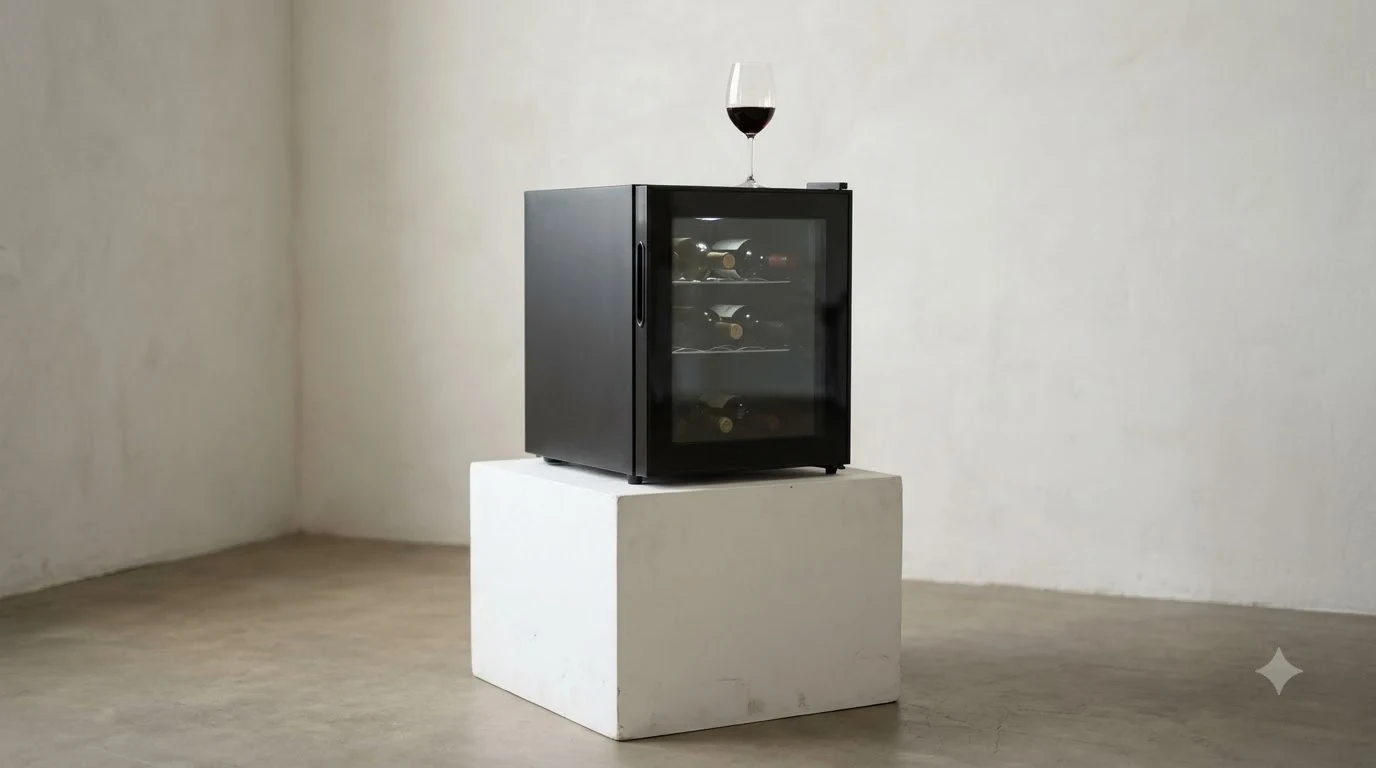
The vinotemp countertop wine cooler is a compact wine-storage option for households that want space for a small bottle collection, with the six-bottle VT-6TEDS serving as a useful example of the brand’s countertop designs. Its thermoelectric cooling system, adjustable 46°F to 66°F temperature range, glass door, and compact footprint make it appealing for everyday wine storage. However, its ventilation requirements, limited capacity, and sensitivity to surrounding temperatures mean it is not the right choice for every kitchen or wine collection.
Vinotemp’s countertop range deserves a closer look because the manufacturer’s product category covers compact appliances rather than identifying one universally available model. The VT-6TEDS provides a documented reference point for evaluating the format, but buyers should distinguish its specifications from those of other Vinotemp products. This review examines its features, practical limitations, ownership considerations, and the questions to resolve before purchasing a similar countertop refrigerator.
Specs and Key Features
The VT-6TEDS is a small, single-compartment wine refrigerator designed around a six-bottle capacity and adjustable temperature control. Its strongest selling points are its modest exterior dimensions, straightforward operation, and thermoelectric cooling system.
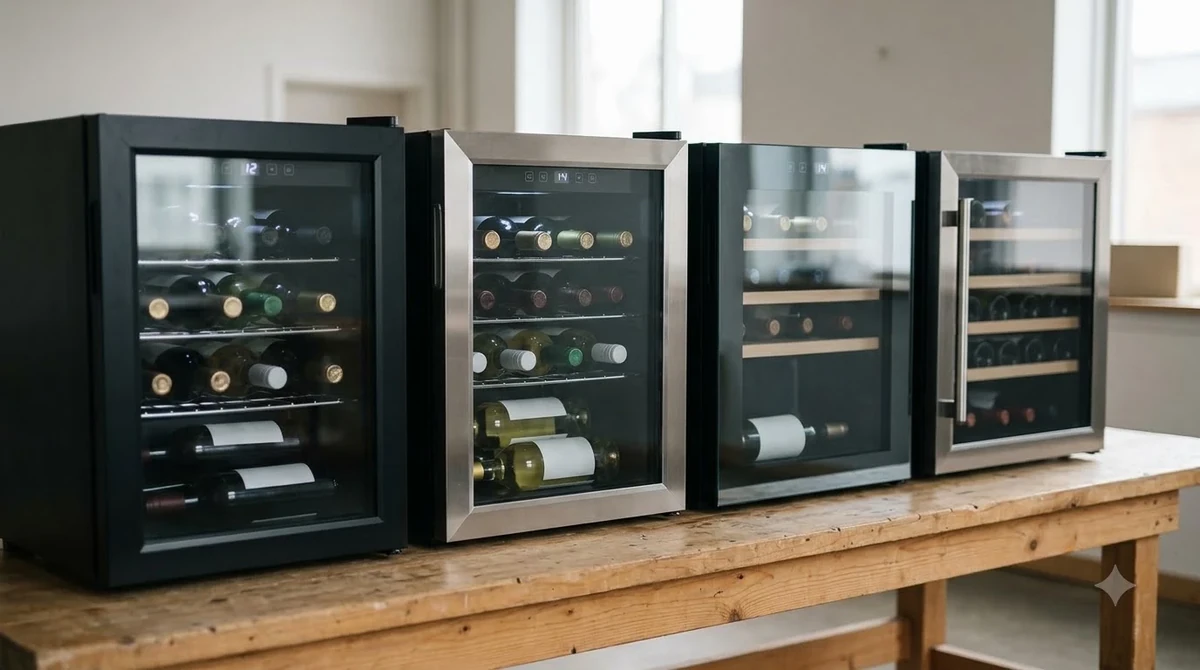
One important distinction is that this review uses the VT-6TEDS as a documented example, not as a claim that every Vinotemp countertop cooler has identical specifications. The manufacturer’s official owner’s manual library identifies multiple compact models, including the VT-6ECOSS-01, VT-6TEDS, and other products with different configurations. The current countertop collection also displays no listed products, making model availability something buyers should verify before ordering.
| Specification | Vinotemp VT-6TEDS |
|---|---|
| Rated capacity | 6 standard Bordeaux bottles |
| Interior volume | 16 liters |
| Temperature range | 46°F–66°F |
| Temperature adjustment | 1°F increments |
| Cooling technology | Thermoelectric |
| Input voltage | 110V |
| Frequency | 60Hz |
| Input power | 50W |
| Daily energy consumption | 0.5 kWh at 59°F |
| Dimensions (W × D × H) | 10.125 × 19.75 × 14.875 inches |
| Net weight | 25 pounds |
| Operating ambient temperature | 50°F–80°F |
| Shelves | 2 slide-out shelves |
| Door | Glass with magnetic seal |
These specifications come from the VT-6TEDS manufacturer’s manual. Its 16-liter capacity is intended for six standard Bordeaux bottles, not six bottles of every wine style. A broad sparkling wine bottle, a Champagne bottle, or an unusually shaped bottle can take up more room than a conventional Bordeaux bottle. Consequently, buyers with a collection dominated by sparkling wines should treat the stated capacity as a maximum rather than a guaranteed everyday arrangement.
Temperature control and cooling technology
The adjustable temperature range runs from 46°F to 66°F, with 1°F adjustments through the electronic control panel. That range offers flexibility for different serving preferences. For example, a light white or rosé can be served around 45°F to 50°F, while a fuller-bodied white generally benefits from approximately 50°F to 55°F. Light reds are commonly served around 55°F to 60°F.
The cooler uses thermoelectric refrigeration rather than a conventional compressor. This design is one of its defining characteristics. An iFixit repair guide for the VT-6TED describes the absence of a compressor and refrigerant system, while identifying cooling fans and electronic components as part of the appliance. The distinction matters because thermoelectric units depend heavily on the temperature surrounding the cabinet. They are not interchangeable with compressor refrigerators designed to cope with more demanding environments.
The manual also lists a soft interior light, glass door, temperature control panel, and two removable shelves. These features make the unit convenient for displaying a small selection of bottles while keeping them organized. The light has a separate switch, so owners can turn it off when display lighting is unnecessary.
Another useful specification is the documented energy consumption of approximately 0.5 kWh per 24 hours at a 59°F setting. Actual consumption can differ with room temperature, door openings, ventilation, and the selected temperature. The figure is a reference measurement, not a promise of identical daily electricity use in every household.
What Owners Like
The main attractions of a compact Vinotemp cooler are its small bottle capacity, simple controls, and display-friendly construction. For a household that regularly keeps four to six bottles available, this format can be more practical than dedicating floor space to a larger refrigerator.
The VT-6TEDS measures approximately 10.125 inches wide and 14.875 inches high, giving it a relatively narrow footprint compared with full-size wine refrigerators. Its depth, however, is nearly 20 inches, which is an important consideration for shallow counters. A buyer should measure the actual available surface rather than judging suitability from the width alone.
A manageable size for a small collection
A six-bottle cooler can serve a particular purpose in a home: keeping a small selection ready for meals, entertaining, or occasional wine purchases. It is not intended to replace a full wine cellar. Instead, it provides a dedicated location for bottles that would otherwise occupy a kitchen refrigerator, pantry shelf, or countertop wine rack.
Consider a household that regularly purchases Sauvignon Blanc, Chardonnay, Pinot Noir, and a bottle of sparkling wine. A compact refrigerator provides a designated place for a rotating selection. The temperature can be adjusted according to the wines being stored, although a single compartment cannot independently maintain different temperatures for different bottles.
The glass door also makes it easy to see the contents without opening the appliance. This is useful when choosing a bottle for dinner or checking whether the cooler needs restocking. Its interior light adds visibility, although keeping the door closed remains important for temperature stability.
Simple controls and flexible serving temperatures
The VT-6TEDS uses plus and minus buttons to change the target temperature by 1°F increments. This is more precise than a basic dial with broad temperature markings. An owner can choose 48°F for a sparkling bottle, 50°F for a lighter white, or 58°F for a lighter red, then adjust the setting when the contents change.
That flexibility is particularly useful for households that serve several wine styles. A bottle of Riesling may benefit from a colder serving temperature than a bottle of Chardonnay, while Pinot Noir generally works better slightly warmer than most crisp white wines. The adjustable range accommodates many of these preferences without requiring separate storage compartments.
However, the displayed setting should not be confused with a guarantee that every bottle has reached precisely the same temperature. Bottle position, loading, door openings, and ambient conditions can influence actual temperatures. A separate wine thermometer can help confirm the serving temperature when precision matters.
Display and everyday convenience
The two slide-out shelves offer access to the bottles without requiring owners to remove everything from the cabinet. The glass door and interior light also make the appliance suitable for a visible kitchen or dining area, provided the necessary ventilation space is available.
For entertaining, the format can make preparation easier. A bottle of sparkling wine can be chilled ahead of a gathering, while a white wine can remain available for dinner. For example, a cooler can support a relaxed meal featuring a chicken Marsala recipe, where a medium-bodied red or fuller white may be an appropriate pairing depending on the sauce and preparation.
The main advantage is organization rather than storage volume. Owners who buy a few bottles at a time may appreciate having a dedicated place for their current selection. People who purchase wine by the case, collect age-worthy bottles, or frequently serve large groups will probably find six positions restrictive.
Common Complaints
The most important limitations of the VT-6TEDS format are its small capacity, demanding clearance requirements, and dependence on room temperature. These are practical constraints that can affect daily convenience even when the appliance is functioning as intended.
Six bottles can mean less in practice
The advertised capacity refers to standard Bordeaux bottles measuring 750 ml. Wine bottles do not share one universal shape. Champagne bottles, sparkling wine bottles, some Burgundy bottles, and unusually wide specialty bottles may not fit in the same arrangement.
This limitation can become frustrating if a collection includes several bottle shapes. A six-bottle cabinet might hold fewer bottles than expected once wider bottles are introduced. Buyers should consider the dimensions of their most frequently purchased wines rather than relying exclusively on the headline capacity.
There is also a distinction between bottle capacity and usable storage. Six positions do not necessarily provide convenient space for accessories, opened bottles, or additional beverages. The manufacturer specifically describes this appliance as a wine cooler and warns against storing food because its interior may not reach a temperature sufficiently low to prevent food spoilage.
Ventilation takes up more room than expected
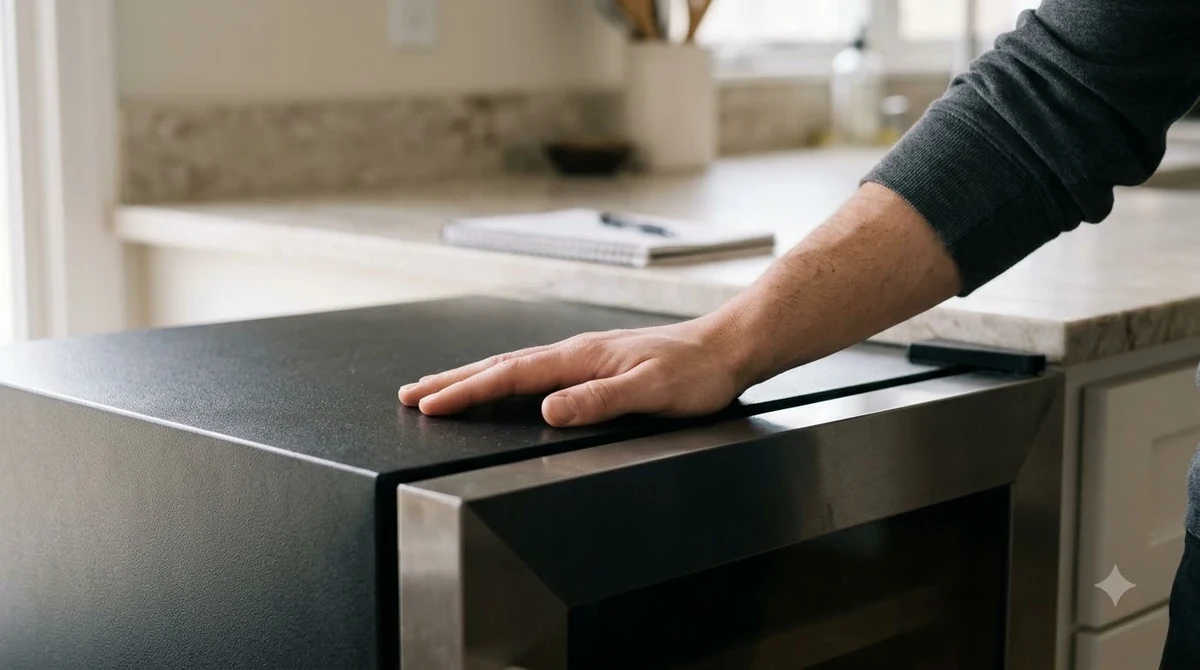
The VT-6TEDS manual requires at least 6 inches behind the appliance and 10 to 12 inches on each side. It also states that the top must remain unobstructed. These requirements can make the cooler considerably less convenient than its compact exterior dimensions suggest.
For example, placing a 10.125-inch-wide appliance on a narrow kitchen counter does not automatically make that location suitable. Adding the required side clearance can demand substantially more usable counter space. The nearly 20-inch depth also needs to be considered before the cooler is positioned against a wall.
The manufacturer explicitly identifies the unit as freestanding. It is not designed for installation under a counter or inside a cabinet. Anyone looking for a built-in wine refrigerator should compare models specifically designed and ventilated for that installation style instead.
Ambient heat can affect cooling performance
The recommended ambient operating range for the VT-6TEDS is 50°F to 80°F. A warm kitchen near a stove, an enclosed entertainment cabinet, or a sunlit countertop can create conditions that interfere with temperature regulation.
The manual explains that thermoelectric cooling operates relative to the surrounding air and that the appliance is not intended for hot garages, warehouses, or outdoor use. It also warns that the desired 46°F to 66°F interior range may not be reached when the surrounding environment is too hot or too cold.
This is an important difference between a small thermoelectric wine refrigerator and a more powerful compressor model. A compressor system may be more appropriate for a location with higher ambient temperatures, although its own installation requirements and environmental operating limits still need to be checked.
Noise and temperature consistency deserve attention
Thermoelectric does not mean completely silent. The VT-6TEDS includes cooling fans, and its electronic controls also contribute to operation. The iFixit repair guide documents the fans and circuit components involved in the cooling system. A fan-based appliance may be quieter than some compressor alternatives, but buyers should not assume that it produces no operating noise.
The manufacturer’s troubleshooting instructions identify several possible causes of poor cooling, including inadequate ventilation, frequent door opening, and an improperly sealed door. An appliance that is not level can also produce vibration or additional noise.
These issues are not proof that every unit develops a fault. They are useful diagnostic points for owners evaluating performance. A cooler that struggles to maintain its setting should be checked for proper positioning, door closure, ventilation, and appropriate room temperature before a service issue is assumed.
Who Should Buy and Who Should Skip
A six-bottle Vinotemp countertop refrigerator makes the most sense for households with limited wine-storage needs and a suitable, well-ventilated location. It is less appropriate for large collections, long-term cellar storage, or rooms that regularly exceed the manufacturer’s recommended ambient temperature range.
Who should consider this type of cooler?
Small households that typically keep a handful of bottles available are the clearest audience. A compact cooler can separate wine from ordinary food storage and make it easier to maintain a consistent target temperature. It can also suit someone who purchases wine for weekend meals rather than building a collection for long-term aging.
Occasional entertainers may appreciate having a few bottles ready for guests. A combination of Sauvignon Blanc, Chardonnay, Pinot Noir, and a sparkling wine can cover several common serving occasions, although the bottle shapes may affect how many fit simultaneously.
Apartment residents may also appreciate the small overall height and relatively narrow width. The important condition is having a counter or table that can accommodate the full depth and required clearance. A small appliance does not necessarily require a small amount of surrounding air space.
Who should choose another format?
Wine collectors with more than a dozen bottles should consider a larger refrigerator. A six-bottle unit offers limited room for inventory management, especially if purchases are made in groups or bottles are kept for different occasions.
People who want to age wine over several years should also consider a dedicated wine-storage solution with more suitable long-term environmental control. The VT-6TEDS has an adjustable temperature range, but a small countertop refrigerator should not automatically be treated as a substitute for a properly designed cellar. Long-term storage involves stability, protection from light, and suitable environmental conditions, not simply choosing a target temperature.
Buyers who want two distinct temperature zones should look for a dual-zone model. A single compartment cannot simultaneously maintain a dedicated temperature for sparkling wine and another for full-bodied red wine. A larger dual-zone appliance can offer more flexibility for a collection containing different wine styles.
Finally, people with a hot kitchen or limited ventilation space should skip this thermoelectric format unless the exact model’s requirements can be met. A compressor-based unit designed for the intended location may be a more appropriate purchase.
Matching capacity to actual wine habits
Capacity should be based on the number of bottles that need to remain chilled simultaneously, not just the number of bottles purchased in a typical month. Someone who buys four bottles and drinks them over several weeks may find a six-bottle unit adequate. Someone who keeps twelve bottles available for spontaneous entertaining will probably outgrow it quickly.
Also consider the mix of red, white, rosé, and sparkling wines. A single-zone appliance works best when the collection can share a reasonably practical temperature setting. If several styles need different serving temperatures, separate storage or a dual-zone refrigerator may be preferable.
For a broader comparison of capacities, cooling technologies, and installation formats, the best rated wine cooler options provide a useful starting point before choosing a compact appliance.
How It Compares to Alternatives
The VT-6TEDS is best understood as a small thermoelectric wine refrigerator rather than a general-purpose wine cellar. Buyers comparing it with other formats should focus on bottle capacity, cooling technology, installation requirements, and temperature-zone flexibility.
Thermoelectric versus compressor cooling
The clearest alternative is a compressor-based wine refrigerator. The VT-6TEDS uses thermoelectric technology, which avoids the conventional compressor and refrigerant arrangement. Its cooling performance is closely tied to the surrounding temperature, making it better suited to a controlled indoor location than a hot garage or outdoor setting.
Compressor refrigerators generally offer a stronger option for larger storage requirements and more demanding temperature conditions. They can be suitable for homes where room temperatures fluctuate, although the buyer must still observe the manufacturer’s ambient operating limits and ventilation instructions.
There is no universal winner between the two systems. For a small collection in a stable indoor room, thermoelectric cooling may be sufficient. For a larger collection or a warmer location, a compressor unit is usually the more sensible category to investigate.
Six-bottle versus larger wine refrigerators
A six-bottle unit prioritizes compact storage. Larger wine refrigerators provide more room for different bottle shapes, additional inventory, and sometimes multiple temperature zones. Their larger dimensions may also require floor space or a dedicated installation area.
The decision depends on how often the collection changes. Someone who keeps a few bottles ready for dinner may have little reason to buy a large appliance. A wine enthusiast who maintains separate selections of Cabernet Sauvignon, Pinot Noir, Riesling, and Champagne may benefit from greater capacity and more specialized storage arrangements.
Single-zone versus dual-zone storage
The VT-6TEDS has one temperature-controlled compartment. This is straightforward and avoids the complexity of managing separate settings, but all bottles share the same general storage environment.
A dual-zone refrigerator allows different temperatures in separate compartments. This can be useful for households that regularly keep sparkling wine, crisp whites, and reds ready for service. For example, sparkling wines are generally served around 40°F to 50°F, while full-bodied reds are better served around 60°F to 65°F.
Buyers should remember that storage temperature and serving temperature are not always identical. Wine can be stored at a stable temperature and brought to the appropriate serving temperature shortly before opening. A single-zone cooler can therefore work for a mixed collection if the owner is comfortable making those final adjustments.
Countertop versus freestanding and built-in designs
Countertop models suit small collections and rooms where a compact appliance is desirable. Freestanding wine refrigerators offer more capacity and can be positioned on a suitable floor surface. Built-in units are specifically designed for installation within cabinetry, with ventilation arrangements that differ from freestanding appliances.
The VT-6TEDS manual makes its installation classification clear: freestanding only, with substantial clearance around the cabinet. It should not be treated as a built-in appliance simply because its exterior dimensions appear compact.
For a buyer who wants an appliance beneath a kitchen counter, a purpose-built front-venting wine refrigerator is a better category to investigate. For someone who has a suitable counter or table with ample airflow, the countertop format may remain attractive.
Wine serving equipment also depends on the occasion. A dedicated cooler is intended to store several bottles, while a bottle chiller is generally used to bring an individual bottle to serving temperature. These are different functions, and they should not be confused when comparing compact wine appliances.
Frequently Asked Questions
The following answers address practical questions about the six-bottle Vinotemp example, including installation, temperature selection, and ownership. The distinction between the VT-6TEDS specifications and other Vinotemp models remains important when checking a particular appliance.
Does the Vinotemp VT-6TEDS have a reversible door?
The VT-6TEDS manual identifies an upper door hinge and a magnetic door seal, but it does not establish a reversible-door feature. Buyers who need the door to open from the opposite side should confirm hinge compatibility with Vinotemp before purchasing. Do not assume that another model’s installation options also apply to this one.
How long should the cooler stand upright before first use?
The manufacturer recommends leaving the VT-6TEDS upright for approximately two hours before connecting it to electricity after transportation. This allows the cooling system to settle following handling. The appliance should also be positioned on a solid, level surface before it is switched on.
Can the VT-6TEDS be used in a basement?
The manual does not recommend garage or basement installations and specifies an ambient operating range of 50°F to 80°F. A basement that consistently remains within suitable conditions may appear attractive, but the manufacturer’s installation guidance should take priority. Temperature extremes can interfere with the unit’s ability to reach its selected setting.
Does the VT-6TEDS require a special electrical outlet?
The manual specifies a 110V supply and a three-prong grounded electrical connection. It recommends connecting the appliance directly to a properly grounded outlet rather than using an extension cord or adapter. Buyers should confirm that their electrical supply matches the exact appliance’s rating plate before installation.
Can the interior light remain switched on continuously?
The VT-6TEDS has a separate interior-light switch, allowing the light to be turned on or off independently. However, the manual notes that interior temperature can vary depending on whether the light is on or off. Keeping the light off when it is not needed is a sensible way to prioritize temperature consistency.
The Vinotemp countertop wine cooler format is worth considering for a small collection that needs dedicated indoor storage, and the VT-6TEDS offers a useful example of its compact, six-bottle design. Its ventilation demands and temperature limitations deserve as much attention as its adjustable controls and glass door. Before buying, verify the exact model, confirm current availability, measure the installation area, and make sure the appliance matches the size and storage needs of your wine collection.
More in Model Reviews
 Magic Chef 44 Bottle Wine Cooler Review for Flexible StorageUpdated Nov 21, 2026
 Whynter 164 Bottle Wine Cooler Review: Capacity, Features, and FitUpdated Nov 21, 2026
 Insignia NS WC16BK6 Review: Compact 16-Bottle Wine StorageUpdated Nov 21, 2026
 Wine Enthusiast Electric Blue Omega Review: Opening, Pouring, and Preserving Made EasierUpdated Nov 21, 2026
 Koolatron 20 Bottle Wine Cooler Review: Features, Fit, and PerformanceUpdated Nov 21, 2026
 NewAir AWC 330E Review for Home Wine StorageUpdated Nov 21, 2026