

We may earn a commission when you buy through links on this page, at no extra cost to you. Learn more.
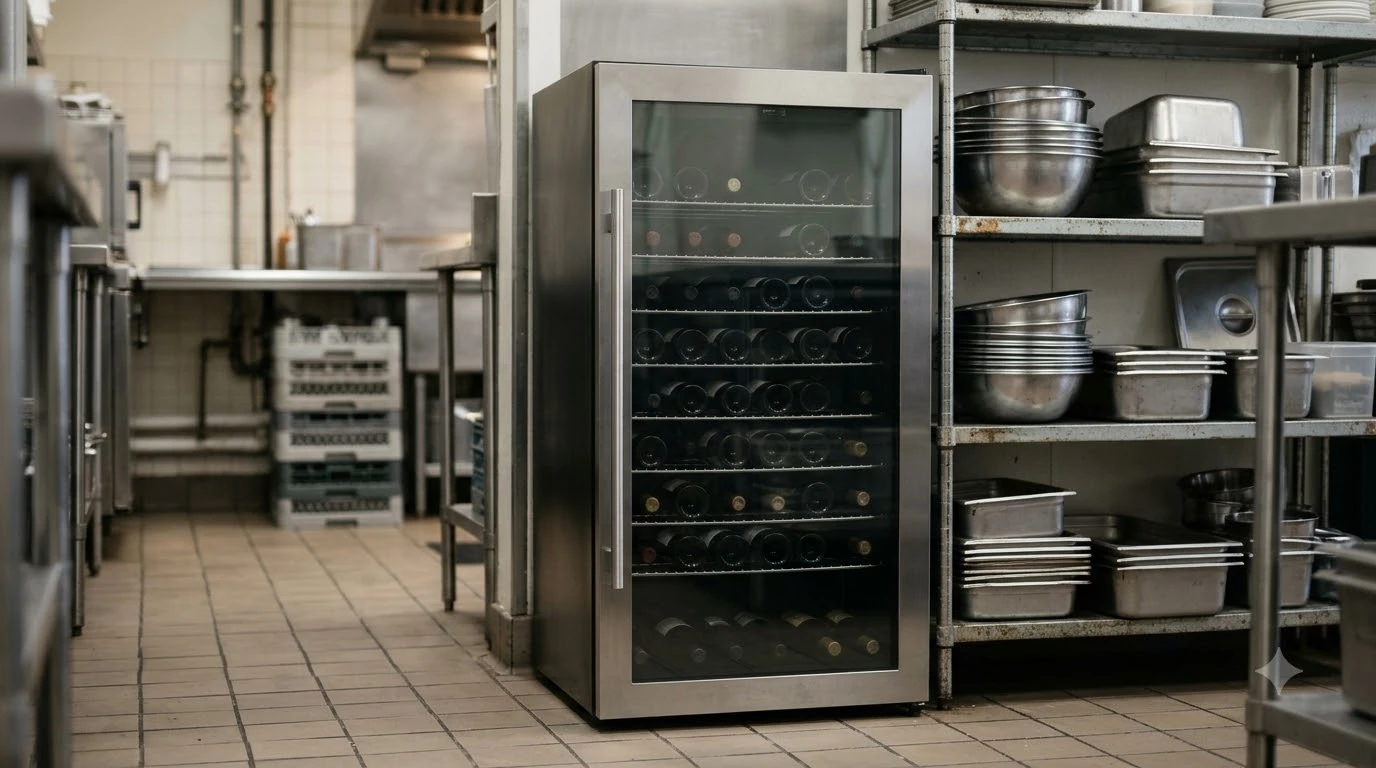
The Summit under counter wine fridge SWC1840B is a practical choice for homeowners who want built-in wine storage in an 18-inch cabinet opening, with room for up to 34 standard wine bottles. Its single temperature zone, reversible glass door, digital controls, and automatic defrost make it a convenient option for everyday wine storage. However, buyers should consider its single-zone design, installation requirements, and mixed owner feedback before choosing it over a dual-zone model.
Summit offers several undercounter wine refrigerators in different widths, capacities, and configurations. The SWC1840B is a particularly interesting option for kitchens where a full-size wine refrigerator would take up too much cabinet space. This review examines its specifications, practical advantages, owner experiences, limitations, and alternatives within Summit’s product range to help determine whether it fits your home and wine collection.
Specs and Key Features
The Summit SWC1840B combines an 18-inch cabinet footprint with a stated capacity of 34 bottles and a temperature range of 41°F to 68°F. Its built-in-capable design, automatic defrost, and reversible door make it a flexible choice for a dedicated kitchen wine-storage space.
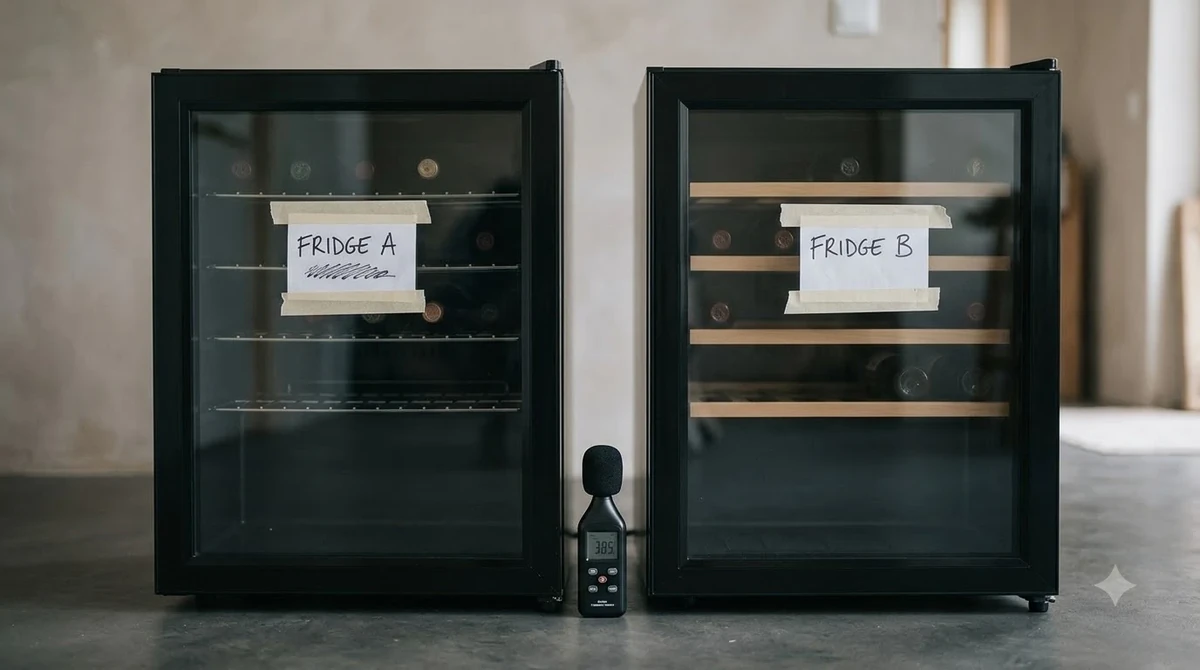
According to Summit’s official product specifications, the SWC1840B measures 34.25 inches high, 17.75 inches wide, and 23.5 inches deep. It has a 3.3-cubic-foot interior, weighs 95 pounds, and uses a standard 115V AC, 60Hz electrical supply. These measurements make it important to check the actual cabinet opening rather than relying only on the nominal 18-inch product category.
The refrigerator uses one temperature zone with digital thermostat controls. Its listed operating range is 41°F to 68°F, giving owners flexibility for different wine styles. Summit also specifies five wooden shelves, interior lighting, automatic defrost, and interior and exterior fans. A glass door with stainless steel trim provides visibility while maintaining a finished appliance appearance.
| Specification | Summit SWC1840B |
|---|---|
| Appliance type | Built-in-capable wine cellar |
| Nominal width | 18 inches |
| Actual width | 17.75 inches |
| Height | 34.25 inches |
| Depth | 23.5 inches |
| Interior capacity | 3.3 cubic feet |
| Rated bottle capacity | 34 bottles |
| Temperature zones | 1 |
| Temperature range | 41°F–68°F |
| Shelving | 5 wooden shelves |
| Defrost system | Automatic |
| Door | Glass with stainless steel trim |
| Door configuration | Reversible |
| Electrical requirement | 115V AC, 60Hz |
| Weight | 95 pounds |
| Parts and labor warranty | 1 year |
| Compressor warranty | 5 years |
| Listed sound level | 33.8 dB |
One important distinction is the difference between a single-zone refrigerator and a dual-zone wine cellar. The SWC1840B maintains one compartment temperature rather than providing independently controlled sections. This is convenient for collectors who primarily store one category of wine or prefer a consistent storage environment.
Summit’s published product information also identifies the model as suitable for residential or commercial applications. Its front-oriented ventilation design supports undercounter installation, while the finished cabinet provides flexibility for freestanding placement when the installation instructions are followed.
For the complete manufacturer specifications, dimensions, available options, and downloadable documentation, consult the Summit SWC1840B official product page.
What Owners Like
Owner feedback highlights the SWC1840B’s space-saving design, useful temperature adjustment, and ability to fit into kitchen cabinetry. Some buyers also appreciate its relatively quiet operation and attractive appearance, although individual experiences differ.
The 18-inch format is a major practical advantage. A conventional full-width wine refrigerator can require a substantial kitchen redesign, whereas this Summit model is intended for a narrower cabinet opening. Its 34-bottle capacity is substantial for an appliance of this width, making it attractive to households that want more than a small countertop cooler without dedicating an entire cabinet section to refrigeration.
Another positive feature is the reversible door. Kitchen layouts vary considerably, and the direction in which an appliance opens can determine whether it works comfortably beside a dishwasher, island, or neighboring cabinet. Being able to change the hinge orientation gives installers additional flexibility.
Home Depot customer comments also provide some encouraging examples. One owner reported that the SWC1840B maintained its selected temperature and operated quietly after installation. That owner also described receiving satisfactory assistance from a Summit representative when a minor electronic switch issue appeared.
Other positive comments mention the refrigerator’s appearance and its usefulness in a kitchen wine or beverage station. Its glass door makes bottle selection straightforward, while the wooden shelving gives the interior a more traditional wine-cellar appearance than a basic wire-rack beverage refrigerator.
The adjustable temperature range is another advantage. Owners can select a setting appropriate for the wines they store rather than relying on a fixed cooling level. This matters for households that regularly keep different bottles available for dinner, entertaining, or weekend gatherings.
For example, a household that primarily drinks Pinot Noir, Merlot, and Cabernet Sauvignon may prefer a moderate setting for storage, then briefly chill individual bottles to their preferred serving temperatures before opening them.
The capacity is also useful for organizing a modest collection. Five shelves provide distinct storage levels, allowing owners to group wines by grape variety, producer, drinking occasion, or intended opening date. This is more convenient than keeping bottles scattered across kitchen cabinets and a household refrigerator.
Automatic defrost is another useful convenience. Summit includes this feature to reduce routine maintenance compared with systems that require owners to manage manual defrosting themselves. It does not eliminate ordinary cleaning, but it simplifies one aspect of ownership.
Overall, the positive owner feedback suggests that the SWC1840B can work well as a compact, integrated wine-storage appliance when the installation and operating conditions are appropriate.
Common Complaints
The main concerns surrounding the Summit SWC1840B involve reported condensation, potential water accumulation, and the limitations of its single-zone configuration. Owner experiences should be considered alongside the manufacturer’s installation requirements rather than treated as proof that every unit will develop the same problem.
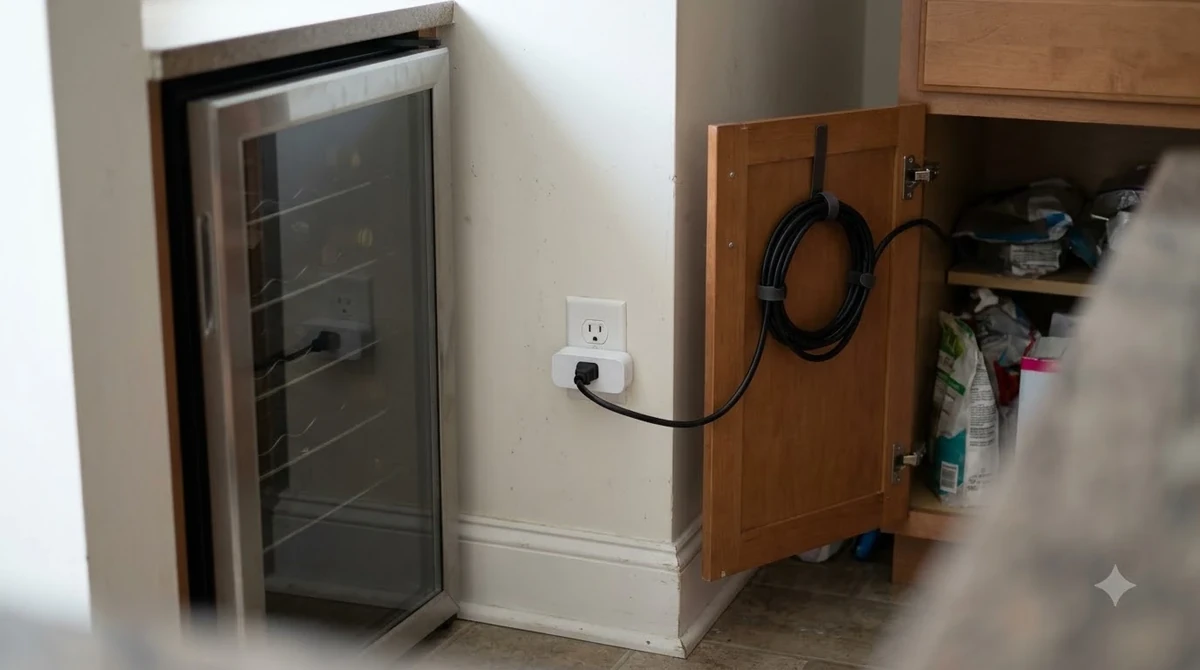
One particularly important Home Depot review describes condensation accumulating beneath a refrigerator purchased in 2022, followed by damage to nearby baseboards and surrounding building materials. This is a serious complaint because an undercounter refrigerator is installed close to cabinetry, flooring, and other materials that may be vulnerable to moisture.
A separate owner described a more positive experience with the appliance, noting quiet operation and satisfactory temperature maintenance. The contrast between these accounts demonstrates why it is important to examine multiple ownership experiences rather than relying on a single review.
Condensation deserves particular attention in kitchens with high humidity. Summit’s SWC1840B manual explains that moisture can form on the exterior glass door when humid air meets its cooler surface. In particularly humid conditions, water may drip from the door. This does not establish that every report of water beneath the appliance has the same cause, but it makes environmental conditions and moisture monitoring important considerations.
The single-zone configuration is another potential drawback. A wine collector who regularly serves sparkling wine, crisp Sauvignon Blanc, Chardonnay, and full-bodied Cabernet Sauvignon may prefer separate temperature settings. With only one zone, the SWC1840B cannot independently maintain different temperatures for different bottle groups.
Capacity is also less predictable than the headline figure suggests. Summit advertises storage for 34 standard 750 ml Bordeaux-style bottles and wider Burgundy-style bottles, but real collections contain bottles with different shoulders, diameters, and lengths. Sparkling wine and Champagne bottles can also occupy more room than conventional still-wine bottles.
The reversible door is helpful, but installation still requires careful planning. Summit lists a depth of 39.75 inches with the door open to 90 degrees. That is substantially greater than its closed depth of 23.5 inches, so the surrounding kitchen layout matters.
Noise is another consideration, even though the manufacturer lists a sound level of 33.8 dB. Actual operating sounds can include compressor activity, fan operation, and refrigerant movement. A refrigerator installed near a dining table or quiet living space may be more noticeable than one placed in a separate utility area.
Finally, the warranty deserves careful attention. Summit lists one year of parts and labor coverage and five years of compressor coverage for this model. Those are different forms of protection: a longer compressor warranty does not mean every repair, component, or service expense is covered for five years.
Potential buyers should also investigate local service availability, installation responsibilities, and the conditions under which warranty coverage applies. These practical details can matter as much as the refrigerator’s appearance or advertised bottle capacity.
Who Should Buy and Who Should Skip
The Summit SWC1840B is best suited to households with an available 18-inch cabinet opening, a collection of approximately 34 bottles or fewer, and a preference for one consistent storage temperature. Buyers who need separate red and white wine settings should investigate a dual-zone alternative.
Who should consider the SWC1840B?
Homeowners renovating a kitchen are among its most natural potential buyers. The refrigerator can be incorporated into an existing cabinet plan, creating a dedicated wine-storage area without requiring a large standalone appliance. Its relatively narrow footprint can be particularly useful in smaller kitchens and home bars.
It also suits wine drinkers who maintain a relatively consistent collection. Someone who regularly buys Bordeaux, Oregon Pinot Noir, Italian Chianti, and Spanish Tempranillo may appreciate the storage capacity and adjustable thermostat without needing multiple independent zones.
Entertainers can benefit from having bottles readily accessible. A dedicated wine refrigerator makes it easier to organize bottles for dinner parties, family celebrations, and casual gatherings. The glass door also allows owners to see the available selection without repeatedly opening the appliance.
Restaurants, tasting rooms, and other commercial environments may also consider this model because Summit identifies it as commercially approved. However, commercial buyers should verify that the product’s capacity, sanitation listing, and operating characteristics match their actual requirements.
Who should skip it?
Collectors who regularly drink both white and red wines at different serving temperatures should consider a dual-zone model instead. For example, serving a Sauvignon Blanc at 48°F while keeping a Cabernet Sauvignon in a warmer section is easier with independent temperature controls.
Buyers with many Champagne, sparkling wine, or unusually shaped bottles should also be cautious about assuming that all 34 spaces will be usable. A bottle-count rating is a standardized capacity measurement, not a guarantee that every collection will fit in the same arrangement.
Those who need substantial long-term wine-aging capacity may prefer a larger cellar with more room for inventory growth. The SWC1840B is a compact storage solution, not a substitute for a dedicated large wine room.
It may also be unsuitable for buyers who cannot meet the installation requirements or who have no practical way to manage potential moisture around nearby cabinetry. Anyone planning to install the refrigerator in a particularly humid kitchen should pay close attention to environmental conditions.
How It Compares to Alternatives
Summit’s product range includes several undercounter wine refrigerators with different widths, capacities, and configurations. The most important comparison is between the SWC1840B’s 34-bottle single-zone layout and alternatives offering two zones, a narrower cabinet footprint, or a larger storage area.
The SWC182Z is a particularly relevant alternative because Summit lists it with the same approximate external dimensions as the SWC1840B. However, the SWC182Z uses two temperature zones, giving buyers a different storage arrangement within a similar cabinet footprint.
According to Summit’s undercounter product comparison, the SWC182Z accommodates up to 28 Bordeaux-style bottles or 22 Burgundy-style bottles. This is a lower stated capacity than the SWC1840B, but the additional temperature flexibility may be more valuable to households with varied wine preferences.
Another option is the SWC530BLBISTCSS. Summit describes this as a two-zone undercounter wine cellar with room for up to 46 standard Bordeaux bottles. It can alternatively accommodate 40 wider Burgundy-style bottles together with six Bordeaux bottles.
That model is particularly relevant for buyers who want a larger collection and independent temperature settings. Its specifications and installation requirements should be evaluated separately rather than assuming that the capacity and dimensions are interchangeable with the SWC1840B.
At the opposite end of the range, the SWC007 is a specialized six-inch-wide wine cellar. Summit lists its dimensions as 32.25 inches high, 5.88 inches wide, and 20.75 inches deep, with capacity for seven bottles. It is an unusual solution for homeowners who have a very narrow unused cabinet space.
| Summit model | Approximate width | Zones | Stated capacity | Best suited to |
|---|---|---|---|---|
| SWC1840B | 17.75 inches | 1 | 34 Bordeaux bottles | Everyday single-temperature storage |
| SWC182Z | 17.75 inches | 2 | 28 Bordeaux bottles | Separate red and white wine storage |
| SWC530BLBISTCSS | 24 inches | 2 | 46 Bordeaux bottles | Larger mixed collections |
| SWC007 | 5.88 inches | 1 | 7 bottles | Very narrow cabinet spaces |
These figures come from Summit’s published model information and undercounter catalog. They are maximum stated capacities, and actual usable space depends on the dimensions and shapes of individual bottles.
The choice between these models should therefore begin with cabinet measurements and storage needs, not simply the largest bottle count. A household with 20 bottles of mixed wine styles may find a two-zone refrigerator more useful than a single-zone appliance rated for 34 bottles.
For additional appliance comparisons and other model-specific evaluations, the wine refrigerator model reviews section provides a useful starting point.
Installation, Temperature Settings, and Everyday Use
Proper installation is essential for the SWC1840B because its performance depends on suitable ventilation, stable positioning, and a compatible electrical supply. Summit specifies front ventilation, while its owner’s manual provides specific clearances for built-in and freestanding installation.
For built-in installation, the manual specifies 3/16 inch of clearance on both sides, 1/16 inch at the top, and 2 inches at the rear. For freestanding use, it specifies at least 4 inches of clearance at the sides, top, and back. The airflow beneath the appliance must also remain unobstructed.
These instructions are important even though the refrigerator is designed for undercounter use. A built-in-capable appliance is not permission to block its ventilation openings or disregard the installation instructions.
Wine Enthusiast’s installation guidance makes a similar point: buyers should measure the cabinet opening at the front, middle, and back, account for the door swing, and consider electrical outlets and other obstructions. Its practical advice is especially useful when planning a kitchen renovation or replacing an existing appliance.
The SWC1840B also requires a grounded 115V electrical connection. Summit recommends using an appropriate dedicated circuit and advises against extension cords or removing the grounding prong. Installation should comply with applicable local electrical requirements.
Choosing a temperature
The SWC1840B offers a single adjustable temperature setting, so the owner needs to decide which storage priority matters most. Summit’s manual provides recommended chilling ranges for red, dry white, and sparkling wines.
- Red wines: approximately 59°F to 64.4°F.
- Dry white wines: approximately 48.2°F to 57.2°F.
- Sparkling wines: approximately 41°F to 46.4°F.
These ranges overlap only partially, which explains the limitations of a single-zone appliance. A setting suitable for many white wines may be colder than ideal for storing full-bodied reds at serving temperature.
For general wine preservation rather than immediate serving, a consistent temperature near 55°F is a useful target. Owners who prefer to store all their bottles together can use a moderate setting and briefly chill or warm individual bottles before serving.
Tip: Measure the cabinet opening in three places before ordering the SWC1840B. Also account for the 39.75-inch door-open depth, the rear electrical connection, and the manufacturer’s required ventilation clearances. A refrigerator that fits the closed cabinet opening may still interfere with a nearby island or walkway when its door is fully open.
Wine selection can also influence how useful the appliance becomes. For example, bottles intended for a casual Aperol Spritz recipe may include sparkling wine that benefits from colder serving temperatures. A separate serving refrigerator or a short chilling period before entertaining can help when the main cellar is set for a mixed collection.
For dinner, a bottle of Pinot Noir or Chardonnay can accompany a chicken Marsala recipe, while a lighter sparkling wine may suit a summer gathering featuring a Hugo Spritz recipe. These examples illustrate why the best refrigerator setting depends on the wines regularly enjoyed in the household.
Frequently Asked Questions
Does the Summit SWC1840B have a high-temperature alarm?
The SWC1840B product specifications identify digital temperature controls but do not establish a high-temperature alarm as a standard feature. Summit lists an open-door and high-temperature alarm on its much narrower SWC007 model, so buyers should not assume that every Summit wine cellar includes identical warning functions.
Can the SWC1840B be connected to a smart-home system?
Summit’s published SWC1840B specifications identify a digital thermostat but do not list built-in Wi-Fi connectivity, a companion smartphone application, or smart-home integration. Buyers who require remote temperature monitoring should look for an explicitly documented connected feature rather than assuming that a digital control panel provides internet access.
How long should the refrigerator stand upright before its first use?
Summit’s SWC1840 owner’s manual recommends leaving the appliance upright for approximately two hours before connecting it to its power source. This allows the refrigeration system to settle after transportation and reduces the possibility of a handling-related malfunction.
What happens to the temperature setting after a power interruption?
The owner’s manual explains that the appliance can return to its original 12°C setting after the power cord is disconnected or the electrical supply is interrupted. Owners should therefore verify the displayed setting after a power outage rather than assuming the previous selection has been retained.
Can the SWC1840B be installed in an outdoor kitchen?
The owner’s manual says the appliance should be installed in an area protected from the elements, including wind, rain, water spray, and drips. It also specifies an ambient operating environment between 61°F and 95°F. These conditions mean that an exposed outdoor kitchen is not an appropriate installation location.
The Summit SWC1840B is a capable undercounter wine refrigerator for homeowners who want a compact 34-bottle storage solution with adjustable temperature control and a finished built-in appearance. Its biggest advantages are its narrow cabinet footprint, reversible door, and practical everyday features, while its single-zone layout and reported moisture concerns deserve careful consideration. Measure the installation area, compare the SWC182Z if separate temperature zones matter, and review the manufacturer’s installation and warranty documentation before making a final decision.
More in Model Reviews
 Magic Chef 44 Bottle Wine Cooler Review for Flexible StorageUpdated Nov 21, 2026
 Whynter 164 Bottle Wine Cooler Review: Capacity, Features, and FitUpdated Nov 21, 2026
 Insignia NS WC16BK6 Review: Compact 16-Bottle Wine StorageUpdated Nov 21, 2026
 Wine Enthusiast Electric Blue Omega Review: Opening, Pouring, and Preserving Made EasierUpdated Nov 21, 2026
 Koolatron 20 Bottle Wine Cooler Review: Features, Fit, and PerformanceUpdated Nov 21, 2026
 NewAir AWC 330E Review for Home Wine StorageUpdated Nov 21, 2026