

We may earn a commission when you buy through links on this page, at no extra cost to you. Learn more.
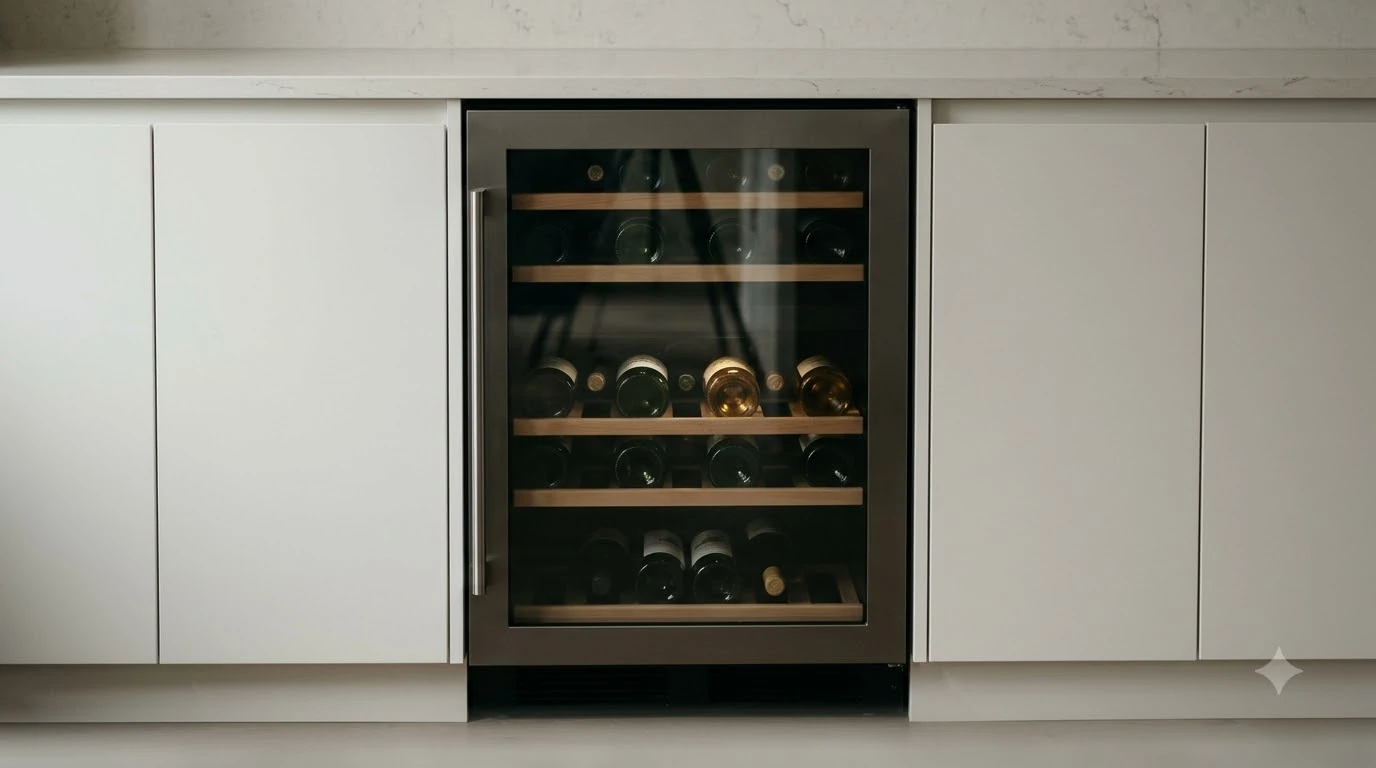
The sub zero 15 inch wine fridge is a premium, built-in wine storage refrigerator designed for homeowners who want to preserve up to 24 bottles in a narrow kitchen cabinet opening. The current Designer Undercounter Wine Storage model, DEU1550W, combines customizable cabinetry panels, UV-resistant glass, precision temperature control, and Wi-Fi connectivity. Its compact width makes it appealing for upscale kitchens, although its limited capacity, installation requirements, and premium positioning deserve careful consideration before purchasing.
A dedicated wine refrigerator can make a noticeable difference in how a collection is organized and stored. Instead of filling valuable refrigerator space with bottles, homeowners can create a dedicated wine storage area that integrates with existing cabinetry. Sub-Zero approaches this category as a built-in appliance rather than a simple countertop cooler. This review examines the DEU1550W, including its specifications, storage features, practical limitations, installation requirements, and the types of wine collectors most likely to appreciate it.
Specs and Key Features of the Sub-Zero DEU1550W
The DEU1550W is a 15-inch-wide, panel-ready undercounter wine refrigerator with a stated capacity of 24 bottles. Its main appeal is the combination of compact dimensions, integrated kitchen styling, and features designed to protect and organize a small wine collection.
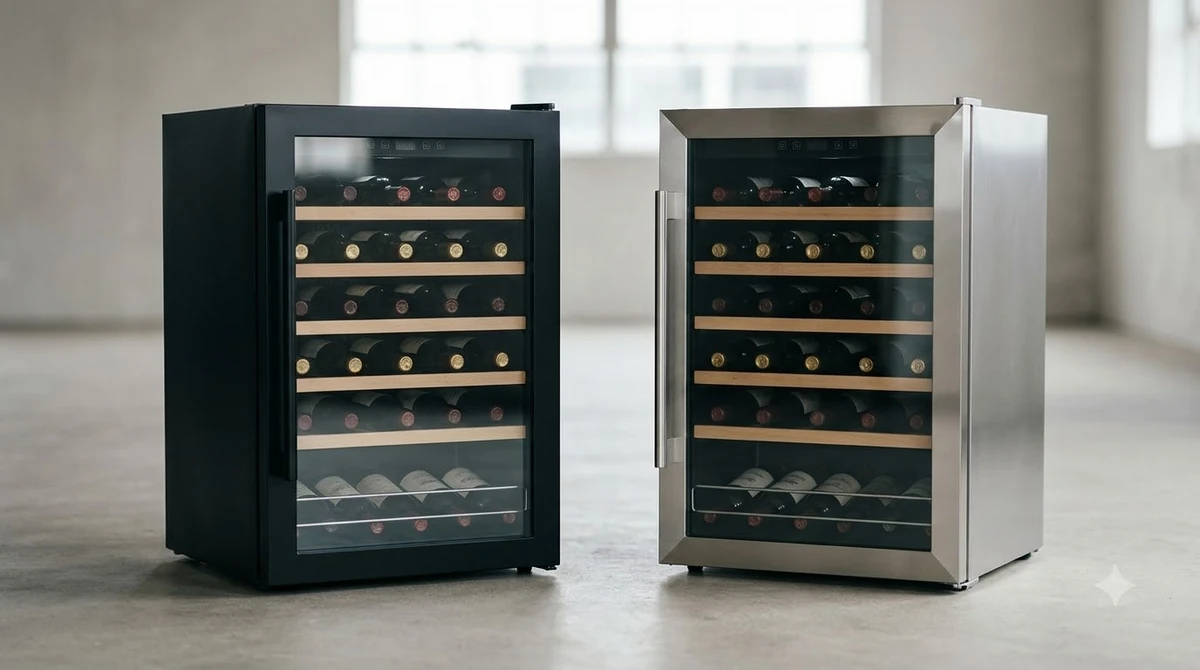
Sub-Zero lists the appliance at 15 inches wide, 34 1/2 inches high, and 23 1/8 inches deep. The recommended installation opening is 15 inches wide, 34 1/2 inches high, and 24 inches deep. These measurements make it important to distinguish the appliance’s physical dimensions from the cabinet opening needed for installation. Buyers planning a kitchen renovation should work from the manufacturer’s installation documentation rather than assume that a nominal 15-inch cabinet space will automatically accommodate every surrounding detail.
| Specification | Sub-Zero DEU1550W |
|---|---|
| Product category | Built-in undercounter wine storage |
| Model | DEU1550W |
| Width | 15 inches |
| Height | 34 1/2 inches |
| Depth | 23 1/8 inches |
| Installation opening width | 15 inches |
| Installation opening height | 34 1/2 inches |
| Installation opening depth | 24 inches |
| Wine capacity | 24 bottles |
| Door clearance | 17 1/2 inches |
| Product weight | 131 pounds |
| Electrical supply | 115 VAC, 60 Hz |
| Electrical service | 15-amp dedicated circuit |
| Hinge options | Left or right |
These specifications come from Sub-Zero’s official DEU1550W product information and quick reference guide. The manufacturer also provides separate documentation for installation, product care, and wine serving. Buyers can review the official Sub-Zero DEU1550W specifications and manuals before committing to a cabinet layout.
Temperature control and wine protection
One of the more interesting features is precision temperature control within one degree of the selected setpoint. This is useful for collectors who prefer consistency rather than repeatedly adjusting a basic refrigerator thermostat. Temperature stability matters because wine is sensitive to prolonged exposure to unsuitable storage conditions. Large fluctuations can be particularly undesirable for bottles intended to mature over time.
The unit also has UV-resistant glass designed to shield wine from harmful light. Light exposure is an important consideration for wine storage because prolonged exposure can negatively affect wine quality. A glass door provides visibility into the collection while offering a protective feature that an ordinary transparent cabinet door may not provide.
Racks, lighting, and connected features
Sub-Zero specifies full-extension wine racks designed to accommodate standard bottles, half bottles, and magnums. Full-extension access makes it easier to reach bottles toward the back without removing everything in front of them. The inventory tile system provides another organizational feature, allowing owners to identify and arrange their collection more conveniently.
The product documentation also describes adjustable LED accent lighting, an on-door touch control panel, and Wi-Fi-enabled features. Through the Owner’s App, users can adjust temperatures, receive door-ajar notifications, and access remote service diagnostics. These features make the appliance more sophisticated than a basic wine cooler, although their usefulness depends on how much owners value connected appliance controls.
What Owners May Appreciate About This Wine Refrigerator
The strongest advantages of the DEU1550W are its cabinetry integration, organized storage, and thoughtful wine-protection features. These characteristics make it particularly attractive for homeowners who prioritize kitchen appearance and want a dedicated space for a carefully selected collection.
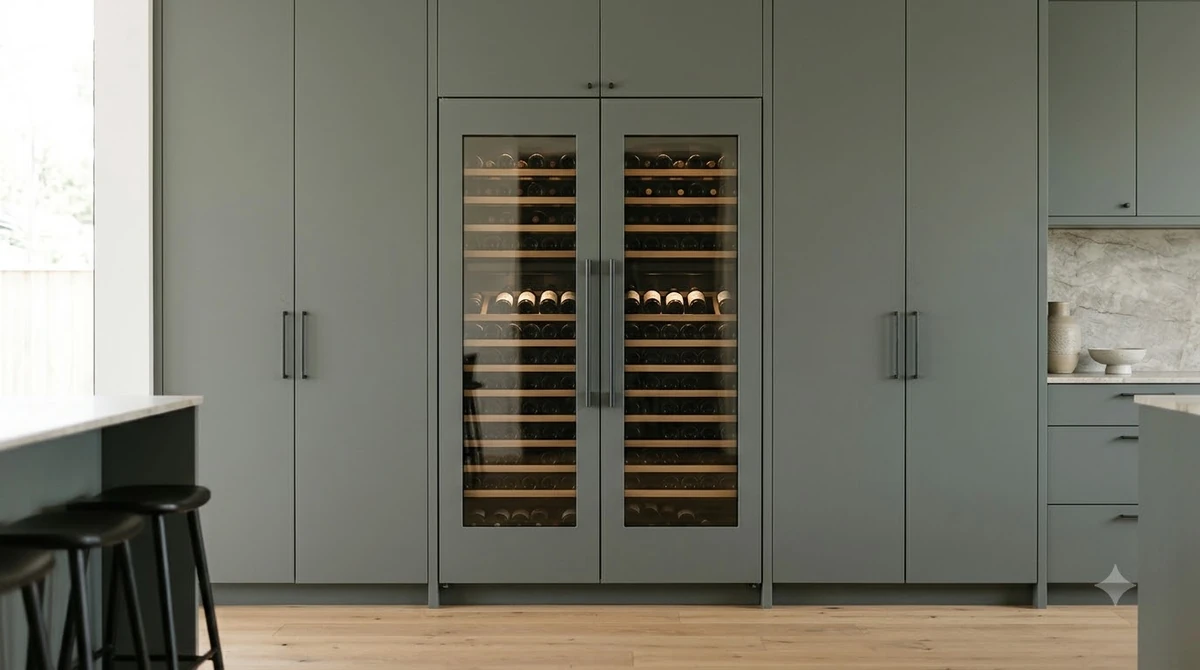
The customizable exterior is arguably its biggest design advantage. Rather than forcing homeowners to accept a prominent stainless-steel appliance front, the model accepts custom panels that can coordinate with surrounding cabinetry. This makes it possible to create a more consistent kitchen appearance, especially in contemporary kitchens where uninterrupted cabinet lines are an important design consideration.
Sub-Zero also offers stainless-steel accessory panels and handle options for buyers who prefer a coordinated appliance appearance. The available handle styles include Pro and tubular designs. This flexibility is useful when matching the wine refrigerator to other kitchen appliances, although the selected accessories and custom panel requirements should be included in the project budget.
Convenient access to a small collection
A 24-bottle capacity is modest compared with larger wine cabinets, but it can be appropriate for a household that regularly purchases wine for meals, entertaining, and occasional special occasions. Instead of storing bottles in different cupboards or refrigerator compartments, owners have one designated location for their collection.
The full-extension racks are another practical advantage. Wine bottles can be organized so that frequently opened selections remain accessible while bottles intended for later occasions occupy other positions. The ability to accommodate half bottles and magnums adds flexibility beyond a collection consisting entirely of standard 750 ml bottles.
For example, a homeowner might reserve several positions for sparkling wine, keep a few bottles of Sauvignon Blanc and Chardonnay available for seafood dinners, and organize Cabernet Sauvignon or Pinot Noir for other meals. The inventory tile system can make this arrangement easier to maintain as bottles are purchased and removed.
Connected monitoring and lighting
Wi-Fi connectivity gives the appliance some additional convenience. Remote temperature adjustments can be useful when household routines change, while door-ajar notifications provide another way to monitor an important storage condition. Remote service diagnostics may also help when troubleshooting requires assistance.
The adjustable LED lighting is a smaller but worthwhile design consideration. A wine refrigerator is often installed in an area visible from a kitchen or entertaining space. Being able to illuminate the collection without relying on harsh interior lighting helps create a more polished presentation.
These advantages are most relevant to homeowners who want their wine storage to function as part of a larger kitchen design. Buyers primarily interested in storing inexpensive everyday bottles may find that some of the design and connected features add complexity without providing enough practical value to justify the appliance’s premium positioning.
Common Complaints and Practical Limitations
The DEU1550W has several limitations that prospective buyers should understand before ordering. Its 24-bottle capacity, specialized installation requirements, and dependence on separately selected finishing components can make it less convenient than a simpler freestanding wine cooler.
One important distinction is that the advertised capacity is not the same as a guarantee that every wine collection will fit comfortably. The manufacturer states a 24-bottle capacity, but the shape and dimensions of individual bottles can affect how efficiently the interior space is used. Burgundy bottles, Champagne bottles, and unusually shaped wine bottles may occupy more room than standard Bordeaux-style bottles.
Limited capacity for growing collections
Twenty-four bottles may sound adequate when a homeowner first purchases the refrigerator. However, wine collections can grow quickly, particularly when buying mixed cases, trying different producers, or keeping several bottles for special occasions.
A collector who purchases six bottles each month could theoretically fill a 24-bottle refrigerator in four months if none were consumed. This simple example illustrates why buyers should think about future collection size rather than only their current inventory.
There is also a practical difference between maximum storage capacity and comfortable everyday organization. A refrigerator filled to its stated limit leaves little flexibility for unusual bottle formats or newly purchased wines. Buyers who frequently entertain or collect Champagne may find the usable capacity more restrictive than the headline number suggests.
Custom panels and installation planning
Another consideration is the panel-ready configuration. The appliance is designed to accept a custom exterior, but this does not mean every decorative component is included automatically. Retailer Abt specifically identifies the custom frame as a separate purchase for its DEU1550W/L listing.
Buyers must therefore coordinate the appliance, cabinet panel, handle, hinge direction, and surrounding cabinetry. A mismatch between the planned panel and the appliance specifications can create additional work during installation. This is especially relevant when the wine refrigerator is being added to an existing kitchen rather than incorporated into a new cabinet design.
The 131-pound product weight is another practical consideration. Moving the appliance into a narrow opening and aligning it correctly is not a casual do-it-yourself task. Professional installation is a sensible option, particularly when the kitchen requires modifications to cabinetry or electrical service.
Premium features may not suit every household
The connected controls, UV-resistant glass, precision temperature regulation, and customizable exterior are attractive features, but they are not equally important to every wine drinker. Someone who purchases a few bottles each month and drinks them relatively quickly may not need this level of appliance sophistication.
There is also the question of connectivity. Remote temperature adjustments and door notifications are useful additions, but buyers who prefer conventional controls may rarely use the Owner’s App. A feature-rich appliance is not automatically a better purchase if its additional functions do not match the owner’s habits.
Tip: Before ordering, confirm the exact DEU1550W configuration, cabinet opening, panel thickness, handle selection, hinge direction, electrical location, and door clearance with the installer. The manufacturer specifies a 15-amp dedicated circuit and 17 1/2 inches of door clearance, so these details should be addressed before cabinetry is finalized.
Who Should Buy the Sub-Zero 15-Inch Wine Fridge and Who Should Skip It?
This wine refrigerator makes the most sense for homeowners who want integrated undercounter storage for a relatively small collection. It is less suitable for buyers who prioritize maximum bottle capacity, straightforward installation, or the lowest possible appliance cost.
Who should consider buying it?
Homeowners renovating a premium kitchen: The panel-ready design makes the DEU1550W particularly appealing when matching the wine refrigerator to custom cabinetry is important. A 15-inch opening can provide a dedicated wine storage location without requiring the space occupied by a larger refrigerator.
Wine enthusiasts with smaller collections: A 24-bottle capacity can accommodate a carefully managed selection for regular dining and entertaining. Someone who enjoys keeping a few sparkling wines, whites, and reds available may find the capacity appropriate.
People who value wine organization: Full-extension racks and inventory tiles make the appliance attractive for owners who prefer to organize bottles rather than store them randomly. The ability to access different bottle formats also adds practical flexibility.
Homeowners who appreciate connected appliances: Remote temperature adjustments and door-ajar notifications can be useful for people who already use smart appliances and appreciate monitoring features.
Who should skip it?
Collectors with expanding inventories: Twenty-four bottles is not a large collection. Someone regularly purchasing wine by the case may quickly outgrow the refrigerator. A wider wine cabinet or dedicated wine room would provide more flexibility.
Buyers who want a simple freestanding appliance: This is a built-in product designed around a specific cabinet opening. It is not the natural choice for renters, people who frequently relocate, or homeowners who want an appliance they can move between rooms without coordinating cabinetry.
Budget-conscious wine drinkers: The DEU1550W is positioned as a premium integrated appliance. Its specialized design and accessories may be difficult to justify if the primary objective is simply keeping a small number of bottles at a consistent temperature.
Households that frequently store oversized bottles: Although the racks are designed for standard bottles, half bottles, and magnums, buyers with many unusually shaped bottles should investigate the actual storage arrangement before relying on the full stated capacity.
Think about your wine-drinking habits
It is also useful to consider what kinds of wine you normally buy. A household that frequently serves sparkling wine, Sauvignon Blanc, and light reds may have different storage priorities from a collector focused on Bordeaux, Barolo, or California Cabernet Sauvignon.
Serving temperature and long-term storage temperature are not identical concepts. Sparkling wines are generally served around 40–50°F, light whites and rosé around 45–50°F, full-bodied whites around 50–55°F, and full-bodied reds around 60–65°F. A refrigerator should be evaluated according to its actual temperature capabilities and storage configuration, not simply the serving temperatures of different wine styles.
For example, someone preparing an Aperol Spritz recipe may appreciate having sparkling wine available for entertaining. A household that frequently prepares a chicken Marsala recipe might prefer to keep suitable reds and whites organized for dinner. These everyday habits help determine whether a dedicated 24-bottle refrigerator is a practical investment.
How It Compares to Alternative Wine Storage Options
The DEU1550W occupies a specific position in the wine refrigerator market: a narrow, integrated undercounter appliance with a 24-bottle capacity. Its closest alternatives are not necessarily other Sub-Zero models of the same width, but rather different storage formats that serve different household needs.
Choosing between a 15-inch built-in refrigerator, a wider undercounter wine cabinet, and a freestanding cooler requires evaluating capacity, installation, visual appearance, and everyday access. The right option depends on the kitchen layout and the size of the collection.
15-inch built-in versus 24-inch undercounter storage
A 15-inch unit is attractive when available cabinet space is limited. It can fit into a narrow kitchen opening and provide dedicated storage without requiring a wider appliance location. This is a useful arrangement in kitchens where every inch of cabinetry has a purpose.
A 24-inch undercounter unit offers a wider installation footprint and is generally the more natural direction for homeowners who need greater storage potential. Sub-Zero’s official design documentation includes 24-inch undercounter wine storage options, including DEU2450W. However, buyers should compare the specifications and capacity of the exact model rather than assume that width alone determines the number of bottles it can hold.
Built-in versus freestanding wine refrigerators
Built-in models are intended to integrate with cabinetry and a planned installation opening. They are particularly suitable for permanent kitchen designs, but require more preparation than a portable appliance. Electrical planning, door clearance, and cabinet measurements all matter.
Freestanding wine refrigerators generally offer more flexibility in placement. They can be appropriate for apartments, home bars, dining rooms, or existing kitchens where modifying cabinetry is undesirable. Some models also offer larger capacities without requiring custom cabinet panels.
The trade-off is appearance. A freestanding appliance may remain visually separate from the rest of the kitchen, while the panel-ready DEU1550W can be designed to blend into surrounding cabinets. Buyers should decide whether the integrated appearance is important enough to justify the more specialized installation.
How it fits into the broader Sub-Zero range
Sub-Zero offers different undercounter wine storage configurations and wider wine refrigeration products. Its 15-inch Designer model is aimed at homeowners who want compact integrated storage, whereas larger formats make more sense for households with extensive collections or more available cabinet space.
For readers comparing other premium refrigeration products, the model reviews section provides a useful starting point for evaluating appliances according to their intended use, specifications, and installation requirements.
The important point is that the DEU1550W should not be selected simply because it carries a premium appliance name. Its value depends on whether the 15-inch format, 24-bottle capacity, custom appearance, and connected features match the household’s actual requirements.
Installation, Maintenance, and Wine Storage Considerations
Proper installation is essential for the DEU1550W because it is a built-in appliance with specific cabinet and electrical requirements. Buyers should plan the installation before the kitchen opening is completed, rather than treating the refrigerator as an appliance that can be fitted into any available gap.
The manufacturer’s quick reference guide specifies a 15-inch installation width, 34 1/2-inch installation height, and 24-inch opening depth. It also lists a 17 1/2-inch door clearance requirement. These dimensions should be reviewed alongside the cabinetry drawings, finished returns, panel measurements, and selected handle configuration.
Electrical and cabinet preparation
The electrical requirements are 115 VAC at 60 Hz, with a dedicated 15-amp circuit. This is an important planning detail because a suitable electrical connection must be available at the correct location. The manufacturer also provides an electrical location illustration, so the installer should review the actual documentation rather than place an outlet wherever it appears convenient.
Cabinet depth and door movement deserve equal attention. Even if the appliance body fits the opening, surrounding drawers, cabinet handles, walls, and nearby appliances can interfere with the door. The required door clearance should be considered when determining the final position of the refrigerator.
Panel specifications also matter. Sub-Zero’s documentation notes that exterior dimensions can be affected by panels and handles. The finished installation should therefore be planned using the appropriate panel specifications instead of relying solely on the refrigerator’s nominal dimensions.
Routine cleaning and organization
Regular cleaning helps maintain the interior and exterior appearance of a wine refrigerator. Owners should follow the manufacturer’s Use and Care Guide for cleaning methods and approved materials. Abrasive cleaners and unsuitable chemicals should be avoided unless the manufacturer explicitly approves them.
Wine racks should be handled carefully, particularly when fully extended and loaded with bottles. Organizing the collection by grape variety, region, drinking occasion, or intended opening date can reduce unnecessary handling. Inventory tiles are particularly useful for people who purchase several bottles from different producers.
It is also sensible to check the appliance periodically for door closure, unusual operating behavior, and changes in temperature readings. If the appliance sends a door-ajar notification, investigate promptly rather than assuming the alert is harmless. Maintaining a consistent storage environment is more important than frequently changing temperature settings.
Storing different wine styles
Wine enthusiasts should distinguish between storing wine and preparing it for service. A wine may be stored under controlled conditions and then brought to its preferred drinking temperature shortly before serving.
As a general serving reference, sparkling wine is served around 40–50°F, light whites and rosé around 45–50°F, full-bodied whites around 50–55°F, light reds around 55–60°F, and full-bodied reds around 60–65°F. Sweet white wines are commonly served around 43–50°F.
For households that enjoy sparkling cocktails, keeping Prosecco available can make entertaining easier. Prosecco is made primarily from Glera grapes and uses the tank method, while Champagne undergoes its second fermentation in the bottle. A bottle used for a Hugo Spritz recipe has a different purpose from a bottle being saved for a special dinner, so thoughtful collection organization is useful.
For longer-term storage, wine bottles are generally kept on their sides in a stable environment near 55°F, particularly when they use natural cork closures. The appliance should be evaluated according to its documented temperature range and intended storage function, rather than assuming every wine style should be stored at its ideal serving temperature.
Frequently Asked Questions
Is the Sub-Zero DEU1550W suitable for Champagne bottles?
The manufacturer states that the full-extension racks accommodate standard bottles, half bottles, and magnums. However, Champagne bottles can have different dimensions from standard Bordeaux-style bottles, so the practical number of bottles may vary. Buyers with a collection dominated by sparkling wine should confirm the rack arrangement before purchasing.
Can the Sub-Zero 15-inch wine refrigerator operate without Wi-Fi?
Wi-Fi is an additional connected feature rather than the defining function of the refrigerator. The product also has an on-door touch control panel for accessing appliance settings. Owners who do not use remote monitoring should consult the Use and Care Guide for normal operation and control instructions.
Does the DEU1550W have a door lock?
Abt’s published specifications for the DEU1550W/L list the door lock and control lock as unavailable. Buyers who need restricted access, such as households with young children or shared entertaining spaces, should discuss their requirements with an authorized dealer before ordering.
Can the wine refrigerator be installed next to other appliances?
The appliance is designed for undercounter installation, but the surrounding cabinet arrangement must follow Sub-Zero’s installation instructions. A dual installation kit is listed among the manufacturer’s accessories for certain installation arrangements. The suitability of a particular side-by-side configuration should be confirmed using the installation guide and the selected accessory specifications.
Where can owners obtain replacement accessories and support?
Sub-Zero identifies authorized dealers as the source for accessories such as handles, inventory tiles, and stainless-steel glass door panels. Its product support resources also provide access to owner’s guides and installation documentation. Owners should use the exact model identification when requesting replacement components to avoid ordering incompatible parts.
The Sub-Zero DEU1550W is a compelling option for homeowners who want a refined, integrated wine refrigerator without sacrificing an entire cabinet section to a larger appliance. Its 24-bottle capacity, customizable exterior, precision temperature control, and connected features make it particularly attractive for smaller collections and carefully planned kitchens. However, buyers should weigh the limited capacity and installation complexity against their actual storage needs before choosing this premium 15-inch wine refrigerator.
More in Model Reviews
 Magic Chef 44 Bottle Wine Cooler Review for Flexible StorageUpdated Nov 21, 2026
 Whynter 164 Bottle Wine Cooler Review: Capacity, Features, and FitUpdated Nov 21, 2026
 Insignia NS WC16BK6 Review: Compact 16-Bottle Wine StorageUpdated Nov 21, 2026
 Wine Enthusiast Electric Blue Omega Review: Opening, Pouring, and Preserving Made EasierUpdated Nov 21, 2026
 Koolatron 20 Bottle Wine Cooler Review: Features, Fit, and PerformanceUpdated Nov 21, 2026
 NewAir AWC 330E Review for Home Wine StorageUpdated Nov 21, 2026