

We may earn a commission when you buy through links on this page, at no extra cost to you. Learn more.
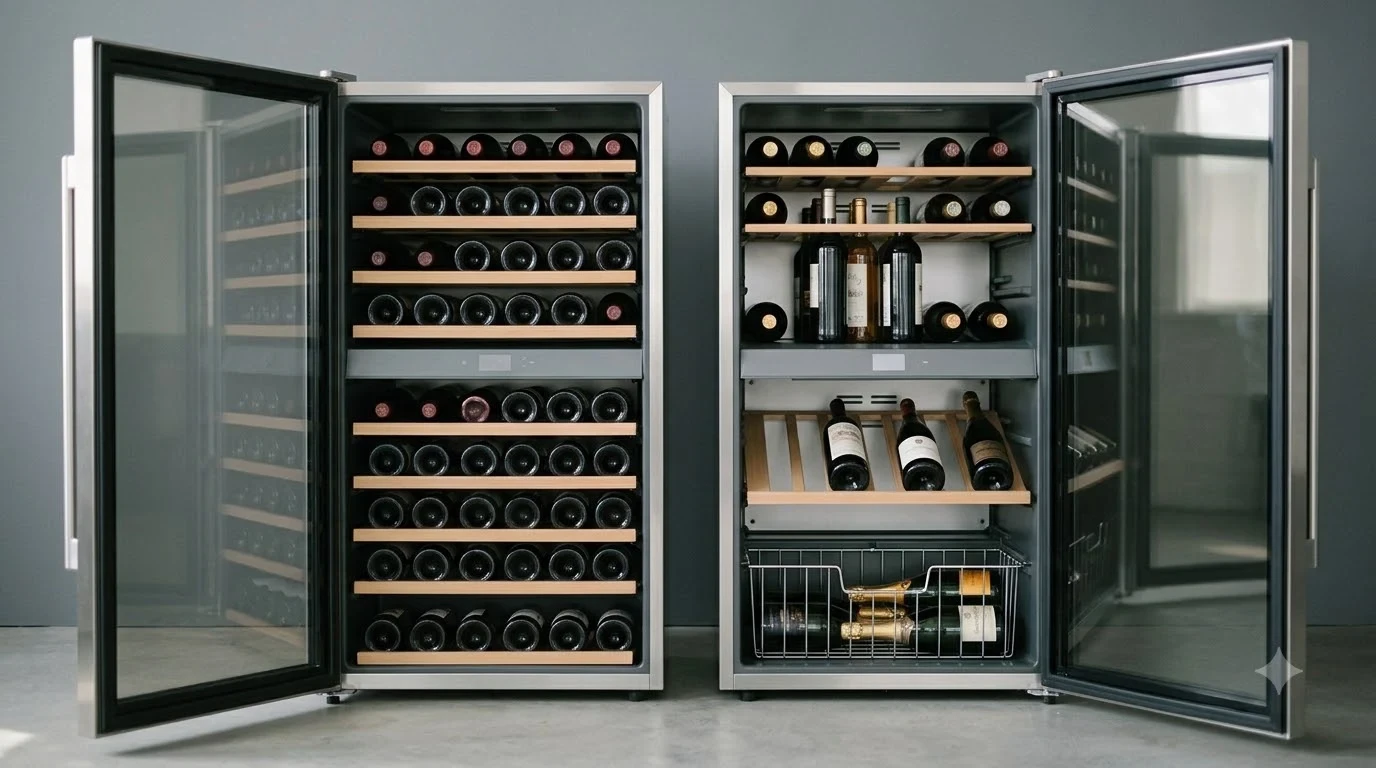
The lanbo dual zone wine fridge is a practical choice for households that want separate storage for wine and chilled beverages in one undercounter-style appliance. The 18-bottle and 55-can configuration offers independent temperature settings, front ventilation, removable shelving, and a stainless-steel-and-glass appearance. However, reported noise, inconsistent owner experiences, limited warranty coverage, and differences between published specifications deserve careful consideration before purchasing.
LANBO’s dual-zone refrigerators appeal to buyers who want more flexibility than a conventional single-temperature wine cooler provides. The 24-inch-class wine and beverage configuration is particularly interesting because it combines a dedicated wine compartment with a separate space for soda, sparkling water, beer, and other drinks. This review focuses primarily on the LB36BAA, while distinguishing its specifications from related LANBO models and retailer listings. That distinction matters because LANBO sells several similarly named refrigerators with different capacities, layouts, and temperature arrangements.
Specs and Key Features
The LANBO LB36BAA combines an 18-bottle wine compartment with a separate beverage compartment advertised for 55 cans. Its independent cooling ranges, front ventilation, compressor system, and compact-width cabinet make it more versatile than a wine-only refrigerator of comparable size.
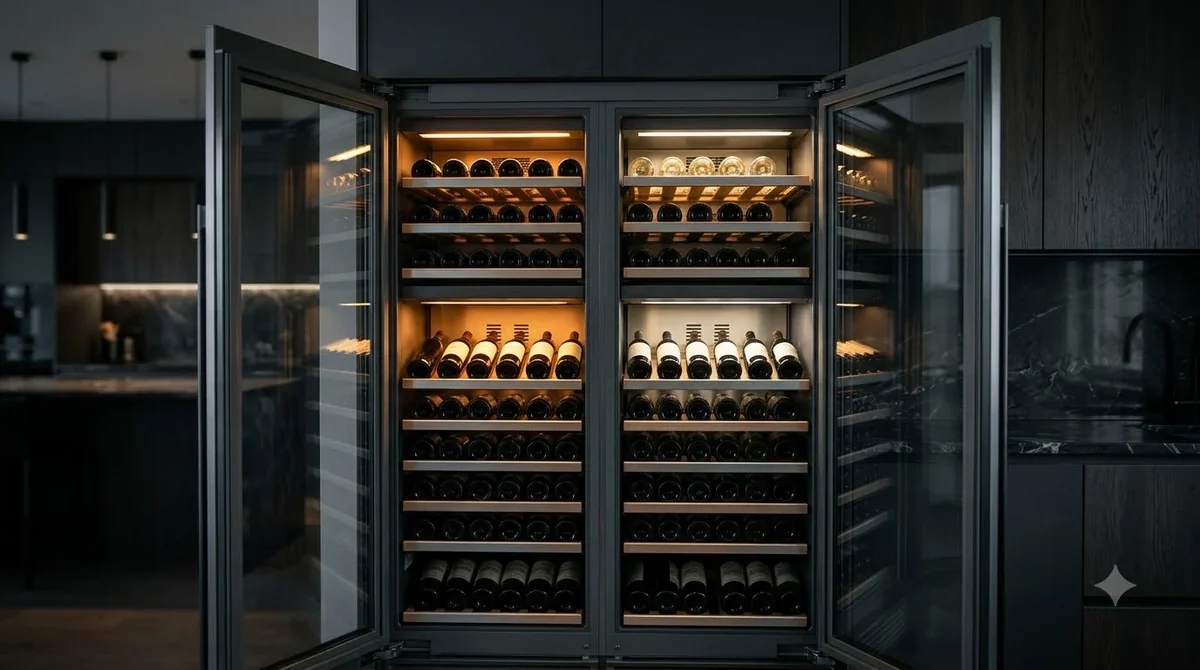
According to LANBO’s product specifications, the refrigerator has a total storage volume of 4.6 cubic feet. The wine section accommodates 18 standard 750 ml Bordeaux bottles, while the adjoining beverage section is designed around standard 330 ml cans. The manufacturer lists a left-zone temperature range of 41°F to 64°F and a right-zone range of 39°F to 50°F. These are separate operating ranges rather than two interchangeable settings across the entire cabinet.
The distinction between the two compartments is useful for everyday entertaining. Wine can remain at a suitable storage or serving temperature while cans and other drinks stay colder. The wine section can accommodate different styles, including Sauvignon Blanc, Chardonnay, Pinot Noir, and Merlot, provided the selected temperature suits the intended use. The beverage section is better suited to drinks that benefit from colder refrigeration.
| Specification | LANBO LB36BAA |
|---|---|
| Wine capacity | 18 standard Bordeaux bottles |
| Advertised beverage capacity | 55 standard cans |
| Total storage volume | 4.6 cubic feet |
| Wine-zone temperature | 41°F–64°F |
| Beverage-zone temperature | 39°F–50°F |
| Height | 33.9 inches |
| Width | 23.4 inches |
| Depth | 25.3 inches |
| Net weight | 97.7 pounds |
| Noise specification | 42 dB |
| Cooling system | Compressor |
| Defrost system | Automatic frost-free |
| Warranty | 1 year labor and 1 year parts |
Construction and convenience features include a double-zone layout, touch-screen controls, white LED interior lighting, and removable shelving. LANBO also specifies anti-vibration technology, an activated-carbon filter, and humidity control above 65%. These features are relevant to wine owners because storage conditions involve more than simply making the cabinet cold. Stable temperatures, reduced vibration, suitable humidity, and protection from excessive light all contribute to a sensible storage environment.
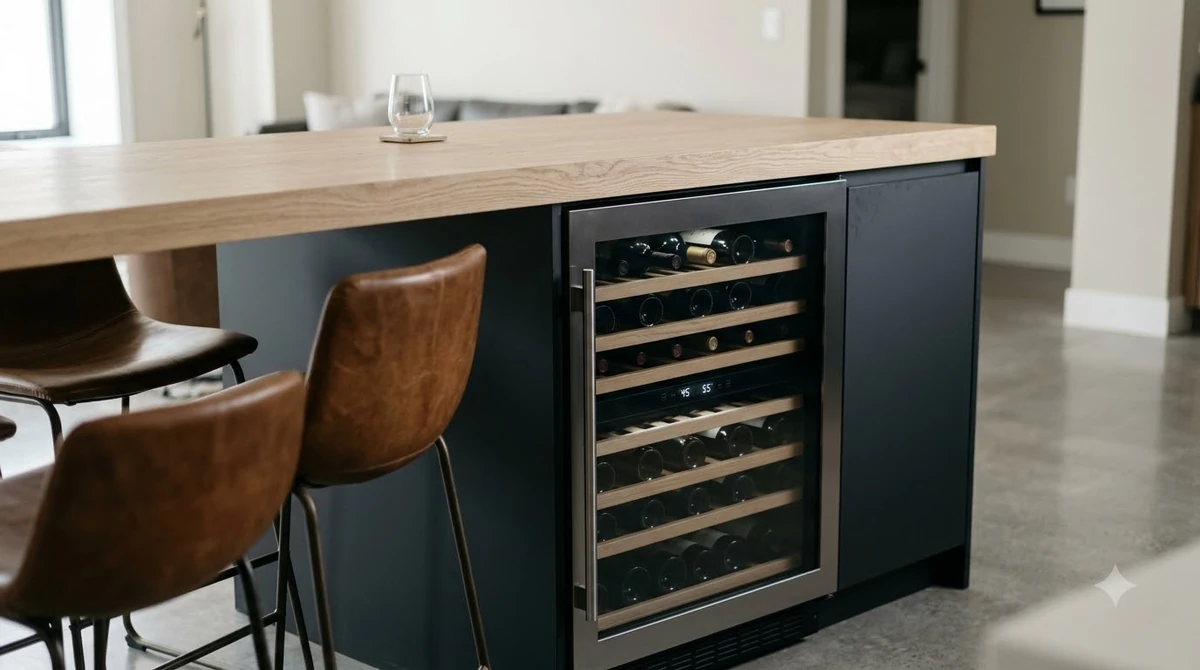
The manufacturer identifies the cabinet as suitable for built-in or freestanding installation, with ventilation at the front. That is an important advantage for buyers planning an undercounter kitchen installation. However, the published dimensions still need to be compared with the actual cabinet opening, countertop arrangement, door clearance, and installation instructions.
There are also details that deserve attention. LANBO’s LB36BAA specification says that the model has no integrated lock and non-reversible doors. Some retailer descriptions of related configurations mention locks or other features, so buyers should confirm the exact model number rather than assume every LANBO 18-bottle refrigerator has identical hardware.
There is another small specification discrepancy: LANBO advertises 55 cans in the product name, while its technical listing identifies a 56-can capacity for the right compartment. Treat 55 as the conservative advertised capacity rather than planning an installation around an extra can.
The product specifications can be reviewed directly on the official LANBO LB36BAA product page.
What Owners Like
Positive owner feedback frequently centers on the refrigerator’s appearance, useful capacity, and ability to keep wine and other beverages in separate temperature environments. Its strongest practical appeal is the combination of two dedicated compartments in a cabinet that occupies approximately 24 inches of width.
For households that regularly entertain, the division between wine and general beverages can simplify refrigerator organization. Bottles do not have to share space with soda cans, bottled water, or other everyday drinks. A dedicated wine compartment also makes it easier to organize different bottles without repeatedly moving food and beverages around a regular kitchen refrigerator.
Wayfair’s customer-review summary identifies attractive appearance and dual-zone functionality as recurring positive themes. Customers also appreciate the refrigerator’s ability to maintain desired beverage temperatures. This feedback supports the idea that the design meets an everyday convenience need, particularly for households with a modest wine collection and a regular supply of chilled drinks.
The stainless-steel trim and glass-door presentation are another attraction. A refrigerator installed beneath a kitchen counter can become part of the overall kitchen design rather than looking like a separate utility appliance. White LED lighting makes the contents visible without requiring the doors to remain open while someone looks for a bottle.
The shelving arrangement provides another practical benefit. LANBO supplies five full shelves and one half shelf in the wine compartment, alongside three wire shelves and a basket in the beverage compartment. The removable design allows users to create additional room when their preferred bottles or cans do not fit comfortably in the original arrangement.
That flexibility can be useful for Champagne, sparkling wine, and bottles with wider shoulders. Standard Bordeaux bottles are the basis of the manufacturer’s capacity calculation, so a collection containing many wider Burgundy bottles or unusually shaped sparkling bottles may require a different arrangement. The nominal 18-bottle figure should therefore be treated as a reference capacity, not a guarantee that every combination of bottles will fit.
The independent temperature settings are arguably the most useful feature. For example, a household can keep Sauvignon Blanc chilled separately from red wine that is intended for slightly warmer serving conditions. The beverage compartment can hold cans at a colder setting without forcing the wine compartment to operate at the same temperature.
The two-zone arrangement can also support entertaining around different drink preferences. Guests who prefer chilled sparkling water or canned beverages have a dedicated space, while wine remains organized on its own shelves. Someone planning a casual gathering can prepare drinks in advance without filling the main refrigerator with every bottle and can.
For cocktail occasions, the beverage compartment can also help organize chilled mixers and cans used alongside an Aperol spritz recipe. It is not a dedicated cocktail refrigerator, but having a separate beverage section is convenient for keeping frequently used drinks together.
One further advantage is the front ventilation design. Traditional freestanding refrigerators generally need space around their sides and rear for airflow, whereas a properly designed front-venting appliance can be more suitable for an undercounter installation. This is a meaningful feature for buyers working with a planned kitchen layout rather than simply placing a refrigerator in an open room.
Common Complaints
The most important concerns involve operating noise, shelf and door fit, and long-term reliability. Positive temperature-control feedback does not eliminate the need to investigate these issues, particularly because a refrigerator is an appliance that buyers generally expect to use for several years.
Wayfair’s customer-review summary identifies noise as a recurring complaint. Although LANBO lists a 42 dB operating specification, that figure should not be interpreted as a promise that the appliance will be inaudible. Compressor operation, fans, installation conditions, surrounding cabinetry, and the room’s acoustics can all influence how noticeable a refrigerator sounds.
This matters particularly in open-plan homes. A refrigerator located beneath a kitchen counter near a dining table, living room, or home office may be more noticeable than the same appliance installed in a separate utility space. Buyers who are sensitive to mechanical sounds should investigate the return policy and installation requirements before committing.
Wayfair’s review summary also mentions wobbly shelves and doors that do not close properly. These issues deserve attention because shelf stability affects everyday loading, while door alignment and sealing influence temperature consistency. A door that does not close fully can undermine the usefulness of even a well-designed cooling system.
Another concern is the difference between advertised capacity and the amount of space available with real-world bottles. The 18-bottle rating assumes standard Bordeaux-sized bottles. Wider sparkling wine bottles, Burgundy shapes, and unusually long bottles can reduce usable capacity. The same principle applies to the beverage side: larger cans, glass bottles, and irregular packaging do not necessarily fit as efficiently as standard 330 ml cans.
Long-term reliability is a more significant consideration. Home Depot customer feedback for the related LB36BD model includes reports of refrigerators stopping cooling after a period of use, increasing compressor or fan noise, and difficulties obtaining satisfactory support. These reports are individual owner experiences rather than proof that every unit will develop the same problems. Nevertheless, repeated reliability concerns should influence a purchase decision.
There are also differences between retailer listings and LANBO’s own specifications. For example, the LB36BAA manufacturer’s page says the unit does not have an integrated lock, while retailer descriptions of related configurations can mention safety locks. Measurements also vary slightly between listings. The exact model number and accompanying documentation should take priority over a generic product title.
Warranty coverage is another limitation. LANBO lists one year for labor and one year for parts on the LB36BAA. That is a relatively short stated coverage period for an appliance that may be used continuously. Buyers should obtain clear answers about the warranty claim process, authorized service availability, replacement components, and responsibility for shipping or repair expenses.
For additional owner feedback, the Wayfair LANBO refrigerator listing provides a useful overview of recurring positive and negative experiences. Its review summary is helpful for identifying patterns, but it should not be treated as a substitute for reading individual reviews and checking the precise product variant.
Who Should Buy and Who Should Skip
The LANBO 18-bottle dual-zone refrigerator makes the most sense for buyers who want a combined wine and beverage appliance, have a suitable undercounter opening, and do not need large-scale wine storage. It is less attractive for people who prioritize exceptionally quiet operation, extended warranty protection, or a large collection of specialty-shaped bottles.
Who should consider buying it
Small households with a regular but moderate wine collection are a natural audience. Eighteen standard bottles provide room for several everyday choices without requiring a large wine cellar. A household might reserve the wine section for six whites, six reds, and six bottles of sparkling wine, adjusting the assortment as seasons and entertaining plans change.
People who frequently host dinner parties may also appreciate the separate beverage compartment. It can accommodate cans and other chilled drinks while preserving dedicated space for wine. A meal involving chicken, mushrooms, and a cream-based sauce, for example, can call for both wine and nonalcoholic refreshments. A separate beverage area keeps those options organized, while the chicken marsala recipe provides an example of the kind of dinner around which a small home wine selection might be planned.
Kitchen renovators should consider the front-venting arrangement if they specifically want an undercounter appliance. The listed width of 23.4 inches and height of approximately 34 inches may suit certain cabinetry layouts, although the manufacturer’s installation instructions and required clearances must be checked before fitting the refrigerator.
Buyers who value visual presentation may also like the stainless-steel finish, glass doors, and interior LED lighting. The appliance can serve as a practical addition to a home bar or kitchen where drinks are frequently accessed by family members and guests.
Who should skip it
Serious wine collectors who want to store substantially more than 18 bottles should look at a dedicated wine cellar instead. A separate beverage compartment uses space that could otherwise be allocated to wine. Collectors with a growing selection of aged Cabernet Sauvignon, Bordeaux blends, Burgundy, or vintage sparkling wine may find the capacity restrictive.
People who regularly purchase large-format bottles or many unusually shaped bottles should also be cautious. The standard bottle count is based on Bordeaux dimensions, and removable shelving cannot guarantee that every oversized bottle will fit without sacrificing other storage space.
Another group that may want to skip the appliance is anyone installing a refrigerator immediately beside a quiet living or sleeping area. The 42 dB specification is useful as a reference, but owner complaints about noise suggest that sound levels deserve investigation before purchase.
Finally, buyers who expect extended manufacturer protection or readily available local repair services should compare warranty arrangements carefully. A one-year parts and labor warranty may not provide enough reassurance for someone making a substantial kitchen-appliance investment.
How It Compares to Alternatives
The LANBO name covers several dual-zone refrigerator configurations, so comparing exact models is more useful than comparing brand names alone. The LB36BAA focuses on combined wine and beverage storage, while the LW28D provides a wine-only layout with 28-bottle capacity.
The LB36BAA is the more flexible choice for households that regularly stock canned drinks alongside wine. Its two compartments have different temperature ranges, allowing wine to remain at a different setting from beverages. This makes it particularly useful in a home bar where chilled cans are accessed frequently.
The LW28D, by contrast, is designed specifically for wine storage. LANBO lists its capacity as 28 standard Bordeaux bottles, divided between two zones. Its first zone accommodates 15 bottles at 41°F to 54°F, while the second accommodates 13 bottles at 54°F to 64°F.
| Feature | LB36BAA | LW28D |
|---|---|---|
| Primary purpose | Wine and beverages | Wine only |
| Wine capacity | 18 bottles | 28 bottles |
| Additional capacity | 55 advertised cans | None specified |
| Wine temperature range | 41°F–64°F | 41°F–64°F overall |
| Separate beverage zone | Yes, 39°F–50°F | No |
| Cooling system | Compressor | Compressor |
| Installation | Built-in or freestanding | Built-in or freestanding |
| Width | 23.4 inches | 15 inches |
The LW28D’s narrower 15-inch cabinet makes it interesting for kitchens with a different available opening. It measures 34.4 inches high and 25.3 inches deep. Its specification also lists four full beechwood shelves and two half shelves, which cannot be adjusted to different heights.
There is an important difference in how the two products organize temperature. The LB36BAA has a dedicated beverage zone that reaches 39°F, while the LW28D divides its wine storage into two compartments with a shared overall range of 41°F to 64°F. The latter is more appropriate for someone who wants additional wine capacity rather than a dedicated space for canned drinks.
Other LANBO models also demonstrate why model-level comparisons matter. The LP66D specification describes a 62-bottle dual-zone wine refrigerator with a 5.9-cubic-foot storage volume, front ventilation, and a compressor cooling system. It represents a different storage category from the smaller 18-bottle-and-beverage arrangement.
For a broader look at the available refrigerator categories, the wine refrigerator model reviews section can help establish which type of appliance fits a particular collection and installation space.
Frequently Asked Questions
Does the LANBO wine refrigerator need to stand upright before being switched on?
Refrigerators that have been transported on their side or at an angle may need to remain upright before operation so that compressor oil can settle appropriately. The required waiting period depends on the manufacturer’s transportation instructions and the position used during delivery. Ask the seller or LANBO for the exact procedure before connecting a newly delivered unit.
Can the LANBO wine refrigerator operate in a garage?
Garage installation should not be assumed to be suitable simply because a refrigerator supports freestanding placement. Ambient temperatures outside the manufacturer’s approved operating range can affect cooling performance and compressor operation. Confirm the permitted ambient temperature range and indoor installation requirements for the exact model before placing it in an unconditioned garage.
Does the LANBO refrigerator have a power-failure memory function?
The published LB36BAA specification identifies touch-screen temperature controls but does not establish a guaranteed temperature-memory or automatic restart function after a power interruption. Buyers who experience frequent outages should ask LANBO whether the specific control system restores previous settings automatically. It is also sensible to verify the actual compartment temperatures after electricity returns.
Can the LANBO refrigerator be connected to a smart-home system?
The published LB36BAA product specifications describe touch-screen controls and digital temperature adjustment, not built-in Wi-Fi or smart-home integration. Buyers should therefore not assume that the appliance supports smartphone monitoring, remote temperature changes, or voice-assistant control. A conventional plug-in refrigerator may still suit most households that are comfortable adjusting temperatures directly at the appliance.
Should the refrigerator be connected to a dedicated electrical circuit?
Electrical requirements depend on the appliance’s rated current, the existing household circuit, and local electrical regulations. LANBO lists 110–120 volts and 60 Hz for the LB36BAA. Before installation, compare the rating plate and owner’s manual with the available outlet and ask a qualified electrician if the circuit’s suitability is uncertain.
The LANBO LB36BAA is an appealing option for buyers who want 18 bottles of wine and a separate space for approximately 55 cans without installing two refrigerators. Its independent cooling ranges, front ventilation, and removable shelves offer practical advantages, but owner concerns about noise, fit, and reliability should not be overlooked. Compare the exact model specifications, verify the installation opening, and obtain clear warranty and service information before deciding whether this dual-zone refrigerator belongs in your kitchen.
More in Model Reviews
 Magic Chef 44 Bottle Wine Cooler Review for Flexible StorageUpdated Nov 21, 2026
 Whynter 164 Bottle Wine Cooler Review: Capacity, Features, and FitUpdated Nov 21, 2026
 Insignia NS WC16BK6 Review: Compact 16-Bottle Wine StorageUpdated Nov 21, 2026
 Wine Enthusiast Electric Blue Omega Review: Opening, Pouring, and Preserving Made EasierUpdated Nov 21, 2026
 Koolatron 20 Bottle Wine Cooler Review: Features, Fit, and PerformanceUpdated Nov 21, 2026
 NewAir AWC 330E Review for Home Wine StorageUpdated Nov 21, 2026