

We may earn a commission when you buy through links on this page, at no extra cost to you. Learn more.
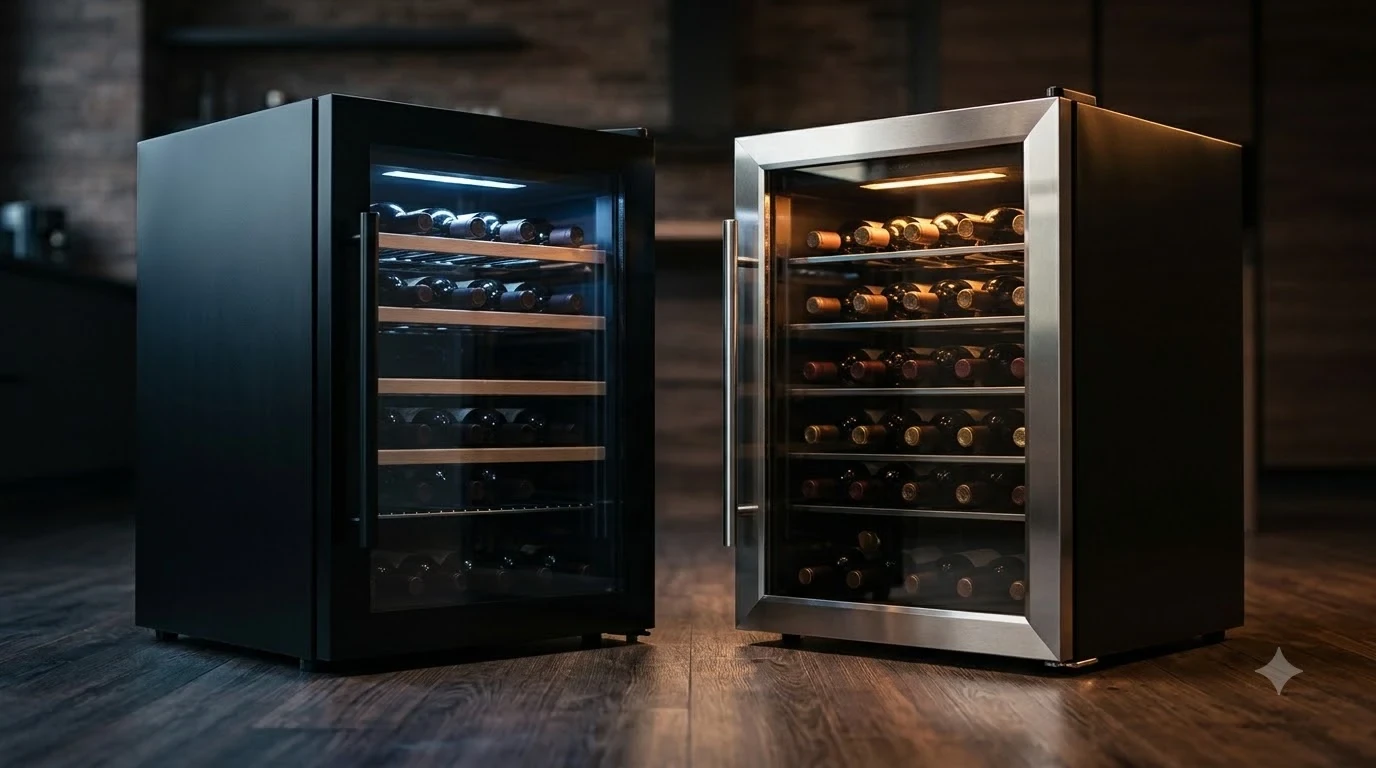
The Lanbo beverage cooler is worth considering for homeowners who want separate wine and beverage storage, but its mixed reliability and noise reports deserve careful attention before buying. The popular LB36BD configuration combines space for 18 wine bottles and 55 beverage cans in a dual-zone refrigerator designed for built-in or freestanding installation. Its separate temperature controls, glass doors, and compact undercounter format are attractive features, although customer reports of cooling failures, noisy operation, and inconsistent support make warranty verification particularly important.
A dedicated beverage refrigerator can make a home bar more practical by keeping wine, soda, beer, and other drinks organized and ready to serve. Lanbo offers several refrigerator configurations, including single-zone beverage coolers and larger wine-and-beverage combinations. The distinction matters because the brand name alone does not identify one particular capacity or temperature arrangement. This review focuses primarily on the popular 18-bottle, 55-can LB36BD-style dual-zone configuration, while identifying relevant differences between Lanbo models so buyers can make a more informed decision.
Specs and Key Features
The Lanbo LB36BD combines two independently controlled compartments in one refrigerator, making it suitable for households that regularly store wine and chilled beverages together. Its advertised capacity, front-venting design, and separate temperature ranges are the strongest reasons to consider this configuration.
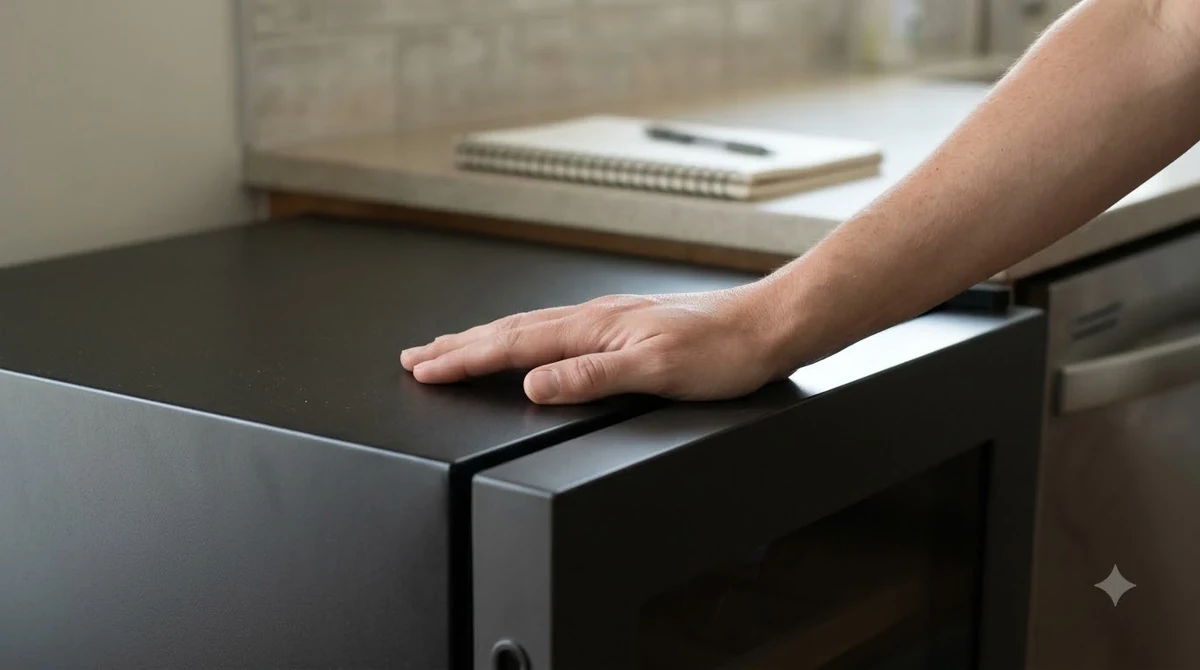
According to the Wayfair product listing, the refrigerator measures 33.8 inches high, 23.4 inches wide, and 24.9 inches deep. Its two compartments have different temperature ranges: the wine side operates between 41°F and 64°F, while the beverage side operates between 39°F and 50°F. This arrangement allows owners to maintain a warmer environment for certain wines while keeping cans and other drinks colder.
The capacity is advertised as 18 standard Bordeaux wine bottles and 55 beverage cans. These figures provide a useful starting point, but actual storage depends on bottle shapes, can dimensions, shelf positions, and how frequently the compartments are reorganized. Larger Champagne bottles, unusually shaped wine bottles, and tall beverage containers may reduce the usable capacity.
| Specification | Lanbo LB36BD configuration |
|---|---|
| Product type | Dual-zone wine and beverage refrigerator |
| Wine capacity | 18 standard bottles |
| Beverage capacity | 55 cans |
| Overall height | 33.8 inches |
| Overall width | 23.4 inches |
| Overall depth | 24.9 inches |
| Wine compartment | 41°F–64°F |
| Beverage compartment | 39°F–50°F |
| Cooling system | Compressor-based |
| Controls | Digital touchscreen |
| Door design | Double-pane tinted glass |
| Installation | Built-in or freestanding |
| Listed weight | 100.3 pounds |
The refrigerator uses compressor-based cooling with circulation fans. This approach is intended to distribute cold air throughout the compartments rather than relying on a passive cooling arrangement. Separate digital displays allow users to monitor and adjust the two zones independently. That flexibility is useful for households that prefer red wine at a different temperature from beer, soda, and sparkling water.
Other listed features include stainless-steel trim, tinted double-pane glass, interior LED lighting, removable shelving, anti-vibration technology, and two safety locks. The glass doors make it easier to identify drinks without opening the refrigerator, while the lighting gives the appliance a display-oriented appearance that works well in a kitchen, entertainment room, or home bar.
The advertised capacity should not be interpreted as a guarantee that every combination of bottles and cans will fit. Standard Bordeaux bottles are narrower than many Burgundy and Champagne bottles. Buyers who frequently purchase larger-format bottles should prioritize usable shelf dimensions over the headline bottle count.
It is also important to distinguish this model from other refrigerators sold under the Lanbo name. For example, the manufacturer’s LB148BC is a separate single-zone beverage refrigerator advertised for 110 cans and six wine bottles, with a temperature range of 37°F to 64°F. Its specifications should not be confused with those of the LB36BD dual-zone configuration.
What Owners Like About the Lanbo Refrigerator
Positive owner feedback most often concerns the refrigerator’s appearance, storage flexibility, and ability to keep different beverages in separate temperature zones. The combination of wine storage and everyday drink storage is particularly useful for households that entertain regularly.
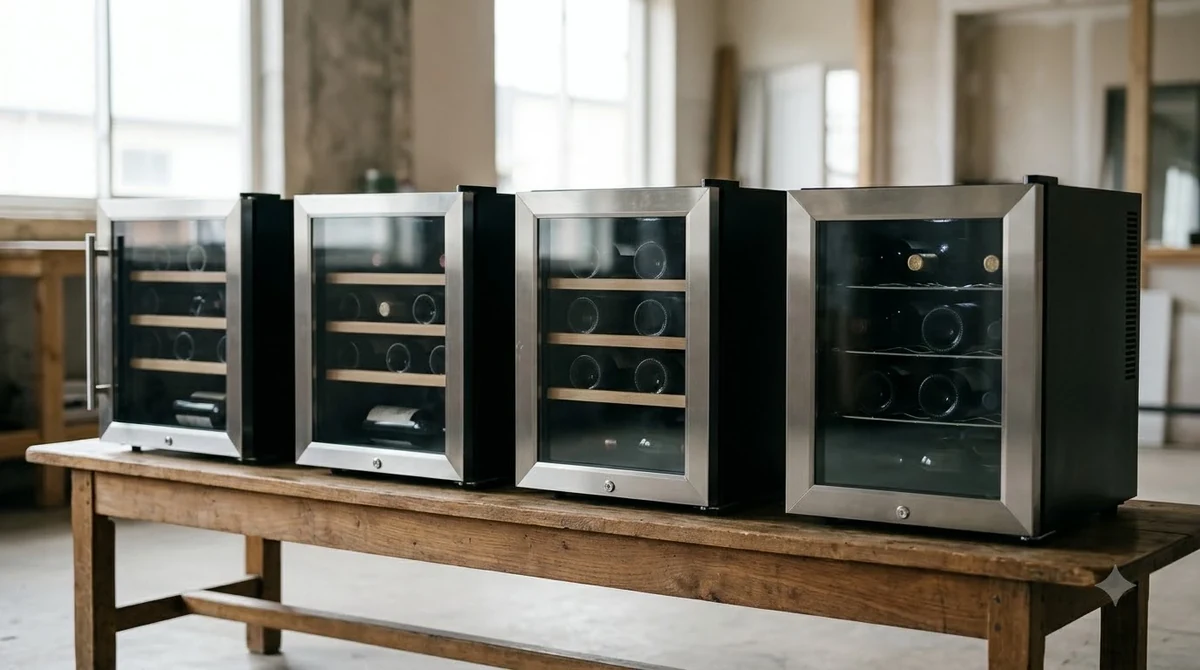
One major advantage is the two-compartment layout. Instead of choosing between a wine refrigerator and a conventional beverage fridge, owners can dedicate one side to wine and the other to cans. A household might keep Cabernet Sauvignon and Merlot in the wine compartment while reserving the beverage side for beer, soda, sparkling water, and mixers. This arrangement can reduce clutter in the main kitchen refrigerator.
Customer feedback on Lowe’s includes positive comments about maintaining suitable temperatures for different wine styles. One reviewer specifically appreciates being able to store red and white wine separately. Another customer describes the appliance as attractive and suitable for placement beside a credenza. These comments illustrate why the refrigerator appeals to homeowners who want functional storage without sacrificing the appearance of their entertainment space.
The visual design is another recurring positive. The stainless-steel appearance, glass doors, and interior lighting give the appliance a more finished look than a basic solid-door beverage refrigerator. It can fit naturally into a modern kitchen, a basement bar, or a dedicated entertainment room.
The front-venting design is also a practical feature. According to the Wayfair listing, the refrigerator is designed for both built-in and freestanding use. Front ventilation allows the cooling system to draw and release air through the front rather than depending entirely on open space behind the appliance. That makes undercounter installation possible when the surrounding cabinetry and manufacturer’s clearance requirements are respected.
Another advantage is the ability to adjust the shelves. Removable shelves provide some flexibility when the standard arrangement does not suit a particular selection of bottles and cans. Owners can reorganize the interior around their usual shopping habits instead of treating the advertised storage arrangement as the only possible configuration.
For wine drinkers, separate temperature management can be more useful than simply having a refrigerator that gets very cold. White wines, sparkling wines, and reds are not always served at the same temperature. A wine compartment that reaches 41°F to 64°F offers a broader range of options than a conventional beverage cooler that operates only at very cold settings.
The beverage side, with its advertised 39°F to 50°F range, is more appropriate for everyday chilled drinks. This separation means owners do not have to compromise by keeping all their bottles at one temperature. It is a meaningful advantage for people who entertain and maintain a varied selection of drinks.
However, positive feedback needs to be considered alongside the negative reviews. Some satisfied owners describe quiet operation and reliable temperature control, but other customers report the opposite experience. A good experience from one household does not establish that every unit will perform consistently over several years.
Common Complaints and Reliability Concerns
The biggest concern with the Lanbo LB36BD is the mixed customer feedback about long-term cooling performance and customer service. Noise, shelf construction, and reports of early breakdowns make reliability a more important purchasing consideration than the appliance’s appearance alone.
Lowe’s displays 64 customer reviews for the LB36BD on its reviewed product page. The displayed rating distribution includes 59% five-star reviews, 17% four-star reviews, 5% three-star reviews, and 19% one-star reviews. The retailer also reports that 53% of reviewers recommend the product. This is a divided feedback profile rather than a consistently positive ownership record.
One particularly concerning group of complaints involves refrigerators that stop cooling after relatively short periods. Some Lowe’s reviewers describe failures after approximately eight to fourteen months. Other reports mention clicking noises, water leakage, and cooling problems. These are individual customer accounts, not proof that every refrigerator will experience the same defect, but the repeated nature of the complaints deserves attention.
Home Depot feedback adds similar concerns. Some customers describe appliances that initially worked well but subsequently lost their ability to maintain the selected temperature. Other reviewers report compressor-related problems after approximately one or two years. These experiences make it sensible to investigate warranty coverage and repair arrangements before purchasing.
Noise is another recurring issue. Some owners describe their units as quiet, while others report a noticeable humming sound, loud fans, clicking, or increasing noise as the refrigerator operates. Compressor-based refrigerators naturally produce some operating sounds, particularly when cooling cycles begin and stop. Nevertheless, a unit that becomes substantially louder than expected should not automatically be dismissed as normal.
The shelf construction also receives criticism. Some Home Depot customers report that loaded shelves feel flimsy or require careful handling when removing bottles. This is particularly relevant to wine storage because glass bottles can be relatively heavy, and a shelf that shifts unexpectedly can create a safety problem.
Customer support is another area to investigate. Some dissatisfied Lowe’s and Home Depot reviewers describe lengthy email exchanges, difficulty arranging repairs, and requests to replace components themselves. Other customers report satisfactory interactions, so experiences are not uniform. Still, a refrigerator that requires specialist repair can become frustrating if local technicians, replacement components, or clear warranty procedures are difficult to obtain.
Tip: Before purchasing, obtain the complete written warranty for the exact model and ask who pays for replacement parts, technician labor, shipping, and diagnostic visits. Also confirm whether repairs are handled locally or require email coordination with the manufacturer. A long compressor warranty is less reassuring if labor and service arrangements are unclear.
There is an important difference between a product specification and a proven reliability record. A manufacturer may advertise anti-vibration technology, compressor cooling, and insulated glass, but those features do not establish how long a particular appliance will last. Buyers should treat customer feedback as a warning signal to investigate rather than as a definitive prediction of their own experience.
For additional context, the Lowe’s Lanbo LB36BD customer reviews show both the positive experiences and the recurring complaints about cooling performance, noise, and support. Reading the written comments is more useful than looking at the overall rating alone because it reveals the types of problems owners have actually encountered.
Who Should Buy and Who Should Skip the Lanbo LB36BD?
The Lanbo LB36BD is best suited to households that need combined wine and beverage storage in a relatively compact undercounter format. It is less suitable for buyers who prioritize proven long-term reliability, very quiet operation, or extensive local repair support.
Who should consider buying it?
Homeowners with a dedicated bar or entertainment area are among the strongest potential buyers. The 18-bottle wine compartment and 55-can beverage compartment provide useful everyday capacity without requiring two separate appliances. Someone who regularly hosts guests can keep wine, beer, sparkling water, and soft drinks organized in one location.
It may also suit homeowners renovating a kitchen. The 23.4-inch width and front-venting arrangement make the refrigerator worth considering for a suitable undercounter space. However, installation should be based on the exact appliance dimensions, cabinetry opening, ventilation requirements, electrical access, and door-opening clearance. A refrigerator that technically fits the opening can still be inconvenient if its doors cannot open fully.
Wine drinkers who enjoy several styles may also appreciate the dual-zone arrangement. The 41°F to 64°F wine compartment provides flexibility for storing different bottles, while the colder beverage compartment can be used for drinks that benefit from refrigerator-level chilling.
Buyers who are comfortable researching warranties, checking return conditions, and arranging appliance repairs independently may also find the configuration attractive. This is especially true if the retailer provides a clear return process and the purchaser can verify the availability of local service.
Who should skip it?
Buyers who need a dependable appliance for a high-traffic commercial setting should be cautious. A home beverage refrigerator with mixed reliability feedback may not be the right choice for a restaurant, bar, or business that depends on continuous cooling and cannot afford unexpected downtime.
People who are sensitive to appliance noise should also consider other options. Customer reports vary considerably, and there is not enough consistent owner feedback to confidently promise that the LB36BD will be unobtrusive in an open-plan kitchen or quiet living space.
Buyers who expect a refrigerator to operate for many years without maintenance may want to prioritize a brand with a stronger documented service network. The repeated reports of cooling failures and customer support difficulties make warranty details particularly important with Lanbo.
Finally, collectors who store expensive wines for extended periods should think carefully about whether a combination beverage refrigerator is the right appliance. Its stated temperature ranges and storage features may suit everyday wine storage, but long-term wine preservation also involves stable temperatures, appropriate humidity, protection from light, and limited vibration. A dedicated wine refrigerator may be more appropriate for a serious collection.
For shoppers still comparing appliances, the best rated wine cooler options provide a useful broader starting point. Comparing dedicated wine refrigerators with dual-purpose beverage centers can clarify whether separate storage compartments are genuinely necessary or simply an attractive extra feature.
How It Compares to Alternatives
The Lanbo LB36BD’s main selling point is its combination of wine and beverage storage, rather than a unique cooling technology. Its value becomes clearer when compared with single-zone beverage refrigerators, dedicated wine coolers, and larger-capacity Lanbo configurations.
Compared with a single-zone beverage refrigerator
A single-zone beverage refrigerator is generally the more straightforward choice for households that mainly store cans, bottled water, beer, and soft drinks. Its entire interior can operate at one selected temperature, which avoids the need to divide storage between two different beverage categories.
The LB36BD has an advantage if wine is also an important part of the household’s routine. Its 18-bottle wine compartment provides dedicated storage rather than forcing bottles into shelves intended for cans. The trade-off is that the combined design uses space for two distinct purposes, and the owner may not need both compartments equally.
Compared with a dedicated wine refrigerator
A dedicated wine refrigerator is a more natural choice for someone who stores wine as the primary collection. Its shelving can be designed around bottles rather than cans, and some models provide multiple temperature zones for different wine categories.
The LB36BD is more versatile for entertaining, but its wine capacity is limited to 18 standard bottles under the advertised arrangement. Someone with a growing collection may quickly need additional storage. For a household that mostly drinks wine and only occasionally serves other beverages, a dedicated wine refrigerator may offer a more useful layout.
Compared with the Lanbo LB148BC
The LB148BC is a useful example of why buyers should compare model numbers instead of assuming all Lanbo refrigerators share the same specifications. According to Lanbo’s manufacturer listing, the LB148BC is a single-zone beverage refrigerator advertised for 110 standard 330 ml cans and six 750 ml wine bottles.
Its temperature range is 37°F to 64°F, compared with the LB36BD’s separate wine and beverage compartments. The LB148BC therefore offers a larger advertised can capacity, but it does not provide the same independent temperature arrangement. A household that primarily stores cans may prefer the larger capacity, while a household that regularly stores wine and chilled drinks separately may prefer the dual-zone concept.
The manufacturer also lists front ventilation, frost-free defrosting, a reversible door, and an activated carbon filter for the LB148BC. These are model-specific specifications and should not automatically be applied to the LB36BD.
For anyone considering other configurations, the Brand x Type refrigerator reviews can help organize the comparison around appliance category, storage needs, and ownership considerations rather than brand recognition alone.
Which features matter most?
Temperature flexibility, installation dimensions, storage capacity, and warranty support should carry more weight than cosmetic differences. A stainless-steel finish and attractive glass doors are useful, but they do not compensate for an appliance that cannot maintain its selected temperature or is difficult to repair.
Buyers should also compare the advertised bottle count with their actual collection. Standard Bordeaux bottles are not representative of every wine bottle. Champagne, sparkling wine, and some Burgundy bottles have different shapes that may require more shelf clearance.
In short, the Lanbo dual-zone configuration is a convenience-oriented option rather than an obvious choice for every home. Its combination of storage compartments is appealing, but competing single-purpose appliances may offer a better fit for households with more specialized needs.
Warranty, Installation and Long-Term Ownership
Installation and after-sales support deserve as much attention as the refrigerator’s advertised features. A unit measuring approximately 33.8 inches high, 23.4 inches wide, and 24.9 inches deep needs careful planning, particularly when installed beneath a kitchen counter.
The Wayfair listing identifies front ventilation and both built-in and freestanding installation as supported arrangements. Nevertheless, buyers should obtain the installation instructions for the exact model before preparing cabinetry. Ventilation openings must remain unobstructed, and the appliance should have the clearances specified by its manufacturer.
Door clearance is another consideration. The product is approximately 100.3 pounds, so positioning it after cabinetry has been completed may be difficult. The refrigerator should be moved carefully, leveled correctly, and positioned where both doors can open without striking cabinet handles or nearby appliances.
Electrical planning matters too. The Wayfair specification identifies a 110-volt power supply, 1.3-amp current rating, and 60 Hz frequency. Buyers should confirm that the available electrical outlet meets the requirements for their exact unit and that the installation follows applicable local electrical codes.
Warranty coverage requires particular attention because owner feedback includes reports of repairs becoming complicated. Wayfair’s listing identifies a limited product warranty and one-year labor warranty, but the coverage applicable to an individual purchase can depend on the seller, model, and purchase terms. Buyers should request the actual warranty documentation rather than relying on a general description.
Before completing a purchase, ask these questions:
- How long are the complete appliance, compressor, and electronic components covered?
- Is technician labor included during the warranty period?
- Who pays for replacement parts and shipping?
- Can a local appliance technician perform authorized repairs?
- Does the retailer offer a return period that allows the refrigerator to be checked after delivery?
- What documentation is required if the refrigerator stops cooling?
It is also sensible to document the appliance’s condition when it arrives. Photograph the exterior, doors, shelves, and any visible shipping damage. After installation, allow the refrigerator to stabilize according to its instructions and monitor the temperatures with an independent refrigerator thermometer. A digital display provides a convenient reference, but an independent reading can help identify an unexpected temperature difference.
During regular ownership, avoid repeatedly opening the doors and overloading the shelves. Frequent door openings introduce warmer air, while excessive loading can restrict circulation or place unnecessary weight on removable shelving. Cleaning the door seals and keeping ventilation openings unobstructed are simple maintenance steps that can support consistent operation.
For wine, storage temperature should also be distinguished from serving temperature. The wine compartment may be used to hold bottles before serving, but different wine styles are generally best enjoyed at different temperatures. Light whites and rosé are commonly served around 45°F to 50°F, while fuller-bodied whites are often served around 50°F to 55°F. Light reds are generally better around 55°F to 60°F, and fuller reds around 60°F to 65°F.
That distinction makes the LB36BD’s upper wine temperature of 64°F potentially useful for some red wines, while its lower setting provides flexibility for chilled white wine. However, its separate beverage side is designed for colder drinks, not necessarily for every wine style. Understanding the purpose of each compartment helps owners use the available temperature range more effectively.
Frequently Asked Questions
Does the Lanbo beverage cooler have a reversible door?
Door configuration depends on the model. Lanbo specifically lists a reversible door for the LB148BC, but that specification should not be assumed to apply to every Lanbo refrigerator. Confirm the hinge arrangement and available conversion instructions for the exact model before designing cabinetry around it.
Can the Lanbo beverage cooler store Champagne bottles?
Standard bottle-capacity figures generally refer to Bordeaux-shaped bottles rather than every wine bottle format. Champagne bottles have wider bodies and may require more shelf clearance. Removing or repositioning shelves may create additional room, but doing so can reduce the total storage capacity.
Does the Lanbo beverage cooler require manual defrosting?
Defrosting arrangements vary by model. Lanbo identifies frost-free defrosting for its LB148BC, but buyers should confirm the defrost system for the specific dual-zone refrigerator they are considering. A frost-free design can reduce routine ice-removal maintenance, although interior cleaning is still necessary.
Can the Lanbo refrigerator be used in a garage?
Installation in an unconditioned garage depends on the appliance’s approved ambient operating-temperature range. The normal cooling range shown on a product listing does not establish how well the refrigerator operates in extreme outdoor heat or cold. Check the model’s installation documentation before placing it in a garage, enclosed porch, or other space without climate control.
Does a Lanbo beverage cooler protect wine from ultraviolet light?
Some Lanbo product specifications identify UV-resistant glass, but the precise protection level can vary between models. Tinted glass alone should not be treated as proof of complete ultraviolet protection. Buyers storing valuable wine should confirm the door’s stated UV specifications and avoid placing the refrigerator in direct sunlight.
The Lanbo beverage cooler offers a useful combination of wine and everyday beverage storage, attractive glass-door styling, and independent temperature controls. However, mixed customer experiences involving cooling reliability, noise, and service support mean that the LB36BD deserves careful comparison rather than an automatic recommendation. For buyers who value its dual-zone layout, verifying the exact specifications, installation requirements, warranty, and return conditions is essential before committing to the purchase.
More in Model Reviews
 Magic Chef 44 Bottle Wine Cooler Review for Flexible StorageUpdated Nov 21, 2026
 Whynter 164 Bottle Wine Cooler Review: Capacity, Features, and FitUpdated Nov 21, 2026
 Insignia NS WC16BK6 Review: Compact 16-Bottle Wine StorageUpdated Nov 21, 2026
 Wine Enthusiast Electric Blue Omega Review: Opening, Pouring, and Preserving Made EasierUpdated Nov 21, 2026
 Koolatron 20 Bottle Wine Cooler Review: Features, Fit, and PerformanceUpdated Nov 21, 2026
 NewAir AWC 330E Review for Home Wine StorageUpdated Nov 21, 2026