

We may earn a commission when you buy through links on this page, at no extra cost to you. Learn more.
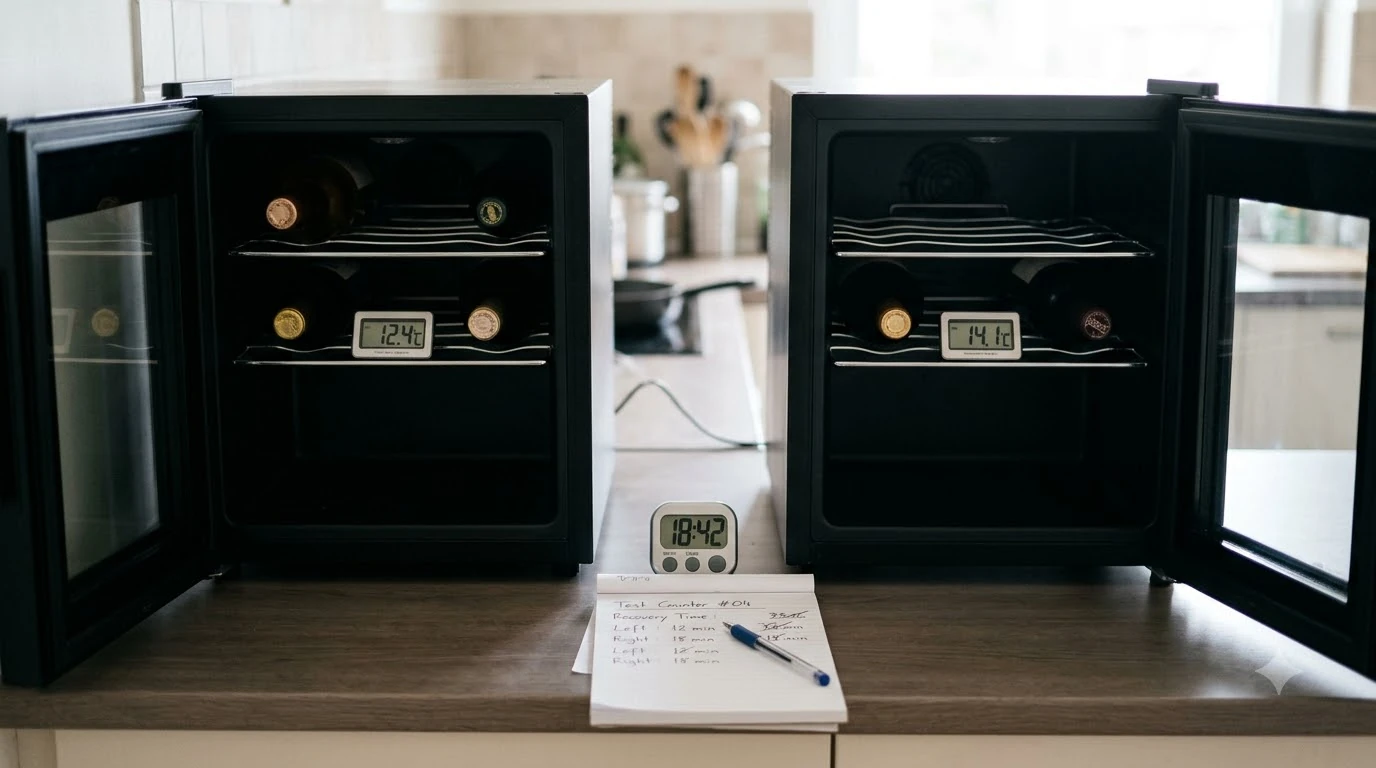
The Haier 36 bottle wine fridge is a single-zone, thermoelectric wine refrigerator designed to store up to 36 bottles, with eight removable wire racks, digital temperature controls, and a 50°F to 66°F operating range. Model HEWFT36BXB is a reasonable option for wine drinkers who want a dedicated freestanding storage cabinet with quiet cooling and a glass display door. However, it is a discontinued model, and its single temperature zone, limited temperature range, and installation requirements make it less suitable for some collections. Buyers should also investigate the condition, service history, and remaining parts availability before purchasing an older unit.
A dedicated wine refrigerator offers more controlled storage than an ordinary kitchen refrigerator, particularly for households that regularly keep several bottles of red and white wine. Haier’s 36-bottle cellar combines a relatively narrow cabinet, electronic controls, and thermoelectric cooling in a straightforward design. The important question is whether its actual specifications match the way a household buys, stores, and serves wine. This review examines the HEWFT36BXB’s features, practical limitations, ownership considerations, and alternatives to consider before committing to one.
Specs and Key Features of the Haier HEWFT36BXB
The Haier HEWFT36BXB offers straightforward wine storage rather than advanced cellar management. Its most important features are a 36-bottle stated capacity, eight removable wire racks, a single temperature zone, and a digital control panel.
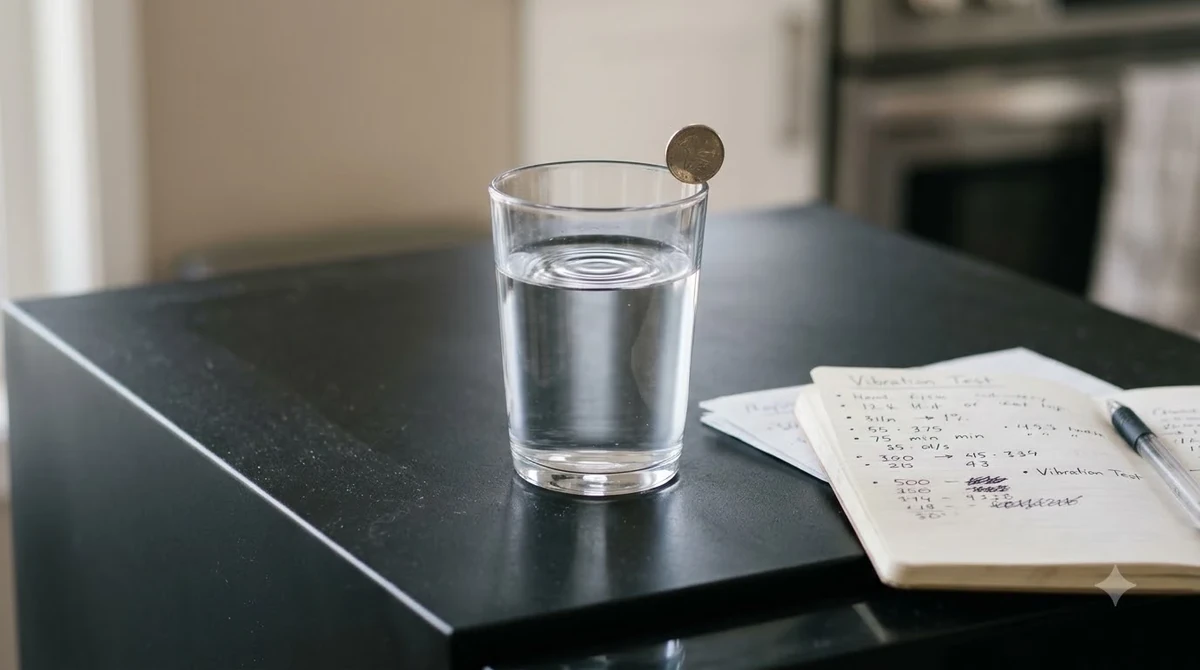
The cabinet uses thermoelectric cooling, which Haier describes as quiet and vibration-free. Instead of relying on a conventional compressor, this system uses a thermoelectric cooling mechanism. That approach can appeal to homeowners who intend to place a wine cabinet in a living area, dining room, or other frequently occupied part of the house.
The black exterior and full-length glass door give the appliance a display-oriented appearance. Soft interior lighting makes the bottles easier to identify, while the LED electronic display provides access to temperature adjustments. The recessed handle keeps the exterior relatively uncomplicated, and adjustable leveling legs help accommodate minor differences in flooring.
According to Haier’s specifications, the temperature range extends from 50°F to 66°F. Electronic adjustments are available in one-degree increments, giving owners a reasonably precise way to select a storage setting within that range. However, the appliance has only one independently controlled zone. All stored bottles therefore share the same general temperature environment.
| Specification | Haier HEWFT36BXB |
|---|---|
| Stated capacity | 36 bottles |
| Cooling technology | Thermoelectric |
| Temperature range | 50°F–66°F |
| Temperature zones | 1 |
| Temperature adjustment | Electronic, 1°F increments |
| Number of racks | 8 |
| Rack material | Wire |
| Lighting | Soft interior lighting |
| Exterior | Black with glass door |
| Height | 42 inches |
| Width | 18 1/8 inches |
| Depth | 20 5/16 inches |
| Depth with door open 90° | 37 1/4 inches |
| Net weight | 66.2 pounds |
| Electrical requirement | 115V, 60Hz |
| Installation type | Freestanding |
| Manufacturer warranty | Limited 1 year |
These specifications come from Haier’s product documentation and AJ Madison’s archived product listing. The distinction between advertised capacity and usable capacity deserves attention. The 36-bottle figure is a manufacturer-stated maximum, not a guarantee that every bottle shape will fit comfortably. Standard Bordeaux bottles are generally easier to arrange than wide Burgundy bottles, Champagne bottles, or unusually shaped wine packaging.
For a collection dominated by conventional 750 ml bottles, the layout should be more practical than for a collection with several large-format bottles. Buyers should also inspect the condition of all eight racks if considering a used appliance. Missing or bent racks can reduce the cabinet’s usefulness even when its cooling system still operates.
Another important specification is the ventilation arrangement. AJ Madison lists rear ventilation and recommends 2 inches of clearance behind the appliance, 2 inches on each side, and 4 inches above it. These measurements should be included in the installation plan rather than treating the cabinet’s exterior dimensions as its complete space requirement.
The original product information is available through Haier’s HEWFT36BXB product and support page, which also identifies the model’s discontinued status.
What Owners May Appreciate About Its Design
The HEWFT36BXB has several design characteristics that can make it appealing to households with modest wine collections. Its strongest selling points are the relatively narrow footprint, visible bottle storage, straightforward controls, and thermoelectric cooling system.
The 18 1/8-inch width is particularly relevant for homeowners who do not have room for a wide refrigerator. At 42 inches tall and 20 5/16 inches deep, the cabinet can fit into some compact storage areas, provided that ventilation and door-opening clearance are available. Its freestanding configuration also gives owners more flexibility than an appliance that requires a specialized built-in installation.
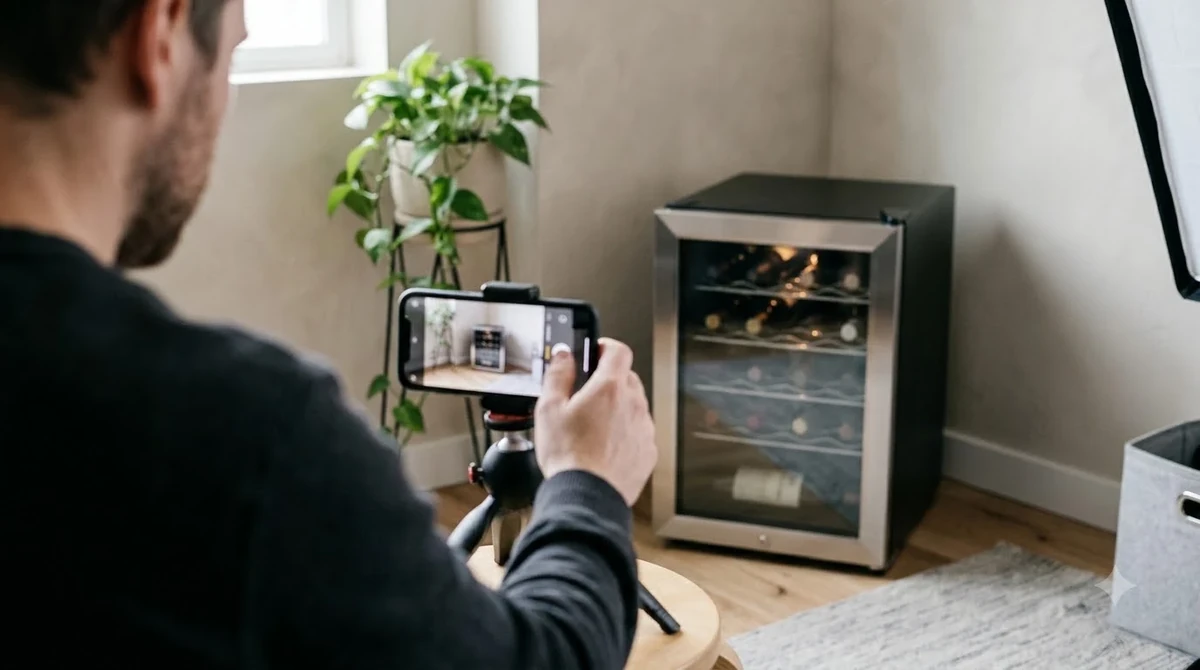
The glass door is another practical feature. It allows bottles to remain visible without opening the cabinet repeatedly to identify a particular wine. The soft interior lighting contributes to this display function, especially when the refrigerator sits in a dining room or entertainment area.
Eight removable wire racks provide a defined storage arrangement. Removable shelves can make it easier to accommodate bottles with slightly different dimensions, although removing a rack reduces the number of dedicated storage positions. The wire construction also makes it important to inspect the shelf supports and contact points for damage before buying a secondhand unit.
Temperature controls are relatively uncomplicated. The digital display and electronic touch controls are easier to interpret than a basic mechanical dial because owners can select a numerical temperature. One-degree increments also make it possible to distinguish between settings such as 54°F, 55°F, and 56°F.
The thermoelectric design is another potential advantage in a home environment. Haier specifically advertises quiet, vibration-free cooling. This may be attractive for a cabinet located near a sitting area, although actual operating sound can depend on the surrounding environment, ventilation, installation, and condition of the appliance.
It is important to distinguish advertised characteristics from verified long-term owner satisfaction. The available product listing does not provide a substantial body of published owner reviews for this exact model. Consequently, claims that owners universally praise its reliability, temperature stability, or lifespan would be unsupported. The features themselves are identifiable advantages, but buyers should evaluate the individual refrigerator rather than assume every surviving unit performs identically.
For households that frequently serve wine with meals, the glass-door arrangement can also make bottle selection more convenient. A bottle of Pinot Noir for a lighter dinner or Cabernet Sauvignon for a richer meal can be located without searching through a separate cupboard. Recipes such as chicken Marsala can provide useful inspiration for planning meals around a home wine collection.
Common Complaints and Important Limitations
The Haier 36-bottle wine cellar has several limitations that deserve attention before purchase. Its discontinued status, single-zone configuration, relatively narrow temperature range, and freestanding installation requirements are more significant concerns than its basic appearance or control layout.
The first concern is availability. Haier identifies the HEWFT36BXB as no longer being manufactured. AJ Madison also marks the product as no longer available. This means prospective buyers should not assume that a new unit can be ordered through ordinary retail channels or that every advertised listing represents current inventory.
Remaining-stock and secondhand purchases require additional checks. A refrigerator that has been sitting unused in a warehouse may have a different service history from one that has operated in a household for several years. Buyers should request confirmation of the model number, operating condition, included racks, power connection, and any available warranty documentation.
The single-zone design is the next limitation. Red and white wines are often served at different temperatures, so households that regularly maintain both categories may prefer independently controlled compartments. The Haier cabinet cannot create two separately adjustable temperature environments. Owners must choose one setting for the entire collection.
The 50°F to 66°F range also restricts its flexibility. It can accommodate a number of red-wine storage and serving preferences, but it cannot reach the lower temperatures generally preferred for serving sparkling wines, many lighter whites, and rosé. A household that expects to keep every wine at its ideal serving temperature may find this restriction inconvenient.
There is also an important difference between wine storage temperature and serving temperature. A cabinet set to 55°F can provide a useful general storage environment, but that does not mean every bottle is ready to pour directly from the refrigerator. Sparkling wines are generally served at 40°F to 50°F, while light whites and rosé are typically served at 45°F to 50°F. Full-bodied reds are generally served warmer, around 60°F to 65°F.
The thermoelectric cooling system also deserves realistic expectations. Its quiet operation is an advertised benefit, but thermoelectric refrigerators can be more sensitive to surrounding ambient temperatures than buyers might expect. A poorly ventilated installation or a particularly warm room can make temperature management more difficult. This is especially relevant in hot climates and rooms exposed to direct sunlight.
Another practical limitation is the absence of a door lock. AJ Madison’s specifications explicitly list no lock. Households with children, shared entertainment spaces, or valuable collections may prefer a cabinet with a locking mechanism.
Finally, the eight wire racks should not be mistaken for universal bottle compatibility. The advertised capacity is based on a particular bottle arrangement. Wide bottles and Champagne formats can occupy more space than standard Bordeaux bottles, so a collection with varied shapes may hold fewer than 36 bottles.
Tip: Before purchasing a used HEWFT36BXB, ask the seller to run it continuously and demonstrate that the displayed temperature settles near the selected setting. Also inspect every rack, the glass door, the door seal, the electrical cord, and the cabinet’s ventilation area. A photograph of a powered-on display alone is not enough to establish that the cooling system works correctly.
Who Should Buy This Wine Refrigerator and Who Should Skip It
The Haier HEWFT36BXB is most appropriate for someone who wants a compact, freestanding cabinet for a relatively conventional collection of up to 36 bottles. It is less appropriate for serious collectors who need dual-zone control, advanced temperature flexibility, or dependable access to manufacturer-supported replacement products.
Who should consider it
A casual wine drinker with a collection of everyday 750 ml bottles may appreciate the simple organization. Eight removable racks, a glass door, and digital temperature adjustment provide the basic functions needed to keep bottles together in a dedicated appliance. The black finish can also work well in a kitchen, dining room, or entertainment space with dark appliances.
People who prefer a quiet storage appliance may find the thermoelectric design attractive. Its advertised vibration-free operation is relevant for households where the wine refrigerator will be located close to a dining table or sitting area. However, the actual operating environment remains important, particularly where room temperatures are high.
The unit may also appeal to someone who finds a well-maintained secondhand example at a reasonable overall purchase cost. In that situation, the key is not simply finding a refrigerator with a 36-bottle label. It is confirming that the specific appliance cools properly, includes all eight racks, has an intact door seal, and has a realistic path to service if something fails.
Who should skip it
Collectors who keep both reds and whites at different storage temperatures should consider a dual-zone appliance instead. The Haier has only one zone, so it cannot independently regulate two groups of bottles.
People who frequently serve Champagne, sparkling wine, Sauvignon Blanc, Riesling, or rosé straight from their wine refrigerator may also prefer a model with a lower minimum setting. The HEWFT36BXB starts at 50°F, which is warmer than the typical serving temperature for several of these styles.
Buyers planning a built-in kitchen installation should skip this model unless their intended arrangement fully respects its freestanding ventilation requirements. Its published dimensions do not make it an approved undercounter refrigerator. A tight cabinet opening can restrict airflow and interfere with the cooling system.
It is also a less attractive choice for anyone who requires a current product with a straightforward manufacturer warranty and readily available replacement parts. Because the HEWFT36BXB has been discontinued, the age and condition of the individual appliance become especially important.
For households that mainly want wine ready for entertaining, the right choice depends on whether they prioritize general storage or immediate serving temperature. Someone who enjoys making an Aperol Spritz or a Hugo Spritz may have different refrigeration needs from someone who primarily stores Bordeaux, Merlot, and Pinot Noir. The Haier is a wine-storage cabinet, not a complete beverage center for every drink.
How It Compares to Other Wine Storage Options
The HEWFT36BXB competes most directly with the broader categories of compact single-zone wine refrigerators, dual-zone wine cabinets, and ordinary household wine storage. The best alternative depends on whether the priority is simplicity, temperature flexibility, installation convenience, or collection size.
A single-zone wine refrigerator is the closest match. Like the Haier, this type of cabinet uses one temperature setting for the entire collection. It makes sense for households that primarily buy one category of wine or are comfortable storing different styles at a consistent temperature and chilling individual bottles before serving.
A dual-zone wine refrigerator is more appropriate for mixed collections. Independent compartments allow owners to maintain different temperatures for red and white wines. This is useful for households that regularly entertain and want multiple bottles ready for different occasions. The trade-off is that buyers must compare the usable capacity of each compartment rather than relying only on the total bottle count.
A conventional compressor-based wine refrigerator is another alternative. Compressor systems are generally more suitable for buyers who need stronger cooling performance in warmer surroundings. However, noise, vibration, cabinet construction, and installation specifications differ between models. A compressor appliance should not automatically be considered superior in every situation; the appropriate choice depends on its intended environment and the manufacturer’s performance specifications.
There is also the option of a regular household refrigerator combined with a separate wine rack or cupboard. This may be sufficient for people who buy only a few bottles at a time and do not need a dedicated wine appliance. However, ordinary refrigerators generally operate at colder temperatures than typical wine-storage recommendations, and frequent kitchen use can make bottle organization less convenient.
For a more focused comparison of capacity and appliance features, the wine refrigerator model reviews section can help narrow down the type of cabinet that fits a particular household.
Haier itself has also offered other wine-storage products. For example, its QWR04DGRGB wine center is listed as a 44-bottle dual-zone appliance, with independently controlled temperature areas between 41°F and 61°F. That product represents a different storage approach from the single-zone HEWFT36BXB, rather than a direct replacement with identical dimensions or construction.
When comparing these categories, the important figures are usable capacity, temperature range, number of zones, cooling method, ventilation clearance, and warranty coverage. A refrigerator with a higher stated bottle capacity is not necessarily a better choice if its shelves cannot accommodate the bottles in a particular collection.
Frequently Asked Questions
What is the model number of the Haier 36-bottle wine refrigerator?
The model number is HEWFT36BXB. Its UPC is 688057382685, which can help distinguish it from other Haier wine cabinets when checking old listings, replacement components, or documentation. Both identifiers are useful when contacting an appliance parts supplier.
Can the Haier HEWFT36BXB be transported on its side?
Upright transportation is the safer general approach for a wine refrigerator unless its specific handling instructions say otherwise. If the appliance must be transported horizontally, obtain the manufacturer’s guidance about positioning and the required standing period before reconnecting power. This is particularly important when buying an older appliance that may already have an uncertain service history.
Does the Haier 36-bottle wine cellar have a reversible door?
AJ Madison identifies the HEWFT36BXB as having a right-side hinge and does not list a field-reversible door. Buyers should therefore plan the installation around the existing door swing rather than assuming the hinge can be moved to the opposite side. This can matter in narrow kitchens and rooms with nearby cabinets.
Can the Haier wine fridge operate outdoors?
No outdoor approval is listed in AJ Madison’s specifications. The appliance should be treated as an indoor residential wine refrigerator rather than an outdoor-rated cabinet. Exposure to rain, excessive humidity, and unsuitable ambient temperatures can create problems that an ordinary indoor installation is not designed to handle.
Does the HEWFT36BXB include a Sabbath mode?
No. AJ Madison explicitly lists Sabbath mode as unavailable for this model. Households that require this particular appliance function should verify its presence in the specifications of any replacement refrigerator before purchasing.
The Haier HEWFT36BXB remains a straightforward wine refrigerator on paper, with useful features for a modest collection: 36-bottle stated capacity, eight removable racks, electronic controls, and quiet thermoelectric cooling. Its discontinued status and single-zone temperature limitations, however, make careful purchasing essential. A well-maintained unit may suit someone who values simple wine storage, but buyers seeking a current, flexible appliance should compare newer single-zone and dual-zone cabinets before making a decision.
More in Model Reviews
 Magic Chef 44 Bottle Wine Cooler Review for Flexible StorageUpdated Nov 21, 2026
 Whynter 164 Bottle Wine Cooler Review: Capacity, Features, and FitUpdated Nov 21, 2026
 Insignia NS WC16BK6 Review: Compact 16-Bottle Wine StorageUpdated Nov 21, 2026
 Wine Enthusiast Electric Blue Omega Review: Opening, Pouring, and Preserving Made EasierUpdated Nov 21, 2026
 Koolatron 20 Bottle Wine Cooler Review: Features, Fit, and PerformanceUpdated Nov 21, 2026
 NewAir AWC 330E Review for Home Wine StorageUpdated Nov 21, 2026