

We may earn a commission when you buy through links on this page, at no extra cost to you. Learn more.
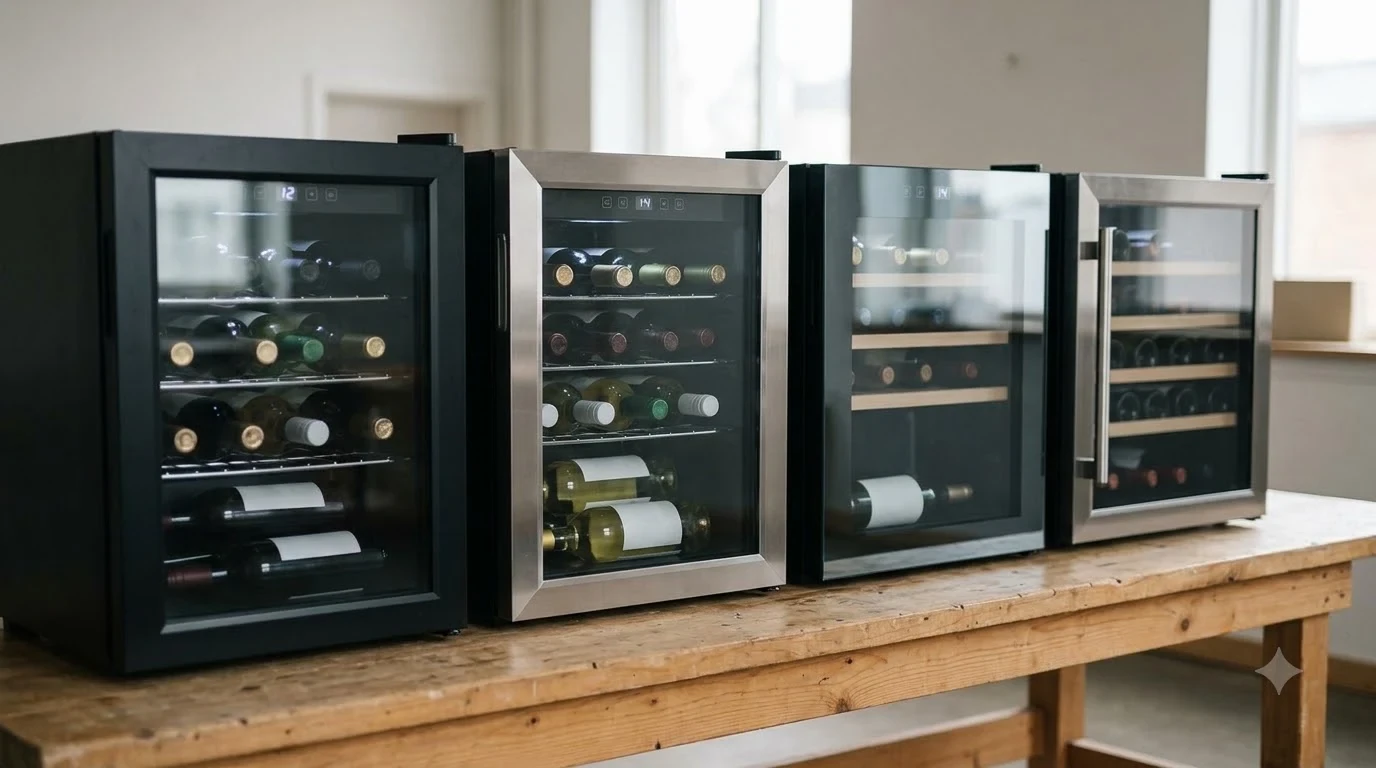
The Danby countertop wine cooler DWC172BL is a compact 17-bottle wine refrigerator designed for households that want dedicated wine storage without giving up space to a full-size cellar. Its 1.8-cubic-foot interior, reversible glass door, and 43°F to 57°F temperature range make it a practical option for keeping everyday reds and whites ready to serve. However, Danby lists the original black model as discontinued, and its relatively narrow temperature range and manual rear thermostat are important limitations to understand before buying.
The Danby Designer DWC172BL occupies an interesting middle ground between a small six-bottle countertop chiller and a larger freestanding wine refrigerator. Its stated 17-bottle capacity is useful for casual collectors, apartment kitchens, and entertaining spaces, while the molded top provides a convenient place for wine accessories. This review examines its specifications, real-world ownership considerations, temperature controls, installation requirements, and alternatives so buyers can decide whether this particular Danby deserves a place in their home.
Specs and Key Features
The Danby DWC172BL is designed around straightforward wine storage rather than advanced cellar management. Its 1.8-cubic-foot interior accommodates up to 17 standard bottles, while three staggered storage surfaces help organize a modest collection.
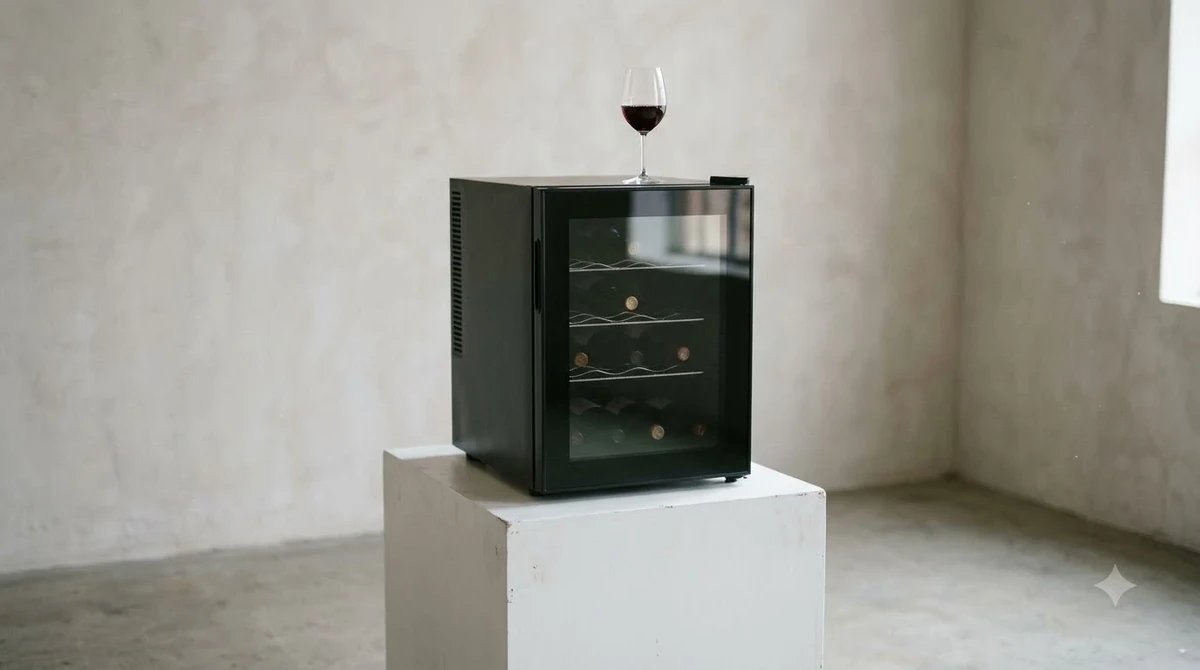
One of its strongest selling points is its relatively small exterior footprint compared with larger wine refrigerators. The black cabinet, tinted glass door, and molded worktop also give it a finished appearance that works in a kitchen, home bar, or apartment entertaining area. The reversible door is particularly useful when the available counter space dictates which direction the appliance needs to open.
Here are the manufacturer’s principal specifications for the original DWC172BL:
| Specification | Danby DWC172BL |
|---|---|
| Model | DWC172BL |
| Product type | Freestanding countertop wine cooler |
| Capacity | 17 standard 750 ml bottles |
| Interior volume | 1.8 cubic feet |
| Temperature range | 43°F–57°F |
| Width | 17.5 inches |
| Depth | 19.6875 inches |
| Height | 20.125 inches |
| Weight | 57.5 pounds |
| Shelving | Two vinyl-coated wire shelves and one staggered shelf |
| Door | Reversible glass door |
| Exterior | Black cabinet with molded worktop |
| Warranty listed by Danby | 18 months, parts and labor |
The dimensions deserve particular attention. At 17.5 inches wide and just over 20 inches high, the appliance looks compact on paper, but its 19.6875-inch depth can consume a meaningful amount of counter space. Buyers should measure the entire installation area rather than relying on the front-facing width alone.
The 57.5-pound product weight is another consideration. This is not a lightweight countertop accessory that can be moved around casually after installation. Choose its permanent location before loading bottles, and make sure the supporting surface can handle the appliance’s weight plus a full collection.
Danby’s original product listing also identifies the DWC172BL as discontinued. That distinction matters because availability, replacement parts, warranty eligibility, and the condition of remaining inventory may vary. A secondhand unit should be evaluated differently from an unopened appliance with documented purchase and warranty information.
The manufacturer’s Danby DWC172BL product specifications provide the appropriate starting point for verifying the original model’s dimensions, features, and discontinued status. Avoid assuming that another Danby countertop refrigerator has identical controls or warranty coverage simply because the cabinet looks similar.
What Owners Like
The main appeal of the Danby countertop format is its combination of relatively modest dimensions and useful bottle capacity. For someone who regularly keeps a mixture of everyday wine styles at home, 17 standard bottles offer considerably more flexibility than a compact six-bottle chiller.
Capacity is particularly valuable when planning for entertaining. A collection might include Sauvignon Blanc, Chardonnay, Pinot Noir, Merlot, sparkling wine, and a few bottles reserved for special occasions. Rather than placing every bottle in a crowded kitchen refrigerator, a dedicated wine appliance provides a separate storage area that can remain organized.
The DWC172BL’s shelving arrangement is another practical feature. Danby specifies two vinyl-coated wire shelves and one staggered shelf, with a loading arrangement described in its owner’s manual. The shelves can be removed by lifting their rear sections and sliding them out of their locked positions. This gives owners some flexibility when cleaning the interior or adjusting the available storage arrangement.
The molded worktop also makes the design more useful than a plain refrigerator cabinet. Wine accessories such as a corkscrew, stopper, bottle opener, and serving napkins can be kept nearby. The surface should not be treated as an invitation to overload the appliance, but it does provide a convenient landing area for lightweight accessories.
A clean appearance for smaller rooms
The black exterior and glass door give the DWC172BL a more specialized appearance than a basic beverage refrigerator. Bottles remain visible through the door, and the compact rectangular cabinet can fit into a variety of kitchen and home-bar arrangements.
The reversible door is especially helpful in rooms where the appliance must sit beside another cabinet or appliance. Depending on the kitchen layout, changing the hinge orientation can make loading and retrieving bottles considerably easier. This is a more meaningful convenience than a decorative feature because it directly affects everyday access.
Historical customer feedback on other Danby countertop models provides some useful context, although it should not be mistaken for verified DWC172BL owner feedback. A KitchenReviews customer discussing the DWC1233BL-SC praised its modern appearance and bottle display but also noted that the appliance occupied more counter space than expected. The same owner questioned whether it consistently reached its selected temperature.
Those observations reinforce two sensible buying priorities: measure the available space carefully and verify cooling performance rather than assuming that a thermostat setting guarantees an identical internal temperature in every location.
For a broader look at the features that distinguish different wine refrigerator sizes and configurations, the best rated wine cooler options are a useful comparison point. In particular, consider whether a countertop appliance actually matches your collection size and available room.
Useful for everyday wine rotation
The DWC172BL is most attractive for people who purchase wine regularly and drink bottles over relatively short periods. Its capacity gives an owner room to keep several wine styles available without turning an entire kitchen refrigerator into a wine cabinet.
It can also support a more organized entertaining routine. For example, a host planning an evening with chicken marsala might want a medium-bodied red such as Merlot or Pinot Noir available alongside a chilled white for guests who prefer lighter wines. A separate wine cooler makes it easier to maintain that selection without repeatedly rearranging food in the main refrigerator.
Similarly, a home bar serving an Aperol Spritz can benefit from having suitable wine storage nearby, although the DWC172BL is not a substitute for a dedicated refrigerator for ice, mixers, or other cocktail ingredients.
Common Complaints
The biggest limitations are the relatively restricted temperature range, the rear-mounted manual thermostat, and the physical space required for a unit described as countertop-sized. Buyers should also pay attention to the discontinued status of the original black model.
Its temperature range of 43°F to 57°F is appropriate for chilling many everyday white wines, rosés, and lighter reds, but it does not cover every preferred wine-serving temperature. In particular, someone who wants to maintain a full-bodied red at a warmer storage or serving temperature will find that the appliance cannot be adjusted to every desired setting.
For perspective, common serving temperatures vary by wine style. Sparkling wines are generally served around 40°F to 50°F, light whites and rosés around 45°F to 50°F, full-bodied whites around 50°F to 55°F, light reds around 55°F to 60°F, and fuller reds around 60°F to 65°F. The DWC172BL’s upper limit of 57°F therefore works better for some wines than others.
The manual thermostat requires attention
Unlike a modern digital wine refrigerator with a clearly displayed temperature, the original DWC172BL uses a dial on the back of the appliance. The owner’s manual describes a graduated blue scale, with darker and thicker blue indicating colder settings and lighter, thinner blue indicating warmer settings.
That arrangement is simple, but it is less convenient for people who want precise temperature adjustments. There is no digital display on the described control system that lets an owner quickly confirm the actual internal temperature. A separate refrigerator thermometer is useful for checking the conditions inside the cabinet after it has stabilized.
Danby also explains that the internal temperature can change according to room temperature, the number of bottles stored, and how frequently the door is opened. These factors make the appliance’s actual performance dependent on its environment and usage rather than just the thermostat position.
Countertop dimensions can be misleading
The term countertop sometimes suggests a small appliance that fits beneath virtually any kitchen cabinet. The DWC172BL is not that small. Its 19.6875-inch depth, 17.5-inch width, and required ventilation clearance mean that a suitable installation area needs more room than the exterior measurements alone suggest.
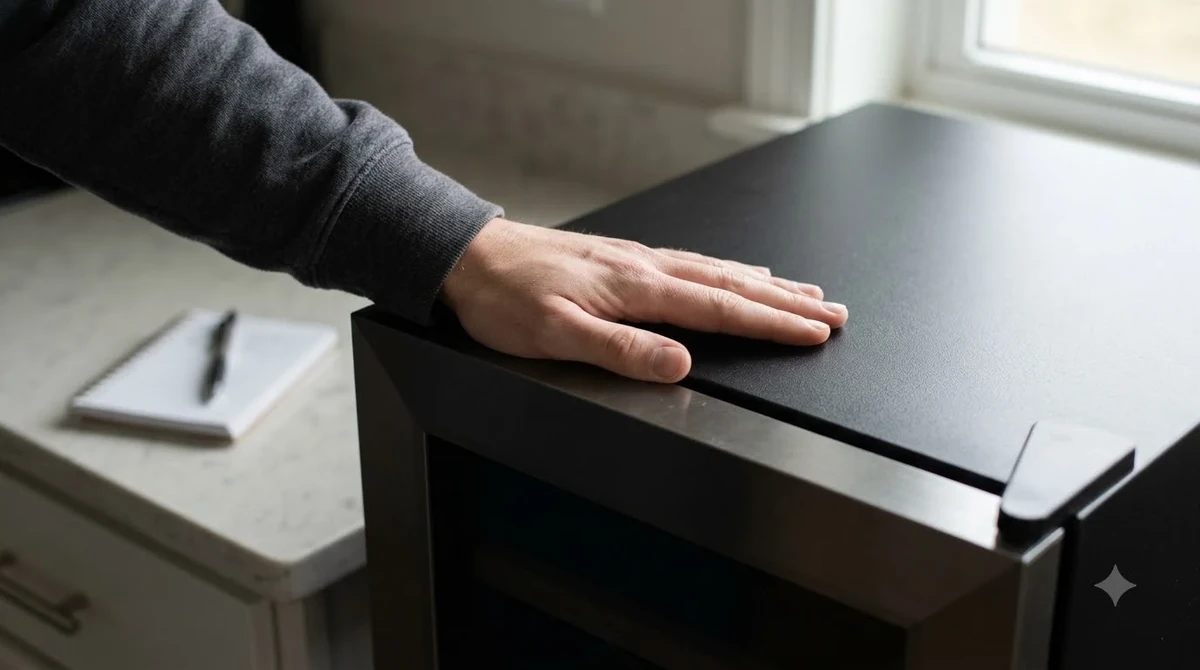
The original owner’s manual specifies five inches of clearance at the back, sides, and top. That requirement can make placement beneath low cabinets or inside enclosed kitchen furniture impractical. The appliance is also specified for freestanding installation, not installation inside a cabinet or counter.
There is another practical issue: the unit weighs 57.5 pounds before it is filled. Moving it into a tight location after loading bottles creates unnecessary handling difficulty. Planning the installation before delivery is the better approach.
Noise and temperature expectations
Any compressor-based refrigeration appliance can make operating sounds as its cooling system cycles. Danby’s general refrigerator FAQ gives a sound range of 35 to 46 decibels for its refrigerators and freezers, but that general information should not be treated as a measured noise specification for this particular model.
Buyers who intend to place the cooler directly beside a bed, in a quiet office, or in a small studio should consider this limitation. An appliance that cycles periodically may be more noticeable in a quiet room than in a busy kitchen.
There is also a difference between an appliance reaching a selected thermostat position and maintaining an exact temperature throughout its interior. Bottle placement, door openings, and ambient conditions all influence cooling. Owners who care about consistency should monitor the interior rather than relying entirely on the dial’s position.
Finally, the discontinued status introduces purchasing uncertainty. A remaining unit could be new old stock, refurbished, open-box, or used. Each condition creates different expectations for documentation, support, and warranty protection.
Who Should Buy and Who Should Skip
The Danby DWC172BL makes the most sense for someone who wants a dedicated wine refrigerator with room for approximately 17 standard bottles and does not require sophisticated digital temperature management. It is less suitable for collectors who want long-term cellar conditions or precise independent settings for different wine categories.
Who should consider it
Apartment residents and small-household wine drinkers: The 1.8-cubic-foot interior provides a useful storage capacity without requiring the floor space of a full-size wine cabinet. Its 17-bottle rating is sufficient for someone who keeps a modest rotating collection rather than dozens of cases.
Casual wine enthusiasts: People who purchase a mixture of Sauvignon Blanc, Chardonnay, rosé, Pinot Noir, and other everyday wines may appreciate the convenience of dedicated cooling. The reversible door and visible interior also make the appliance relatively easy to incorporate into an existing kitchen arrangement.
Home entertainers: A household that regularly hosts small gatherings may benefit from having several bottles ready to serve. The molded worktop provides an additional surface for lightweight wine accessories, while the separate cabinet keeps bottles organized.
Buyers comfortable with straightforward controls: The rear thermostat dial is uncomplicated once its operation is understood. Owners who do not need a digital readout or several independent temperature zones may find this arrangement perfectly acceptable.
Who should skip it
Collectors building a long-term cellar: The DWC172BL is a compact chilling appliance, not a substitute for a dedicated wine-aging cabinet. Serious collectors may prefer a larger wine refrigerator with more precise temperature management and greater capacity.
People with many full-bodied reds: The 57°F upper limit does not reach the usual 60°F to 65°F serving range for full-bodied reds. A collector who wants to maintain a collection at warmer temperatures should consider a different configuration.
Buyers with limited counter clearance: The depth and five-inch ventilation requirements make the appliance difficult to fit into some kitchen arrangements. A compact-looking cabinet is not automatically suitable for every countertop.
People who need current-production availability: Danby lists the original DWC172BL as discontinued. Anyone who wants straightforward access to current inventory and manufacturer support may prefer a currently listed alternative rather than relying on remaining stock.
Owners seeking silent operation: Anyone particularly sensitive to compressor or cooling-cycle sounds should compare appliance noise information carefully before choosing a wine refrigerator for a bedroom or quiet workspace.
How many bottles do you really need?
A stated capacity of 17 bottles sounds generous, but the appropriate capacity depends on buying habits. Someone who purchases two or three bottles each week and drinks them regularly may find the unit comfortably sized. Someone who purchases mixed cases for entertaining, seasonal occasions, and longer-term storage may outgrow it quickly.
It is also important to remember that the manufacturer’s stated capacity refers to standard 750 ml bottles. Champagne bottles, sparkling wine bottles, and unusually shaped bottles can occupy different amounts of space. A collection containing many wider bottles may not fit in the same arrangement as a collection of standard Bordeaux-style bottles.
For that reason, the practical capacity should be judged by the actual bottle shapes in the collection rather than the maximum number printed in the product description.
How It Compares to Alternatives
The original DWC172BL competes most directly with other compact wine refrigerators, including newer Danby countertop configurations. Its biggest advantage is its 17-bottle capacity within a relatively compact cabinet, while its principal disadvantage is that the original black version is discontinued.
One relevant comparison is Danby’s DWC172BLPDB, a platinum-finish version of the 17-bottle countertop design. It retains the same general capacity and 43°F to 57°F temperature range but has slightly different exterior dimensions and a different published warranty period.
| Comparison | DWC172BL | DWC172BLPDB |
|---|---|---|
| Finish | Black | Platinum |
| Capacity | 17 bottles | 17 bottles |
| Interior volume | 1.8 cubic feet | 1.8 cubic feet |
| Temperature range | 43°F–57°F | 43°F–57°F |
| Width | 17.5 inches | 17.72 inches |
| Depth | 19.6875 inches | 20.08 inches |
| Height | 20.125 inches | 20.08 inches |
| Listed warranty | 18 months | 12 months |
The platinum version is worth considering for buyers who prefer a metallic appearance that coordinates with stainless-steel kitchen appliances. However, the finish should not be the only deciding factor. The different published dimensions and warranty terms matter when comparing two closely related products.
Countertop versus larger freestanding wine refrigerators
A larger freestanding wine refrigerator is a better option for someone whose collection regularly exceeds 17 bottles. Larger models can provide more storage flexibility, although they require additional floor space and may be less convenient in smaller apartments.
Danby’s 36-bottle DWC036A1BSSDB family illustrates the next general capacity category. A 36-bottle appliance offers more than twice the nominal capacity of the DWC172BL, making it more appropriate for households that buy wine in larger quantities. However, it is a substantially different installation proposition rather than a direct replacement for a compact countertop cabinet.
For someone who only keeps a few bottles available for dinner, a six- or twelve-bottle wine refrigerator may also be sufficient. A smaller cabinet can be easier to position, while the 17-bottle Danby provides more room for guests and a broader everyday selection.
Which configuration offers better value?
The best choice depends on the balance between storage capacity, available space, and the level of temperature control required. A compact model can be excellent value if it comfortably accommodates the collection, but it becomes an inconvenient purchase if the owner immediately needs additional capacity.
Think about how the appliance will be used over the next several years. A household that currently stores eight bottles but expects to collect more may benefit from a larger unit. Someone who mainly wants a separate place for everyday drinking wine may find a 17-bottle model more than adequate.
There is also a meaningful difference between buying an older discontinued appliance and purchasing a currently supported model. Before buying the DWC172BL, verify the seller’s return policy, the exact model number, the appliance’s condition, and the warranty documentation. Do not assume that the warranty published for a related Danby model automatically applies to an older unit.
For more Danby appliance comparisons and individual model evaluations, the Brand x Type model reviews section provides another starting point for comparing product categories and specifications.
Installation, Operation, and Maintenance
Correct placement and basic maintenance are particularly important for a compact compressor-based wine cooler. The DWC172BL’s owner’s manual provides specific instructions for clearance, electrical connections, leveling, temperature adjustment, and cleaning.
Prepare the installation area
Start by measuring the width, depth, and height of the intended location. Allow for the manufacturer’s specified five inches of clearance between the appliance and adjacent walls at the back, sides, and top. These spaces are important for ventilation and should not be treated as optional decorative gaps.
Choose a firm, level supporting surface capable of holding the appliance when fully loaded. Avoid direct sunlight, nearby stoves, heaters, and damp locations. Danby also specifies indoor, temperature-controlled household use rather than outdoor installation in garages, porches, or vehicles.
The original DWC172BL is intended for freestanding installation. It should not be enclosed inside cabinetry or treated as a built-in wine refrigerator. Blocking ventilation openings can interfere with cooling performance and appliance operation.
Allow the appliance to settle before operation
If the unit has been transported on its side or back, Danby instructs owners to leave it standing upright for approximately six hours before connecting it to power. This waiting period helps reduce the possibility of cooling-system problems caused by transportation.
Use a properly grounded three-prong electrical outlet. The owner’s manual specifically prohibits extension cords and warns against using ungrounded adapters. Electrical installation should follow the manufacturer’s requirements rather than relying on improvised connections.
Adjust the temperature gradually
The thermostat is positioned on the rear wall of the appliance. Its graduated blue dial uses darker, thicker markings for colder settings and lighter, thinner markings for warmer settings. Danby suggests starting just past the midpoint of the blue scale as a general cooling position.
Because internal conditions depend on room temperature, bottle quantity, and door-opening frequency, give the appliance time to stabilize after installation and loading. Use a separate thermometer to monitor the actual temperature rather than assuming the dial position represents an exact numerical setting.
Tip: Keep a small refrigerator thermometer inside the cooler and record the temperature over several days. This makes it easier to identify whether your preferred setting maintains suitable conditions for your usual wine selection, especially after adding several bottles or opening the door repeatedly.
Clean the interior and maintain airflow
Disconnect the appliance before cleaning. Danby’s manual recommends using a soft cloth with a mild detergent solution or a mixture of one tablespoon of baking soda in one quart of water for the interior. Removable shelves can be washed separately using mild detergent and dried before being returned to the cabinet.
Pay particular attention to the door-seal area. A clean, properly seated gasket helps maintain the cabinet’s cooling environment. Avoid abrasive cleaning products and cleaners containing ammonia or alcohol, which Danby warns can damage the appliance’s appearance.
Do not cover the wire shelves with aluminum foil or other materials that prevent air circulation. Proper airflow helps the cooler distribute cold air throughout its interior. Also avoid packing the shelves so tightly that bottles interfere with normal circulation or door closure.
The reversible door is another feature that may require occasional attention during installation. If changing the hinge orientation, follow the manual’s sequence carefully and ensure the gasket seals evenly around the door after reassembly. If the appliance is laid on its side during the procedure, allow it to stand upright for six hours before reconnecting power.
Frequently Asked Questions
Is the Danby DWC172BL still manufactured?
Danby’s official US product listing identifies the DWC172BL as discontinued. Remaining units may appear through independent sellers or secondhand marketplaces, but availability and condition can differ. Buyers should verify the exact model number and obtain written warranty information before purchasing.
Can the Danby DWC172BL store champagne bottles?
The manufacturer’s 17-bottle capacity is based on standard 750 ml wine bottles, not every possible bottle shape. Champagne and sparkling wine bottles are often wider, so they may reduce the number that can be stored simultaneously. Measure the bottle diameter and available shelf spacing before planning a full sparkling-wine collection.
Does the DWC172BL have automatic defrost?
The original model’s operating documentation describes an auto-cycle defrost arrangement in which refrigerated surfaces defrost during the thermostat’s off cycle. Water is directed toward a drip tray near the compressor, where it evaporates. This differs from manually scraping accumulated frost from the cooling surfaces.
Can the Danby countertop wine cooler be used in a garage?
The original DWC172BL is intended for household use in a temperature-controlled indoor environment. Danby excludes garages, porches, vehicles, and other uncontrolled outdoor locations from its intended installation conditions. Extreme ambient temperatures can affect refrigerator performance.
Can the shelves be removed to store taller bottles?
Yes. The owner’s manual explains that a shelf can be released by lifting its rear section and sliding it out. However, removing a shelf changes the usable storage arrangement and does not guarantee that every oversized bottle will fit securely. Make sure remaining bottles cannot roll or obstruct the door.
The Danby DWC172BL remains an appealing compact wine-storage concept, particularly for households that want room for 17 standard bottles without committing to a large floor-standing refrigerator. Its limited temperature adjustment, ventilation requirements, and discontinued status deserve careful consideration, but its reversible door and straightforward shelving make the design practical for everyday use. If you find a properly documented unit in good condition and have the required installation space, it can still be a sensible choice for a modest home wine collection.
More in Model Reviews
 Magic Chef 44 Bottle Wine Cooler Review for Flexible StorageUpdated Nov 21, 2026
 Whynter 164 Bottle Wine Cooler Review: Capacity, Features, and FitUpdated Nov 21, 2026
 Insignia NS WC16BK6 Review: Compact 16-Bottle Wine StorageUpdated Nov 21, 2026
 Wine Enthusiast Electric Blue Omega Review: Opening, Pouring, and Preserving Made EasierUpdated Nov 21, 2026
 Koolatron 20 Bottle Wine Cooler Review: Features, Fit, and PerformanceUpdated Nov 21, 2026
 NewAir AWC 330E Review for Home Wine StorageUpdated Nov 21, 2026