

We may earn a commission when you buy through links on this page, at no extra cost to you. Learn more.
The wine enthusiast 6 bottle wine fridge is a compact, freestanding thermoelectric cooler designed to keep up to six standard Bordeaux bottles organized and ready to serve. Its touchscreen controls, blue LED temperature display, and small countertop-height footprint make it appealing for apartments, kitchen counters, and home bars. However, its limited capacity, temperature fluctuation, ventilation requirements, and inability to accommodate every bottle shape mean it is better suited to short-term everyday storage than serious wine collecting or long-term aging.
A dedicated wine cooler can make a noticeable difference for someone who regularly keeps a few bottles of red, white, and sparkling wine available. Rather than placing every bottle in a household refrigerator, a compact wine refrigerator provides a separate storage environment with adjustable temperature controls. Wine Enthusiast’s six-bottle model targets this small-collection market, combining a narrow cabinet with electronic controls and solid-state cooling. The important question is whether its practical features outweigh the restrictions that come with such a small appliance.
Specs and Key Features
The Wine Enthusiast 6-Bottle Wine Cooler is a compact thermoelectric appliance with room for six standard Bordeaux bottles. Its main advantages are a narrow exterior, straightforward electronic controls, and a dedicated wine-storage compartment rather than a general-purpose refrigerator.
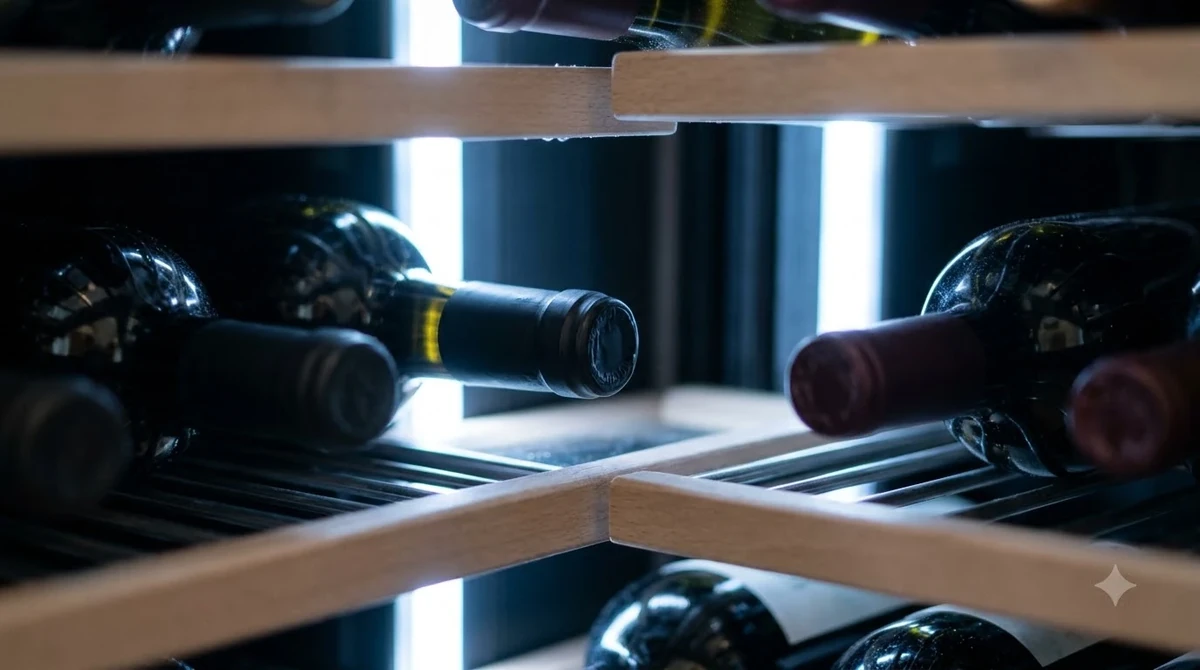
The manufacturer’s product number is 272 02 06 01. Its listed dimensions are 14-7/8 inches high, 9-3/4 inches wide, and 19-7/8 inches deep, making it particularly narrow compared with many freestanding wine refrigerators. The interior has a stated gross volume of 0.7 cubic feet, while the empty appliance weighs 9.2 pounds. These specifications make the unit relatively easy to position on a suitable countertop or bar, provided its ventilation requirements are respected.
The cooling system uses thermoelectric technology. Unlike compressor refrigerators, thermoelectric appliances use solid-state cooling components and do not rely on a conventional compressor. This arrangement is attractive in small living spaces because of its generally quieter operation and relatively simple construction. Wine Enthusiast describes the model as using efficient, quiet solid-state cooling.
Temperature adjustment is electronic, with a touchscreen interface and blue LED display. The manufacturer’s detailed specifications list a range of 46°F to 64°F, although some retailer listings give slightly different upper limits. The stated temperature variance is plus or minus 5°F, an important qualification for buyers expecting highly precise temperature management.
| Specification | Wine Enthusiast 6-Bottle Cooler |
|---|---|
| Item number | 272 02 06 01 |
| Maximum capacity | 6 Bordeaux-size bottles |
| Height | 14-7/8 inches |
| Width | 9-3/4 inches |
| Depth | 19-7/8 inches |
| Interior volume | 0.7 cubic feet |
| Empty weight | 9.2 pounds |
| Cooling technology | Thermoelectric |
| Temperature range | 46°F–64°F |
| Temperature variance | ±5°F |
| Recommended ambient temperature | 60°F–80°F |
| Shelving | 2 wavy-wire shelves |
| Electrical requirements | 115V / 60Hz |
| Running current | 0.95 amps |
| Warranty | 1 year, parts and labor |
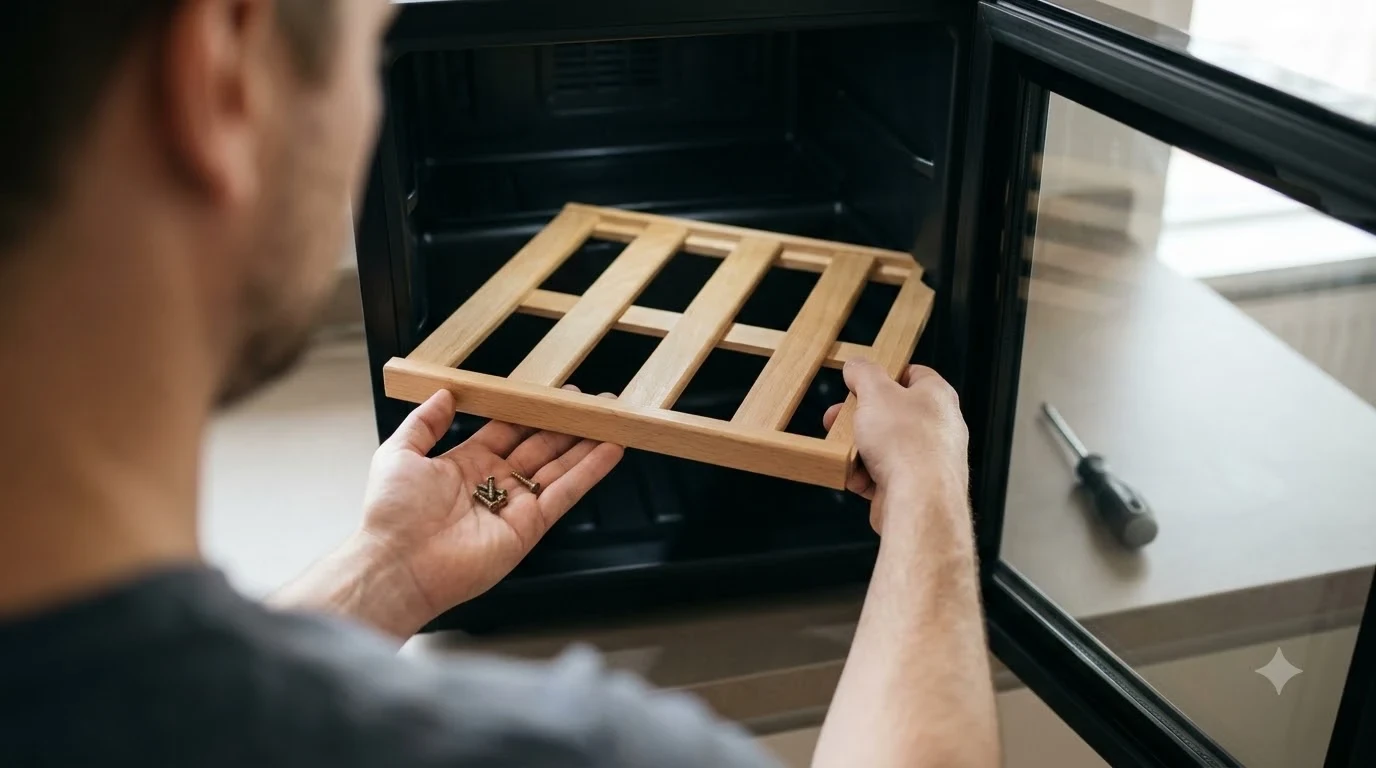
Other details include a black steel exterior, molded polystyrene interior liner, glass door, and top-mounted LED interior lighting. The manufacturer’s specifications also identify rear ventilation, a non-reversible door, and no integrated lock. These are relatively straightforward features, but they matter when planning where the appliance will sit and how it will fit into an existing room.
For a more detailed look at the manufacturer’s specifications, see the Wine Enthusiast 6-Bottle Wine Cooler product information. It is particularly useful for confirming the item number and distinguishing the manufacturer’s specifications from retailer descriptions of similar-looking models.
What Owners and Product Listings Suggest
The strongest practical appeal of this cooler is its compact design, relatively simple operation, and quiet cooling approach. Retailer descriptions emphasize its suitability for small collections, countertops, and home bars rather than large wine inventories.
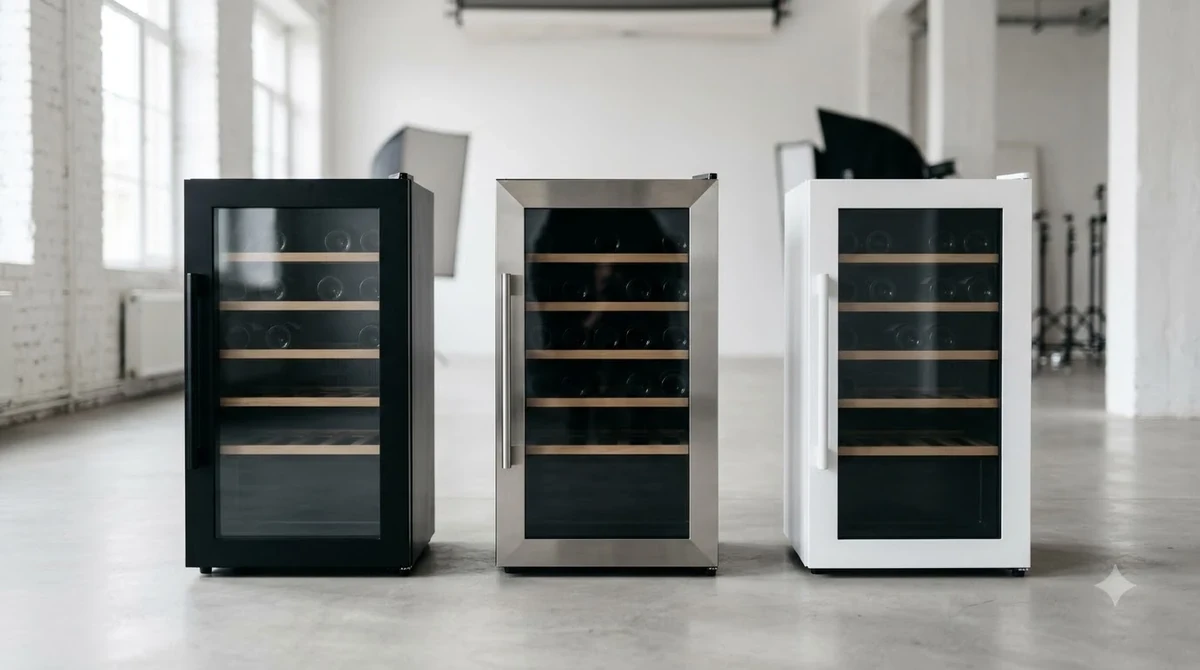
Crate & Barrel identifies the product by the same item number, 272 02 06 01, and describes the cooler as holding six standard bottles horizontally. Its listing also identifies chrome wire shelves, a glass door with black trim, a blue LED temperature display, and soft white interior lighting. The combination gives users a dedicated place to keep wine visible and organized without adding a large cabinet to the room.
Williams Sonoma also describes the six-bottle cooler as a compact appliance with touchscreen controls and solid-state cooling. Its product description emphasizes the convenience of keeping a small collection accessible. However, its listing identifies the appliance as no longer available through that retailer, so its specifications are more useful as corroborating product information than as proof of current stock.
There is an important distinction between positive product descriptions and verified long-term owner experiences. Retailer descriptions are useful for identifying features, but they do not establish that every appliance will maintain identical temperatures in every household. Nor do they establish a particular lifespan, noise level in decibels, or failure rate. Those claims should not be assumed without reliable owner data.
The design nevertheless makes sense for someone who buys wine in small quantities. Six bottles are enough for a modest rotation, such as two bottles of Sauvignon Blanc, two bottles of Pinot Noir, one bottle of Chardonnay, and one bottle of sparkling wine, assuming the bottle shapes fit the racks. That arrangement provides variety without requiring a dedicated wine room or a larger refrigerator.
Another practical benefit is visibility. A glass door and interior light make it easier to identify bottles without opening the cooler repeatedly. The touchscreen also removes the need for a mechanical dial, allowing users to change the selected temperature directly. These features are especially useful when the appliance sits in a shared kitchen or entertaining area.
For additional product descriptions and construction details, the Crate & Barrel product listing provides another description of the same item number. Its information supports the basic design assessment, although it should not be treated as an independent laboratory evaluation.
Common Complaints and Important Limitations
The main compromises are limited bottle compatibility, modest temperature precision, and the need for an appropriate room environment. Buyers should also understand that this is a freestanding cooler, not a refrigerator designed to disappear into kitchen cabinetry.
The six-bottle capacity is based on standard Bordeaux-size bottles. That qualification is important because wine bottles are not manufactured in one universal shape. A tall Burgundy bottle, wide Champagne bottle, or unusually shaped sparkling wine bottle may not fit the shelves in the same way as a conventional Bordeaux bottle. Even when a larger bottle fits, it may reduce the total capacity.
The temperature variance is another limitation. The manufacturer lists a normal variation of plus or minus 5°F around the selected temperature. A displayed setting should therefore not be interpreted as a guarantee that every bottle experiences exactly that temperature throughout the day. Buyers who require tightly controlled conditions for valuable or collectible wines may prefer a more sophisticated compressor-based cabinet with better documented temperature performance.
Thermoelectric cooling also depends on the surrounding environment. Wine Enthusiast recommends an ambient room temperature between 60°F and 80°F. A cooler placed in a particularly hot kitchen, beside an oven, or in direct sunlight may struggle to maintain its selected setting. This matters in homes where the temperature regularly rises above the manufacturer’s recommended operating range.
Installation restrictions can be inconvenient for people who want a built-in appearance. The manufacturer explicitly specifies freestanding use only. Rear ventilation releases heat, so enclosing the appliance within a cabinet or placing it directly beneath a counter without adequate airflow is not an appropriate installation.
The door is not reversible, which can also affect placement. Someone installing the unit beside a wall or between kitchen appliances should check the opening direction before committing to a location. The lack of a lock is another consideration for households where children or guests may have unrestricted access to the wine collection.
Finally, a six-bottle refrigerator is not designed to replace a long-term wine cellar. Its relatively small interior, single temperature environment, and specified temperature variation make it more appropriate for holding wines intended for near-term consumption. Collectors storing valuable bottles for years should consider a dedicated cellar with more consistent environmental controls.
Who Should Buy and Who Should Skip It
This model makes the most sense for people who want a separate place for a small selection of ready-to-drink wines. It is less suitable for households that regularly purchase wine by the case, collect large-format bottles, or need long-term storage conditions.
Who should consider buying it
Apartment residents with limited space: The 9-3/4-inch width is a useful advantage when countertop space is limited. Its relatively low height also makes it easier to incorporate into a small home bar or kitchen arrangement. A dedicated wine refrigerator can be practical for people who regularly keep a few bottles available but have no room for a full-size cabinet.
Casual wine drinkers: Someone who usually keeps three to six bottles at home may find the capacity sufficient. A small rotation of red and white wines can be stored separately from food and other refrigerator items. The electronic controls and interior light also make routine access straightforward.
People who entertain occasionally: Having a handful of bottles ready for guests is convenient, especially when different wine styles are served during an evening. A bottle of Prosecco, a crisp white, and a lighter red can cover several common preferences without requiring a substantial collection.
First-time wine cooler buyers: This model offers a relatively simple introduction to dedicated wine storage. Its touchscreen controls and straightforward rack arrangement are less intimidating than the more complicated controls and storage systems found in larger wine cabinets.
Who should skip it
Serious collectors: Six bottles are unlikely to provide enough capacity for someone who buys wine regularly or wants to maintain several vintages. A larger refrigerator with adjustable shelving is a more practical option.
People who want built-in installation: The freestanding-only designation makes this model unsuitable for a recessed installation beneath a kitchen counter. It needs open space around the cabinet to release heat effectively.
Buyers with large-format bottles: Anyone who frequently purchases Champagne, Burgundy, or unusually shaped bottles should consider a model with more flexible shelf spacing. The stated six-bottle capacity does not mean six bottles of every wine style will fit.
Collectors seeking long-term aging: The temperature variance and limited environmental controls are not compelling reasons to choose this model for valuable wines intended to mature over many years.
Tip: Before buying, measure the intended location and leave at least 2 inches of clearance on both sides and 4 inches behind and above the appliance. Also measure your widest wine bottle rather than assuming every 750 ml bottle will fit the same way.
How It Compares to Alternative Wine Storage Options
The Wine Enthusiast six-bottle cooler occupies a specific position between ordinary household refrigeration and larger dedicated wine cabinets. Its compact footprint and thermoelectric cooling are appealing, but the appropriate alternative depends on the number of bottles, room temperature, and intended storage period.
A standard kitchen refrigerator is useful for chilling bottles before serving, but it is not necessarily the ideal place to maintain a small wine collection. Food odors, frequent door openings, and the need to accommodate groceries can make a separate wine compartment more convenient. A dedicated cooler also provides temperature settings intended for wine rather than the colder environment normally used for everyday food storage.
A larger freestanding wine refrigerator is a more sensible choice for someone who keeps 12, 24, or more bottles at home. These models generally provide additional shelf positions and more flexibility when organizing bottles. Some also offer compressor cooling, which can be preferable when the appliance must operate in warmer rooms.
A dual-zone wine refrigerator offers another option for people who frequently serve different wine styles. Separate temperature zones can accommodate whites and sparkling wines at cooler serving temperatures while keeping reds in a different environment. The six-bottle Wine Enthusiast model does not provide this flexibility.
However, dual-zone technology is not essential for everyone. Someone who primarily stores wine at a moderate temperature and chills individual bottles before serving may find a single-zone appliance sufficient. The six-bottle model is therefore most appealing when space and simplicity matter more than specialized storage functions.
The manufacturer’s separate larger-capacity models also illustrate why buyers should consider their future collection. A 12-bottle appliance, for example, offers twice the nominal capacity, while larger cabinets can provide additional storage and different cooling arrangements. The right size is not necessarily the smallest model that fits the current collection; it is the one that accommodates normal purchasing habits without becoming overcrowded.
For a wider overview of available appliance categories, the wine cooler model reviews section can help compare different capacities and configurations. Pay particular attention to cooling technology, usable bottle space, ventilation, and temperature controls rather than choosing exclusively by exterior dimensions.
Serving, Loading, and Everyday Use
Getting good results from a compact wine cooler involves more than selecting a temperature on the touchscreen. Proper placement, sensible loading, and an understanding of serving temperatures help make the appliance more useful in everyday wine service.
For general wine storage, a moderate temperature is a reasonable starting point. A setting around 55°F is commonly used for holding a mixed collection, although the ideal serving temperature depends on the style. The manufacturer’s specified temperature range begins at 46°F, which makes cooler settings available for bottles that need additional chilling.
Different wines benefit from different serving temperatures. Sparkling wines are generally served around 40°F to 50°F, light whites and rosé around 45°F to 50°F, full-bodied whites around 50°F to 55°F, light reds around 55°F to 60°F, and fuller-bodied reds around 60°F to 65°F. These are serving guidelines rather than a requirement to store every wine at its final drinking temperature.
For example, a bottle of Sauvignon Blanc can be kept in the cooler and given additional time in a colder refrigerator or ice bucket before serving. A Pinot Noir can be brought slightly closer to room temperature before pouring. A full-bodied Cabernet Sauvignon generally benefits from a warmer serving temperature than a crisp white wine.
Wine and food pairing can also help determine which bottles deserve space in the cooler. A bottle of Chardonnay may be useful alongside chicken dishes, while Pinot Noir can work well with mushroom-based meals. For a dinner featuring a rich sauce, a chicken Marsala recipe offers an opportunity to pair food with a suitable red or fuller-bodied white.
Loading deserves equal attention. The shelves are designed around standard Bordeaux bottle dimensions, so avoid forcing unusually wide bottles into narrow spaces. Keep bottles stable and do not obstruct the rear ventilation area. Overloading the compartment or crowding the interior can make access less convenient and interfere with the intended storage arrangement.
When planning a small entertaining collection, consider the drinks that will actually be served. A bottle intended for an Aperol Spritz recipe, for example, may need to be chilled before preparation, while a bottle intended for a lighter wine pairing can be maintained at a more moderate storage temperature. This makes the appliance useful as part of a broader home bar setup without requiring it to perform every chilling task.
Maintenance, Placement, and Long-Term Care
Routine maintenance is relatively simple, but correct placement is especially important for a thermoelectric wine cooler. Keeping the ventilation area clear, cleaning the interior carefully, and avoiding extreme room temperatures can help the appliance operate under the conditions intended by its manufacturer.
Start by selecting a stable, level surface away from direct sunlight and heat-producing appliances. The recommended ambient range is 60°F to 80°F, so a location beside a frequently used oven or in an enclosed utility area may not be appropriate. Avoid placing the cooler where its rear ventilation can be blocked by a wall, cabinet, or stored household items.
Allow the required clearances: at least 2 inches on each side and 4 inches behind and above. These spaces are functional requirements rather than optional styling preferences. A compact appliance still needs room to release heat generated during operation.
Cleaning should be gentle. A soft cloth and mild cleaning solution are preferable to abrasive pads or aggressive chemicals. Remove bottles carefully before cleaning the interior, and make sure the compartment is dry before returning the collection. The retailer’s care instructions also recommend wiping the exterior with a damp cloth.
Check the door seal periodically for dirt or visible damage. A clean, properly seated seal helps prevent unnecessary exchange of air between the interior and the room. Also inspect the electrical cord and plug, particularly if the appliance has been moved or repositioned.
Wine storage itself benefits from consistency. Bottles intended for longer holding periods should generally be stored horizontally when they have natural cork closures, helping keep the cork in contact with the wine. Avoid repeated temperature swings and unnecessary movement. A compact six-bottle cooler is best viewed as a convenient holding appliance rather than a substitute for a carefully controlled wine cellar.
It is also sensible to monitor the actual interior temperature with a separate thermometer during the first few days of operation. The manufacturer specifies a temperature variance of plus or minus 5°F, so observing the compartment in its intended location provides a more realistic understanding of its performance than relying on the display alone.
The one-year parts-and-labor warranty is another detail worth reviewing before purchase. Keep the purchase documentation and product number available if service is needed. Buyers should also confirm the warranty terms applicable to their particular seller and purchase because retailer policies and manufacturer coverage are not necessarily identical.
Finally, remember that a wine cooler should not be packed simply because its advertised capacity is six bottles. Bottle dimensions, rack spacing, and ease of access are all relevant. Leaving a little flexibility in the collection makes the appliance more convenient and reduces the temptation to force larger bottles into spaces designed for standard shapes.
Frequently Asked Questions
These additional answers address practical questions about the Wine Enthusiast six-bottle cooler, including its electrical requirements, bottle compatibility, cooling expectations, and suitability for different wine collections.
Does the Wine Enthusiast six-bottle cooler have a compressor?
No. Model 272 02 06 01 uses thermoelectric solid-state cooling rather than a conventional compressor. This technology has fewer moving mechanical components, although its performance remains dependent on surrounding room temperature and ventilation. It should not be confused with compressor-based wine cabinets sold under the same brand.
Can the cooler operate on a standard household outlet?
Yes. The manufacturer’s electrical specifications identify a 115V, 60Hz supply and a standard NEMA 5-15P plug. The listed running current is 0.95 amps. Buyers should still follow the electrical and safety instructions supplied with the appliance and avoid unsuitable extension arrangements.
Does the cooler have a reversible glass door?
No. The manufacturer’s specifications identify the door as non-reversible. This means the opening direction cannot simply be changed to accommodate every countertop arrangement. Check the hinge position and available opening space before selecting its final location.
Can this refrigerator store wine bottles with natural cork closures?
Yes. Natural-cork bottles can be stored horizontally, provided their dimensions fit the supplied shelves. Horizontal positioning helps maintain contact between the wine and the cork during storage. The cooler does not, however, provide a dedicated humidity-control system, so it should not be treated as a specialist long-term aging cabinet.
Is the six-bottle cooler suitable for storing opened wine?
Yes, provided opened bottles are properly resealed and stored upright when practical to reduce leakage. Most opened still wines are best consumed within approximately 3 to 5 days when refrigerated, while sparkling wines generally retain their best character for around 1 to 3 days with an appropriate sparkling-wine stopper. The cooler is a convenient place to hold these bottles, but it does not replace proper closures or guarantee freshness.
The Wine Enthusiast 6-Bottle Wine Cooler is a practical choice for a small collection, especially where countertop width, simple controls, and relatively quiet cooling are priorities. Its six-bottle limit, temperature variation, and freestanding installation requirements are meaningful compromises, however. Choose it for convenient everyday wine storage rather than serious collection aging, and confirm the exact model specifications and available warranty before purchasing.
More in Model Reviews
 Magic Chef 44 Bottle Wine Cooler Review for Flexible StorageUpdated Nov 21, 2026
 Whynter 164 Bottle Wine Cooler Review: Capacity, Features, and FitUpdated Nov 21, 2026
 Insignia NS WC16BK6 Review: Compact 16-Bottle Wine StorageUpdated Nov 21, 2026
 Wine Enthusiast Electric Blue Omega Review: Opening, Pouring, and Preserving Made EasierUpdated Nov 21, 2026
 Koolatron 20 Bottle Wine Cooler Review: Features, Fit, and PerformanceUpdated Nov 21, 2026
 NewAir AWC 330E Review for Home Wine StorageUpdated Nov 21, 2026